China Travel Budget 2026: Real Cost Breakdown
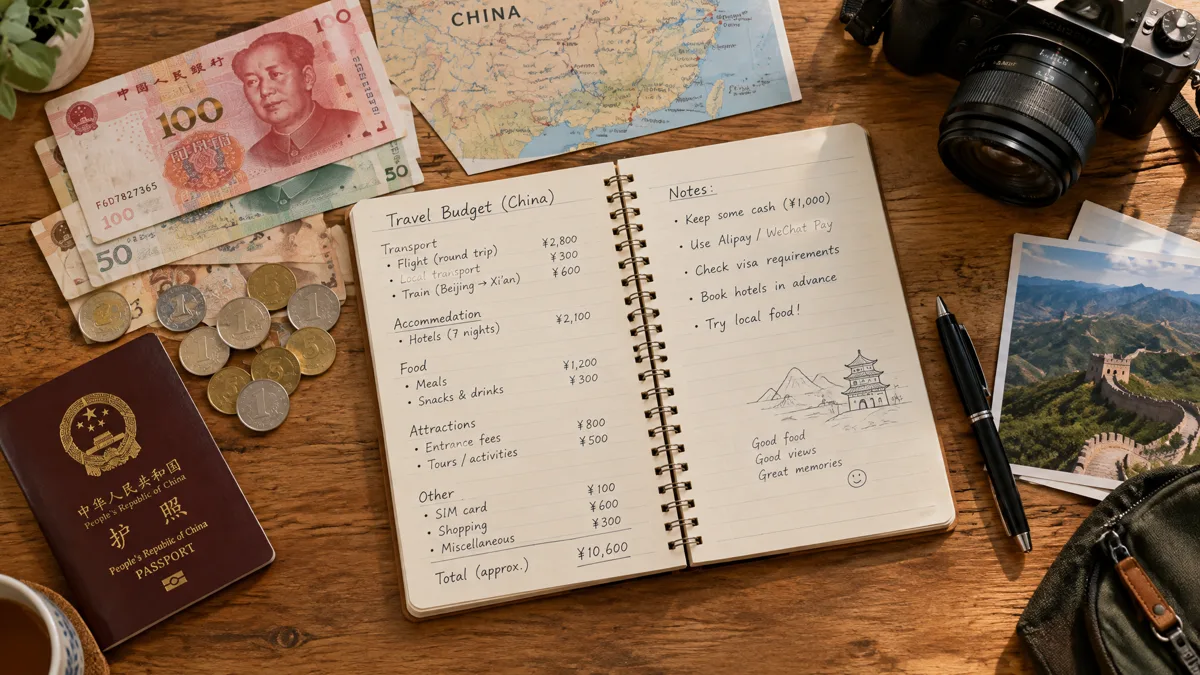
Let me start with the number everyone actually wants: a comfortable week in China costs roughly ¥5,000–7,500 (about $700–1,050) per person, excluding international flights. A lean backpacker week can be done for ¥2,500. A polished, hotel-and-taxi week runs ¥12,000+.
The spread is enormous because China is genuinely cheap in some categories and surprisingly expensive in others. Hotels in Shanghai cost more than Berlin. A bowl of noodles in Chengdu costs $2. High-speed rail is world-class and priced accordingly. Once you know which line items swing, budgeting stops being guesswork.
This is the itemised version — real 2026 numbers, three spending tiers, four city examples, and a table you can copy into your own notes.
📑 What’s in here
- The exchange rate I’m using
- Seven line items that make up your trip
- Three tiers: daily and 7-day totals
- City by city: what actually changes
- Copyable budget table
- Where the money leaks
- FAQ
The exchange rate I’m using
Currency moves, so pin it down before you read the numbers.
| Item | Assumption |
|---|---|
| Reference rate | USD 1 = ¥7.10 |
| Plausible 2026 range | ¥6.90 – ¥7.35 per USD |
| EUR | roughly ¥7.7 – ¥8.2 per EUR |
| GBP | roughly ¥8.9 – ¥9.5 per GBP |
💡 Every USD figure below is converted at 7.10. If the rate moves 5%, your dollar costs move 5% — the yuan prices in this guide are the ones that don’t change.
Seven line items
Here’s what a China trip actually costs, and how much each line swings between tiers.
| Line item | Budget | Comfort | Premium |
|---|---|---|---|
| Visa | $0 (visa-free) or ~$140 | ~$140 | ~$185 |
| International flights | $600–800 | $800–1,200 | $1,200–1,800 (premium econ) |
| High-speed rail | ¥100–200/leg | ¥300–550/leg | ¥550–1,800/leg (business) |
| Accommodation | ¥60–150/night | ¥350–650/night | ¥1,200–3,000/night |
| Food | ¥60–100/day | ¥150–300/day | ¥400–800/day |
| Attractions | ¥40–80/day | ¥100–200/day | ¥200–400/day |
| Internet (eSIM/VPN) | $5–15 total | $15–30 total | $30–50 total |
The honest read: flights and hotels are where the tier actually changes. Food and attractions compress far less than people expect — a great meal in Chengdu costs a fraction of a mediocre one in Shanghai, but the gap between budget and premium eating is smaller than the gap between hostel and five-star.
📌 Visa note: citizens of 50 countries currently enter visa-free, which zeroes out this line entirely. Check your nationality in our Visa & Entry guide before budgeting $140 you may not owe.
Three tiers: daily and 7-day totals
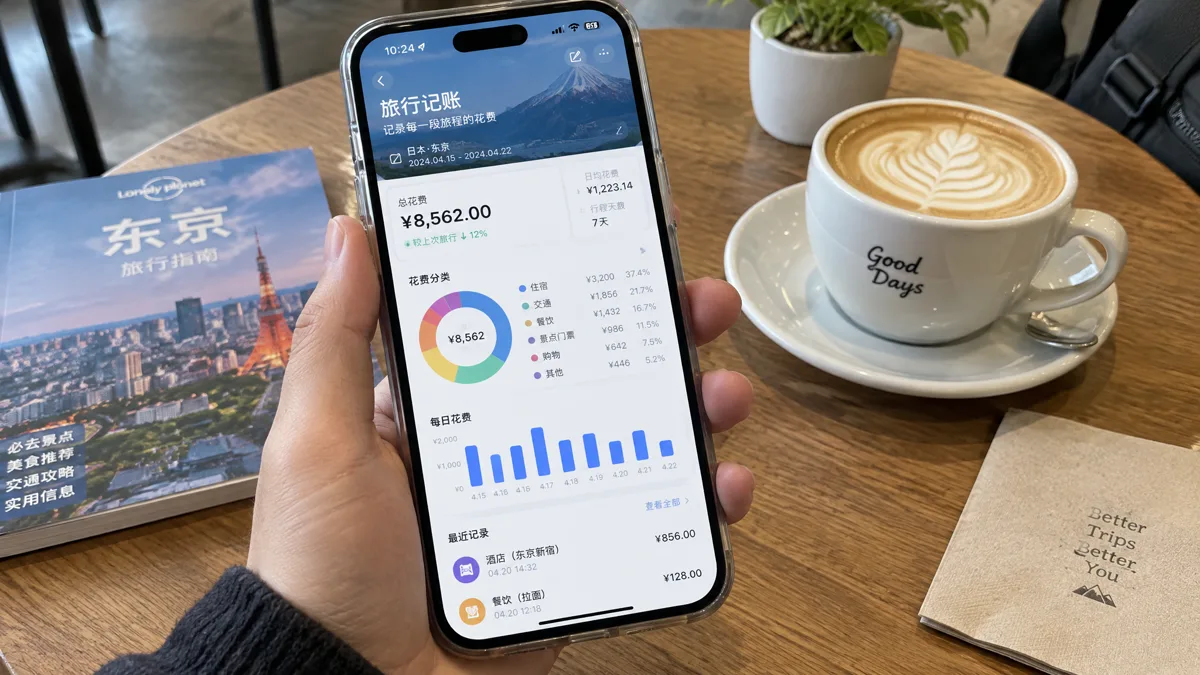
These are on-the-ground costs — accommodation, food, transport, attractions, incidentals. International flights are listed separately because they don’t scale with your travel style.
🎒 Tier 1 — Budget / backpacker
| Category | Per day |
|---|---|
| Hostel dorm | ¥80 |
| Food (street + local canteens) | ¥80 |
| Metro + occasional bus | ¥20 |
| Attractions (one paid site/day) | ¥60 |
| Incidentals | ¥40 |
| Daily total | ≈ ¥280 (~$39) |
7 days: ≈ ¥1,960 (~$276) + flights.
This is genuinely doable and not miserable — Chinese hostels are clean, street food is excellent, and the metro is cheap and fast. You’re skipping taxis, paid attractions most days, and any restaurant with a printed menu.
🏨 Tier 2 — Comfort (the realistic default)
| Category | Per day |
|---|---|
| 3–4★ hotel, twin room | ¥480 |
| Food (mix of local restaurants + one good dinner) | ¥220 |
| Metro + 2–3 DiDi rides | ¥70 |
| Attractions (2 paid sites/day) | ¥150 |
| Incidentals | ¥80 |
| Daily total | ≈ ¥1,000 (~$141) |
7 days: ≈ ¥7,000 (~$986) + flights.
This is where most independent travellers land: a proper hotel room, sit-down meals, taxis when it rains, and no agonising over a ¥120 ticket.
✨ Tier 3 — Light luxury
| Category | Per day |
|---|---|
| 5★ hotel or boutique | ¥1,800 |
| Food (good restaurants, wine) | ¥600 |
| Private car / DiDi premium | ¥200 |
| Attractions + guided experiences | ¥300 |
| Incidentals | ¥150 |
| Daily total | ≈ ¥3,050 (~$430) |
7 days: ≈ ¥21,350 (~$3,007) + flights.
At this tier you’re paying for space, service and time — not a fundamentally different China. The country doesn’t get better, your logistics get smoother.
City by city
Same country, four very different bills. These are comfort-tier daily totals for a solo traveller.
| City | Hotel (3–4★) | Food/day | Transport/day | Attractions/day | Daily total |
|---|---|---|---|---|---|
| Beijing | ¥520 | ¥220 | ¥70 | ¥180 | ≈ ¥990 |
| Shanghai | ¥620 | ¥260 | ¥70 | ¥150 | ≈ ¥1,100 |
| Chengdu | ¥380 | ¥170 | ¥50 | ¥110 | ≈ ¥710 |
| Xi’an | ¥350 | ¥160 | ¥45 | ¥140 | ≈ ¥695 |
What the table really says:
- Shanghai is the expensive one — hotels run 20–30% above Beijing for equivalent quality.
- Chengdu is the value champion. Cheap hotels, transcendent food at street prices, and a compact centre.
- Xi’an is cheap and dense — the Terracotta Warriors and the city wall are the two big spends, everything else is walking distance.
- Beijing sits in the middle, but its attraction costs are the highest of the four (Forbidden City, Great Wall, Summer Palace all charge).
💡 A 7-day two-city trip — say Beijing + Xi’an at comfort tier — lands around ¥5,900 (~$830) on the ground, before flights. That’s the realistic middle of the market.
Copyable budget table
Paste this into your notes and fill in your own numbers.
CHINA TRIP BUDGET — [YOUR NAME] — [DATES]

Rate used: USD 1 = ¥7.10

FIXED / PRE-TRIP
  Visa ............................. ¥______  ($______)
  International flights ............ ¥______  ($______)
  Travel insurance ................. ¥______  ($______)
  eSIM / VPN ....................... ¥______  ($______)
  ------------------------------------------------
  Subtotal (pre-trip) .............. ¥______

ON THE GROUND (per day × days)
  Accommodation ....... ¥____ × ___ nights = ¥______
  Food ................ ¥____ × ___ days   = ¥______
  Local transport ..... ¥____ × ___ days   = ¥______
  Attractions ......... ¥____ × ___ days   = ¥______
  Intercity rail ......        (list legs) = ¥______
  Shopping / misc .....                    = ¥______
  ------------------------------------------------
  Subtotal (ground) ....................... ¥______

TOTAL ................................... ¥______  (~$______)

PER PERSON (if splitting) ............... ¥______
BUFFER (+10%) ........................... ¥______
Always add the 10% buffer. Every trip has one unplanned taxi, one ticket you didn’t know was paid, one bowl of noodles at 1am.
Where the money leaks
Four places travellers consistently overspend, and how to plug them.
1. Airport transfers. A taxi from Pudong to central Shanghai is ¥180–250. The Maglev + metro combination is under ¥60 and often faster in traffic. Same story in Beijing.
2. Buying rail tickets late. Chinese rail pricing is fixed, but availability isn’t — a sold-out second class forces you into first class at 1.6×. Book the moment the 15-day window opens; our 12306 booking guide walks through it.
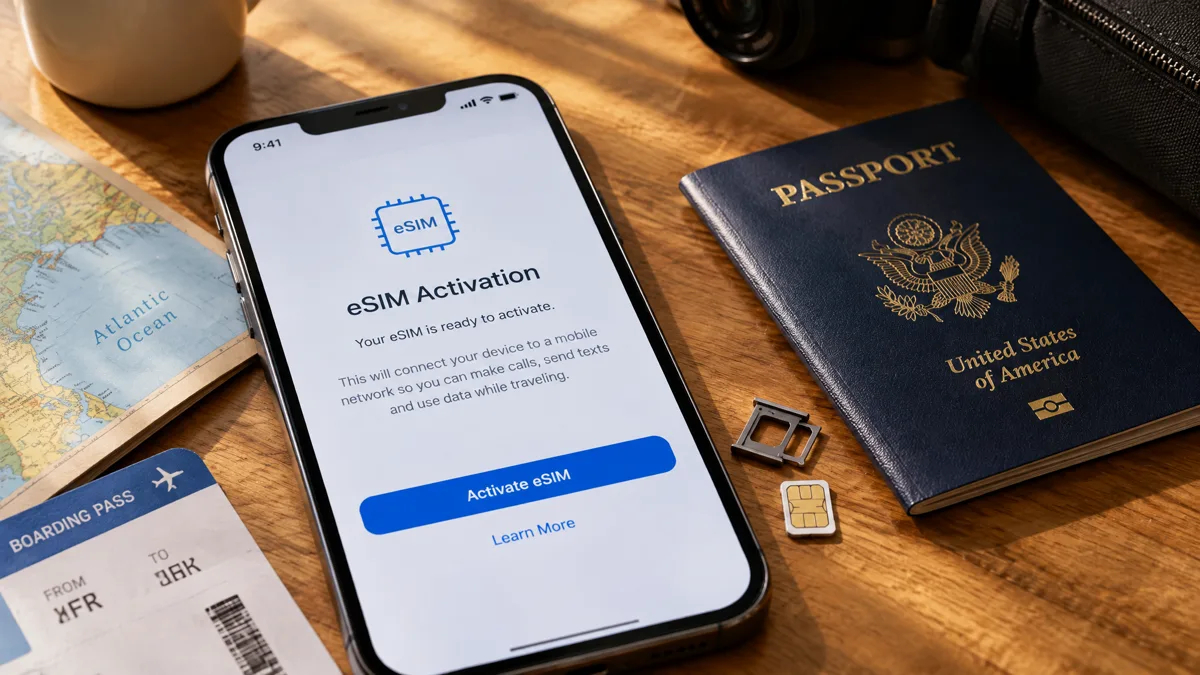
3. Connectivity. Roaming data packs routinely cost $10/day. A travel eSIM costs $5–30 for the whole trip and activates before you land — see the internet & eSIM guide. This is the single easiest saving on the list.
4. Booking hotels on arrival. Walk-in rates in Shanghai and Beijing are brutal. Booking ahead through an OTA — and knowing which hotels legally accept foreign passports — saves both money and a wasted evening. Our foreigner-friendly hotel guide covers the passport-registration rule that trips people up.
🛡️ One line item worth not skimping: travel insurance. A hospital visit without cover is the only cost on this page that can run to five figures. Compare policies before you fly — see the insurance section of our health & emergency guide.
FAQ
Is China cheap or expensive? Both. Ground costs (food, transport, attractions) are low by Western standards. Hotels in tier-one cities and long-haul flights are not.
How much for 7 days excluding flights?
Budget ≈ ¥2,000 ($280). Comfort ≈ ¥7,000 ($990). Light luxury ≈ ¥21,000 (~$3,000).
How much cash should I carry? ¥300–500 as backup. Alipay and WeChat Pay cover almost everything — see payment setup.
Do I need to tip? No. Tipping isn’t customary and can cause confusion.
Are attraction tickets expensive? Major sites run ¥40–120. The Forbidden City is ¥60, the Terracotta Warriors ¥120, the Great Wall ¥40–45. Book popular ones ahead — some sell out.
What’s the cheapest month? Avoid Chinese New Year, National Day (early October) and summer holidays. Late spring and November are cheapest for hotels and flights.
Can I budget without a Chinese bank account? Yes — a foreign card bound to Alipay or WeChat Pay works for most payments. See payment setup.
The Bottom Line
China’s cost profile rewards planning more than most destinations. The transport and food are cheap; the hotels and flights are where your tier is decided. Pick your tier, add a 10% buffer, book rail the day the window opens, and buy an eSIM before you fly.
Then spend the savings on a second bowl of noodles. 🍜
Related: Visa & Entry · 12306 Train Booking · Foreigner-Friendly Hotels · Payment Setup · Health & Emergency