Hotels in China That Accept Foreigners (2026)

I still remember my first check-in in China. Small hotel near a train station, booked online, paid online, everything looked fine — and then the woman behind the desk looked at my passport, shook her head, and said two words: “不行” (not possible).
No explanation. No alternative. Just my money already gone and nowhere to sleep at 10pm.
That was years ago and things have genuinely improved, but it still happens — especially to people who book the cheapest place in town and assume a booking is a booking. So here’s what I’ve learned since, including the actual legal situation, how to spot a refusal before you pay, and exactly what to say at the desk if it happens anyway.
🏨 First, the thing everyone gets wrong
There is a lot of outdated advice online about “foreigner hotels” in China. Let me clear it up.
China used to run a designated-hotel system — only properties with a special foreign-reception licence (涉外) could legally take foreign guests. Over the past decade most cities abolished that requirement, and in principle any properly registered hotel can now check in a foreign passport holder.
In principle.
In practice it’s uneven. A hotel can still turn you away for reasons that have nothing to do with the law:
- their front-desk staff have never processed a foreign passport and don’t want to try
- their computer system isn’t linked to the police registration network
- the local police station hasn’t cleared them to register foreign guests
- it’s a small family-run place and nobody wants the paperwork
None of that helps you at 10pm. So treat “can they legally” and “will they actually” as two separate questions.
💡 The practical takeaway: bigger and more international = safer. The further you go down the price ladder into small local guesthouses, the higher the chance of a shrug and a “no”.
🏙️ Which hotels actually take foreigners
Here’s how I think about the tiers, from most reliable to least.
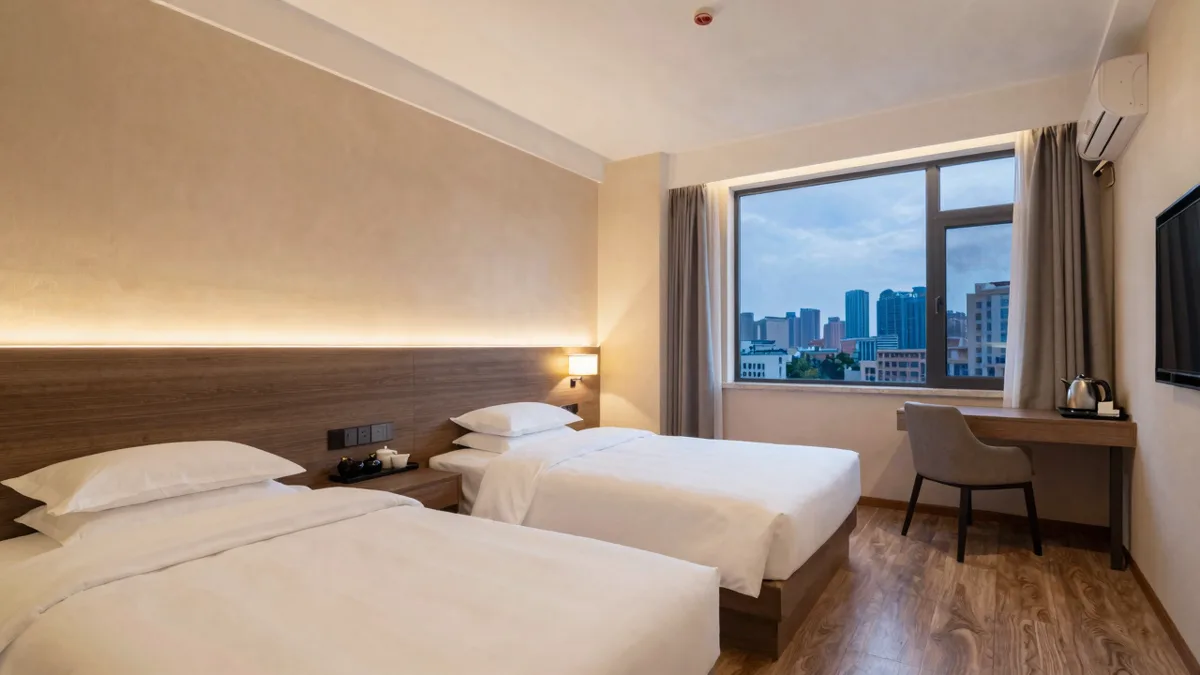
International chains — essentially zero risk. Marriott, Hilton, Hyatt, IHG, Accor, Wyndham. Staff are trained on foreign passports, English is usually spoken, and foreign cards are accepted. The catch is price and sometimes a slightly soulless “airport hotel” feel.
Domestic upscale brands — very low risk. Jin Jiang, Atour, Ji Hotel (全季), Orange Crystal, Novotel and Mercure (Accor-owned but Chinese-run), Narada. Atour in particular has become my default for mid-range: clean, consistent, and used to foreign guests.
Mid-range domestic chains — usually fine, check first. Hanting (汉庭), Home Inn (如家), Lavande, 7 Days Premium. Big-city branches almost always accept foreigners. Suburban or small-town branches are hit and miss. If the listing is on an international booking site and has recent English reviews from foreigners, that’s a good signal.
Budget chains and small local hotels — the risky zone. 7 Days Inn, small “business hotels”, anything near a bus station with a hand-painted sign. Cheap for a reason. Some are perfectly fine; some will refuse. Never book one non-refundably.
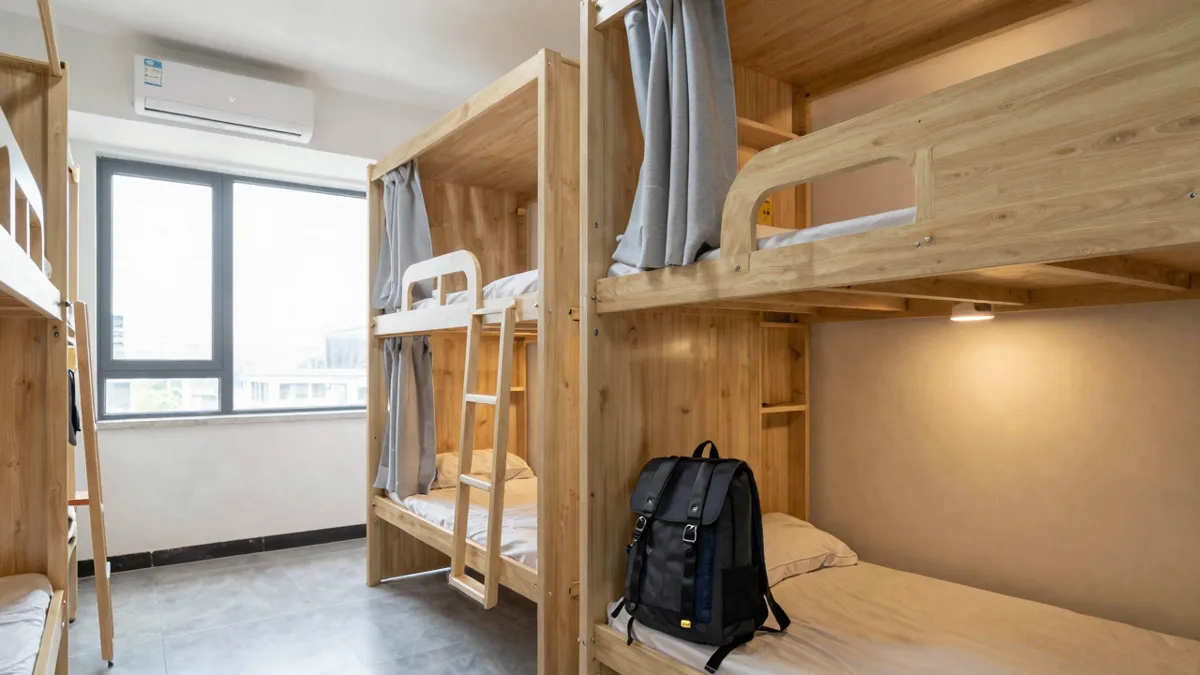
Hostels — much better than their reputation. Chinese youth hostels are used to foreigners, often have English-speaking staff, and are the one budget category I’d book blind. Dorms from about ¥70–150, private rooms ¥200–350. The catch is that “hostel” in China sometimes means a converted apartment, so read the reviews.
One more category worth knowing: hotels near airports and major train stations are almost always foreigner-ready, because that’s their entire business.
🔍 How to filter before you pay
This is the part that saves you the 10pm disaster. Do it at booking time, not at the desk.
1. Book on a platform that shows you the policy, not just the price. Trip.com (the international arm of Ctrip), Agoda and Booking.com all list check-in policies. Read the “property policies” or “house rules” section — if it says foreign guests are not accepted, believe it and move on.
2. On the Chinese-language Ctrip/Ctrip app, look for the 接待外宾 filter. “接待外宾” literally means “receives foreign guests”. Turning that on removes most of the risk in one click. The English site doesn’t always expose the same filter, which is why the policy text matters.
3. Read the most recent reviews, filtered to your language. One recent English review that says “checked in with a British passport, no problem” is worth more than any filter. Likewise, a review saying “they refused our foreign passports” is a hard no — even if it was a year ago.
4. Message the hotel before booking. On Trip.com and Agoda you can usually contact the property. One line is enough: “I am a foreign passport holder — can you register foreign guests?” Keep the reply. If they say yes in writing and then refuse you, that message is your leverage for a full refund.
5. Pay at the property, or book free-cancellation. Non-refundable rates save you maybe 10% and cost you all your options if the desk says no.

6. Have a backup pinned before you arrive. Keep one international-chain or well-reviewed hostel saved with its address in Chinese. If the first place fails, you’re not starting from zero at 10pm.
📋 What actually happens at check-in
The process is more bureaucratic than in most countries, but it’s quick.
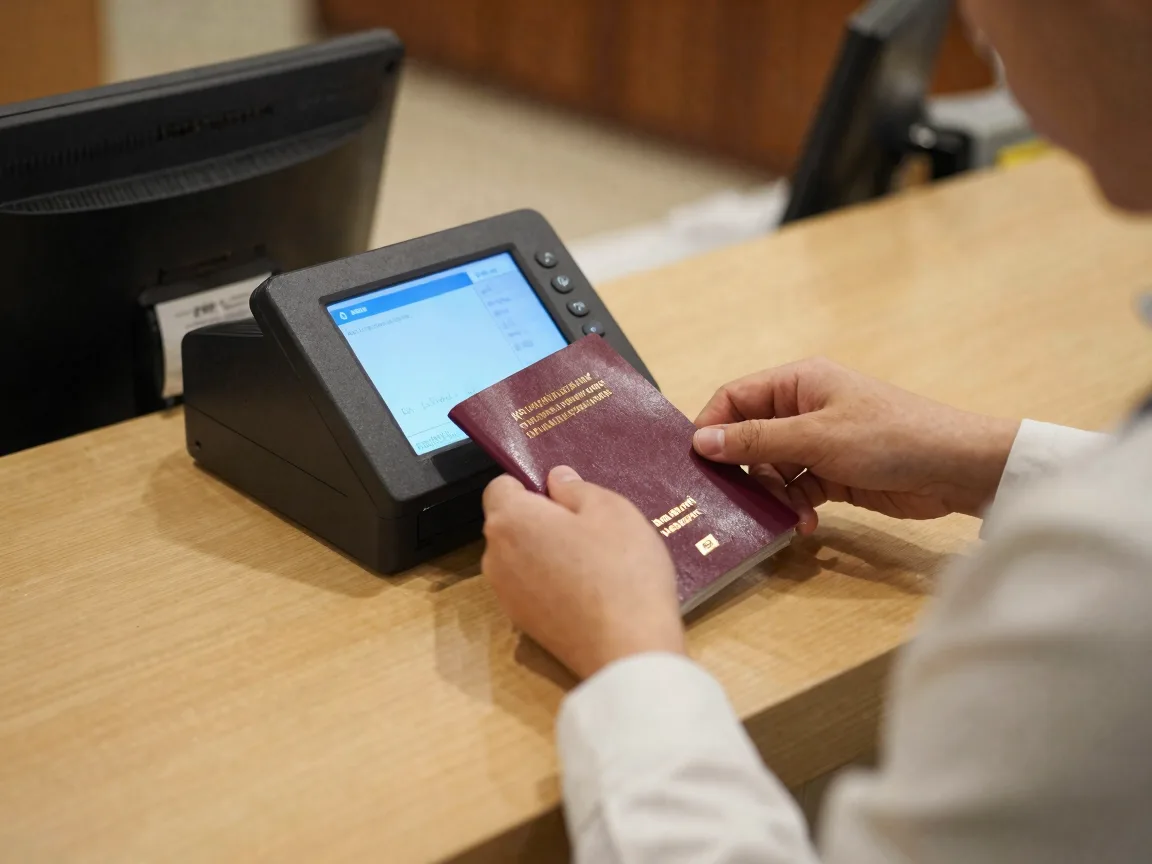
- They take your passport — the physical one, not a photo. This is non-negotiable and applies to every guest, Chinese or foreign.
- They check your entry stamp or visa to confirm you’re legally in the country.
- They scan or type your details into the police hotel registration system (旅馆业治安管理信息系统). Every hotel is legally required to be connected to it, which is exactly why some can’t take foreigners: no connection, no check-in.
- They may ask for a phone number and address. Your home address and a Chinese mobile number if you have one; if not, the hotel’s number sometimes works.
- You get your key — often a card, sometimes a physical key with a deposit.
That registration happens automatically and is the hotel’s job. You don’t need to do anything. Keep the registration record if they give you one; it’s occasionally useful if police ask questions later.
Two things that trip people up: foreign credit cards sometimes get declined at the desk even when the booking was prepaid (bring a backup card and Alipay/WeChat Pay set up), and hotels will often hold a cash or card deposit of ¥100–300 that’s returned at checkout.
🚫 If they refuse you at the desk
Stay calm and work through this in order. It has worked for me and for people I’ve travelled with.
Step 1 — Ask why, specifically. Not “why not” but “is it because you cannot register foreign guests?” If the answer is yes, you know it’s a system problem, not a policy against you. If the answer is “management said no”, nothing you say will change it.
Step 2 — Ask them to confirm with the local police station. Many front-desk staff genuinely don’t know the current rules. A call to the 派出所 (local police station) sometimes flips a no into a yes in five minutes. Ask politely: “Could you check with the local police station whether you can register a foreign passport? I’m happy to wait.”
Step 3 — Ask for help finding an alternative. Big hotels usually know which nearby properties take foreigners. This is often faster than searching yourself.
Step 4 — Get the refusal in writing, then claim the refund. Ask them to note on the booking or in a message that they refused service. Screenshot it. Then contact the booking platform immediately — Trip.com and Agoda both refund in this situation, but you need the evidence and you need to do it the same day.
Step 5 — Escalate if you were charged and refused. The platform’s customer service first, then the local tourism complaint hotline 12345 (English is sometimes available; a Chinese-speaking friend helps). A refused-but-charged booking is a straightforward complaint and platforms usually fold.
What not to do: don’t hand over your passport and hope, don’t pay a “foreigner surcharge” that appears out of nowhere, and don’t walk away without cancelling in the app — an un-cancelled no-show is how you lose the money.
🏡 Airbnb and homestays — the risky option
This is where I’d be most careful.
Airbnb no longer operates domestic listings in mainland China. It shut down its China domestic business in 2022 and now only serves outbound travel from China. So if you see an Airbnb listing for a Beijing apartment, treat it with suspicion — it’s either stale, or it’s a listing that has migrated to a local platform.
The local equivalents are Tujia (途家), Meituan homestays and Xiaozhu. Plenty of these are legitimate, licensed 民宿 (minsu) — especially in tourist areas like Dali, Yangshuo or the alleys of Beijing. Plenty are also just an apartment someone rents out.
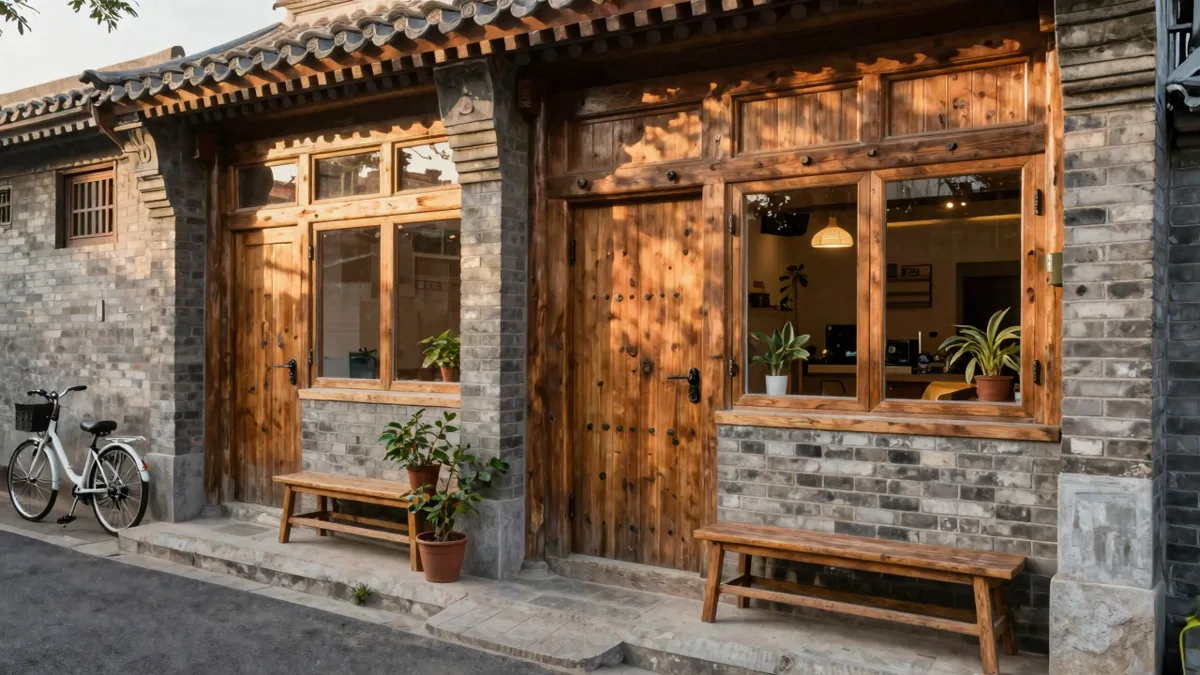
The legal issue is registration, not tourism. Every accommodation provider in China is required to register foreign guests with the police. A licensed guesthouse has the system and the paperwork. An unlicensed apartment rental usually does not — which means either the host quietly doesn’t register you (a legal problem for you, not just them), or the building’s management refuses you at the door.
My rule: if it’s not a licensed 民宿 with a business licence and a front desk that asks for your passport, don’t book it as a foreigner. The savings aren’t worth arriving to a locked door.
If you do stay somewhere that isn’t a hotel, see the next section — it becomes your responsibility.
⏰ The 24-hour registration rule
This one catches people who stay with friends or in a rented apartment.
If you stay in a hotel, hostel or licensed guesthouse: the property registers you. Done. Nothing for you to do.
If you stay anywhere else — a friend’s flat, a rented apartment, a relative’s home — you must register yourself at the local police station (派出所) within 24 hours of arrival in cities, or within 72 hours in rural areas. This is Article 39 of China’s Exit and Entry Administration Law and it is enforced.
What to bring:
- your passport and current visa or entry stamp
- the host’s ID card and proof of the address (property certificate or lease)
- sometimes the host themselves — many stations want the property owner present
It’s free and takes about 15 minutes. You’ll get a registration slip; keep it. Hotels do this for you automatically, which is why most tourists never encounter it — but the moment you’re in private accommodation, it’s on you. Skipping it can mean a fine at exit, or problems extending a visa.
💰 What it costs
Rough 2026 ranges for a double room in a major city. Add 30–50% in Beijing and Shanghai, subtract in smaller cities.
| Tier | Typical price | What you get | Foreigner risk |
|---|---|---|---|
| Hostel dorm | ¥70–150 / ~$10–21 | Bunk, shared bath, often great atmosphere | Low |
| Hostel private room | ¥200–350 / ~$28–49 | Simple private room, own bath sometimes | Low |
| Budget chain | ¥180–350 / ~$25–49 | Clean box room, no frills | Medium |
| Mid-range domestic | ¥350–700 / ~$49–97 | Atour / Ji Hotel level, good beds, breakfast | Low |
| International 4-star | ¥700–1,200 / ~$97–167 | English service, gym, reliable wifi | Very low |
| International 5-star | ¥1,200–2,500+ / ~$167–350 | Full service | Very low |
Two pricing notes that surprise people. First, rates swing wildly by city and season — Spring Festival and the first week of October can double or triple the mid-range tier. Second, the cheapest room is rarely the cheapest stay: a refused check-in at 10pm costs you a taxi, a rebooking at walk-in rates, and a fight for a refund.
❓ FAQ
Do I need to book a “foreigner hotel” in China? No — the old designated-hotel system has been largely abolished. Any properly registered hotel can legally take you. But some small properties still refuse in practice, so book with a filter or a chain.
Will a hostel accept my passport? Almost always yes. Hostels in China live on foreign travellers and are the safest budget option.
Can I pay with a foreign credit card? At international chains and mid-range hotels, usually. At budget places, often not — set up Alipay or WeChat Pay with your foreign card before you arrive.
What if my booking says “foreign guests not accepted”? Believe it. Cancel while it’s free and pick another property. It’s a real policy note, not a formality.
Is it legal for a hotel to refuse me? If they cannot register foreign guests with the police, they cannot legally check you in — that’s the usual reason. If they simply don’t want to, escalating to the platform and 12345 is your recourse.
Do I need to register with the police myself? Only if you’re not staying in a hotel, hostel or licensed guesthouse. Then yes — within 24 hours in cities, 72 hours in rural areas.
Can I stay in an Airbnb in China? Airbnb no longer runs domestic listings in mainland China. Local platforms exist, but unlicensed apartments can’t register foreign guests, which puts you at risk. Stick to licensed guesthouses.
What documents do I need at check-in? Your physical passport, with a valid visa or entry stamp. A photo or copy won’t work.
✅ The bottom line
China’s hotel situation for foreigners is much better than the internet suggests, but it isn’t uniform. The system that causes refusals isn’t xenophobia — it’s a police registration network that some small properties simply aren’t plugged into.
So: book with the 接待外宾 filter on, favour chains and hostels over mystery budget hotels, message the property if you’re unsure, keep one backup address, and if you get refused, ask about registration rather than arguing about rights. Nine times out of ten the problem is solvable in five minutes. The tenth time, the platform refunds you.
And if you’re staying anywhere that isn’t a hotel, don’t forget the 24-hour registration — that one is genuinely on you.
Related reading: Visa & Entry for China · Payment Setup · Essential Apps · China Train Travel: The 12306 Booking Guide