Medical Treatment in China: The Visa & Entry Guide
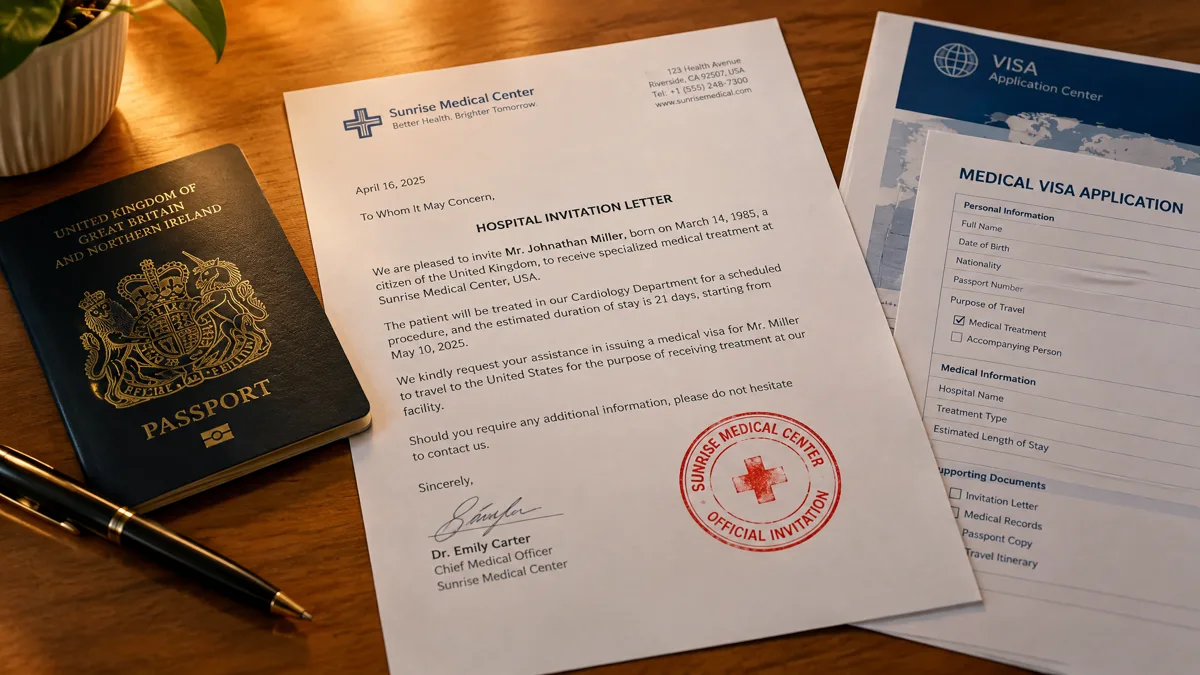
◆ A quiet shift is underway in how people plan medical care. Patients are no longer asking whether they can travel for treatment — they’re asking how to do the paperwork.
China is not the first destination most patients consider, which is exactly why the process still feels under-documented. This guide covers the one part that trips people up before they ever reach a hospital: getting in, and staying in legally. It is logistics, not medical advice — for that, talk to a clinician.
◆ Do I need a special “medical visa”?
No — and this is the single most misunderstood point.
China has no standalone visa category called “medical visa.” Instead, you apply for an ordinary visa category that matches your purpose, and you support it with hospital documents. The category depends on the type and length of treatment.
Editor’s note — because there’s no dedicated category, requirements vary by consulate and by region. Two patients with the same treatment, applying in different countries, may be told different things. Always check your own consulate’s checklist.
◆ Which visa type fits my treatment?
| Situation | Typical category | Notes |
|---|---|---|
| Short visit, consultation, or check-up | M | Business/trade category; commonly used for short medical visits and check-ups |
| Short private-affairs medical visit | S2 | Private affairs; some consulates list short medical treatment under S2 |
| Light, non-surgical treatment (TCM, spa, wellness) | L | Tourism category; fine for wellness-style trips, not for surgery |
| Longer treatment or rehabilitation | S1 | Private affairs, longer stay; leads to a residence permit after entry |
| Accompanying a patient | S1 / S2 | Family members apply separately |
The rule of thumb: short evaluation → M or S2. Anything that will keep you in China for weeks, or that involves surgery and recovery → arrange a proper visa before you fly, not a visa-free entry.
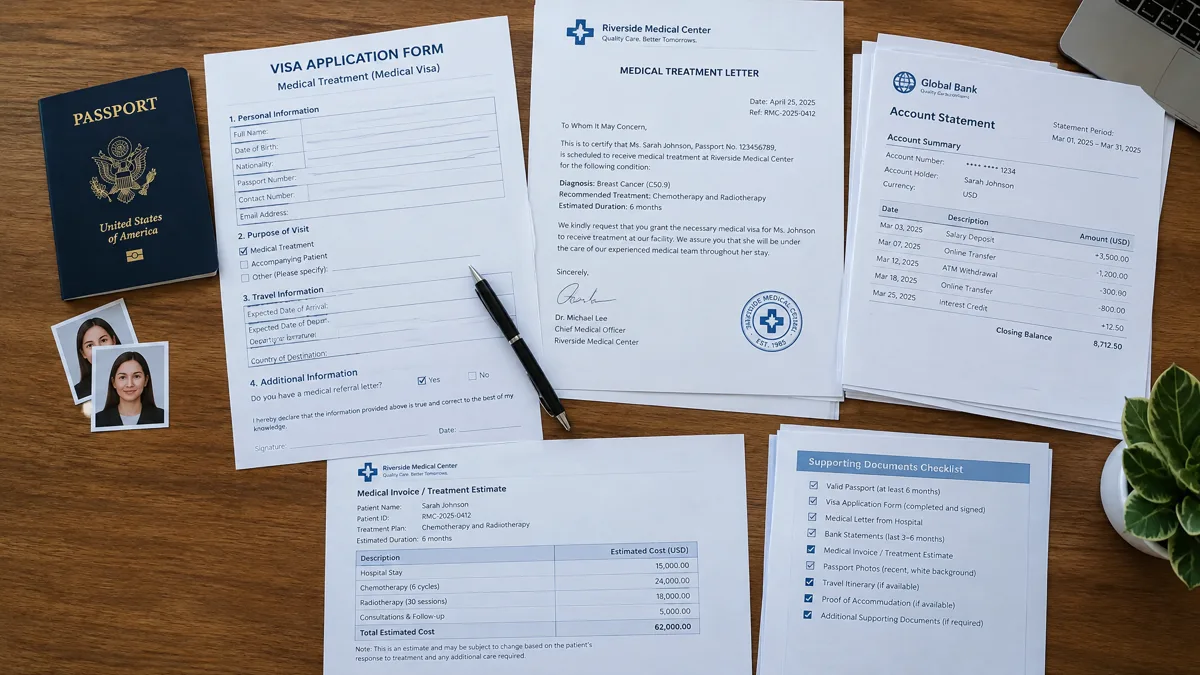
◆ Do I need a hospital invitation letter?
Usually yes, and it’s the document that most often causes delays.
- For an M visa — the hospital invitation letter is generally required
- For an L visa — strongly recommended, and often requested
- For S2 — some consulates ask for hospital documentation too
What the invitation letter must contain
An incomplete or vague letter is the number-one cause of delays. It should state:
- Your full name exactly as printed in your passport (including middle names)
- The hospital’s name and official stamp
- The department and, if assigned, the attending doctor
- The purpose of treatment
- Expected admission and discharge dates
- Hospital contact details
⚠️ Don’t reformat the hospital’s official letter yourself. Ask the hospital’s international department or medical affairs office to issue it in their standard form.
◆ What documents do I need in total?
| Document | Who needs it | Notes |
|---|---|---|
| Passport | Everyone | 6+ months validity |
| Visa application form + photo | Everyone | 48mm × 33mm, white background |
| Hospital invitation letter | M (required), L/S2 (often) | Must be stamped and specific |
| Appointment confirmation | All applicants | Confirms date, department, contact |
| Medical summary | All (recommended) | Diagnosis and history, translated |
| Proof of funds | L, M | 3–6 months of bank statements |
| Travel insurance | All (strongly advised) | Should cover medical evacuation |
| Accommodation booking | L, M | Hotel or hospital-arranged lodging |
| Return / onward ticket | All | Shows you’ll leave |
Put it together 4–6 weeks ahead if you can. Hospital letters take anywhere from a few working days to two weeks, depending on internal approvals.
◆ Can my family come with me?
Yes, but they apply separately, and their application is assessed on its own merits.
Accompanying family members usually need:
- Their own passport and visa application
- Proof of relationship to the patient
- The patient’s hospital documents (a copy)
- Sometimes a caregiving statement from the hospital
Some consulates limit how many carers can accompany a patient, or who counts as a carer. Confirm with the hospital that they can name your companion in their documents — not all will.
◆ What if my treatment runs longer than my visa?
This is the scenario to plan for, not to improvise.
Extensions are handled by the local Exit-Entry Administration (part of the Public Security Bureau) in the city you’re in. Apply at least 7–10 days before your stay expires.
| Current status | Typical extension | Notes |
|---|---|---|
| M visa | Up to 180 days | A hospital letter strengthens the application considerably |
| L visa | Up to 30 days (often once) | A second extension is possible with strong grounds |
| S2 visa | Up to 90 days (private affairs) | Assessed case by case |
| Visa-free entry | Generally not extendable | If treatment may exceed the visa-free window, get a visa before you fly |
You’ll need: your passport, the hospital’s letter explaining why you must stay longer, your accommodation registration, and a completed application form. Processing takes 7–15 working days.
The key discipline: don’t wait until the last few days. If a procedure is postponed, re-align your visa window before it becomes a problem.
◆ Can I just use visa-free entry?
Sometimes — but be careful.
If your nationality is covered by visa-free entry or the Hainan 30-day scheme, a short evaluation or minor consultation may be possible without a visa. Hainan’s scheme explicitly lists medical treatment as a permitted purpose.
But:
- Surgery, hospitalisation, cell therapy, or repeated visits generally call for a proper visa
- Visa-free stays are short and usually cannot be extended
- Entering as a “tourist” when your real purpose is surgery can create problems with hospital paperwork, accommodation registration and any later extension
If in doubt, get the visa. It costs less than a disrupted treatment plan.
◆ What can I bring into China?

- Prescription medication — bring a doctor’s note explaining it; keep it in original packaging
- Controlled / narcotic medication — declare it in advance; rules are strict
- Medical equipment (CPAP, hearing aids, etc.) — declare at customs
- Records — carry your diagnosis, imaging and reports, ideally translated
◆ Once you’re in the hospital system

The practical stuff that makes the treatment itself smoother:
- Ask for the international department — larger hospitals have one, with English-speaking staff. See our medical tourism overview.
- Get a written quote before treatment begins where possible.
- Keep every record — appointment letters, admission notes, payment receipts. You may need them for insurance, extension, or a follow-up trip.
- Register your accommodation within 24 hours of arrival.

◆ FAQ
Is there a dedicated medical visa? No. You use an ordinary category (most often M or S2) supported by hospital documents.
Do I need an invitation letter? For M, generally yes. For L and S2, often. Ask the hospital well in advance.
Can I extend my stay for treatment? Usually yes — M up to 180 days, L up to 30, S2 up to 90 — applied for locally at least 7–10 days before expiry.
What if I entered visa-free and need longer? Visa-free stays are generally not extendable. If treatment might run long, get a visa before you travel.
Can my spouse or parent come? Yes, via S1/S2, applying separately, with proof of relationship.
Do I need medical insurance? Not always required, but strongly advised — and it should cover medical evacuation.
Does a visa guarantee entry? No. Border officers may still check your purpose, documents and funds on arrival.
◆ The Bottom Line
◆ There is no shortcut category to memorise — there is a sequence to follow. Choose the category that matches your true purpose, get a proper hospital letter, apply early, and keep your stay legal if treatment runs long.
Do that, and the paperwork stops being the hard part. The hard part becomes what it should be: your health.
Related: Visa & Entry for China · Medical Tourism in China · Payment Setup