China Food Guide: How to Order & Get What You Actually Want
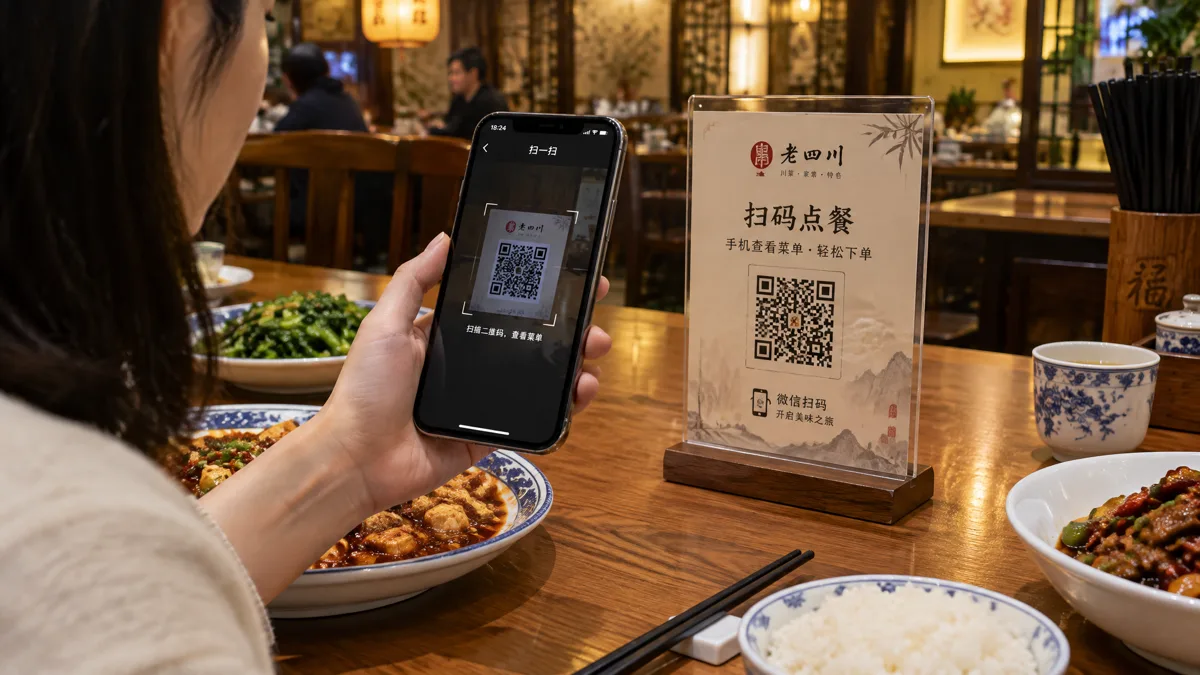
Chinese food is the best reason to come to China, and the menu is the biggest reason people give up and order “whatever that table is having.” I’ve done both. The turning point was learning maybe forty characters and six sentences.
This guide is the practical part only: how to order, how to read a menu, how to say what you can’t eat, how to talk about spice, and where the street-food line actually is. 🔥
The Ordering Flow: It Starts With a QR Code
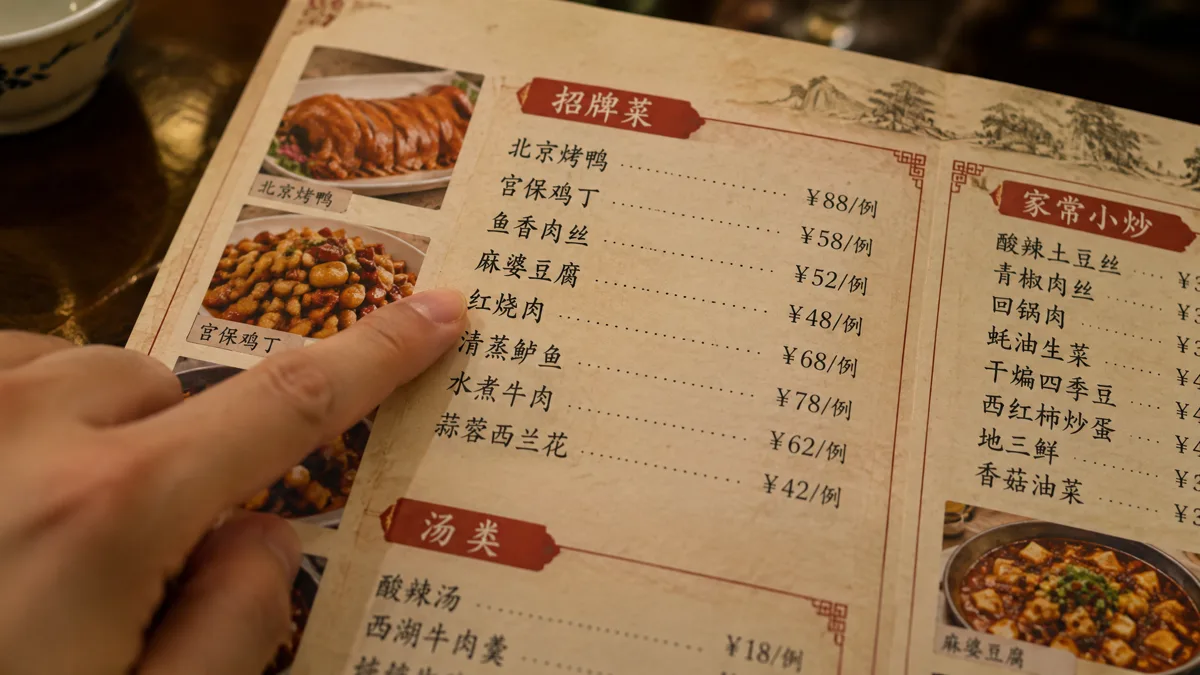
In most casual restaurants — noodle shops, hotpot, barbecue, chains — there is no waiter taking your order. There’s a QR code stuck to the table.
The standard flow:
- Scan the QR code with WeChat or Alipay
- A mini-program opens with the menu
- Tap dishes to add them to the cart
- Hit 下单 (xiàdān — place order)
- Pay in the app, or at the counter when you leave
Where it breaks for foreigners:
| Problem | Workaround |
|---|---|
| Mini-program asks for a Chinese phone number | Ask staff: 有纸质菜单吗? (paper menu?) |
| Interface is Chinese-only | Use your phone’s screen translation, or point at photos |
| Payment fails | Pay at the counter: 在哪里付款? |
| You can’t log in to WeChat | Ask the waiter to order for you — pointing at a photo works |
💡 The most useful sentence in China: “这个” (zhège — “this one”), said while pointing. It has never failed me.
Reading a Menu: Three Layers
Chinese dish names are built from a formula: cooking method + main ingredient + flavour. Learn the parts, and most of a menu becomes guessable.
Layer 1 — Cooking method
| Character | Pinyin | Means |
|---|---|---|
| 炒 | chǎo | stir-fried |
| 炸 | zhá | deep-fried |
| 蒸 | zhēng | steamed |
| 煮 | zhǔ | boiled |
| 烤 | kǎo | roasted / grilled |
| 红烧 | hóngshāo | braised in soy sauce |
| 凉拌 | liángbàn | cold tossed |
| 汤 | tāng | soup |
| 干锅 | gānguō | dry pot |
| 水煮 | shuǐzhǔ | ⚠️ literally “water-boiled” — but it means drowning in chili oil, very spicy |
Layer 2 — The animal
| Character | Pinyin | Means |
|---|---|---|
| 猪 | zhū | pork |
| 牛 | niú | beef |
| 羊 | yáng | lamb / mutton |
| 鸡 | jī | chicken |
| 鸭 | yā | duck |
| 鱼 | yú | fish |
| 虾 | xiā | shrimp |
| 蟹 | xiè | crab |
| 肉 | ròu | meat (usually pork if unspecified) |
Layer 3 — The tricky bits
| Dish | Literal meaning | What it actually is |
|---|---|---|
| 鱼香肉丝 | ”fish-fragrant shredded pork” | No fish. A sweet-sour-spicy flavour; contains pork |
| 蚂蚁上树 | ”ants climbing a tree” | Glass noodles with minced pork |
| 夫妻肺片 | ”couple’s lung slices” | Beef offal in chili oil — no lung |
| 毛肚 | ”hairy tripe” | Beef tripe (hotpot staple) |
| 肥肠 | ”fat intestine” | Pork intestine |
| 脑花 | ”brain flower” | Pork brain (hotpot) |
Offal is everywhere in Chinese cuisine — tripe, intestine, liver, blood curd. If that’s not your thing, the ingredient list above is your filter.
Saying What You Can’t Eat
This is the part worth memorising. Screenshot these.
Vegetarian
| English | Chinese | Pinyin |
|---|---|---|
| I’m vegetarian | 我吃素 | wǒ chī sù |
| No meat | 不要肉 | búyào ròu |
| No pork | 不要猪肉 | búyào zhūròu |
| No beef | 不要牛肉 | búyào niúròu |
| No seafood | 不要海鲜 | búyào hǎixiān |
| Is this vegetarian? | 这是素的吗? | zhè shì sù de ma? |
⚠️ Hidden meat you must ask about: oyster sauce (蚝油 háoyóu), chicken essence (鸡精 jījīng), lard (猪油 zhūyóu), and broth (高汤 gāotāng). Say: 不要放蚝油、鸡精、猪油 (búyào fàng háoyóu, jījīng, zhūyóu).
Halal
| English | Chinese | Pinyin |
|---|---|---|
| Halal | 清真 | qīngzhēn |
| Is this halal? | 这是清真的吗? | zhè shì qīngzhēn de ma? |
| Is there a halal restaurant nearby? | 附近有清真餐厅吗? | fùjìn yǒu qīngzhēn cāntīng ma? |
💡 Practically: Lanzhou beef noodle shops (兰州拉面) are almost always halal, and Xi’an’s Muslim Quarter is built around halal food. Those two are your safest bets.
Allergies
| English | Chinese | Pinyin |
|---|---|---|
| I’m allergic to peanuts | 我对花生过敏 | wǒ duì huāshēng guòmǐn |
| I’m allergic to nuts | 我对坚果过敏 | wǒ duì jiānguǒ guòmǐn |
| I’m allergic to seafood | 我对海鲜过敏 | wǒ duì hǎixiān guòmǐn |
| I’m allergic to eggs | 我对鸡蛋过敏 | wǒ duì jīdàn guòmǐn |
| I’m allergic to dairy | 我对牛奶过敏 | wǒ duì niúnǎi guòmǐn |
| What’s in this? | 这个里面有什么? | zhège lǐmiàn yǒu shénme? |
🚨 For a severe allergy: discuss it with your own doctor before you travel, and carry whatever they advise. If a reaction happens, call 120 (ambulance) or 110 (police). I’m not giving medical advice here — just the numbers and the sentence.
Talking About Spice
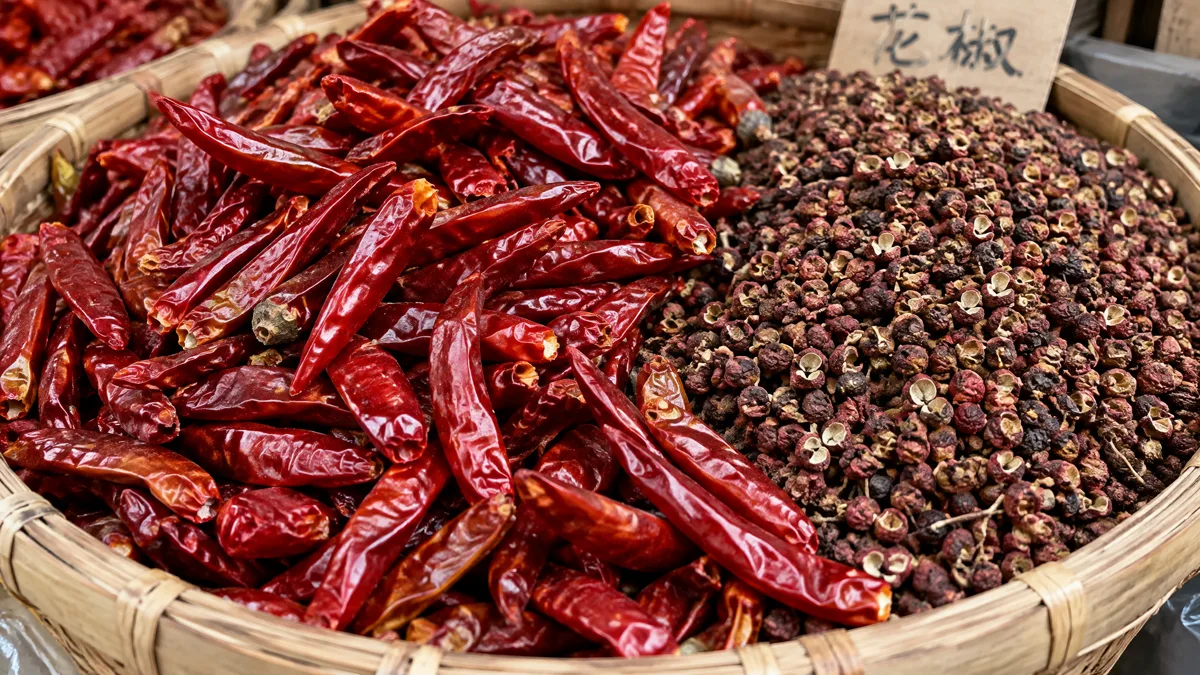
Spice is regional. Sichuan, Hunan and Guizhou cook hot by default. Guangdong, Jiangsu, Zhejiang and Fujian are mild. Ordering “not spicy” in Chengdu takes real insistence.
| English | Chinese | Pinyin |
|---|---|---|
| Not spicy | 不要辣 | búyào là |
| Mildly spicy | 微辣 | wēilà |
| Medium | 中辣 | zhōnglà |
| Extra spicy | 特辣 | tèlà |
| I don’t eat spicy food | 我不吃辣 | wǒ bù chī là |
| No chili | 不要放辣椒 | búyào fàng làjiāo |
| Chili on the side | 辣椒另放 | làjiāo lìng fàng |
💡 The reliable move: order 不辣 (búyào là) and ask for chili on the side (辣椒另放). That way you control it. And remember — 麻 (má) is the numbing Sichuan peppercorn sensation, separate from 辣 (là) heat.
What to Order: A Short Starter List
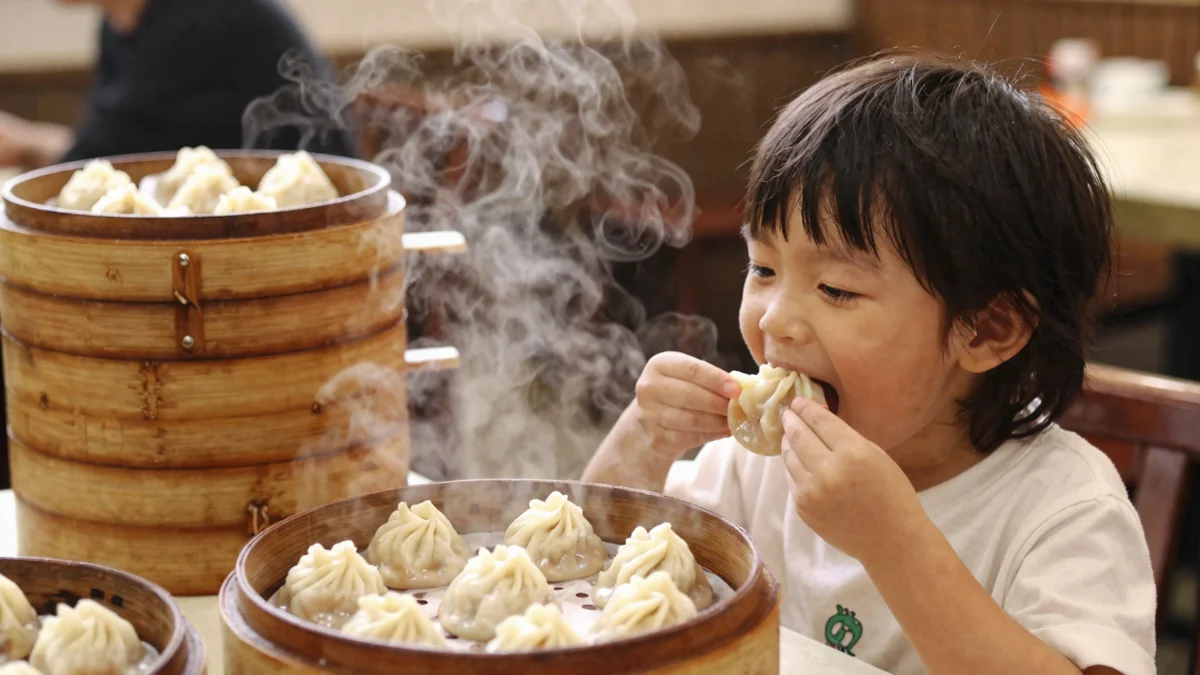
If you freeze at the menu, order these. They’re safe, iconic, and almost universally liked.
| Dish | Chinese | What it is |
|---|---|---|
| Kung pao chicken | 宫保鸡丁 | Peanuts, chili, chicken — mildly spicy |
| Mapo tofu | 麻婆豆腐 | Silken tofu in chili-bean sauce — spicy |
| Twice-cooked pork | 回锅肉 | Pork belly, leek, chili bean paste |
| Xiaolongbao | 小笼包 | Soup dumplings — bite, sip, then eat |
| Hand-pulled noodles | 拉面 | Lanzhou style, beef broth |
| Biangbiang noodles | 裤带面 / biángbiáng面 | Wide hand-pulled noodles, Xi’an |
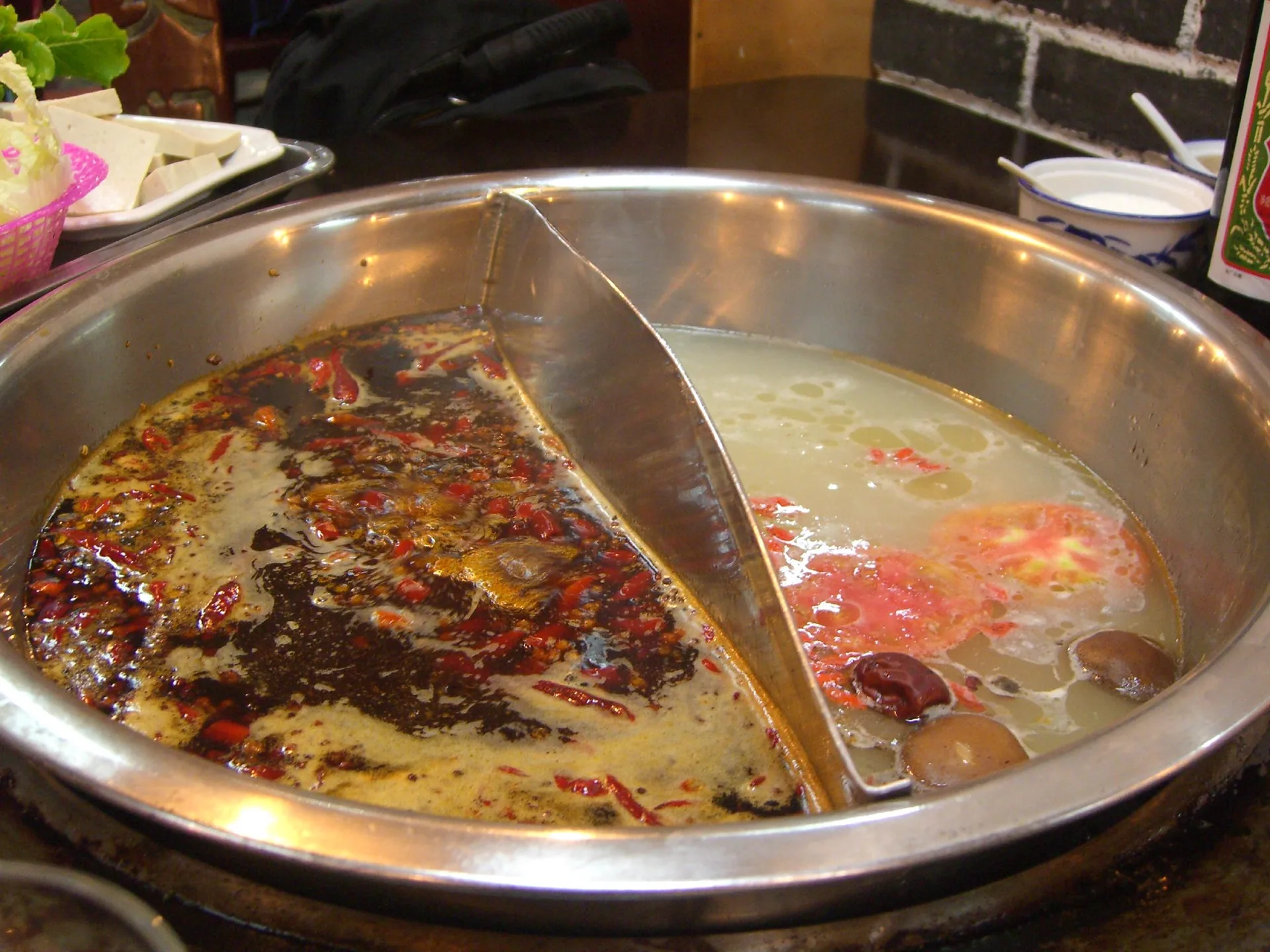
| Hotpot | 火锅 | You cook at the table — pick your broth |
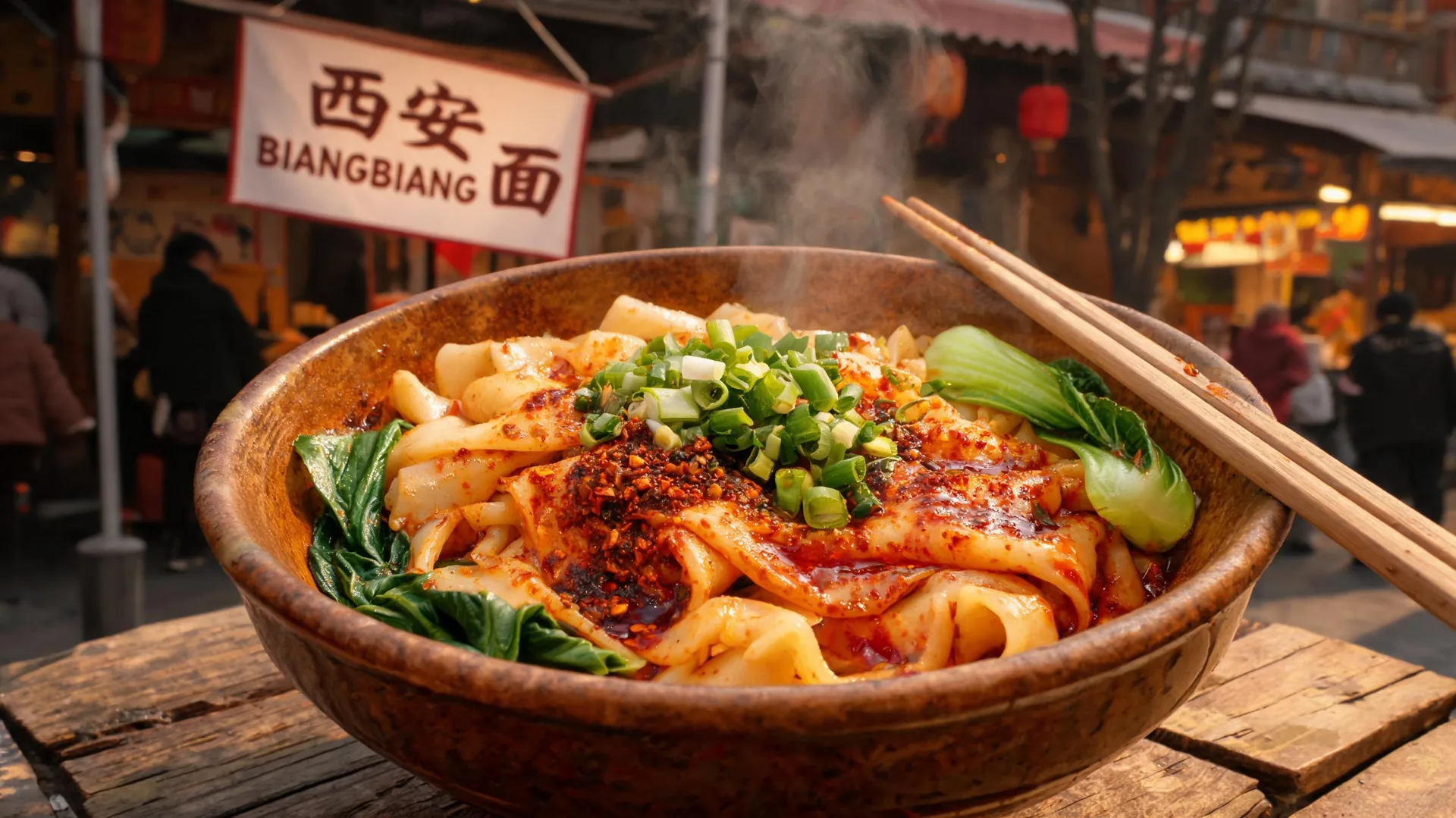
🌶️ Hotpot tip: choose a 鸳鸯锅 (yuānyāng guō) — a split pot with mild broth on one side and spicy on the other. Best decision a group can make.
Street Food: Where the Line Is
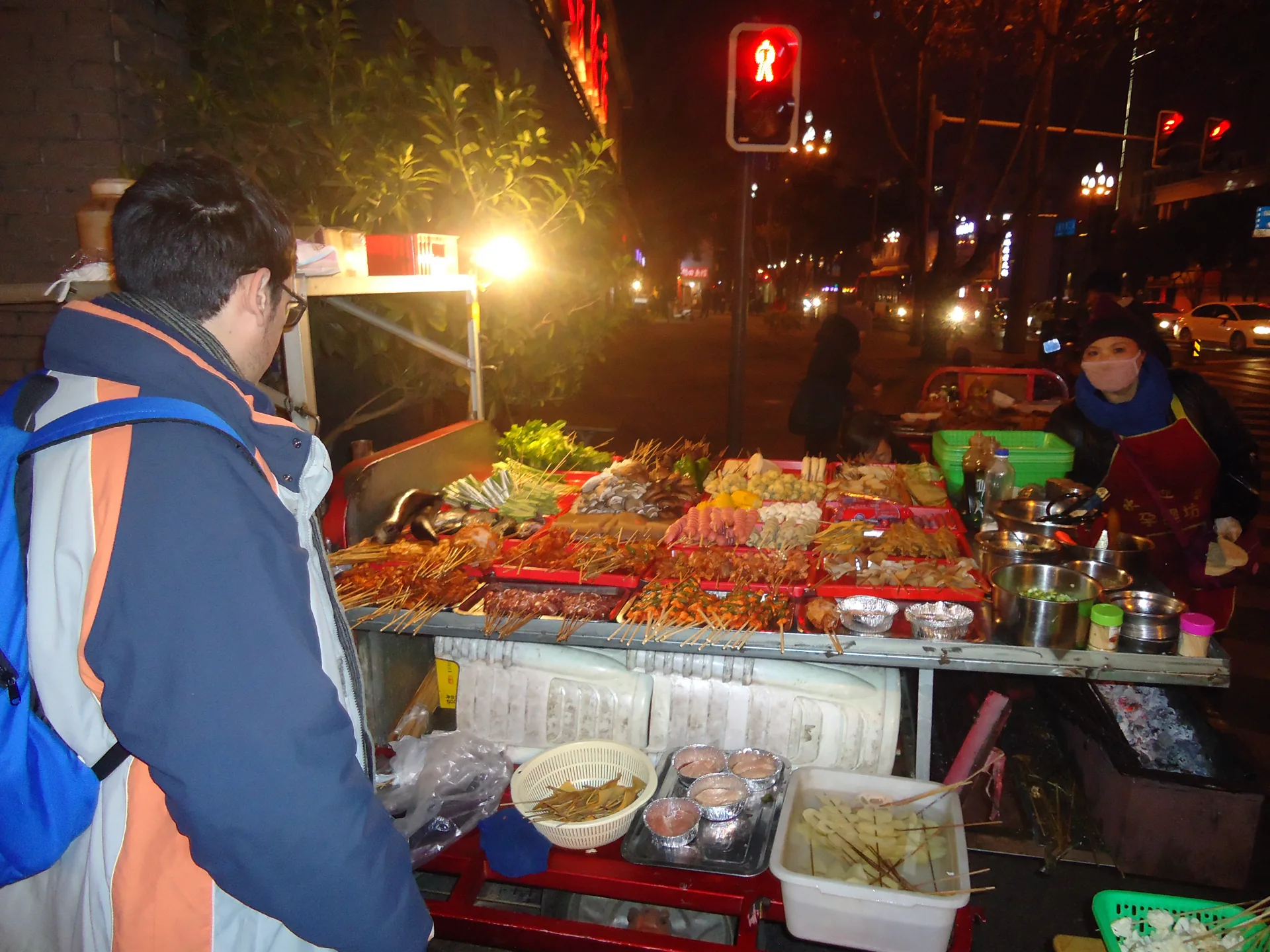
Street food in China is one of the great pleasures of travelling here. It’s also where people get careless. The line isn’t “don’t eat street food” — it’s “eat at stalls that are actively cooking.”
Green flags:
- A long queue of locals — high turnover means fresh stock
- Food cooked in front of you, hot off the grill or out of the wok
- Busy, clean stall with visible prep area
- Bottled or boiled water, sealed drinks
Red flags:
- Pre-cut fruit sitting out uncovered in the heat
- Cold dishes (凉菜) at room temperature for hours
- Meat skewers sitting raw on the counter with no heat nearby
- Ice in drinks from an unsealed source
- A stall with no customers at peak dinner time
💡 Practical habits: peel your own fruit, drink sealed bottled water, eat where the locals queue, and go early in the evening when the turnover is highest.
Delivery Apps: Meituan & Ele.me
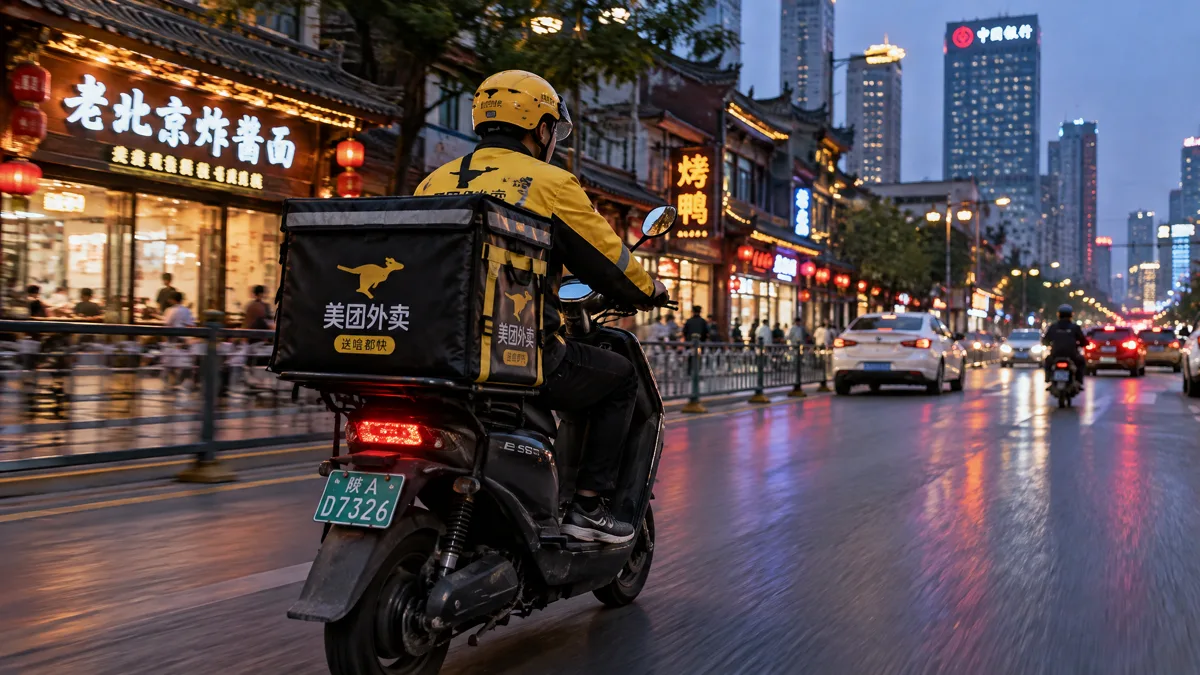
China’s delivery ecosystem is genuinely excellent — and genuinely hard for foreigners to join.
| App | Chinese | Reality for visitors |
|---|---|---|
| Meituan | 美团 | Biggest. Registration usually needs a Chinese phone number |
| Ele.me | 饿了么 | Alibaba-backed, similar requirements |
| Hotel front desk | — | The reliable workaround |
The blockers, honestly stated:
- Phone number: both apps typically want a mainland number for registration and real-name verification
- Payment: foreign cards are often not accepted directly. An Alipay/WeChat Pay account bound to a foreign card works in some cases — test it before you rely on it
- Address: you need your address in Chinese characters, ideally with building and room number
- Language: the interface is Chinese-first
What actually works:
- Ask your hotel front desk to order for you — the single most reliable option
- Use Alipay’s built-in food delivery if your account is verified
- Pick up instead (自取) from a nearby restaurant — skip the app entirely
- For chains, many have their own WeChat mini-programs with simpler flows
💡 Set up Alipay and WeChat Pay before you fly. Both apps are far more useful with a working payment method attached. See our payment guide.
Quick Phrase Card
Screenshot this.
不要辣          búyào là            not spicy
微辣            wēilà               mild
我不吃辣        wǒ bù chī là        I don't eat spicy
我吃素          wǒ chī sù           I'm vegetarian
不要肉          búyào ròu          no meat
这是清真的吗    zhè shì qīngzhēn de ma?   is this halal?
我对___过敏      wǒ duì ___ guòmǐn  I'm allergic to ___
有英文菜单吗    yǒu yīngwén càidān ma?    English menu?
有纸质菜单吗    yǒu zhǐzhì càidān ma?     paper menu?
这个            zhège               this one
买单 / 结账     mǎidān / jiézhàng  the bill
打包            dǎbāo               takeaway
The Bottom Line
You don’t need fluent Chinese to eat brilliantly here. You need six sentences, a phone with a translation app, and the willingness to point at what the next table ordered.
Learn 不要辣, 我吃素, and 我对___过敏. Scan the code, hit 下单, and if it fights you, ask for the paper menu. The food is worth the friction.
Related: Payment Setup · Essential Apps · Culture & Daily Life · Health & Emergency