🐪 Silk Road Gateway
: Xi’an → Dunhuang → Zhangye
📅 July 2026 | 📍 History buffs & landscape photographers | ⏱️ 7 Days / 6 Nights
The Silk Road isn’t one road — it’s a network of trade routes that connected China to the Mediterranean for over 1,500 years. This trip covers the most dramatic section: from the imperial capital of Xi’an through the Hexi Corridor to the painted mountains of Zhangye.
I’ve always been fascinated by the idea that camels once carried silk, spices, and ideas across these same deserts. Standing in the Mogao Caves, looking at 1,600-year-old Buddhist paintings, you feel the weight of that history.
🎯 Before You Go
Must-Have Apps
- Alipay / WeChat Pay — Essential
- 12306 — Train booking
- Amap (高德地图) — Best for navigation in western China
- VPN — Standard
- Ctrip/Trip.com — English-friendly booking for remote areas
Best Season to Visit
- May–October — The only practical window. Winter temperatures drop to -15°C
- Best months: September–October — warm days, cool nights, golden light for photography
- Avoid: July–August — Extreme heat in Dunhuang (40°C+), though Zhangye stays cooler
Budget Estimate (per person)
| Category | Estimated Cost |
|---|---|
| Transport (trains + flights) | ¥2,000 / ~$276 |
| Accommodation (6 nights) | ¥1,800 / ~$248 |
| Food (7 days) | ¥1,050 / ~$145 |
| Attractions | ¥700 / ~$96 |
| Total | ¥5,550 / ~$765 |
What to Pack
- Sunscreen SPF 50+ (the UV is brutal at altitude)
- Lip balm with SPF
- Reusable water bottle (desert air is extremely dry)
- Warm layer for desert nights (can drop to 10°C even in summer)
- Comfortable walking shoes for sand
📅 Itinerary
Day 1: Xi’an — The Starting Point of the Silk Road
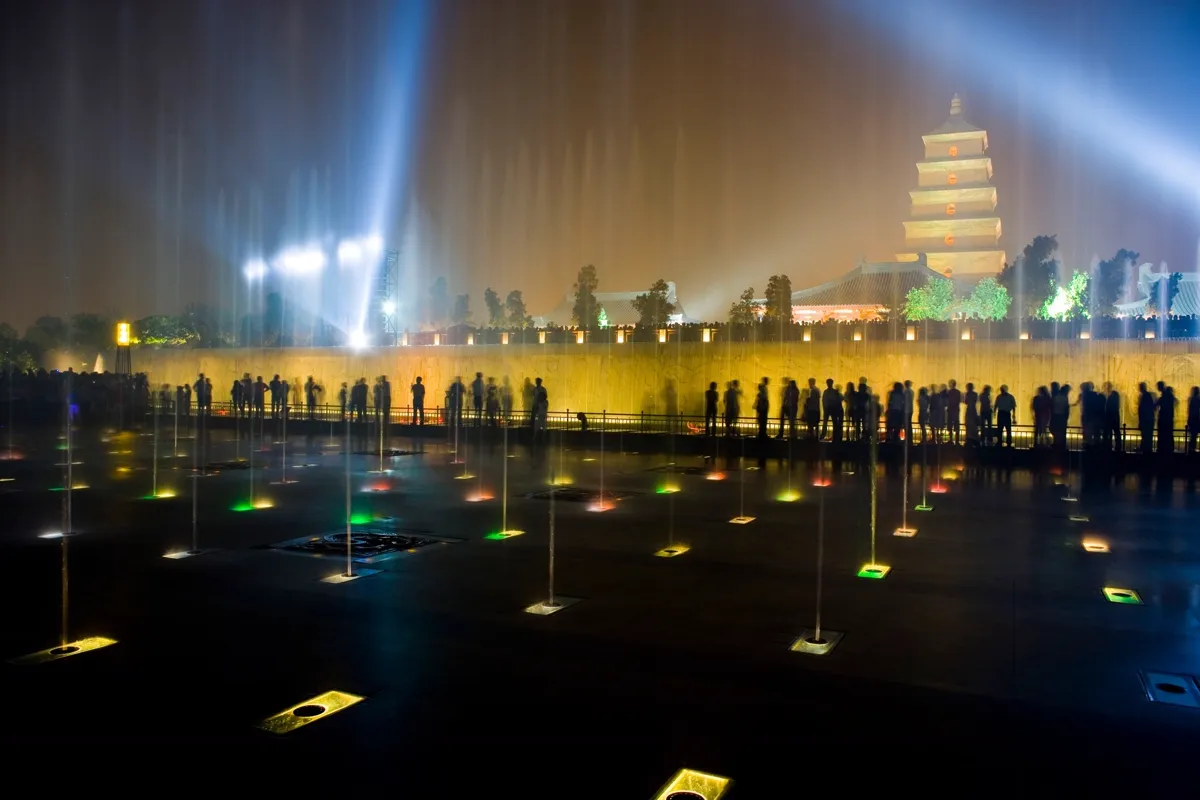
Theme: Where it all began
Shaanxi History Museum
Start here to understand the context. This museum has the best collection of Silk Road artifacts in China — Han Dynasty jade, Tang Dynasty gold, and Roman glass found in Xi’an tombs. The murals from Tang tombs show foreign merchants, camels, and goods flowing along the trade routes.
- 📍 Address: 91 Xiaozhai East Road, Yanta District
- ⏰ 9:00 AM – 5:30 PM (closed Mondays)
- 💰 Free (passport required)
Big Wild Goose Pagoda
Built in 652 AD to house Buddhist scriptures brought from India by the monk Xuanzang — the same monk who inspired Journey to the West. The pagoda was the largest Buddhist library in Asia for centuries.
- 📍 Address: Yanta District, 2 Fucun Road
- 💰 ¥50 / ~$7 (interior), free exterior
Muslim Quarter (回民街)
Xi’an has one of the oldest Muslim communities in China, dating back to the Tang Dynasty. The Muslim Quarter is a maze of food streets and mosques. The food here is different from regular Xi’an cuisine — more lamb, more bread, more Central Asian influence.
Must try: Lamb skewers (¥5–10), roujiamo (¥8–12), sour soup (¥10–15)
🛏️ Stay near: Bell Tower — central, easy access to train station
Day 2: Xi’an City Wall & Travel Day
Theme: Last morning in Xi’an, then into the desert
Xi’an City Wall
Ride the full 13.7km circuit. At 8 AM, you’ll have the wall mostly to yourself. The views of the city stretching to the mountains are beautiful.
- ⏰ 8:00 AM – 10:00 PM
- 💰 ¥54 / ~$7.50, bike rental ¥45–90 / ~$6–12
Afternoon: Xi’an → Dunhuang
Option 1: Fly (recommended)
- Xi’an Xianyang → Dunhuang Airport
- Duration: 2.5 hours
- Price: ¥800–1500 / ~$110–207 one way
- This saves you an entire day compared to the train
Option 2: Train (adventure)
- Xi’an → Lanzhou → Dunhuang
- Duration: 12–16 hours (including transfer)
- Price: ¥400–600 / ~$55–83
- The scenery through the Hexi Corridor is spectacular
I flew. The desert landscape from the air — endless dunes, oasis towns, the Great Wall snaking along mountain ridges — is worth the ticket price alone.
Arrive Dunhuang evening. Check in and rest. You’ll need energy for tomorrow.
🛏️ Stay near: Mingsha Mountain area — close to the main attractions
Day 3: Dunhuang — Mingsha Mountain & Crescent Moon Spring
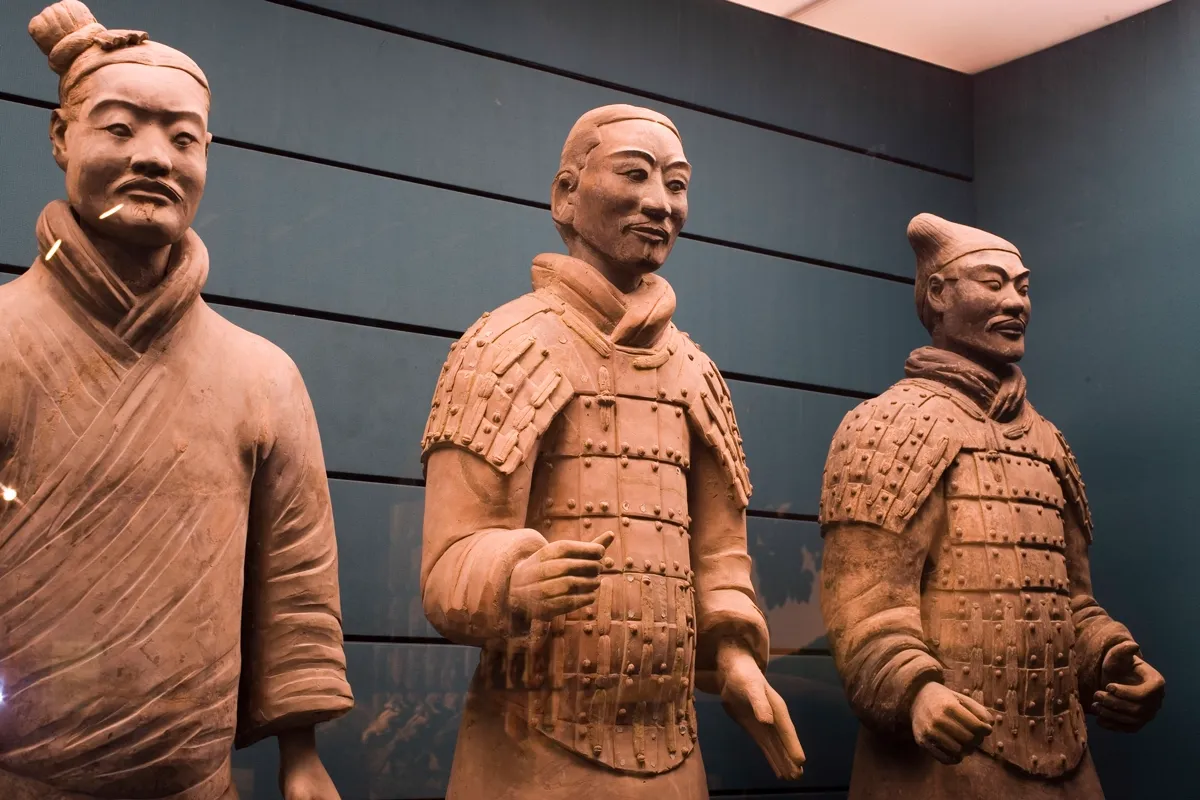
Theme: Desert magic
Mingsha Mountain (鸣沙山)
A 25km-long, 170m-high sand dune. When the wind blows (or when you run down the slope), the sand “sings” — a phenomenon caused by friction between sand grains. The sound is eerie and beautiful.
Rent a camel ride (¥100 / ~$14) or climb the dunes on foot (30–40 minutes to the top). The view from the summit — endless desert in every direction, with the oasis of Crescent Moon Spring glowing turquoise at your feet — is one of the most dramatic landscapes I’ve ever seen.
- 📍 Address: Mingsha Mountain, Dunhuang City
- ⏰ 5:00 AM – 8:00 PM (summer hours vary)
- 💰 ¥110 / ~$15 (includes entry to Crescent Moon Spring)
Crescent Moon Spring (月牙泉)
A crescent-shaped lake in the middle of the desert, surrounded by sand dunes. It’s been there for over 2,000 years, fed by underground springs. The physics of how a lake survives in the desert without being buried by sand is still debated by geologists.
- Included in Mingsha Mountain ticket
- 🕐 1–2 hours
Evening: Sunset on the Dunes
Stay for sunset. The sand turns golden, then pink, then deep purple as the sun drops. The desert temperature drops fast — bring a warm layer. Watching the stars come out over the dunes is unforgettable.
Tip: Wear pants and closed shoes. Sand gets everywhere. Bring a bandana or buff for your face during windy moments.
Day 4: Dunhuang — Mogao Caves
Theme: The greatest Buddhist art treasure on Earth
Mogao Caves (莫高窟)
This is why you came. 492 cave temples carved into a cliff face over 1,000 years (4th–14th century), containing the largest collection of Buddhist art in the world. 2,415 painted sculptures and 45,000 square meters of murals.
The caves are mind-blowing. Colors that haven’t faded in 1,600 years, scenes depicting Buddhist stories with incredible detail, and the famous 35.5-meter-tall Maitreya Buddha in Cave 96.
- 📍 Address: 25 Mogao Road, Dunhuang City, 25km southeast of town
- ⏰ 8:00 AM – 6:00 PM
- 💰 ¥238 / ~$33 (peak season, includes film screening + guided tour of 8 caves + shuttle bus)
- ⚠️ Book online 30 days in advance at www.mgk.org.cn — daily limit is strict
How it works: You watch a 40-minute film about the caves’ history, then take a shuttle to the site. A guide leads groups of 25 through 8 selected caves. You can’t wander freely — this protects the art but means you need to book the time slot that works for you.
My advice: Spend the extra ¥100 on the “A” ticket (extended tour, 8 caves) rather than the “B” ticket (4 caves). The extra caves include the most impressive murals.
Dunhuang Night Market
Evening stroll through the small night market. Try Dunhuang apricot skin water (杏皮水) — a sweet-sour drink made from dried apricots. ¥10. Refreshing after a desert day.
Day 5: Dunhuang → Zhangye — Into the Rainbow Mountains
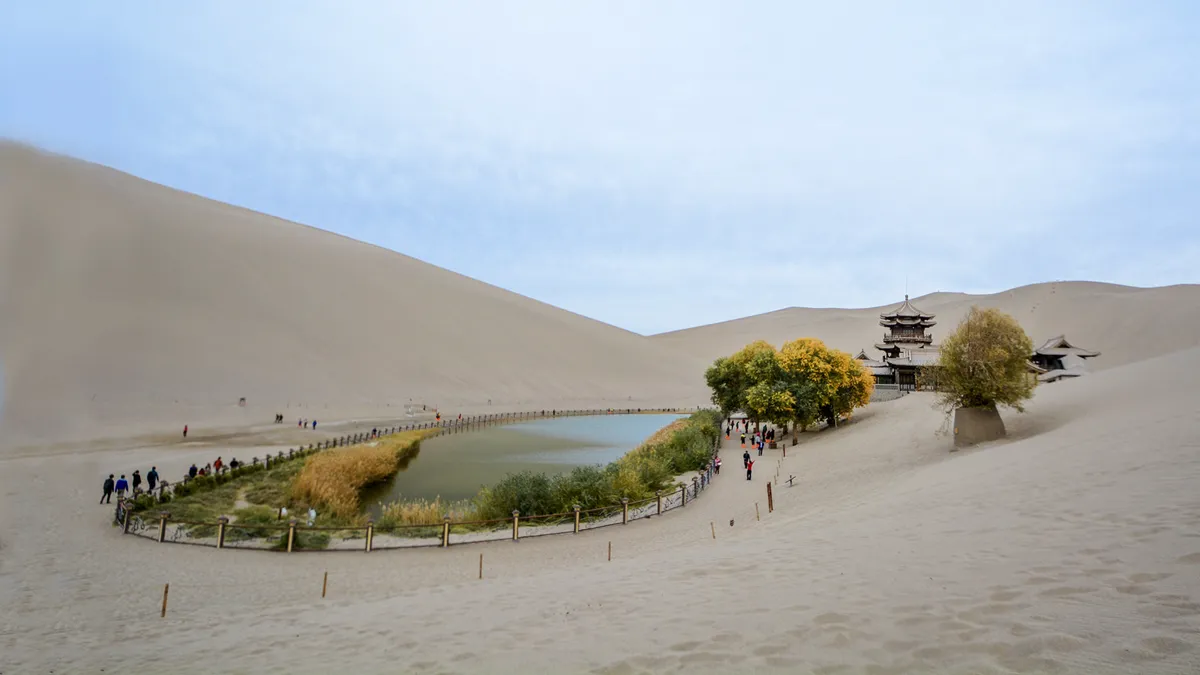
Theme: From desert to color
Morning: Travel to Zhangye
Option 1: Train
- Dunhuang → Zhangye West
- Duration: ~5 hours
- Price: ¥200–350 / ~$28–48
- Scenic route through the Hexi Corridor
Option 2: Drive/taxi
- Duration: ~5 hours
- Price: ¥800–1200 / ~$110–165 (private car)
- More flexible, can stop at Jiayuguan Pass
Jiayuguan Pass (嘉峪关) — if driving
The westernmost end of the Ming Dynasty Great Wall. Called the “Greatest Pass Under Heaven.” Standing on the ramparts, you’re looking out at the Gobi Desert — this was the edge of Chinese civilization. Everything beyond was unknown territory.
- 📍 Jiayuguan City, Gansu Province
- 💰 ¥110 / ~$15 (includes Overhanging Great Wall + Underground Great Wall)
- 🕐 1.5–2 hours
Arrive in Zhangye evening
Check in and rest. Tomorrow is the main event.
🛏️ Stay near: Zhangye city center — easy access to Danxia park
Day 6: Zhangye Danxia — The Rainbow Mountains
Theme: Nature’s most spectacular color palette
Zhangye National Geopark (张掖丹霞国家地质公园)
The Rainbow Mountains. Layers of sandstone and minerals that have been compressed and tilted over 24 million years, creating bands of red, orange, yellow, green, and blue across the landscape. It looks like a painting — but it’s real.
There are two viewing areas:
- Number 1 Viewing Platform — The classic viewpoint. Large, well-maintained. Best for sunrise/sunset
- Number 4 Viewing Platform — Less crowded, more dramatic angles. The “Rainbow Slope” is here
- 📍 Address: 38km southeast of Zhangye City
- ⏰ 5:30 AM – 7:00 PM (summer hours)
- 💰 ¥75 / ~$10.40 (includes shuttle bus)
- 🕐 2–3 hours
Photography tips:
- Golden hour (sunrise/sunset) makes the colors pop the most
- Bring a polarizing filter to reduce glare
- Wide-angle lens for the sweeping landscapes
- The colors are most vivid after rain
My advice: Go for sunset. The light changes the colors every 10 minutes as the sun drops. It’s like watching the mountains breathe.
Evening: Zhangye Night Food
Zhangye is in Gansu, so the food is northern — lamb noodles, hand-pulled beef, and bingtanghulu (candied hawthorns). Try Zhangye roumo mian (肉沫面, minced meat noodles) at a local shop. ¥15–20 / ~$2–3.
Day 7: Zhangye — Last Morning & Departure
Theme: Wrap up the Silk Road
Rainbow Mountain Sunrise (Optional)
If you’re an early riser, go back to the Danxia park for sunrise. The colors are completely different in morning light — cooler tones, more dramatic shadows. Some photographers prefer it to sunset.
Zhangye Giant Buddha Temple (大佛寺)
Home to China’s largest indoor reclining Buddha — 34.5 meters long. The temple is often overlooked by tourists, but it’s beautiful and peaceful. The surrounding old town of Zhangye is worth a walk.
- 📍 Address: 322 South Street, Ganzhou District
- ⏰ 8:00 AM – 6:00 PM
- ¥41 / ~$5.70
Departure
- Fly from Zhangye — Flights to Xi’an (2 hours) or Lanzhou (1 hour)
- Train to Lanzhou — 3 hours, ¥150–200 / ~$21–28. From Lanzhou, fly anywhere in China
🍜 Food Recommendations
| City | Dish | Price | Where |
|---|---|---|---|
| Xi’an | Lamb Skewers | ¥5–10 / ~$0.70–1.40 | Muslim Quarter |
| Xi’an | Roujiamo (meat burger) | ¥8–12 / ~$1–2 | Muslim Quarter |
| Dunhuang | Donkey Meat Yellow Noodles | ¥15–25 / ~$2–3.50 | Night market stalls |
| Dunhuang | Apricot Skin Water | ¥10 / ~$1.40 | Any drink stand |
| Zhangye | Roumo Mian (minced meat noodles) | ¥15–20 / ~$2–3 | Local restaurants |
| Zhangye | Hand-pulled Beef Noodles | ¥20–30 / ~$3–4 | Gansu noodle shops |
💡 Practical Tips
- Book Mogao Caves EARLY — Tickets sell out weeks in advance during peak season. Book exactly 30 days before your visit date.
- Hydration is critical — The desert air is extremely dry. Drink 3–4 liters of water per day. Bring electrolyte packets.
- Sun protection — SPF 50+, sunglasses, hat, long sleeves. The UV in the desert is no joke.
- Layer up — Desert temperatures swing 20°C+ between day and night. Even in summer, bring a fleece.
- Cash for small vendors — Outside major cities, not every small shop accepts mobile payment.
- Flights over trains — For Dunhuang↔Zhangye, the train is scenic but slow. Flying saves precious time.
- Respect the caves — No flash photography, no touching the murals, no food inside. The oils from your hands can damage 1,600-year-old paint.