Wudang Mountain: Where Taoist Immortals Dance and Kungfu Masters Train
L5 深度纪实风 · P4 杂志式 · S1 旅行攻略型
Wudang Mountain rises from the misty forests of northwestern Hubei like a half-remembered dream. Seventy-two peaks coil around a sacred core where Taoist monks have chanted, cultivated, and fought for nearly two millennia. It is one of China’s four most important Taoist holy mountains, a UNESCO World Heritage Site since 1994, and the spiritual birthplace of Tai Chi. If you have ever watched a martial arts film where a barefoot master glides through cloud-covered temples at dawn, the odds are excellent that what you were watching was Wudang.
Walk its stone stairways on any given morning and you will encounter a teenager from São Paulo practicing sword forms beside a seventy-year-old monk who has lived on this mountain since the Cultural Revolution. You will smell incense curling through corridors built by an emperor six centuries ago. You will hear nothing but wind, your own breathing, and the distant clang of a bronze bell.
This guide distills the mountain’s essence — its history, its architecture, its martial soul — and hands you the practical knowledge you need to walk it yourself.
The Mountain That Empires Built
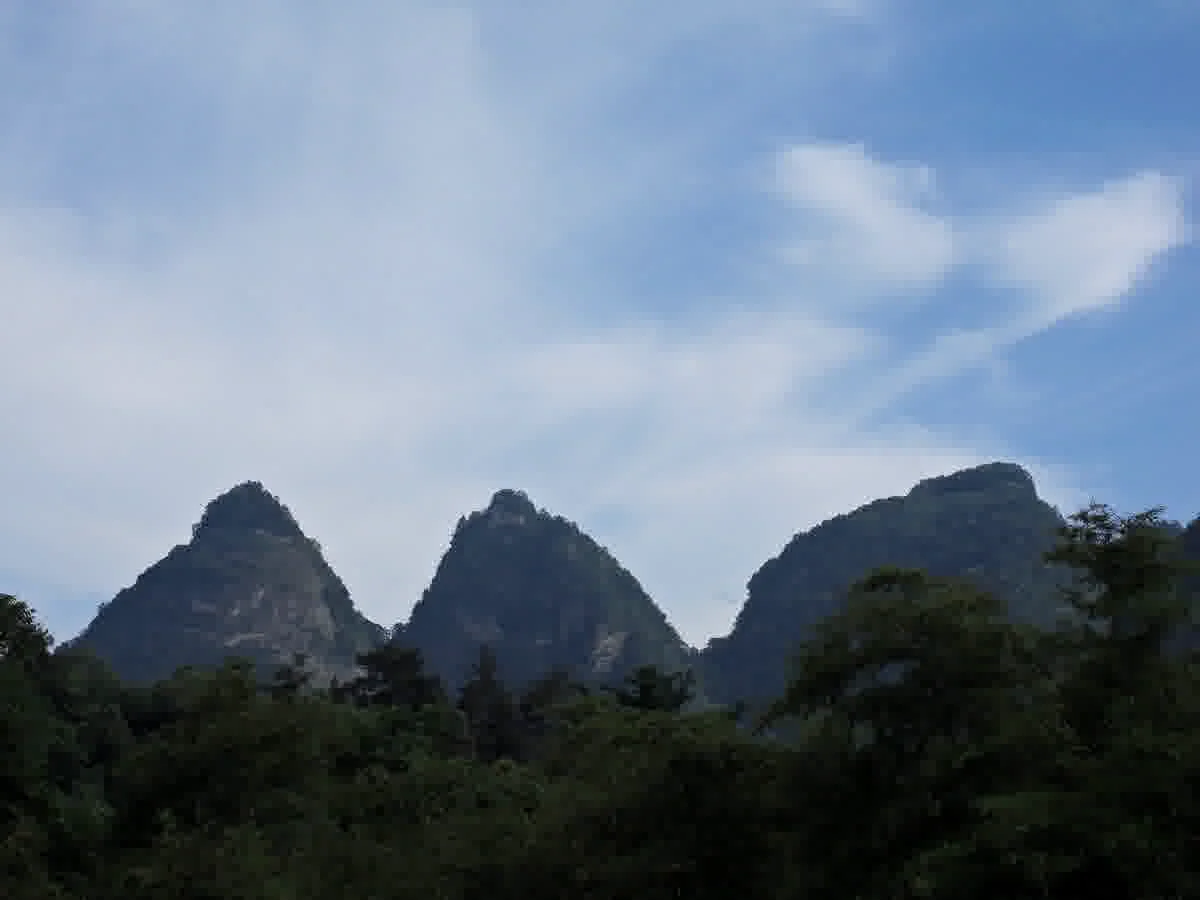
Taoist hermits first retreated to Wudang during the Eastern Han dynasty (25–220 CE), drawn by the mountain’s isolation and what they described as its “accumulated qi.” For centuries, these early practitioners lived in caves and thatched huts, cultivating alchemical elixirs and proto-martial exercises that would eventually evolve into what we now call Wudang martial arts.
The mountain’s transformation from remote retreat to sprawling sacred complex began in earnest during the Tang dynasty (618–907), when Emperor Taizong commissioned the first major temple. But the figure who truly shaped Wudang as we see it today was the Yongle Emperor of the Ming dynasty. In 1412, Zhu Di — the same ruler who relocated China’s capital to Beijing and built the Forbidden City — dispatched over 300,000 soldiers and laborers to Wudang. The construction lasted twelve years. The result was a palace complex of staggering ambition: nine temples, nine palaces, 36 monasteries, and 72 rock-cut shrines connected by a web of stone pathways threading through the mountain’s peaks.
The Yongle Emperor’s motives were political as much as spiritual. He needed legitimacy after seizing the throne from his nephew in a civil war. By declaring himself the earthly representative of Xuantian Shangdi — the Dark Warrior, a Taoist deity associated with Wudang — he wrapped his authority in divine cloth. The mountain became a mirror of the Forbidden City: both built by the same emperor, both oriented along a central axis, both designed to overwhelm.
◆ The Dark Warrior Connection
Xuantian Shangdi, the “Perfected Warrior of the Northern Sky,” is Wudang’s patron deity. He practiced ascetic self-discipline on this mountain for 42 years before achieving immortality. The Yongle Emperor claimed this deity as his personal protector — a claim that gave him divine justification for usurping the throne.
The mountain’s most famous resident, however, was not an emperor but a monk. Zhang Sanfeng, a semi-mythical Taoist master from the late Song or early Yuan dynasty, is credited with founding Wudang’s martial arts tradition. Legend holds that he observed a fight between a crane and a tortoise, and from the contrast between the crane’s fluid evasion and the tortoise’s rooted defense, conceived the principles of Tai Chi — softness overcoming hardness, yielding overcoming force. His legacy is everywhere on the mountain: carved into stone tablets, performed in temple courtyards, and taught in the martial arts schools that now draw students from every continent.
The Golden Hall: A Temple at the Roof of the World
The climax of any Wudang visit is the Golden Hall (金顶, Jīndǐng), perched at 1,612 meters on the summit of Tianzhu Peak — the mountain’s highest point. The structure itself is modest in footprint: a single bronze hall, roughly 5 meters wide and 4 meters deep. But what it lacks in size, it makes up for in sheer audacity of engineering.
Cast in 1416 during the Yongle Emperor’s building campaign, the entire hall — walls, roof, statues, incense burners, even the floor tiles — was forged from bronze and gilded with gold. It weighs approximately 20 tons. The casting was done in Beijing, then the completed sections were transported over 1,200 kilometers to Wudang and assembled on the summit. How 15th-century laborers maneuvered a 20-ton bronze building up a mountainside remains one of the more impressive feats of pre-industrial logistics.
Inside, a gilded statue of Xuantian Shangdi sits enthroned, flanked by attendants. The bronze walls are polished to a mirror finish that catches and multiplies the light of butter lamps, creating an interior glow that visitors consistently describe as otherworldly. Stand inside at dawn, when the first rays of sun slip through the doorway, and the room becomes a golden cavern of reflected fire.
The hall’s survival is partly owed to its material. Bronze does not burn, which is why the Golden Hall still looks essentially the same as it did in 1416, while most of the wooden temples on the mountain have been rebuilt multiple times. The roof ridges are fitted with bronze chains connected to copper rods driven into the rock — an early lightning protection system that has prevented fire strikes for over six centuries.
◆ Reaching the Golden Hall
The final ascent from Tianzhu Peak’s lower stations is a steep climb of roughly 1,000 stone steps. Most visitors take the Wudang Mountain cable car to the upper station, then climb the remaining 30–40 minutes on foot. Alternatively, the hardy can hike the full route from the Taihe Palace area — add about 2 hours. Arrive before 7:30 AM if you want to experience the summit without crowds. On clear mornings, the cloud sea below the peak is extraordinary.
Purple Cloud Palace: The Grandest Taoist Hall in China
Nanyan Palace clings to a cliff face so steep that looking down from its corridors triggers an involuntary step backward. Built during the fifth year of the Yongle Emperor’s reign (1407), Nanyan is the most dramatic of Wudang’s temple complexes — a series of red-walled buildings cantilevered over a void that drops hundreds of meters to the valley floor.
The complex is accessed via a narrow stone pathway carved into the cliff, flanked by ancient cypresses that grow at impossible angles. The architecture here has a precarious grandeur that the more grounded Purple Cloud Palace lacks. Buildings seem to grow from the rock itself, their wooden columns resting on stone brackets hammered into the cliff face. In several places, the temple’s balconies extend over the abyss with no visible support beneath them — an engineering sleight of hand achieved through interlocking wooden brackets (dougong) that distribute weight laterally into the rock.
Nanyan’s most famous feature is the “Dragon Head Incense” (龙头香), a narrow stone ridge extending about 3 meters out over the cliff edge, terminating in a small incense burner. For centuries, devout pilgrims would walk this ridge — with nothing below but a fatal drop — to burn incense at its tip. The practice was so dangerous that the Qing dynasty government eventually banned it, installing a stone barrier at the ridge’s base. Today, visitors can stand at the barrier and gaze out over the dizzying drop, imagining the faith that once drove people to cross it.
Nanyan Palace: Temples Suspended Over the Abyss
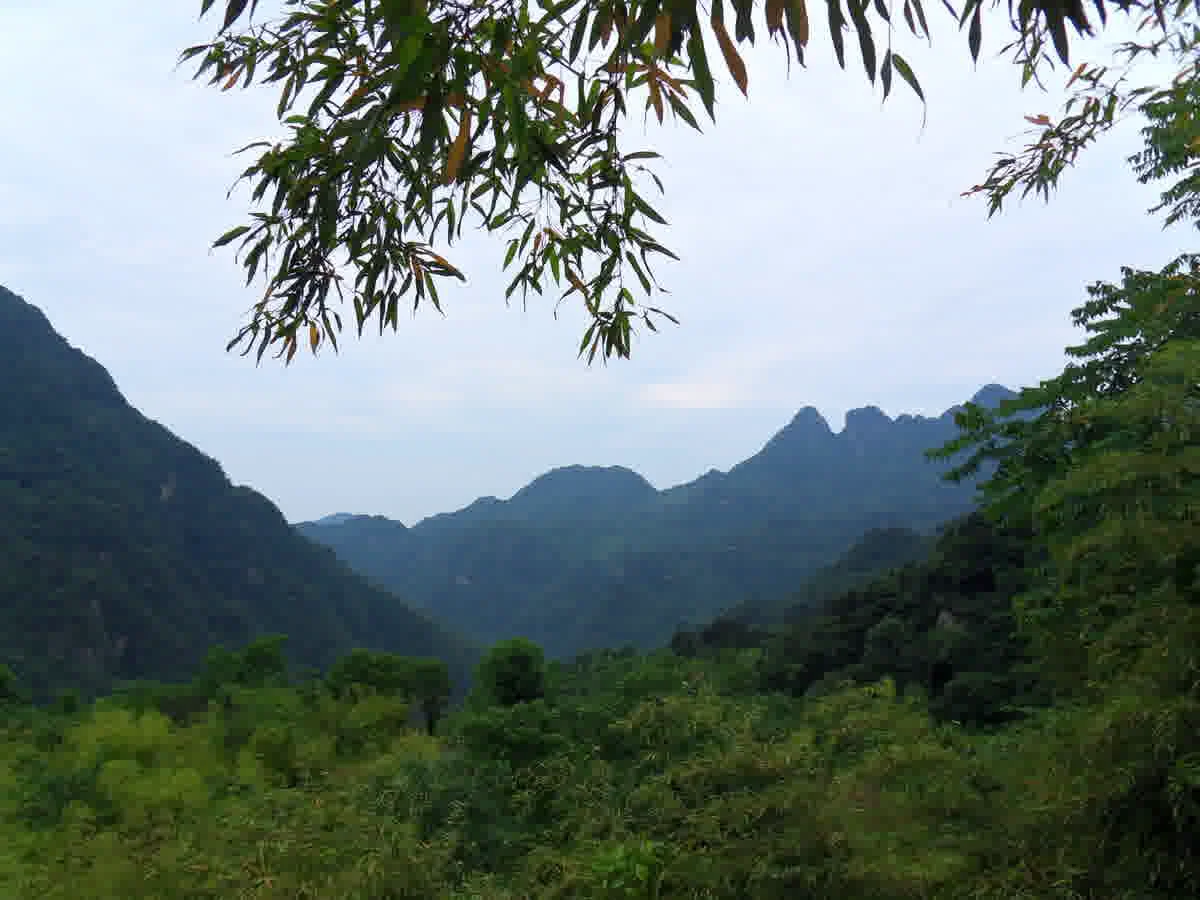
The cliffside temple clings to the rock face with a defiance that borders on defiance of gravity itself. Nanyan Palace (南岩宫, Nányán Gōng) occupies a ledge on the southern cliff of Wudang, and its architecture seems to have been conceived by someone who viewed the concept of flat ground as an unnecessary luxury.
The complex dates to the Yongle period but was damaged and rebuilt several times. What you see today is a mix of Ming and Qing restoration work, unified by the mountain’s distinctive red-walled aesthetic. The main hall sits at the edge of the cliff, its back wall pressed flush against the rock, its front facade facing out over a sea of green peaks that stretch to the horizon.
The Dragon Head Incense platform remains the emotional center of the complex. Stand at the stone barrier where the old pilgrims were turned back, lean forward carefully, and you will see the carved dragon head jutting from the cliff like the prow of a stone ship, the incense burner perched at its snout, and nothing — absolutely nothing — beneath it. It is one of the most viscerally thrilling sights on the mountain.
◆ A Note on Courage
Even after the ban, some pilgrims still try to reach the Dragon Head. In recent years, the site has been fitted with additional safety barriers and signage. Do not attempt to cross. The view from the barrier is spectacular enough, and the mountain has collected enough lives already.
Taihe Palace: Red Walls and Prayer Flags Near the Summit
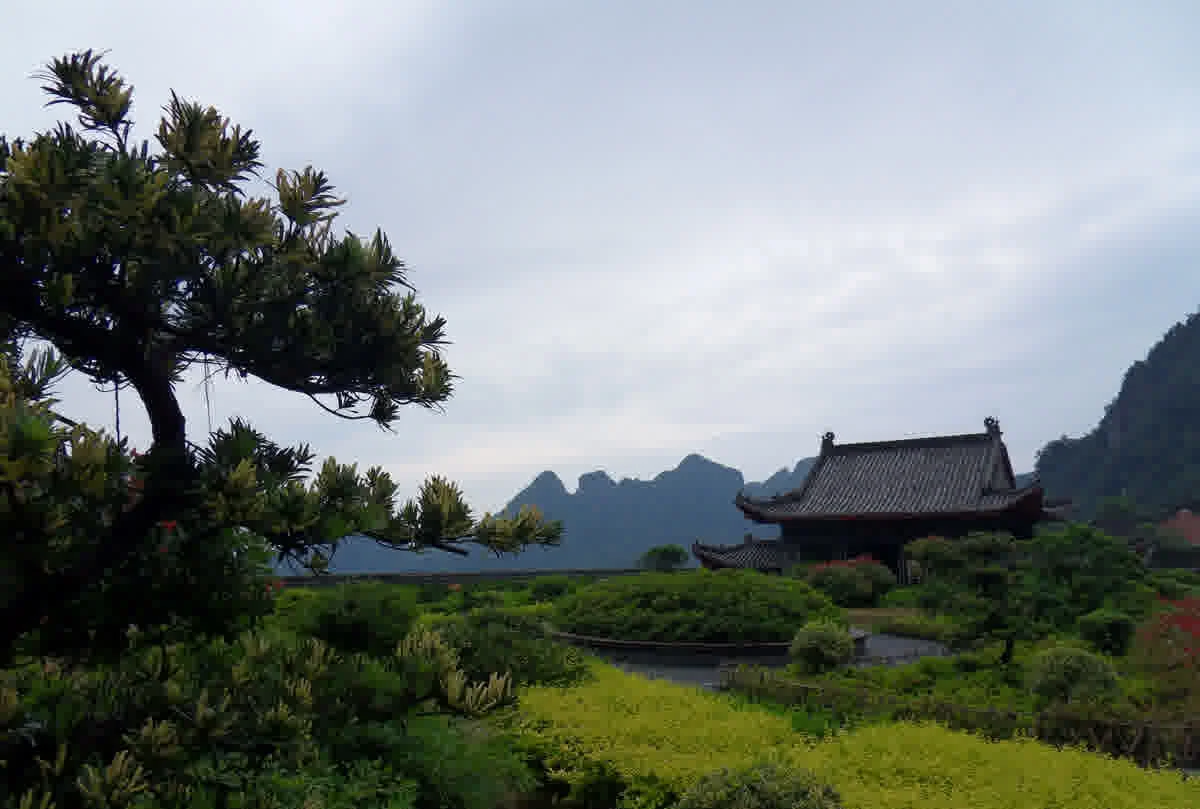
Taihe Palace (太和宫) occupies a broad plateau just below Tianzhu Peak, making it the natural staging ground for the final push to the Golden Hall. The palace’s signature visual is its long red walls — walls that seem to glow at sunset, turning the surrounding stone courtyards into something out of a classical Chinese painting.
Originally built during the Yongle period as the emperor’s personal retreat, it now functions as both a working temple and a way station for pilgrims. The main hall houses a statue of Xuantian Shangdi in his warrior aspect — armored, sword-bearing, standing on the heads of a snake and a tortoise.
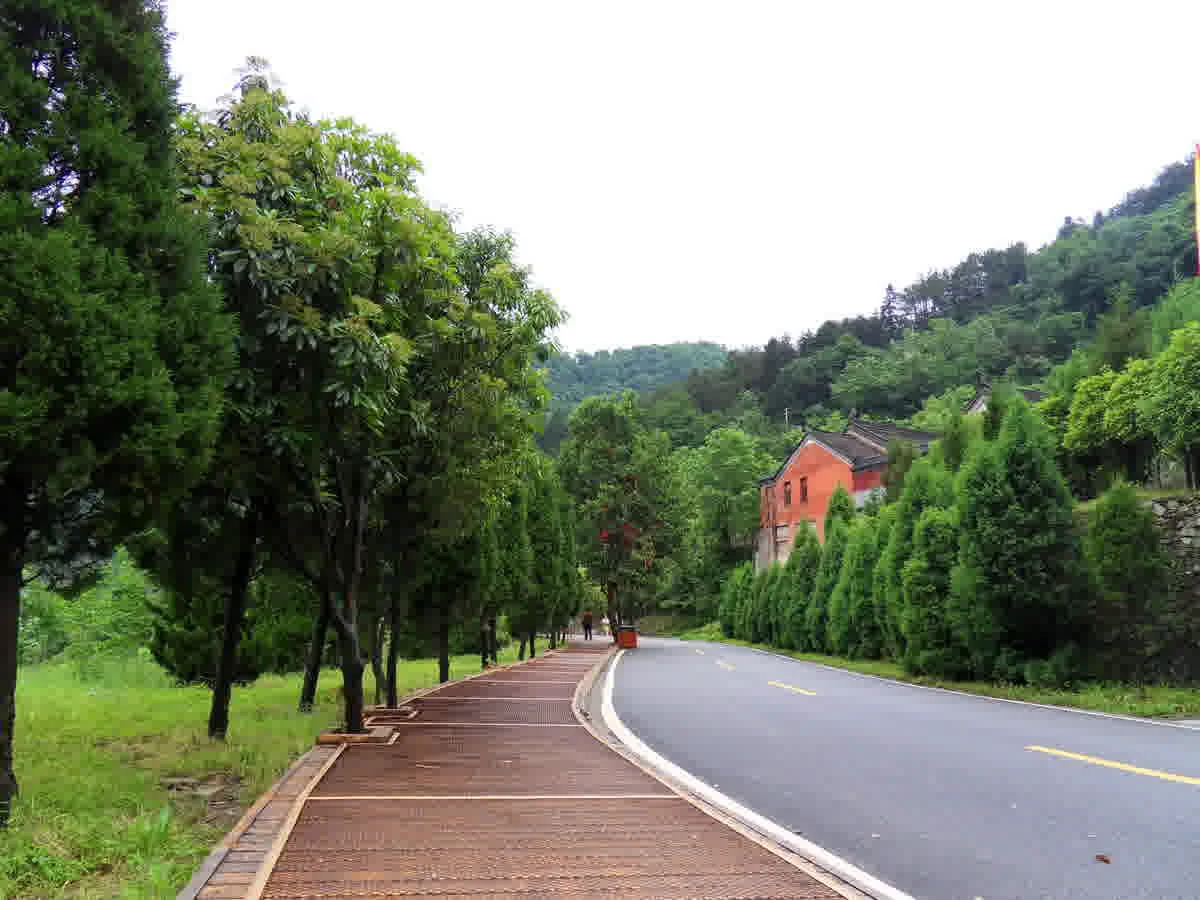
What makes Taihe Palace compelling is the approach. The path winds through a forest of ancient cypress trees, some over 600 years old, their trunks twisted into theatrical shapes. Prayer flags — blue, white, red, green, yellow — strung between the trees catch the wind and fill the air with a soft, constant snapping. By the time you reach the palace gates, the noise of the modern world has been filtered out.
The Living Martial Art: Tai Chi and Wudang Kung Fu
Wudang’s martial arts tradition is not a museum exhibit. It is a living practice, maintained by an active community of monks, students, and international practitioners who train on the mountain year-round.
The core of Wudang martial arts is neijia (internal martial arts) — disciplines that emphasize internal energy (qi), balance, and fluid movement over brute strength. Wudang-style Tai Chi is the most widely known, but the tradition also includes Baguazhang (Eight Trigram Palm), Xingyi (Form-Intention Fist), and a vast repertoire of traditional weapons — swords, spears, fans, and the distinctive Wudang straight sword (太极剑).
At any given hour, you can find practitioners training in the courtyards of the Purple Cloud Palace or on the stone platforms near the Golden Hall. The movements are hypnotic — slow, circular, continuous, as if the practitioners are drawing calligraphy in the air with their entire bodies. In the early morning, when mist drifts through the temple corridors and the only sounds are breathing and the scrape of cloth shoes on stone, watching a Tai Chi session feels less like observing exercise and more like witnessing a form of prayer.
The Wudang Taoist Martial Arts Academy, located near the base of the mountain, offers short-term courses for visitors — typically one to two weeks — covering basic Tai Chi forms, sword techniques, and qigong breathing exercises. Longer programs of three months to a year attract serious students from around the world. The academy’s instructors are genuine Wudang monks, and the training follows traditional methods: early morning conditioning, form practice, partner drills, and philosophy lectures rooted in Taoist texts.
◆ Training Tips for Visitors
- Wear loose, flexible clothing and flat-soled shoes (or go barefoot on stone courtyards)
- Morning sessions (6:00–8:00 AM) are the best time to observe or participate — the atmosphere is at its most authentic
- Most temples have open courtyards where monks practice publicly; you are welcome to watch but should not interrupt
- If you want to try a short course, book through the Wudang Taoist Martial Arts Academy at the mountain base — advance reservation recommended during peak season (April–October)
Hiking the 72 Peaks
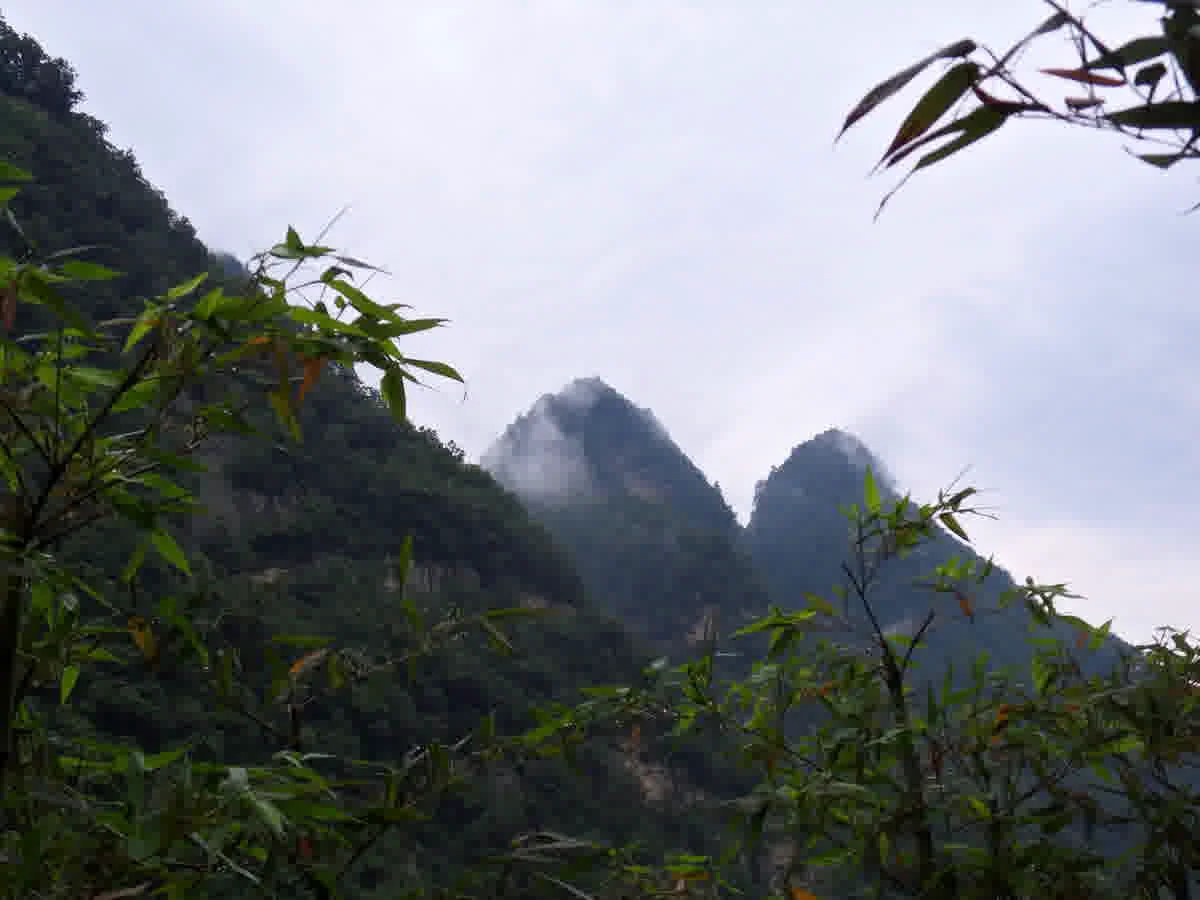
Wudang’s 72 peaks are not all equally accessible, but the mountain offers excellent hiking for various fitness levels. The most rewarding routes connect the major temple complexes along ridgelines that provide continuous panoramic views.
The classic hike runs from the Taihe Palace to the Golden Hall — roughly 3 kilometers with 300 meters of elevation gain, taking 2 to 3 hours at a moderate pace. The trail follows a stone stairway that has been in continuous use since the Ming dynasty, lined with carved stone balustrades and occasional rest pavilions. On clear days, the view from the upper sections is staggering: peak after peak receding into blue haze, with wisps of cloud threading through the valleys below.
For those wanting a full-day experience, the loop trail from the Wudang MountainVisitor Center through Nanyan Palace, up to the Golden Hall, and back down via the Taihe Palace covers approximately 15 kilometers and takes 6 to 8 hours. This route hits all the major highlights and provides the most comprehensive experience of the mountain’s geography.
The cable car offers a viable alternative for those with limited mobility or time. Two lines operate: one from the base area to the mid-mountain station (near Nanyan Palace), and one from the mid-station to the upper station (near Tianzhu Peak). The upper cable car ride alone provides spectacular aerial views of the temple complexes below.
Practical Information
Getting There
Wudang Mountain is located near the city of Shiyan (十堰) in northwestern Hubei Province, approximately 350 kilometers northwest of Wuhan.
| Route | Details | Duration | Cost |
|---|---|---|---|
| High-speed train | Wuhan → Wudangshan West Station (武当山西站) | ~3.5 hours | ¥180–280 (~$25–39) |
| Bus from Wudangshan West Station | Shuttle to Wudang Mountain Visitor Center | ~40 minutes | ¥15 (~$2) |
| Taxi from Wudangshan West Station | Direct to visitor center | ~30 minutes | ¥100–120 (~$14–17) |
| Self-drive | G59 expressway from Wuhan | ~4 hours | Toll + fuel |
From Shiyan city center: Public bus routes 101 and 202 run to the Wudang Mountain Visitor Center, taking approximately 50 minutes. Taxi costs around ¥60 (~$8).
Opening Hours and Tickets
| Item | Details |
|---|---|
| Opening hours | 7:30 AM – 5:30 PM (last entry 4:30 PM) |
| Peak season (Apr–Oct) | ¥230 (~$32) per person |
| Off-peak season (Nov–Mar) | ¥150 (~$21) per person |
| Cable car (round trip) | ¥80 (~$11) per person |
| Cable car (one way) | ¥50 (~$7) per person |
| Shuttle bus (within park) | ¥100 (~$14) — required for the main scenic route |
| Combined ticket (peak) | ¥230 + ¥100 shuttle = ¥330 (~$46) |
◆ Money-Saving Tip
The shuttle bus is mandatory for reaching the main temple complexes by vehicle. If you plan to hike the full route (visitor center → Nanyan → Golden Hall → Taihe Palace → back down), you can skip the shuttle and save ¥100 — but be prepared for a 5–7 hour round trip on steep stone stairs.
Best Time to Visit
- April to June: The most comfortable period. Temperatures range from 15–25°C (59–77°F), wildflowers bloom across the lower slopes, and the cloud sea at dawn is at its most dramatic. This is peak season, so expect crowds at major temples.
- September to October: Clear skies and autumn foliage make this an excellent window. Crowds are thinner than in spring, and the golden-hour light on the red temple walls is extraordinary.
- July to August: Hot and humid at lower elevations, though the summit remains pleasantly cool. Summer thunderstorms are frequent — the stone stairways become dangerously slippery when wet.
- November to March: Cold and quiet. The mountain sees very few visitors, which creates a profoundly peaceful atmosphere, but some facilities close and the higher trails may be icy.
Accommodation
Most visitors stay one night on the mountain and one night in the town of Wudangshan (武当山镇) at the base. On the mountain, several guesthouses operate near the Taihe Palace and along the main trail — basic but clean, with hot water and (usually) Wi-Fi. Expect ¥150–300 (~$21–42) per night. Staying on the mountain is strongly recommended if you want to witness the sunrise from the Golden Hall, which is one of Wudang’s most unforgettable experiences.
At the base, Wudangshan town has a range of hotels from budget hostels to mid-range options. Prices run ¥120–400 (~$17–56) per night.
Budget: Per Person, Per Day
| Category | Budget (CNY) | Budget (USD) | Notes |
|---|---|---|---|
| Accommodation | ¥150–300 | $21–42 | Mountain guesthouse or base town hotel |
| Entrance ticket | ¥150–230 | $21–32 | Depends on season |
| Shuttle bus | ¥100 | $14 | Mandatory for vehicle access |
| Cable car | ¥50–80 | $7–11 | Optional; round trip recommended |
| Meals | ¥80–150 | $11–21 | Mountain restaurants are pricier than base town |
| Miscellaneous | ¥30–50 | $4–7 | Snacks, water, souvenirs |
| Total | ¥560–840 | $78–117 | For one full day with one night |
◆ Budget Breakdown
A comfortable 2-day trip including accommodation, all tickets, meals, and cable car will cost approximately ¥800–1,200 ($111–167) per person. Budget travelers who hike instead of taking the cable car and eat at the base town can bring this down to ¥600–800 ($83–111).
Frequently Asked Questions
Do I need to be fit to visit Wudang Mountain?
Moderate fitness is sufficient for the cable car route, which reduces the main climb to a manageable 30–40 minute ascent from the upper station to the Golden Hall. Full-day hiking (visitor center to summit and back) requires good cardiovascular fitness and sturdy footwear — the stone stairways are steep, uneven, and relentless. There is no shame in taking the cable car up and hiking down, or vice versa.
Is Wudang suitable for children?
Yes, with caveats. Children over 10 can handle the cable car route and the walk to the Golden Hall with reasonable ease. The Nanyan Palace trail involves some narrow cliffside paths that may be uncomfortable for very young children or those afraid of heights. Bring snacks and water, as the mountain restaurants are limited and expensive.
Can I visit Wudang as a day trip from Wuhan?
Technically yes — the high-speed train takes about 3.5 hours each way, and you can take the cable car up and see the highlights in 3–4 hours. But you would be rushing through one of China’s most atmospheric sacred sites, which defeats the purpose. A minimum of 2 days (one night on the mountain) is strongly recommended. Three days allows you to explore at a contemplative pace and catch the sunrise from the Golden Hall.
Is there Wi-Fi on the mountain?
Most guesthouses and some temple restaurants offer Wi-Fi, though the signal can be weak at higher elevations. Mobile coverage (China Mobile and China Unicom) is generally reliable up to the Taihe Palace area, becoming spotty above that. Download offline maps before ascending.
What should I bring?
Sturdy hiking shoes with good grip (the stone paths are slippery when wet), rain gear (weather changes quickly at altitude), a warm layer even in summer (summit temperatures can be 10°C cooler than the base), a refillable water bottle, sunscreen, and a headlamp if you plan to watch the sunrise. A walking stick is useful but not essential — wooden ones can be purchased at the base for ¥10–20.
Are there English-language signs or guides?
The main temple complexes have some English signage, and the visitor center provides an English-language map. However, deeper exploration requires either a guide or a translation app. Licensed guides can be arranged at the visitor center for approximately ¥300–500 ($42–70) per day. The Wudang Taoist Martial Arts Academy also offers English-language introductory lectures on Taoist philosophy.
Wudang Mountain is not a place you conquer. It is a place you walk slowly, listen carefully, and allow to change your pace. Bring good shoes, an open schedule, and the willingness to sit still on a cold stone step while the clouds roll through below you. The mountain has been doing this for a very long time. It can wait for you to catch your breath.