Tibet Adventure: 7 Days on the Roof of the World
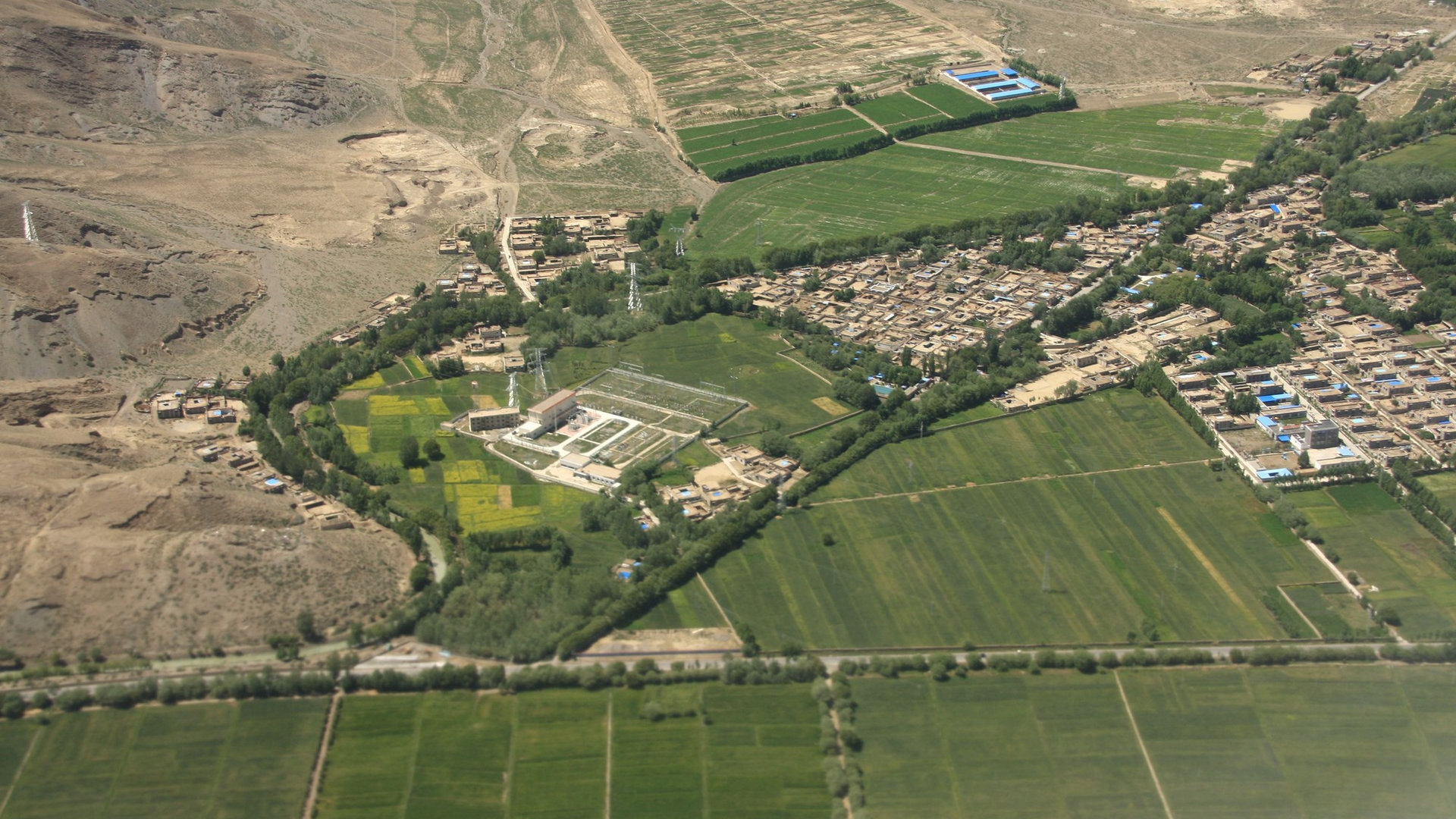
The plane begins its descent over the Himalayas and I press my face against the cold oval window, watching the brown wrinkled earth rise up toward us. The pilot’s voice crackles through the cabin — outside temperature, twelve degrees Celsius. Local time, one hour behind Beijing. Altitude, 3,656 meters. The woman next to me, a seasoned traveler from Chengdu, pulls out a small oxygen canister and takes a long hit before the landing gear drops. “Welcome to the Roof of the World,” she says, and the phrase lands with a weight I hadn’t anticipated.
What follows is a seven-day immersion into a city that sits higher than any capital on earth, a place where prayer flags snap against impossibly blue skies and the smell of juniper incense wafts through alleys older than most European nations. This is Lhasa — not merely a destination but an elevation of the spirit.
Before You Go: The Practical Truths
Let me be blunt about altitude because no one was blunt with me. Lhasa sits at 3,656 meters. The airport is at 3,570. Some of the passes you will cross hit 5,200. Your body will react — maybe a headache, maybe nausea, maybe the strange sensation that your thoughts are wrapped in cotton wool. The acclimatization strategy is simple and non-negotiable: land and go straight to your hotel. Do not sightsee. Do not climb stairs. Drink water as though it is your job. Eat light. No alcohol. Take acetazolamide if your doctor prescribed it.
You also need a Tibet Travel Permit, which you cannot obtain on your own — any tour operator or agency in China will handle it for you once you book transport and accommodation. Foreign travelers additionally need a Alien’s Travel Permit for areas outside Lhasa city limits, including the Namtso day trip. These papers will be checked at military checkpoints on the road, so keep them on your person at all times.
The best seasons are May through October, with July and August bringing the monsoon rains that paint the valleys green but occasionally obscure the mountain views. I went in late September, when the air was crisp and the autumn light turned the whitewashed walls of the Potala to gold.
Day 1: Arrival and Surrender — Letting Lhasa Set the Pace
游玩攻略 — The Art of Doing Nothing
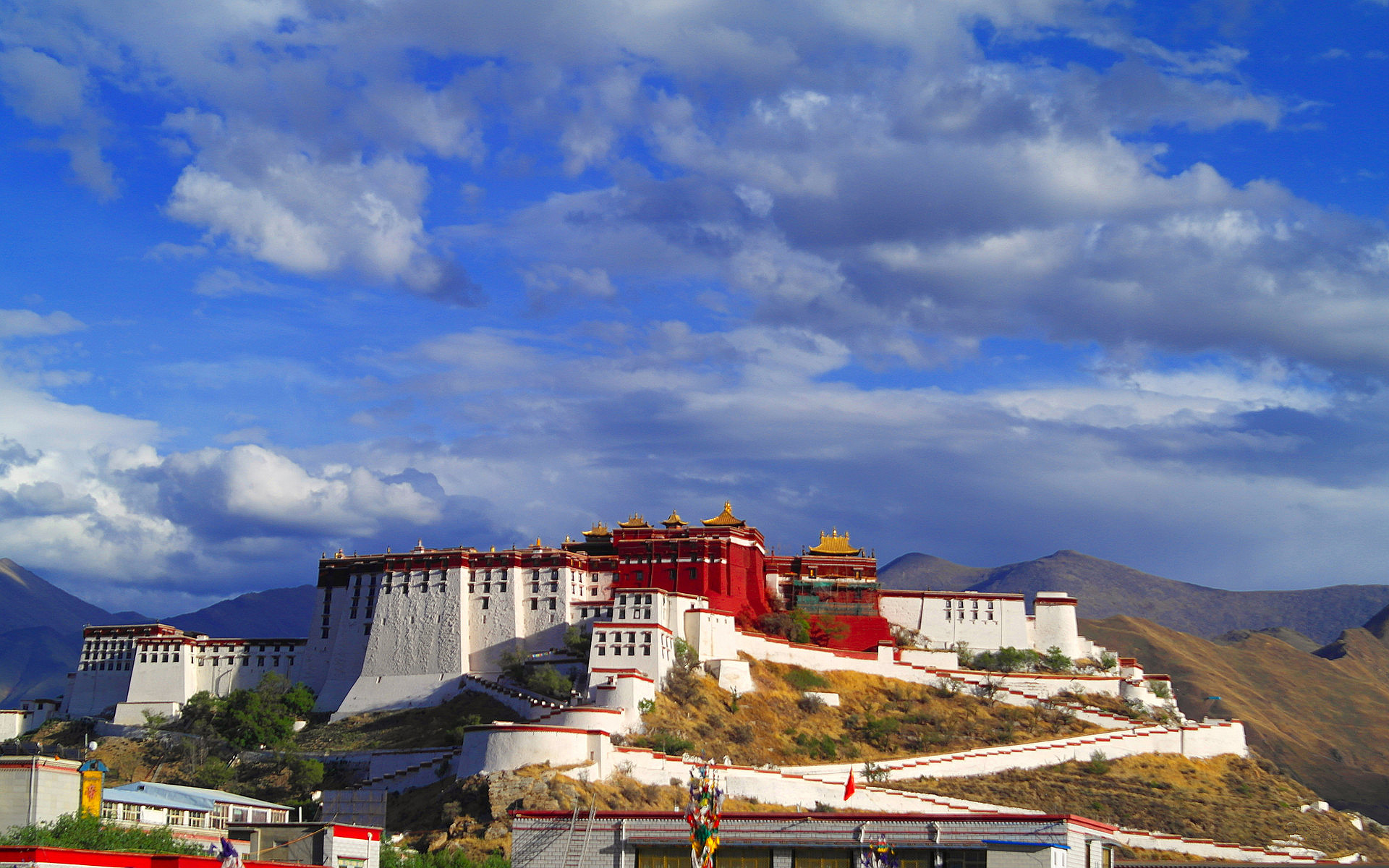
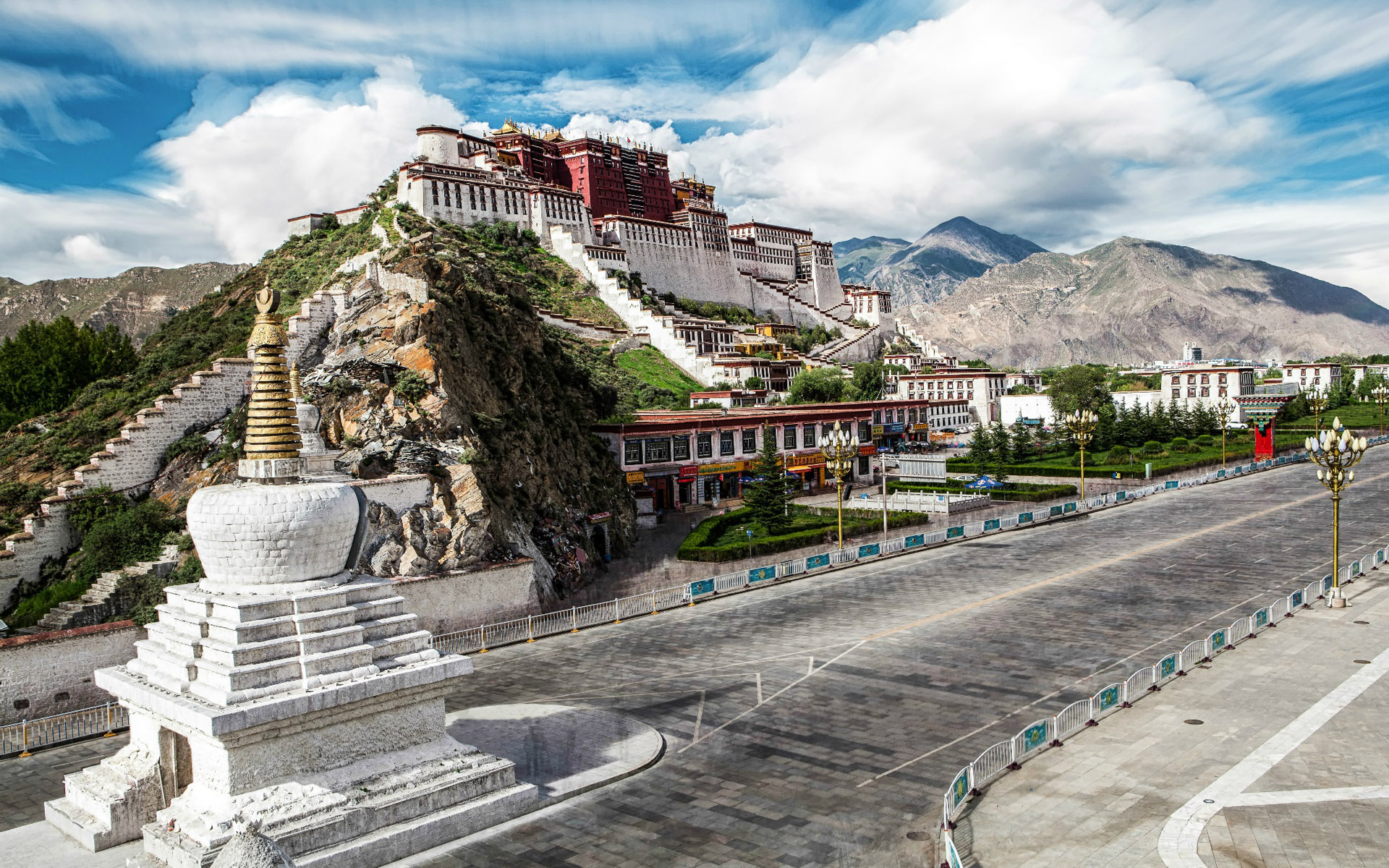
The single most important thing you will do in Lhasa is nothing. The Gonggar Airport is an hour and a half drive from the city center, and that drive along the Lhasa River valley is your first lesson in Tibetan geography — barren, vast, with sudden flashes of green where villages huddle along the water. Your driver will point out the distant Potala Palace as you round a bend, and even from that distance, perched on Marpo Ri hill like a fortress of the gods, it commands your attention.
Check into a hotel in the Chengguan District, ideally south of the Potala or near the Barkhor neighborhood. Old Lhasa hotels with traditional courtyards are preferable to the sterile high-rise chains, though altitude sickness does not discriminate between a luxury suite and a budget dorm. I stayed at a small guesthouse on Beijing Middle Road where the owner, a Han Chinese transplant who has lived in Lhasa for fifteen years, brought me cups of butter tea and told me to walk like a pensioner for the first twenty-four hours.
The afternoon is for your hotel lobby, your bed, and slow sips of water. If you feel well enough by evening, a stroll along the northern side of the Potala Square — no more than fifteen minutes — will introduce you to the peculiar rhythm of Lhasa after dark: families spinning prayer wheels along the kora circuit, vendors selling steaming corn on the cob, the distant sound of chanting from the Jokhang.
交通攻略 — From Tarmac to Thin Air
The flight from almost anywhere in China lands at Lhasa Gonggar Airport, a surprisingly modern facility considering the altitude. Direct flights connect from Beijing, Chengdu, Chongqing, Xi’an, and Kathmandu. The Qinghai-Tibet Railway is the dramatic alternative — a forty-eight-hour train journey from Beijing that climbs through the Tanggula Pass at 5,072 meters, the highest railway pass in the world. I met travelers on the train who had spent the journey staring out the window at yak herds and frozen lakes, arriving in Lhasa already half in love with the landscape.
Airport to city: prepaid taxi counters charge around 200–300 RMB depending on your hotel location. There is also an airport shuttle bus that drops you near the city center for 30 RMB. Neither option is fast — the road winds through mountains and fifty kilometers of river valley, and overtaking a slow truck on a blind curve is a local sport best observed with eyes closed.
餐饮攻略 — First Meals, Gentle Fuel
Your first evening meal should be gentle — think warm broth, noodles, simple starches. The area around Barkhor Street is dense with small Sichuan restaurants where the cooking oil flows freely and the mala spice can shock an unaccustomed stomach. Instead, try a Tibetan restaurant like Tashi on Beijing East Road, where the mild thukpa noodle soup and steamed momo dumplings provide comfort without drama. Drink the butter tea — it is salty, creamy, and genuinely helps with altitude adjustment, even if your first sip makes you wince. The Tibetan theory is that the fat and salt help your body retain moisture at altitude, and after a few days I became convinced they were right.
Day 2: The Potala and the Jokhang — Lhasa’s Twin Hearts
游玩攻略 — Marpo Ri and the Sacred Temple
The Potala Palace opens at 9:00 AM, and you should be in line by 8:30. The walk up the whitewashed ramps is a pilgrimage in miniature — switchback after switchback, with the city falling away beneath you and the air thinning with every step. By the time you reach the Red Palace, the upper section that contains the tombs of eight Dalai Lamas, you will be breathing hard and your heart will be pounding. Take breaks. There are benches. Use them.
The interior is a labyrinth of chapels, audience halls, and meditation chambers, each one more richly adorned than the last. Thousands of murals depict Buddhist cosmology, the life of the Buddha, and the history of Tibet. The jewel-studded stupas of the Dalai Lamas rise like golden mountains beneath silk canopies. Photography is forbidden inside, and this is a mercy — no camera could capture what the incense smoke and butter lamp glow do to the atmosphere. You walk in silence, not because guards enforce it, but because the space demands it.
The entire tour takes two to three hours. By the time you descend the eastern ramp and emerge into the harsh light of Lhasa’s midday sun, you will feel as though you have surfaced from a deep dive.
From the Potala, it is a twenty-minute walk east to the Jokhang Temple, the spiritual heart of Tibetan Buddhism. The Jokhang is older than the Potala by three centuries, built in the seventh century by King Songtsen Gampo to house the Jowo Shakyamuni statue — a life-sized image of the Buddha at age twelve that is, tradition holds, the single most sacred object in Tibet. The approach is through the Barkhor pilgrim circuit, and the crowds here are denser, more urgent. Prostration mats line the flagstones where pilgrims throw themselves flat in sequences of devotion that last for hours.
Inside the Jokhang, the atmosphere is claustrophobic and electric. Butter lamps flicker by the hundreds. Monks chant in a low, hypnotic drone. Pilgrims press their foreheads against the glass case of the Jowo statue, lips moving in prayers I could not understand but somehow felt. The circuit of the temple — up dark staircases, through incense-choked chapels, across a rooftop with views of the Potala framed by golden finials — takes another hour. By the end, my senses were overwhelmed in the best possible way.
交通攻略 — The Walking City
The Potala and Jokhang are within walking distance of each other and of most central hotels. Lhasa’s old city is compact, built on a grid that predates automobiles, and walking is the only way to experience it. Taxis are cheap — 10 RMB for the first kilometer within the city — but they are scarce during rush hour and often refuse to go to the Barkhor area because of the crowds. Electric rickshaws buzz through the narrow alleys like angry bees; negotiate the fare before you get on, and do not expect the driver to know the address of your hotel by name.
餐饮攻略 — Tibetan and Tibetan-Adjacent
Lunch near the Jokhang means the Dunya Restaurant on Barkhor Street’s southeast corner, a rooftop affair with direct views of the Jokhang’s golden roof. The momos here are exceptional — yak meat steamed in delicate wrappers, served with a chili dip that builds heat slowly. The shabhaley — deep-fried bread stuffed with spiced meat — is a more decadent option. From the rooftop, you watch the pilgrims circle below, a living mandala of faith that makes every bite taste like a meditation.
Dinner takes you to the quieter side of town. Snowland Restaurant near the Potala’s west gate serves what might be the best yak curry in Lhasa — tender, rich, spiced with cumin and star anise in a way that reminds you that Tibet sits at the crossroads of Indian, Chinese, and Central Asian culinary traditions. The dining room is warm, dimly lit, and frequented by a mix of travelers and local monks drinking sweet tea. Order a plate of tsampa — roasted barley flour mixed with butter tea into a dense, nutty paste — if you want to eat like a Tibetan. It is an acquired taste. I acquired it by the third day.
Day 3: Barkhor Street and the Living Kora
游玩攻略 — The Circuit of Devotion
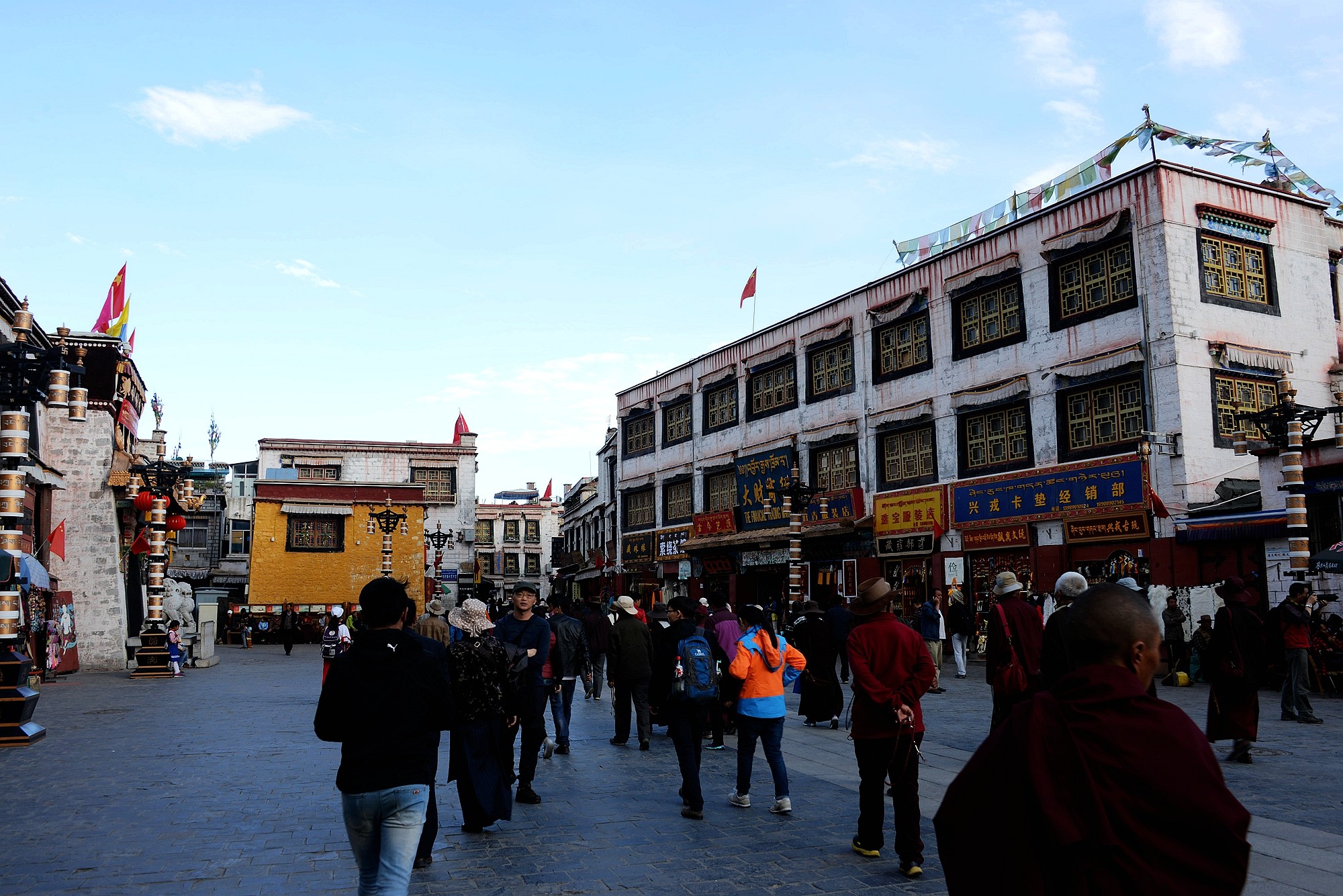
Barkhor Street is not a street in any conventional sense. It is a circular pilgrim route around the Jokhang Temple, a ring of cobblestones worn smooth by a thousand years of footsteps, and it functions as Lhasa’s outdoor living room, market, and cathedral all at once. The pilgrims move clockwise, always clockwise — elderly women in striped aprons spinning prayer wheels, young monks in burgundy robes striding with purpose, entire families from the nomadic regions of northern Tibet stopping to prostrate every few steps. The flow is relentless and hypnotic.
I joined the circuit at 8:00 AM, when the morning light was still soft and the crowds were at their most devout. The outer ring of Barkhor is lined with storefronts selling everything from yak butter for temple lamps to tourist trinkets cast in Nepalese factories. The inner ring, closer to the Jokhang’s outer wall, is where the serious pilgrims walk, their mouths murmuring the mantra Om Mani Padme Hum in a continuous hum that merges into the ambient sound of the city.
Allow at least three hours to complete the circuit — not because the distance is long, but because you will stop every few meters. A doorway reveals a dark chapel where a monk sits pounding a drum in a steady rhythm. An alley leads to a small courtyard where butter is being churned and tea brewed over an open fire. A rooftop café offers a view of the Jokhang’s golden finials that demands a photograph every thirty seconds.
By midday, the street transforms. The pilgrims thin out and the vendors take over. This is when you explore the radial alleyways that extend from Barkhor like spokes — Chak Tsikang alley with its thangka painters, Trolde alley where antique silver jewelry spills from felt-lined trays, and the narrow passage behind the Jokhang where a single ancient willows shades a butter-sculpture workshop. Each alley tells a story of a Lhasa that is rapidly modernizing but clinging to its soul with both hands.
交通攻略 — On Foot and on Faith
There is no public transport that penetrates the Barkhor area. You walk. The nearest taxi drop-off point is on Beijing East Road, from which you enter Barkhor through the south gate — a stone archway that marks the boundary between the modern city and the sacred precinct. If you are staying in the old city, everything is within a fifteen-minute walk. Wear comfortable shoes; the cobblestones are uneven, and the altitude makes every step feel weighted.
餐饮攻略 — Tea Houses of the Old City
The Barkhor area is dense with Tibetan tea houses, and you should make time for at least one. Tsampa Café on the northeast corner of the circuit is a favorite among expatriate Tibetans and long-term travelers, its walls covered in faded photographs of old Lhasa and its menu featuring a yogurt made from yak milk that is tart, thick, and utterly unlike anything you have tasted. The sweet tea — black tea boiled with milk and sugar — is the house specialty and comes in metal thermoses that keep it hot for hours. Sit by the window, watch the pilgrims circle, and let an hour dissolve.
For a more substantial meal, Makye-ame on the south side of Barkhor serves Tibetan-Chinese fusion that is uneven but occasionally brilliant. The yak steak with Sichuan peppercorns and the patter — a Tibetan flatbread stuffed with cheese and herbs — are reliable choices. The second-floor balcony overlooks the south gate of the Jokhang, making it the best people-watching perch in the old city.
Day 4: Drepung and Sera — The Monasteries of the Hill
游玩攻略 — Philosophy and Debate
Drepung Monastery, five kilometers west of Lhasa, was once the largest monastery in the world, housing over ten thousand monks at its peak in the seventeenth century. Today the population is a fraction of that, but the scale remains staggering — a whitewashed city of monastic colleges, chapels, and residential quarters sprawling across the foothills of Mount Gephel.
I arrived at 9:00 AM, ahead of the tour bus crowds, and spent the first hour wandering the maze of alleyways between the colleges. The silence was punctuated only by the sound of prayer flags snapping in the wind and the occasional chant drifting from a darkened assembly hall. The main chapel, the Tsokchen, contains a statue of Maitreya, the future Buddha, that stands five stories tall — you climb wooden stairs to see its face and descend into a lower chapel to see its feet. The scale induces a vertigo that has nothing to do with altitude.
By 11:00 AM, the crowds had arrived. I left Drepung and made my way six kilometers north to Sera Monastery, famous for its monks’ debates that begin at 3:00 PM each afternoon. The debate courtyard is a spectacle unlike anything else in Tibetan Buddhism — rows of monks in burgundy robes pair off, one sitting and one standing, and the standing monk slaps his hands together with a crack that echoes off the stone walls before launching into a logical challenge. The debates are conducted in Tibetan, but the theatricality transcends language. The slaps, the shouts of “Tah!” at the end of a successful point, the sudden bursts of laughter — it is intellectual combat as performance art.
Before the debates, explore Sera’s three colleges and their chapels. The Sera Je college contains a chapel dedicated to the wrathful deity Yamantaka, its walls lined with masks and ritual implements that are equal parts terrifying and beautiful. The rooftop of the Ngagpa college offers a view south across the Lhasa Valley that, on a clear day, stretches all the way to the Yarlung Tsangpo River.
交通攻略 — Monastery Hopping
Drepung and Sera are best visited as a single day trip, with Drepung in the morning and Sera from lunch onward. Taxis from central Lhasa to Drepung cost around 30–40 RMB, and from Drepung to Sera another 30 RMB. Alternatively, city bus routes 24 and 25 run from the center to both monasteries for 2 RMB each way, though the buses are crowded and the stops are not clearly marked in English. I hired a driver for the day for 200 RMB, which allowed me to set my own schedule and avoid the midday taxi shortage.
Walking between the two monasteries is not practical — they are too far apart and connected by busy roads.
餐饮攻略 — Monastery Eats
There is a small restaurant at Drepung’s entrance that serves decent thukpa and momos, but the food is basic and the seating is plastic. I recommend eating in the neighborhood between the two monasteries, near the Sera Temple area, where a cluster of family-run kitchens serve food to the monks and local workers. Sera Kitchen on the road approaching the monastery’s east gate serves a vegetarian shamdey — potatoes, cheese, and vegetables simmered in a mild broth — that is both filling and altitude-friendly. The bread here, baked in a clay oven, is the best I had in Tibet.
Day 5: Namtso Lake — The Sky Mirror
游玩攻略 — Crossing the Pass to the Holy Lake
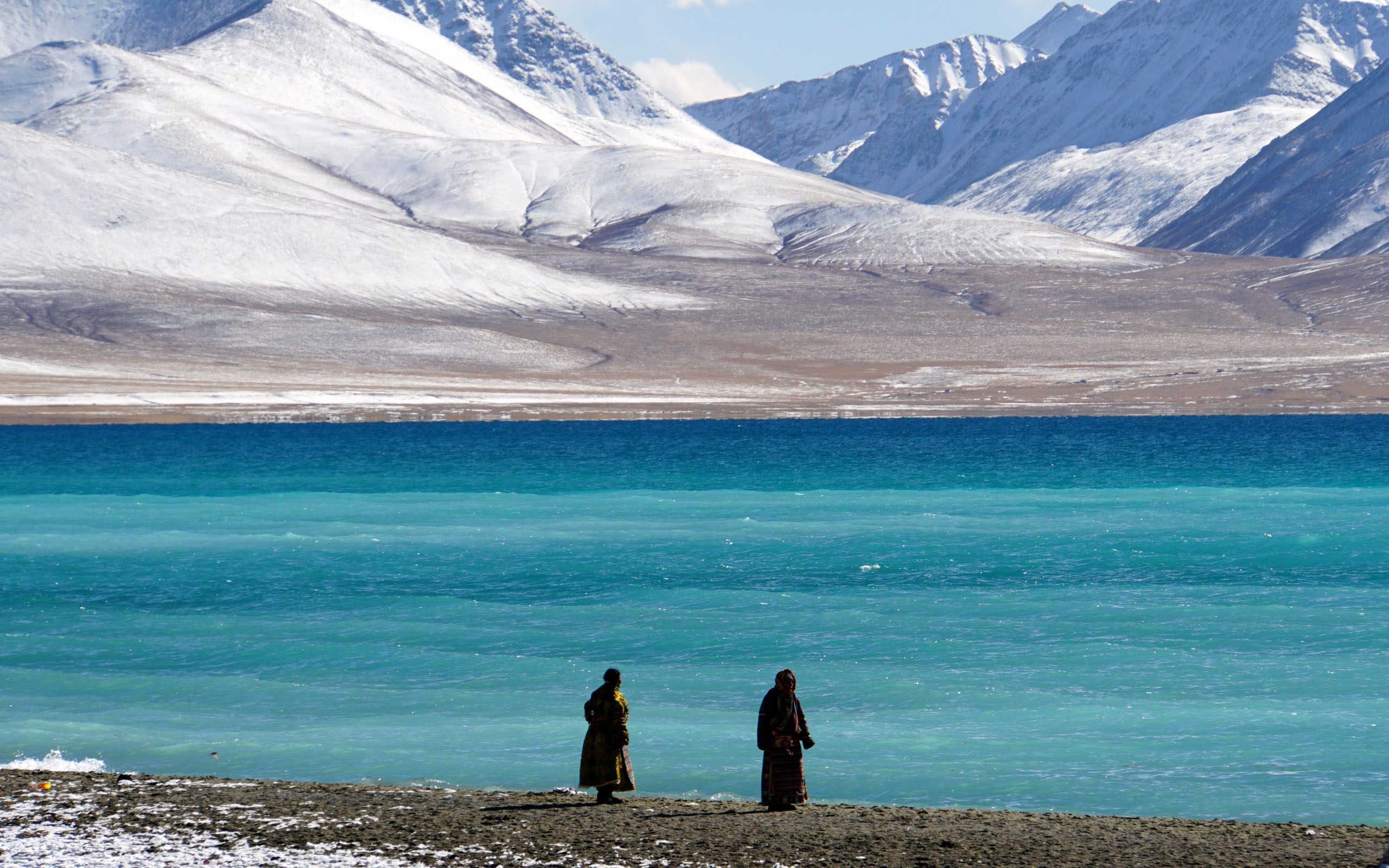
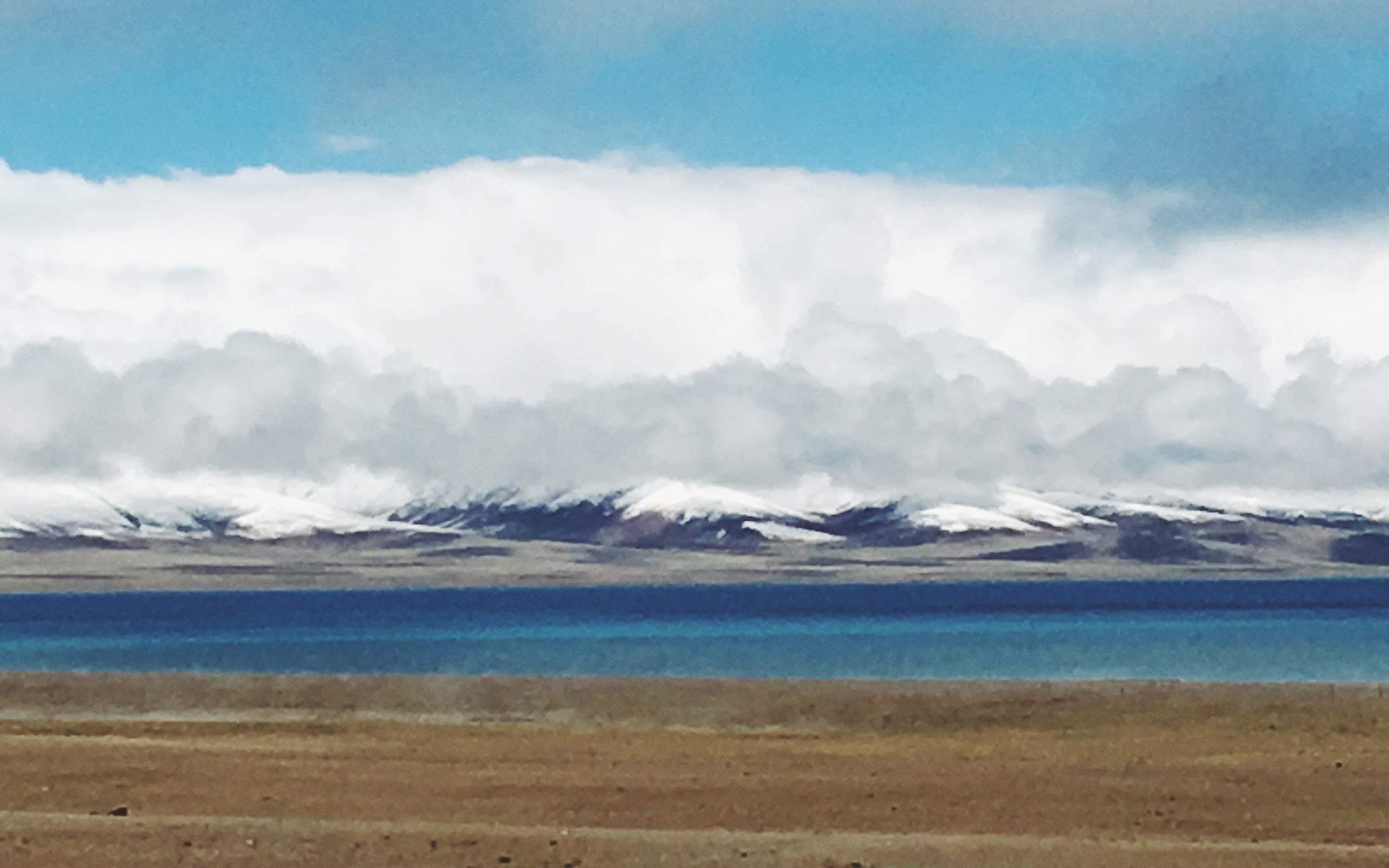
Namtso Lake — “Heavenly Lake” in Tibetan — sits at 4,718 meters, a four-hour drive north of Lhasa through landscapes that grow more alien with every kilometer. The road climbs over the Laken La Pass at 5,190 meters, where prayer flags festoon the summit like a carnival of blessings, and the view from the top is the first glimpse of Namtso — a sheet of turquoise stretched across the horizon, backed by the snow peaks of the Nyainqêntanglha range.
The lake is one of three holy lakes of Tibet, and its water is said to have the power to wash away sins accumulated over a lifetime. Pilgrims circle it on foot, a journey that takes fifteen to twenty days. I had seven hours.
The drive alone is worth the trip. The grasslands of the Tibetan plateau roll out in every direction, dotted with black tents and yak herds that look like scattered pepper grains from a distance. Wild donkeys — the rare Tibetan kiang — sometimes appear alongside the road, and if your driver is observant, they will stop and let you photograph them. At the pass, the wind is ferocious; I could barely stand upright, and the temperature dropped to near freezing even in late September.
At the lake, you have three options: walk the shoreline, hike to the Tashidor Islet for the panoramic view, or simply sit and absorb the scale of the place. I did all three. The water is almost impossibly blue, the kind of blue that looks photoshopped in person. The mountains rise from the opposite shore like a wall of granite and ice. And the silence — broken only by the lapping of water and the cry of gulls — is so complete that you can hear your own heartbeat.
Do not miss the Tashidor Islet, a short scramble up a rocky hill to the east of the main parking area. A small hermitage perches on its summit, occupied by a single nun who has lived there for decades. She may or may not emerge to greet you. If she does, offer a small donation and receive her blessing. If she does not, the view from her doorstep — the entire sweep of Namtso, from the glittering shoreline to the distant glaciers — is blessing enough.
交通攻略 — The Road to Heaven
The Namtso day trip requires a private vehicle or a shared tour. Few taxis are willing to make the journey, and those that do charge 800–1,200 RMB for the round trip. Tour agencies on Beijing East Road offer shared minibus trips for 300–400 RMB per person, departing at 6:00 AM and returning by 5:00 PM. I went with a small group from my guesthouse, which meant three strangers, a driver who chain-smoked, and a very bumpy ride — but also a guide who knew exactly where to spot kiang and when the light would be best for photographs.
The road is paved all the way to the lake now, a relatively recent improvement, but the final stretch descends a series of switchbacks that will test your stomach as much as the altitude. Bring snacks, lots of water, and motion sickness tablets.
Note your Alien’s Travel Permit — it will be checked at a military checkpoint about an hour outside Lhasa. If you are traveling independently and do not have it, you will be turned back.
餐饮攻略 — Picnic at 4,700 Meters
There are basic food stalls near the lake parking area — instant noodles, boiled eggs, and sweet tea served from thermoses — but the quality is poor and the prices are inflated. Pack a proper picnic. I brought momo from the previous night’s dinner, a thermos of sweet tea, apples, and tsampa bars from the Barkhor market. Eating at the edge of the lake, with the wind whipping off the water and the mountains watching, felt like a meal in a dream.
Day 6: Norbulingka and the Old City’s Soul
游玩攻略 — The Summer Palace and the Living Traditions
Norbulingka, the “Jewel Park,” served as the summer residence of the Dalai Lamas from the eighteenth century until 1959. It is a sprawling complex of palaces, gardens, and chapels on the western edge of Lhasa, and it offers a counterpoint to the Potala’s fortress-like grandeur. Where the Potala is all vertical ambition, Norbulingka is horizontal and serene — willow groves, peony beds, and pavilions arranged around courtyards built for leisure.
The main palace, the Kelsang Potang, is a modest two-story structure where the Dalai Lama conducted state business during the summer months. The murals inside depict scenes from Tibetan history — the construction of the Potala, the arrival of Buddhism from India, the great debates at Samye Monastery. The newer Chensel Potang, built in the 1950s, is more ornate but somehow sadder, a relic of a court that would soon dissolve.
Allow two to three hours for Norbulingka. The gardens are perfect for a slow morning, and the shade of the ancient willows provides a welcome break from Lhasa’s relentless sun.
In the afternoon, return to the old city for a walk you should have done on day one but were too dazed to attempt: the Lingkhor circuit, the outer pilgrim route that circles the entire old city. The Lingkhor follows the line of Lhasa’s medieval walls, now largely vanished, and passes through neighborhoods that tourists rarely see — vegetable markets where vendors haggle in a mix of Tibetan and Sichuanese, auto repair shops where monks wait for their scooters, and small temples where the only other visitors are local grandmothers spinning prayer wheels.
The Lingkhor takes about two hours at a slow pace and ends near the Potala’s south gate, where the evening kora is in full swing. Join the flow of pilgrims for one final circuit of the palace, letting the rhythm of walking and spinning become a meditation.
交通攻略 — Parks and Pavements
Norbulingka is a thirty-minute walk from the Potala, or a 10 RMB taxi ride. The Lingkhor circuit begins and ends at the Potala Square, making it easy to combine with a Norbulingka morning. Lhasa’s public bus system covers both locations but requires patience — routes are numbered, schedules are approximate, and you will need small bills for the 2 RMB fare.
餐饮攻略 — A Feast for the Last Night
Your last dinner in Lhasa deserves something special. The Tibet Kitchen on Dekyi Linka Road, just south of Norbulingka, serves what I consider the finest Tibetan cuisine in the city — a tasting menu approach that pairs small plates with explanations of each dish’s cultural significance. The gyurma — blood sausage stuffed with barley and yak blood — is an acquired taste that I never quite acquired, but the sha momo (yak meat dumplings) and the thenthuk (hand-pulled noodle soup) were perfect.
For a less formal option, the night market on Tuanjie New Village Street comes alive after dark with food stalls serving grilled yak skewers, tsampa pancakes, and chang — the local barley beer served in bamboo tubes. It is loud, smoky, and chaotic, and it is exactly how you should say goodbye to Lhasa.
Day 7: Departure — The Letting Go
游玩攻略 — One Last Morning
Your flight or train is likely in the afternoon, which gives you one final morning. Use it wisely. Walk to the Potala Square one last time, when the morning light paints the eastern face of the palace and the prayer flags on the hill above are catching the first breeze of the day. Join the early-morning kora around the Jokhang — the most peaceful hour in Lhasa, when only the most devout pilgrims are out and the city is still shaking off the night.
If you have time and energy, visit the Tibetan Museum near the Potala’s south gate, which houses an excellent collection of thangkas, ritual objects, and photographs documenting Lhasa’s transformation over the past century. The museum is modest but well-curated, and it provides context for everything you have seen over the past six days.
交通攻略 — Getting Out
The airport shuttle bus departs from the Civil Aviation Ticket Office on Norbulingka Road every hour. If you are taking the train, Lhasa Railway Station is a twenty-minute drive south of the city center. Allow extra time for security checks — both the airport and train station screen passengers thoroughly, and the queues can be long.
If you flew in, the drive back to Gonggar Airport will retrace the river valley you arrived through, but the landscape will look different now. You will recognize the villages, remember the bends in the road, and feel the pang of leaving a place that has changed something in you.
餐饮攻略 — Breakfast of Champions
Your last breakfast should be at The Lhasa Kitchen on Beijing Middle Road, a tiny bakery run by a Tibetan woman who studied pastry in Kathmandu. The butter croissants are absurdly good at 3,700 meters, and the ginger tea will settle any residual altitude queasiness. She also serves a yak cheese omelette that I still dream about — fluffy, golden, folded around a sharp, salty cheese that tastes like the mountains.
Buy a bag of dried yak cheese from her shop to take home. It is repellent to most people and beloved by those who understand.
The Verdict
Lhasa is not a vacation. It is a confrontation — with thin air, with a culture that has survived occupation and modernization and indifference, with a faith so tactile and public that it forces you to reckon with your own beliefs or lack thereof. The city gives you headaches and shortness of breath and sunburns in places you forgot to apply sunscreen. It also gives you moments — watching a pilgrim prostrate across the Barkhor stones, hearing the debates at Sera echo off ancient walls, standing at the edge of Namtso with no sound but the wind — that no other place on earth can replicate.
The altitude is the price of admission. The rest is grace.
Take the train if you can. Walk the kora at least once. Drink the butter tea until it makes sense. And when you leave, leave a little piece of yourself on that high, thin-aired plateau. It will ask for it. You will not mind giving it.