The Terracotta Warriors: Qin Shi Huang’s Eternal Army
🏛️ Deep Documentary | 📍 Lintong, Xi’an, Shaanxi | ⏱️ 3–4 Hours
A City of Farmers, a Hole in the Ground, and the Greatest Archaeological Discovery of the 20th Century
In the spring of 1974, a severe drought gripped the Wei River valley. Desperate for water, a group of farmers in Yang Village, Lintong County, began drilling a well on a barren hillside east of Xi’an. What they pulled from the earth was not water — it was a fragment of terracotta, a fired-clay head with hollow eyes and an expression frozen somewhere between duty and defiance. Within weeks, archaeologists from the Shaanxi Provincial Institute had descended on the site. Within months, they had uncovered what would prove to be the most staggering funerary monument in human history: the Terracotta Army of Qin Shi Huang, First Emperor of China, buried here around 210 BCE to guard his passage into the afterlife.
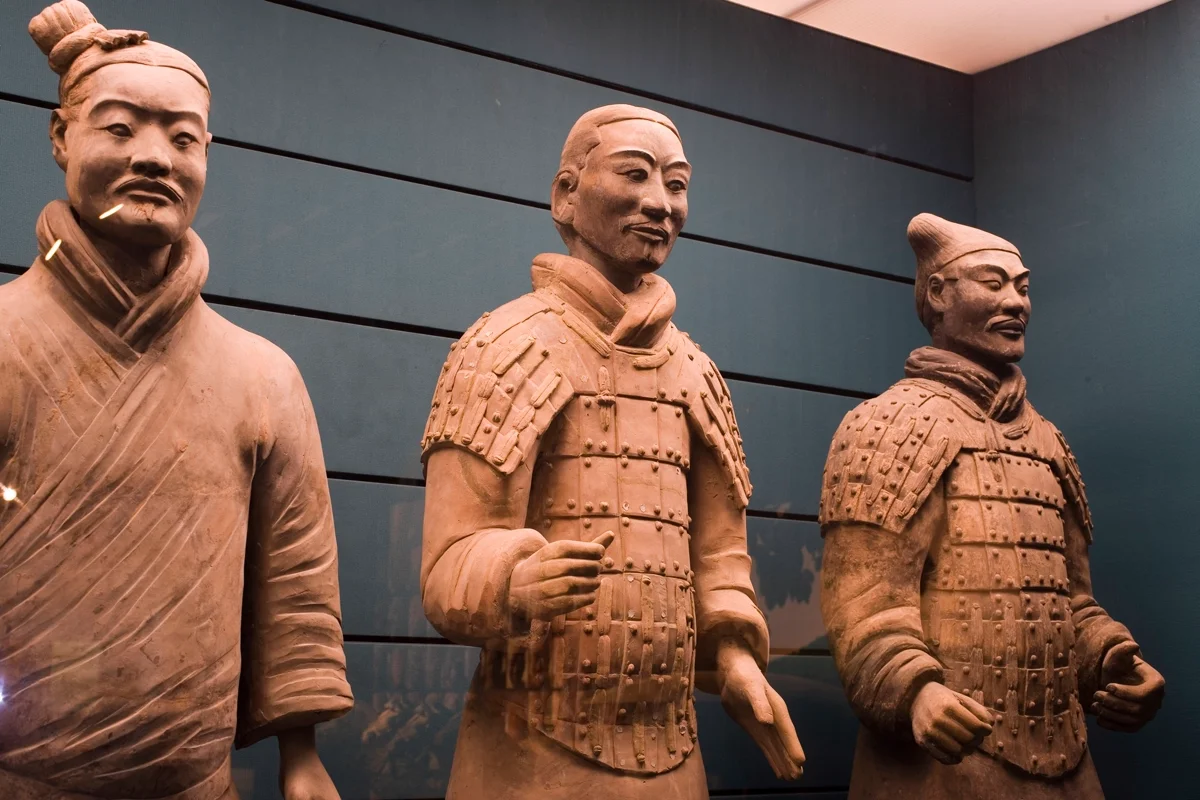
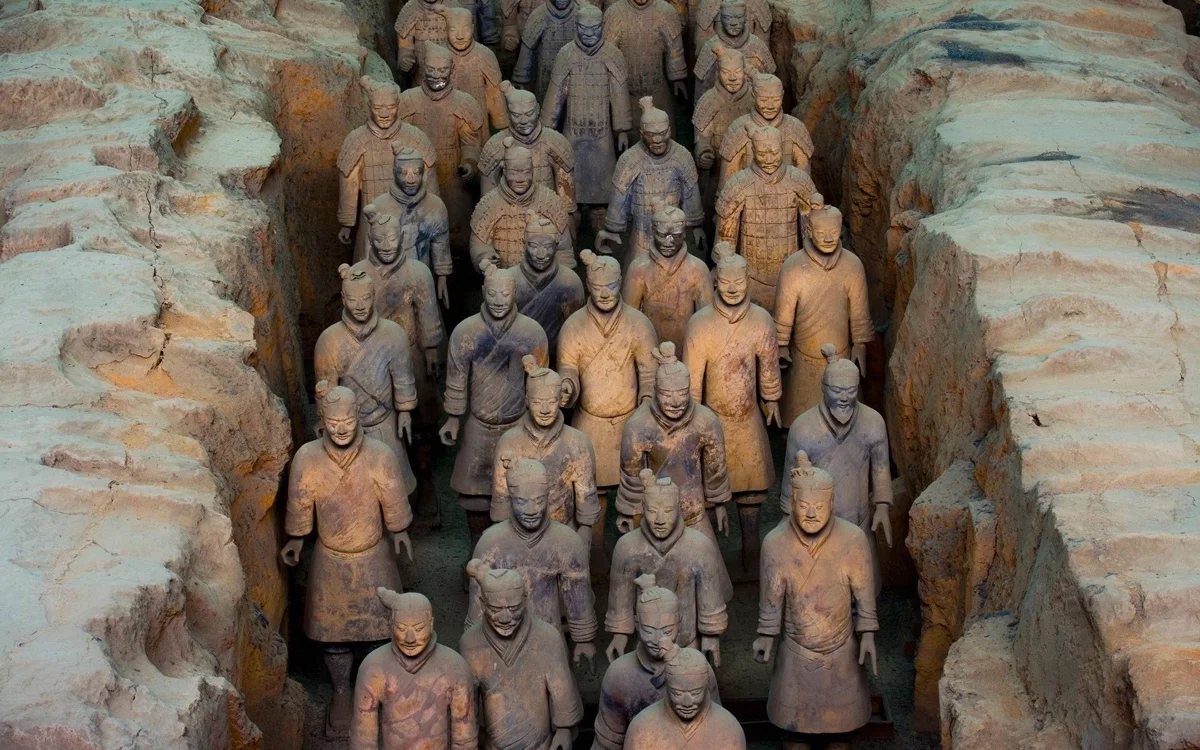
More than two thousand years of silence ended in a single shovel stroke. What emerged was not a handful of statues but an entire subterranean military complex — over 8,000 warriors, 130 chariots, 670 horses, and 150 cavalry horses — arranged in precise battle formation across three enormous pits covering some 20,000 square meters. No two faces are alike. No two postures are identical. Each figure stands life-sized, armed with bronze weapons still sharp enough to draw blood, their painted surfaces — once vivid vermillion, azure, and jade green — now faded to the ghostly terracotta we know today.
This is not merely a museum. It is a portal into the mind of the most ambitious ruler China ever produced, and a testament to the anonymous craftsmen whose hands shaped an army that has outlasted every dynasty that followed.
The Man Behind the Army: Qin Shi Huang and His Obsession with Immortality
The First Emperor, born Ying Zheng, unified the warring states of China in 221 BCE and declared himself Qin Shi Huang — a title no one had held before. He standardized weights, measures, currency, and writing. He connected existing fortifications into what would become the Great Wall. He burned books and buried scholars. He was, by any measure, the most consequential and most ruthless figure in Chinese history.
But even conquerors fear death. From the moment he ascended the throne at age thirteen, Qin Shi Huang began commissioning his own afterlife. The mausoleum complex at Lintong, which he ordered built shortly after unification, was designed to replicate his earthly empire in miniature — complete with palaces, offices, rivers of mercury (described in ancient texts as flowing like water), and, most famously, an army of 8,000 clay soldiers to protect him for eternity.
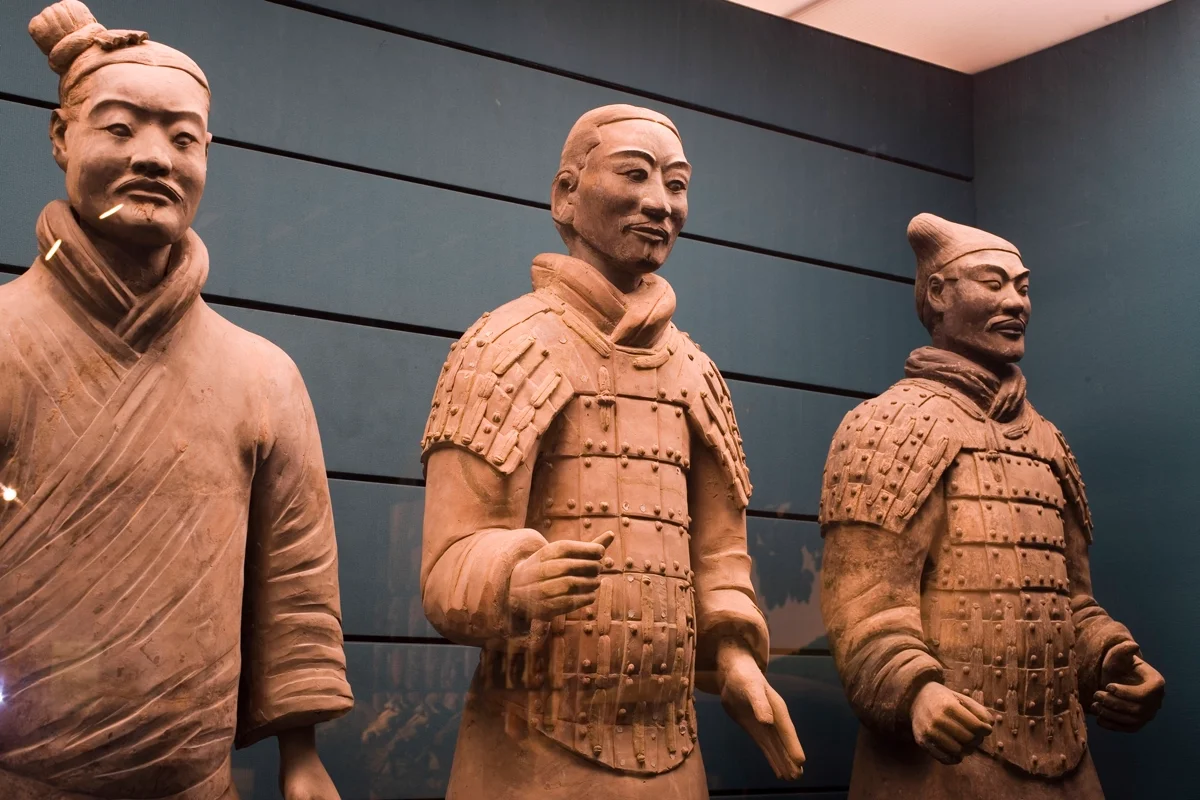
The scale is almost incomprehensible. The entire mausoleum complex covers approximately 56 square kilometers — larger than the city of Manhattan. The army was buried in three pits adjacent to the tomb mound itself, positioned to face outward in all directions, as if standing perpetual guard against threats from the outside world. Each warrior was individually crafted: heads, arms, and torsos were mass-produced in workshops and then assembled, with final details — hairstyles, facial features, expressions — added by hand. The result is a population of figures so varied that archaeologists have classified them into distinct ethnic types, reflecting the diversity of the Qin empire itself.
◆ The Scale of the Underground Army
- Total warriors: Over 8,000 (excavated and estimated)
- War chariots: 130 wooden chariots (largely deteriorated)
- Bronze chariots: 2 half-size ceremonial chariots (complete)
- Horses: 670 for chariots + 150 cavalry horses
- Weapons: Over 10,000 bronze implements — swords, spears, crossbow triggers, arrowheads
- Burial period: Circa 210 BCE
- Rediscovery: 1974 by local farmers
- UNESCO World Heritage: Inscribed in 1987
Pit 1: The Front Line of an Eternal Empire
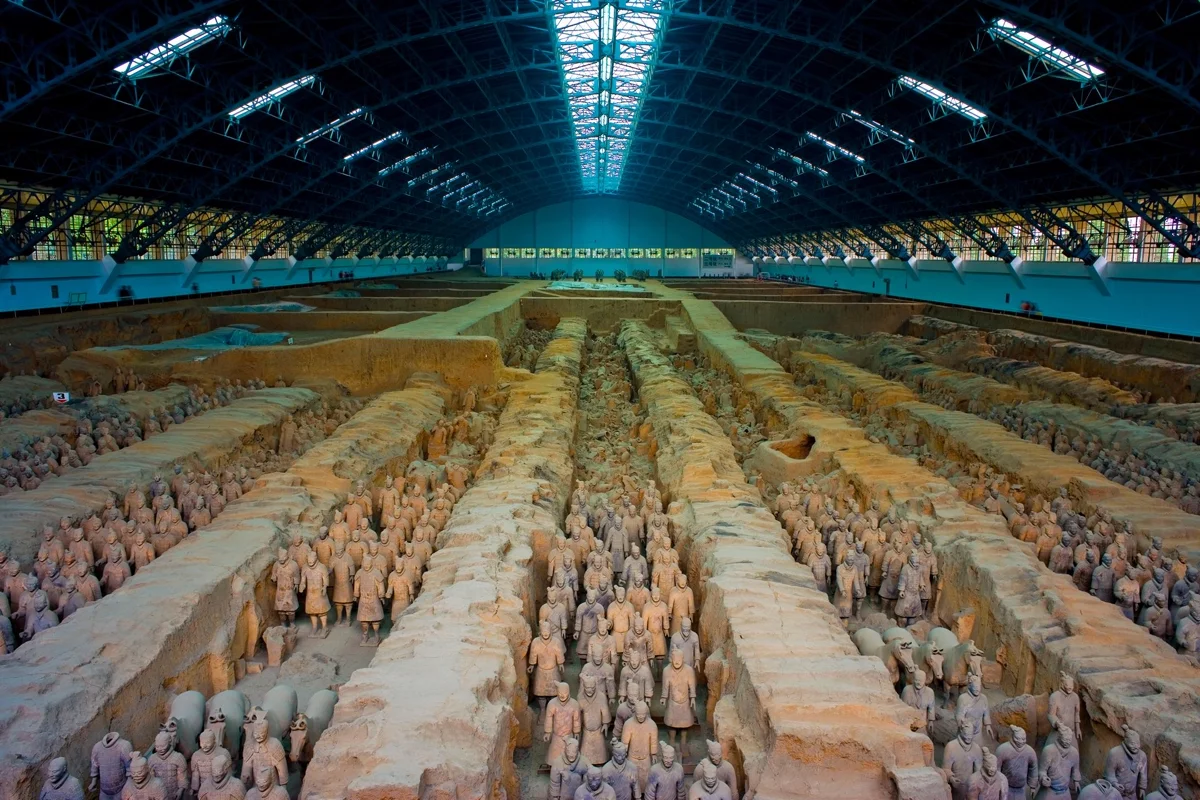
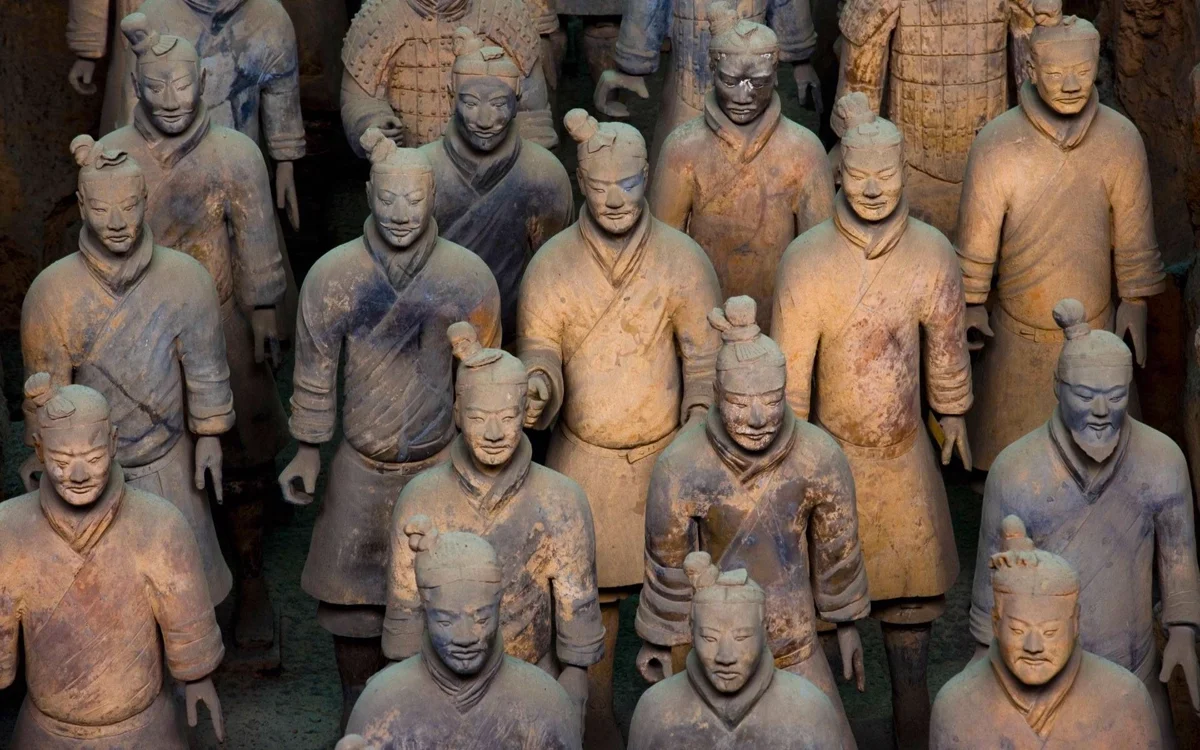
Pit 1 is the largest and most awe-inspiring of the three excavations. Measuring approximately 230 meters long and 62 meters wide, it houses an estimated 6,000 warriors arranged in the vanguard of a military formation facing east — the direction of the states Qin had conquered. The pit is essentially a massive underground corridor divided into eleven longitudinal earthwork walls, between which stand rows of infantry soldiers, flanked by war chariots drawn by teams of four horses.
Walking along the elevated viewing platforms that surround the pit, one is struck first by the sheer repetition — row after row of soldiers, their bodies angled slightly forward, their hands once gripping wooden spear shafts long since rotted away. Then, gradually, the details emerge. Each face is distinct: some broad and stern, others narrow and contemplative. Some wear armored vests over fitted tunics; others wear simple robes, suggesting different ranks. Hair is pulled into elaborate topknots or braided in patterns that archaeologists have correlated with specific military units.
◆ Traveler’s Note Arrive early — by 9:00 AM if possible. The morning light filters through the skylights above Pit 1, casting dramatic shadows across the rows of soldiers. By midday, the viewing platforms are crowded, and the contemplative atmosphere of the excavation gives way to the bustle of tour groups.
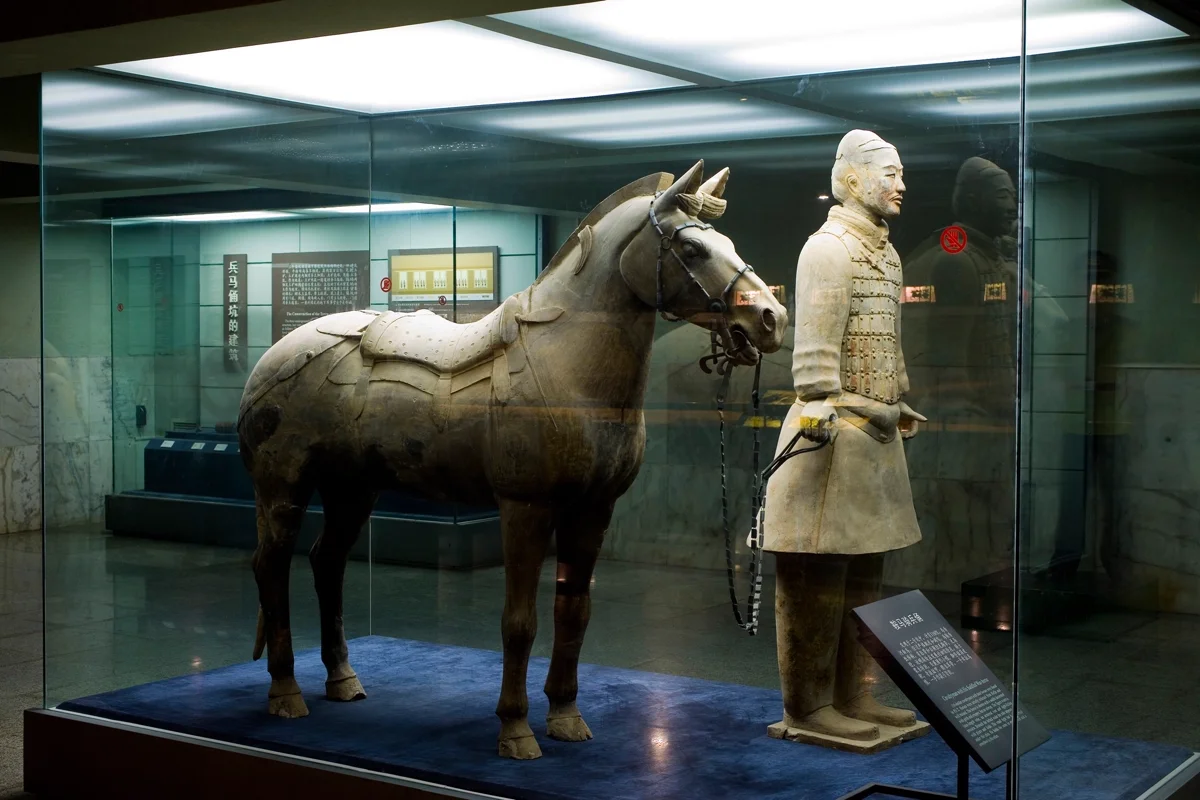
The warriors in Pit 1 are predominantly infantry, the backbone of the Qin military machine. They wear short tunics, suggesting mobility, and their posture — leaning forward, weight on the front foot — conveys readiness to advance. Interspersed among them are chariot teams: four horses abreast, with a charioteer standing behind and two flanking warriors. The chariots themselves were wooden and have largely disintegrated, but the bronze fittings, wheel hubs, and horse harnesses survive, hinting at the engineering sophistication of Qin-era metallurgy.
The western end of Pit 1 remains partially unexcavated, a deliberate decision by Chinese archaeologists who prefer to preserve sections for future generations equipped with better technology. What lies beneath the undisturbed earth may yet rewrite the story of this army.
Pit 2: The Specialist Forces
If Pit 1 represents the main body of the army, Pit 2 reveals its tactical sophistication. Smaller than Pit 1 — approximately 6,000 square meters — this pit contains a mixed-force formation that includes cavalry, kneeling archers, standing archers, and chariot units. The arrangement suggests a military in transition, moving from the chariot-dominated warfare of the Shang and Zhou dynasties toward the infantry-and-cavalry tactics that would define Chinese warfare for centuries to come.
The most celebrated figures in Pit 2 are the kneeling archers. Positioned in the front rows, these warriors kneel on one knee, their bodies angled forward, crossbows raised. Their posture is mechanically efficient — a kneeling figure presents a smaller target while maintaining a stable firing platform. The crossbows themselves were mass-produced with interchangeable parts, a concept that would not become standard in European military engineering until nearly two millennia later.
Behind the archers stand the cavalrymen, mounted on terracotta horses and equipped with short swords. These are the fastest units in the army, positioned to exploit gaps in the enemy line. The horses are depicted in mid-stride, their nostrils flared and ears pricked forward, conveying the kinetic energy of a cavalry charge frozen in clay.
Pit 2 was partially damaged in antiquity — likely by fire set during the rebellion that brought down the Qin dynasty just four years after the First Emperor’s death. The charred remains of wooden structures and the scattered fragments of shattered warriors testify to the violence of those final days, when the empire Qin Shi Huang had spent a lifetime building collapsed in a single generation.
Pit 3: The Command Center
Pit 3 is the smallest of the three excavations — a compact, L-shaped structure covering just 520 square meters — but it may be the most significant. Archaeologists believe it served as the army’s command headquarters. Unlike Pits 1 and 2, which contain soldiers arranged for battle, Pit 3 contains figures in ceremonial and administrative postures: officers in long robes, ceremonial guards with their hands clasped at their waists, and a central hall that may have housed the army’s senior commanders.
The most striking feature of Pit 3 is its architecture. The walls were plastered and painted, the floor paved with compacted earth, and a system of wooden beams and pillars once supported a roof that would have given the space the character of an underground palace. Animal bones discovered in one corner suggest ritual sacrifices performed before the army was sealed underground — a final act of devotion to the emperor’s eternal cause.
Standing in Pit 3, surrounded by these quiet, dignified figures, one feels the weight of ceremony rather than the tension of battle. This was where strategy was decided, where messengers arrived, where orders were dispatched to the thousands of soldiers standing at attention in the pits beyond. It is the brain of the army, and its stillness after two millennia feels almost sacred.
The Bronze Chariots: Half-Size, Full Mastery
Discovered in 1980 approximately 20 meters west of the First Emperor’s tomb mound, two bronze chariots are among the most exquisite artifacts ever recovered from ancient China. Each is roughly half the size of an actual chariot — elaborate reproductions cast in bronze, painted with lacquer and gold leaf, and assembled from over 3,000 individual components.
Chariot No. 1, the open carriage, is pulled by four bronze horses and driven by a kneeling charioteer. Chariot No. 2, the enclosed carriage, features a domed roof, sliding doors, and windows that can be opened and closed — a miniature mobile palace designed for the emperor’s spirit to travel in comfort and safety. The level of detail is extraordinary: the horses’ manes are individually sculpted, the charioteer’s fingers grip reins that once held bronze bridle bits, and the wheels turn on functioning axles.
These chariots are now displayed in a dedicated exhibition hall (Exhibition Hall No. 2) within the museum complex. The climate-controlled space preserves them at constant temperature and humidity, and the low lighting gives the bronze a warm, almost living glow. Visitors who have spent hours amid the earthen tones of the excavation pits find the chariots a revelation — a reminder that the Qin empire’s artistic achievements were as refined as its military ambitions were vast.
The Mausoleum: What Lies Beneath
The tomb mound of Qin Shi Huang stands at the center of the mausoleum complex — a squat, pyramidal hill of rammed earth approximately 51 meters high and 350 meters across at its base. It is, in theory, the most important archaeological site in China. In practice, it remains unopened.
Ancient historian Sima Qian, writing a century after the First Emperor’s death, described the tomb’s interior as a paradise of mercury rivers and jade seas, its ceiling studded with pearls to represent the stars, and its walls painted with the map of the empire. Modern soil testing has confirmed abnormally high mercury concentrations in the mound, lending credibility to at least part of this account.
The Chinese government’s official position is that the tomb will not be opened in the foreseeable future. The technology required to excavate, preserve, and display the contents without destroying them does not yet exist. For now, the mound sits in silence, a reminder that the greatest discovery may still be waiting beneath the earth.
◆ Why the Tomb Has Not Been Opened
- Preservation risk — The terracotta warriors themselves lost their paint within minutes of exposure to air. Any organic materials inside the tomb could suffer catastrophic deterioration.
- Mercury contamination — The high mercury content detected in soil samples poses a health hazard to excavators.
- Structural uncertainty — Ancient texts describe collapsible crossbow traps and mercury rivers. The internal structure of the mound is largely unknown.
- Ethical debate — Some scholars argue the tomb should remain sealed as a monument to the dead, not a resource for the living.
The Restoration Workshop: Fragments Becoming Warriors
One of the most overlooked yet fascinating areas of the museum is the Restoration Workshop, visible to visitors through large glass windows. Here, conservators work painstakingly to reassemble warriors from the thousands of broken fragments recovered during excavation. A single figure may consist of dozens of pieces — a head here, a torso there, fingers and feet scattered across meters of pit floor — and reassembly can take months or even years for a single warrior.
The process is painstaking: fragments are cleaned, catalogued, and matched by material composition, color, and structural fit. Missing sections are filled with modern terracotta, carefully color-matched to the originals. The result is a warrior that looks whole, though trained eyes can distinguish the ancient from the restored.
What strikes most visitors about the workshop is its quiet intensity. There is no dramatic reveal, no cinematic moment. Just craftspeople bent over fragments, applying the same patience and skill their Qin-era predecessors employed two millennia ago. The connection between past and present feels palpable here — an unbroken line of human labor dedicated to the act of creation.
The Museum Complex: A Journey Through 2,200 Years
The Emperor Qinshihuang’s Mausoleum Site Museum encompasses far more than the three excavation pits. The complex includes Exhibition Hall No. 1 (Pit 1), Exhibition Hall No. 2 (Pits 2 and 3 plus the bronze chariots), and several supplementary buildings that house rotating exhibitions, a research center, and an extensive gift shop. The museum’s architecture — clean, modernist lines in gray concrete and glass — recedes deliberately into the background, allowing the ancient artifacts to command attention.
A visit typically follows a linear path: the bronze chariots in Exhibition Hall No. 2, then the three excavation pits in sequence, beginning with the smallest (Pit 3) and building to the overwhelming scale of Pit 1. This progression — from intimate detail to vast panorama — mirrors the experience of understanding the army itself: you begin with individual faces and end with the collective.
◆ Exhibition Hall No. 2 — Bronze Chariots Two half-size bronze chariots, each pulled by four horses, are displayed in this climate-controlled hall. Chariot No. 2 features an enclosed carriage with functioning windows and doors. Over 3,000 individual bronze components make up each chariot. Photography is permitted but flash is prohibited.
Practical Information
Getting There
The museum is located in Lintong District, approximately 40 kilometers east of Xi’an city center.
- By bus: Take Bus 306 (also known as “游5” or “You 5”) from Xi’an Railway Station (near the east gate of the Bell Tower area). The journey takes approximately 60–75 minutes and costs ¥7 (~$1). The bus departs every 10–15 minutes from 7:00 AM to 6:00 PM.
- By taxi/ride-hailing: A one-way trip from central Xi’an costs approximately ¥120–150 (~$17–21), depending on traffic. Didi (China’s equivalent of Uber) is the standard ride-hailing app.
- By private car: Rental cars with drivers can be arranged through most hotels for a day trip, typically ¥300–400 (~$42–56) including waiting time.
Opening Hours
| Season | Hours |
|---|---|
| March – November | 8:30 AM – 6:00 PM (last entry 5:00 PM) |
| November – February | 8:30 AM – 5:30 PM (last entry 4:30 PM) |
The museum is open daily, including holidays. Last entry is one hour before closing.
Tickets
| Category | Price |
|---|---|
| Full ticket (March – November) | ¥120 (~$17) |
| Full ticket (November – February) | ¥80 (~$11) |
| Students / Military / Seniors (65+) | ¥60 (~$8.50) |
| Children under 6 or under 1.2m | Free |
Tickets can be purchased at the gate or online via the museum’s official WeChat mini-program. During peak season (May–October), online booking is strongly recommended as daily visitor numbers may be capped.
Recommended Visit Duration
Allow 3 to 4 hours for a thorough visit. Rushing through the three pits in under two hours means missing the subtlety — the individual faces, the military formations, the restoration work visible through the glass. Those with a particular interest in archaeology or military history may wish to allocate an entire half-day.
Best Time to Visit
- Early morning (before 10:00 AM): The least crowded period, with the best natural light filtering through the exhibition halls. Arrive when the gates open at 8:30 for the most peaceful experience.
- Off-season (November – February): Significantly fewer visitors, shorter queues, and a discounted ticket price of ¥80. The trade-off is cooler weather and slightly shorter hours.
- Avoid: Chinese national holidays (Golden Week in early October, Chinese New Year in January/February) and summer weekends, when visitor numbers can exceed 50,000 per day.
Budget Estimates
| Item | Budget | Mid-Range | Comfort |
|---|---|---|---|
| Transport (from Xi’an center, round trip) | ¥14 (bus) | ¥50 (shared taxi) | ¥300 (private car) |
| Ticket (full price, peak season) | ¥120 | ¥120 | ¥120 |
| Audio guide | — | ¥40 | ¥40 |
| Lunch (at museum附近) | ¥20 | ¥50 | ¥100 |
| Souvenirs | — | ¥50 | ¥200 |
| Daily total (CNY) | ¥154 | ¥310 | ¥760 |
| Daily total (USD) | ~$22 | ~$44 | ~$107 |
◆ Budget tip: The museum’s cafeteria offers decent noodle dishes and rice meals for ¥20–35. For a wider selection of restaurants, take the bus back toward Lintong town center, where local restaurants serve Xi’an-style noodles, roujiamo (Chinese “hamburger”), and other Shaanxi specialties at lower prices.
Frequently Asked Questions
Can I take photos inside the museum?
Yes, photography is permitted in the excavation pits and most exhibition areas. Flash photography is prohibited everywhere, as light damage accelerates the deterioration of painted surfaces. Tripods are generally not allowed during peak hours. Video recording for personal use is permitted, but commercial filming requires prior approval from the museum administration.
How long does the bus from Xi’an take?
Bus 306 takes approximately 60–75 minutes from Xi’an Railway Station to the museum, depending on traffic. The return journey may take longer during evening rush hour (5:00–7:00 PM). Budget at least 90 minutes for the round trip by bus.
Is there a combined ticket that includes the mausoleum mound?
The ¥120 ticket covers the entire museum complex, including all three excavation pits, the bronze chariot exhibition, and the mausoleum mound area. The tomb mound itself is not open for interior visits, but the park surrounding it — including the surrounding landscape and the First Emperor’s memorial — is included in the ticket.
What’s the best season to visit Xi’an for this trip?
Autumn (September – November) offers the most comfortable weather in Xi’an, with mild temperatures and clear skies. Spring (March – May) is also pleasant but can be dusty. Summer (June – August) is hot and humid, with temperatures exceeding 35°C (95°F). Winter (December – February) is cold but manageable, with the benefit of fewer tourists.
Are there English-language guides or audio guides?
Yes, the museum offers English-language audio guides for rent (¥40) at the entrance. English signage is present throughout the exhibition halls, and most information panels include English translations. For a deeper experience, consider booking a licensed English-speaking guide in advance through your hotel or a reputable tour agency — typically ¥200–400 (~$28–56) for a 2–3 hour guided tour.
Is the site accessible for visitors with mobility challenges?
The museum has installed ramps and elevators in most areas, and the main viewing platforms for the excavation pits are accessible via ramps. However, some areas of the museum complex involve stairs or uneven terrain. Wheelchair users should be aware that the restoration workshop viewing area may have limited access. The museum provides free wheelchairs at the entrance on a first-come, first-served basis.
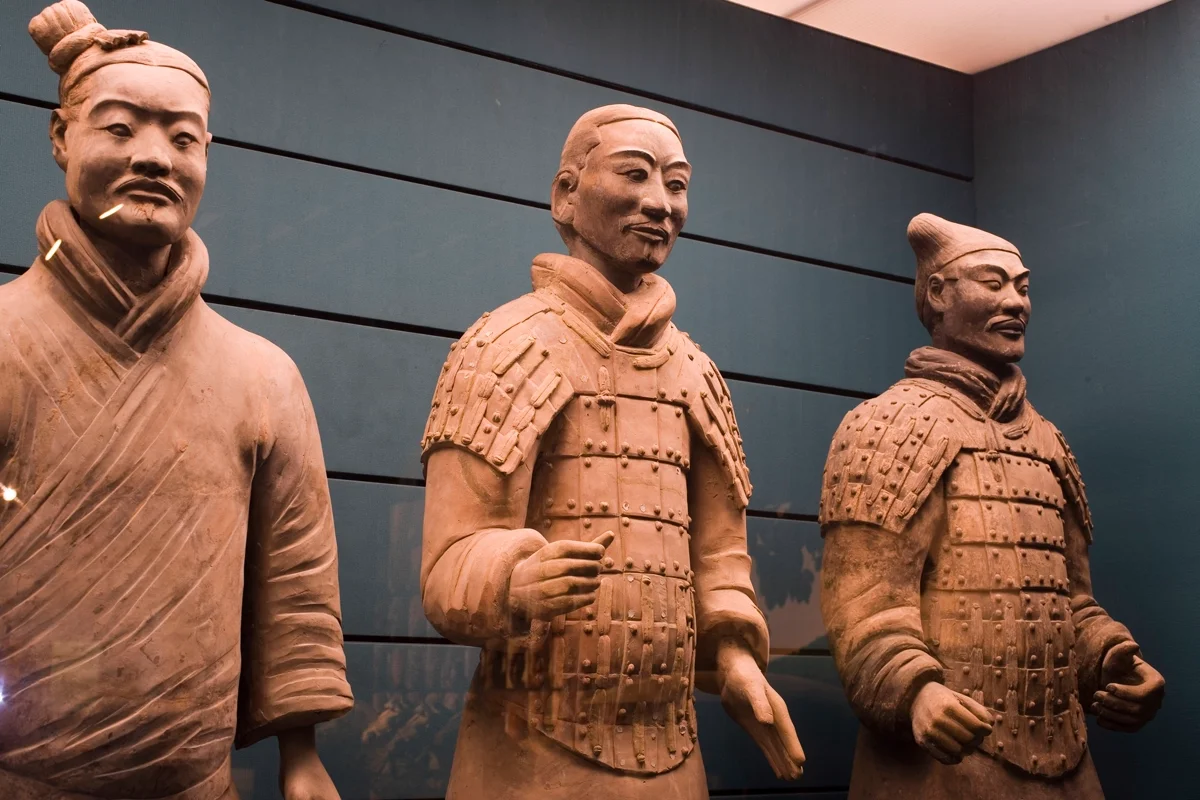
The Terracotta Warriors were buried in silence for twenty-two centuries. When they emerged into daylight, they carried with them the face of an empire — its ambition, its artistry, and its unyielding belief that even death could be conquered. Standing before them, one understands that this was never merely a funeral arrangement. It was a declaration: that the Qin would endure, that order would prevail, that the Emperor’s will would echo through eternity. Whether one agrees with that ambition or recoils from it, the army remains — 8,000 faces staring forward, waiting for orders that will never come.