Suzhou Classical Gardens: The Art of Borrowed Scenery and Timeless Elegance
📅 Single-Attraction Guide | 📍 Suzhou, Jiangsu Province | ⏱️ Half-Day to Full-Day Visit
◆ A City Written in Water and Stone
Suzhou has been a city of gardens for over 2,500 years. While emperors built palaces in the north, scholar-officials here constructed private worlds — miniature landscapes where every rock, every ripple of water, every carefully angled window framed a painting that changed with the seasons. By the Ming and Qing dynasties (1368–1912), Suzhou held over 200 gardens. Today, nine of them are protected as a UNESCO World Heritage Site, collectively known as the Classical Gardens of Suzhou.
This is not a theme park. It is a living archive of Chinese aesthetics — a philosophy of living with nature compressed into walled courtyards, some no larger than a tennis court.
“The garden is a painting made three-dimensional.” — Classical Chinese garden theory
◆ The Philosophy Behind the Walls
To understand a Suzhou garden, you must first understand the scholars who built them. These were retired officials, poets, and painters — men who had spent decades navigating the brutal politics of imperial court life. When they returned home, they didn’t build mansions. They built landscapes.
The core principle is jiè jǐng (借景) — “borrowed scenery.” A wall is never just a wall. It is a canvas interrupted by a moon gate that frames a distant pagoda. A window is never just a window. It is a picture frame whose subject changes with the time of day and the tilt of the seasons. The garden doesn’t end at its boundaries; it absorbs the mountains, the sky, the neighboring trees into its own composition.
Taoist philosophy pervades every decision. Water represents the feminine (yin) — soft, yielding, reflective. Rock represents the masculine (yang) — rigid, enduring, vertical. A garden without both is incomplete. The interplay between stillness and movement, emptiness and fullness, concealment and revelation — this is what makes a Suzhou garden feel alive even in silence.
◆ Humble Administrator’s Garden — 拙政园
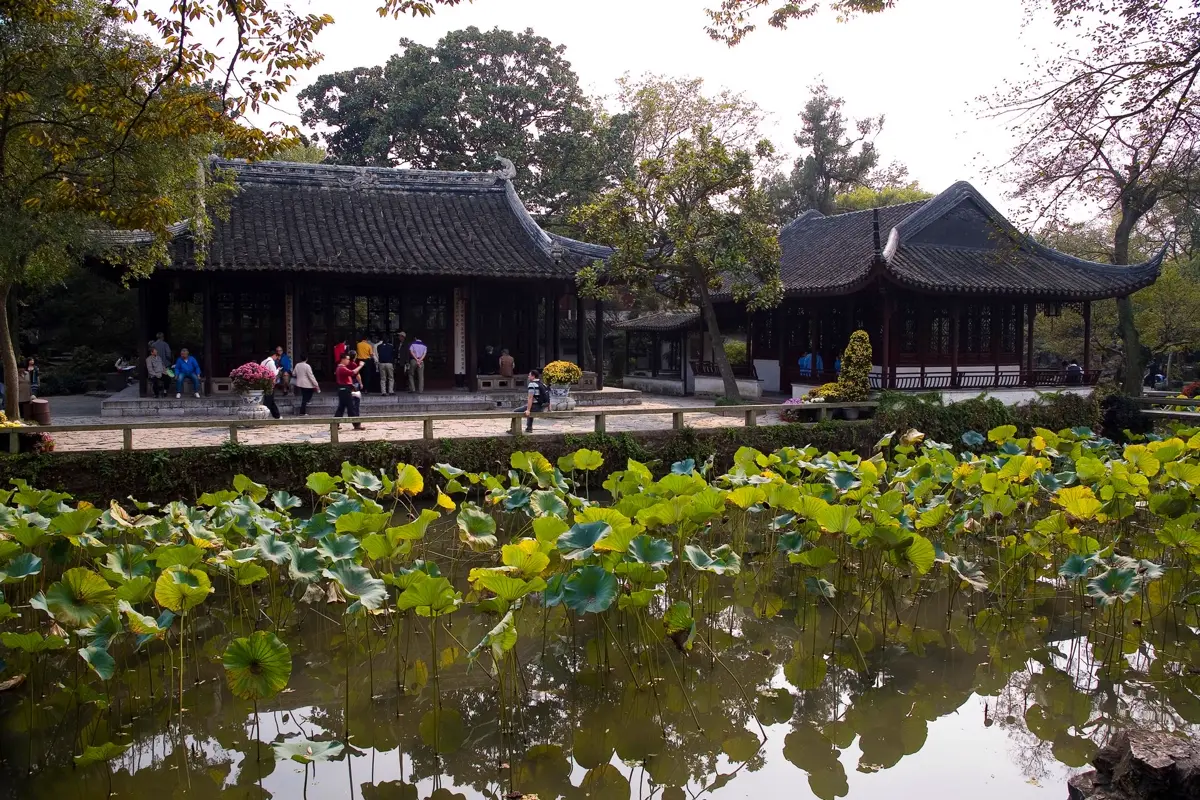
The largest and most famous of Suzhou’s gardens, the Humble Administrator’s Garden (Zhuōzhèng Yuán) covers 52,000 square meters — roughly the size of 7 football pitches. It was built in 1509 by Wang Xianchen, a retired Ming dynasty official who had fallen out of favor at court. The name itself is a quiet act of defiance: “humble administrator” is a self-deprecating reference to a passage in the Zhuangzi, suggesting that the best way to govern is not to govern at all.
Three Distinct Sections
The garden is divided into three sections, each with its own character:
The Eastern Garden is open and pastoral — wide lawns, scattered pavilions, and a sense of spaciousness that feels almost Western in its simplicity. This was the original garden’s entrance area, designed for receiving guests and hosting literary gatherings.
The Central Garden is the masterpiece. Water dominates here — a vast, irregular pond that reflects the sky, the surrounding pavilions, and the distant pagoda of the North Temple. The Fragrant Isle (Xiang Zhou), a boat-shaped stone platform, appears to float on the water. The Faraway Gaze Pavilion (Yuǎn Xiāng Tīng) sits at the highest point, offering a panoramic view that absorbs the surrounding city into the garden’s composition.
The Western Garden is more intimate and ornate. The Thirty-Six Mandarin Ducks Hall features a rare double-corridor — one side open to the garden, the other enclosed — allowing the same walk to feel completely different depending on which side you choose. In summer, the pond here fills with lotus blossoms, and the air carries their fragrance across the water.
Visitor Essentials
| Detail | Information |
|---|---|
| Address | 178 Dongbei Street (东北街178号) |
| Hours | 7:30 AM – 5:30 PM (last entry 4:30 PM) |
| Ticket | ¥80 (~$11) |
| Time needed | 2–3 hours |
| Tip | Book 3–5 days ahead in peak season (April–May, Sep–Oct). Arrive at 7:30 AM opening to avoid crowds. |
💡 Design Note: The garden’s east-to-west flow follows a deliberate emotional arc — from openness to density, from simplicity to ornament. Walking it in reverse feels disorienting, like reading a poem from the last line.
◆ Lingering Garden — 留园
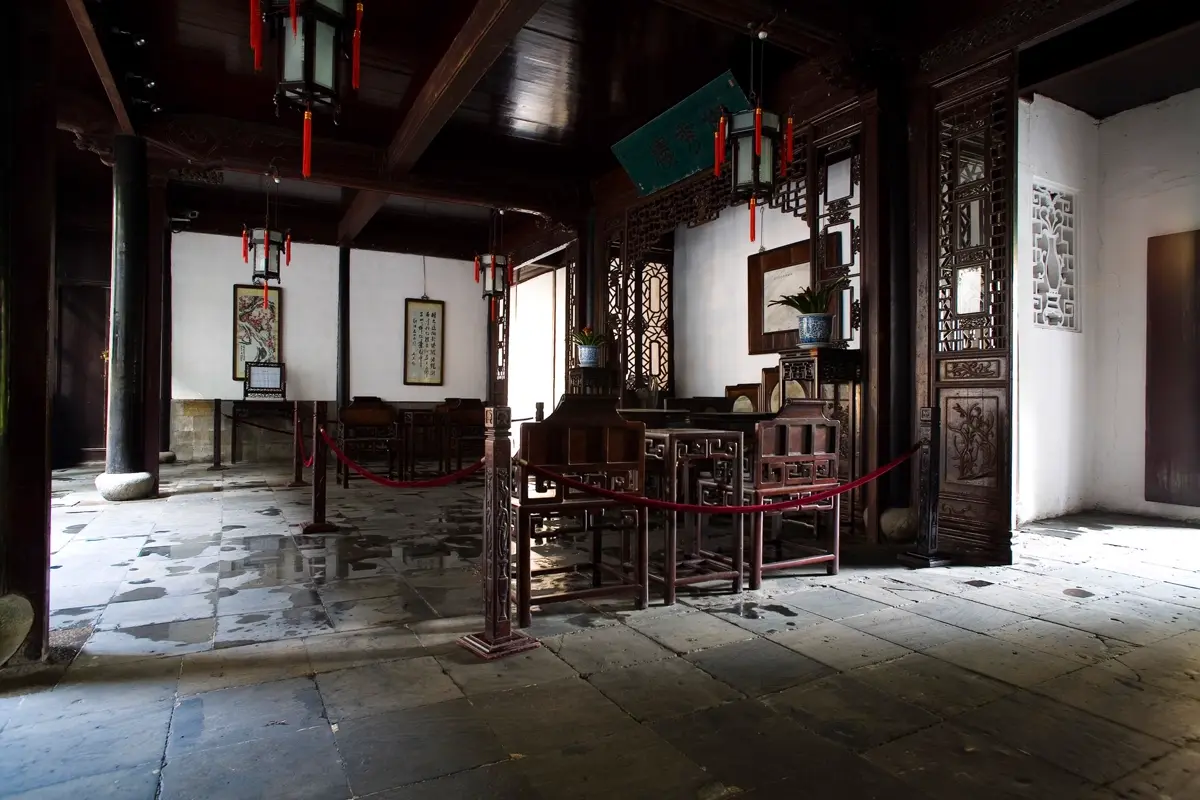
If the Humble Administrator’s Garden is about water, the Lingering Garden (Liú Yuán) is about architecture. Smaller at 23,300 square meters, it compensates with the most diverse collection of architectural elements of any Suzhou garden — over a dozen pavilions, corridors, and halls, each with a distinct personality.
Four Themed Sections
The garden is organized into four sections that transition seamlessly:
- East: The architectural core, centered on the Five Peaks Immortal Hall (Wǔ Fēng Xiān Guǎn), the largest hall in any Suzhou garden. The surrounding rockeries are dramatic, almost theatrical.
- West: A hillside garden with a winding stream that recalls the literati tradition of qū shuǐ liú shāng — floating wine cups down a stream while composing poetry.
- North: The most naturalistic section, with a bamboo grove, a bonsai garden, and a sense of rural retreat.
- Central: The water garden, dominated by a pond that reflects the surrounding structures with mirror-like precision.
The Corridor of Changing Views
The Lingering Garden’s corridors are legendary. The 700-meter covered walkway connects every section, but it’s the way it manipulates perspective that impresses. Decorative lattice windows — each with a unique geometric pattern — frame views of the garden like a series of paintings. As you walk, the scene shifts constantly: a sudden glimpse of a rockery, a flash of lotus leaf, the dark interior of a hall opening onto a sunlit courtyard.
Visitor Essentials
| Detail | Information |
|---|---|
| Address | 338 Liu Yuan Road (留园路338号) |
| Hours | 7:30 AM – 5:30 PM |
| Ticket | ¥55 (~$8) |
| Time needed | 1.5–2 hours |
| Tip | Less crowded than Humble Administrator’s. Visit in autumn when the maple trees turn crimson. |
◆ Master of the Nets Garden — 网师园
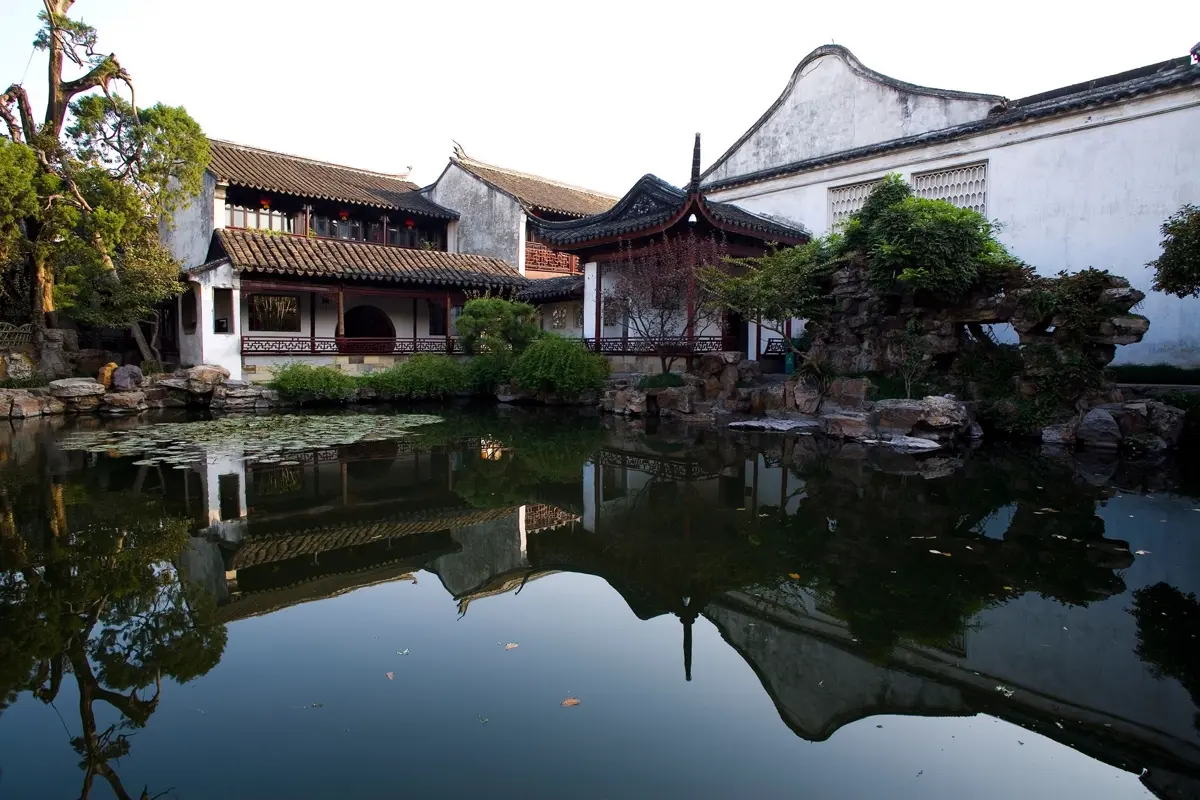
The smallest of Suzhou’s famous gardens — just 5,400 square meters — yet arguably the most refined. The Master of the Nets (Wǎng Shī Yuán) is the garden that Chinese garden designers themselves consider the perfect distillation of the art form. Every element is essential; nothing is superfluous.
The Night Garden Experience
What makes this garden unique is its night tour (夜花园). After dark, the garden transforms. Traditional Kunqu opera performances, Suzhou pingtan storytelling, and guzheng concerts are staged in the pavilions, lit by lanterns and candles. The water reflects the performers, the rockeries cast deep shadows, and the boundaries between reality and reflection dissolve entirely.
Why Designers Love It
The garden demonstrates the principle of yǐ xiǎo jiàn dà — “seeing the great in the small.” The central pond is tiny, but through clever use of mirrored surfaces, adjacent courtyards that visually extend the space, and the strategic placement of a single Taihu limestone rock, it feels boundless. The Fifth Peak Pavilion offers a view that compresses an entire mountain landscape into a single glance.
Visitor Essentials
| Detail | Information |
|---|---|
| Address | 11 Gankengqiao Lane (阔家头巷11号) |
| Hours | Day: 7:30 AM – 5:30 PM; Night: 7:30 PM – 10:00 PM (spring/summer) |
| Ticket | Day: ¥40 ( |
| Time needed | 1–1.5 hours (day); 1.5 hours (night) |
| Tip | The night tour is unmissable if your schedule allows. Book in advance during summer weekends. |
◆ Garden Design — The Four Core Principles
1. Water (水) — The Garden’s Soul
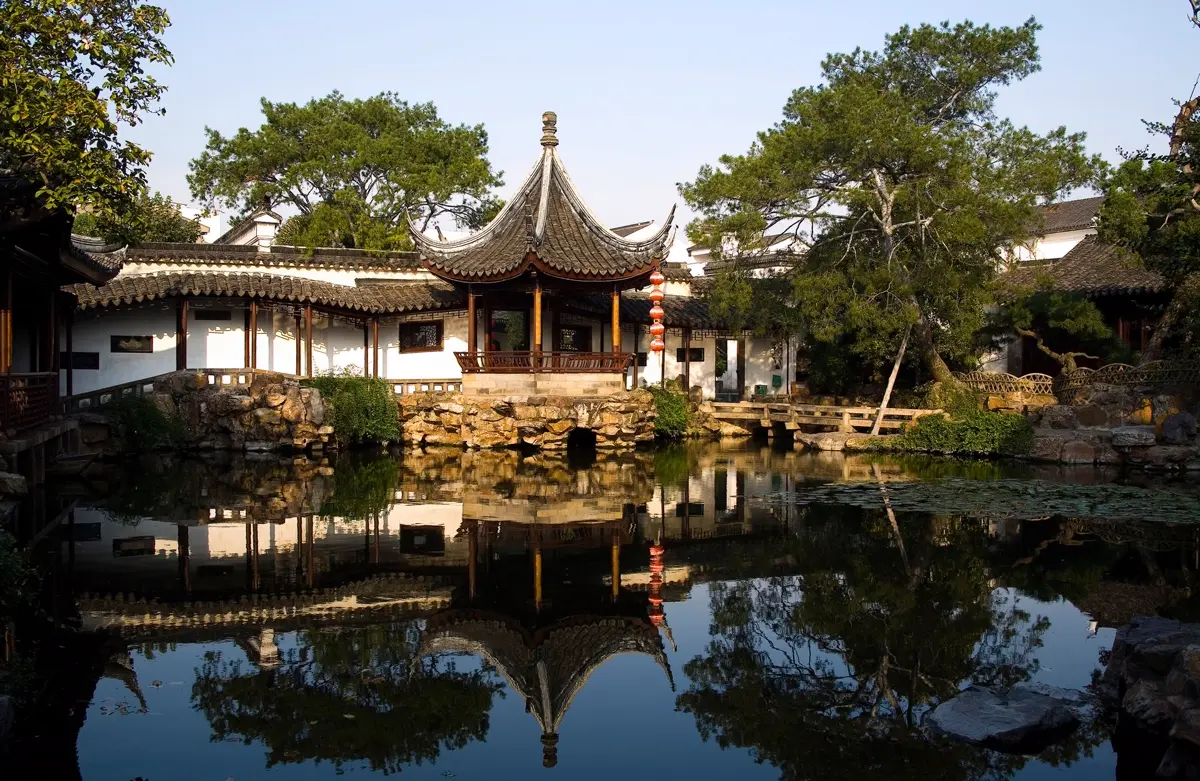
Every Suzhou garden is built around water. The pond is the compositional center — everything radiates outward from it. Water provides reflection, doubling the visual space. It provides sound — the splash of carp, the drip of rain from a pavilion roof. And it provides stillness, a surface that calms the mind simply by existing.
2. Rockeries (山石) — Mountains in Miniature
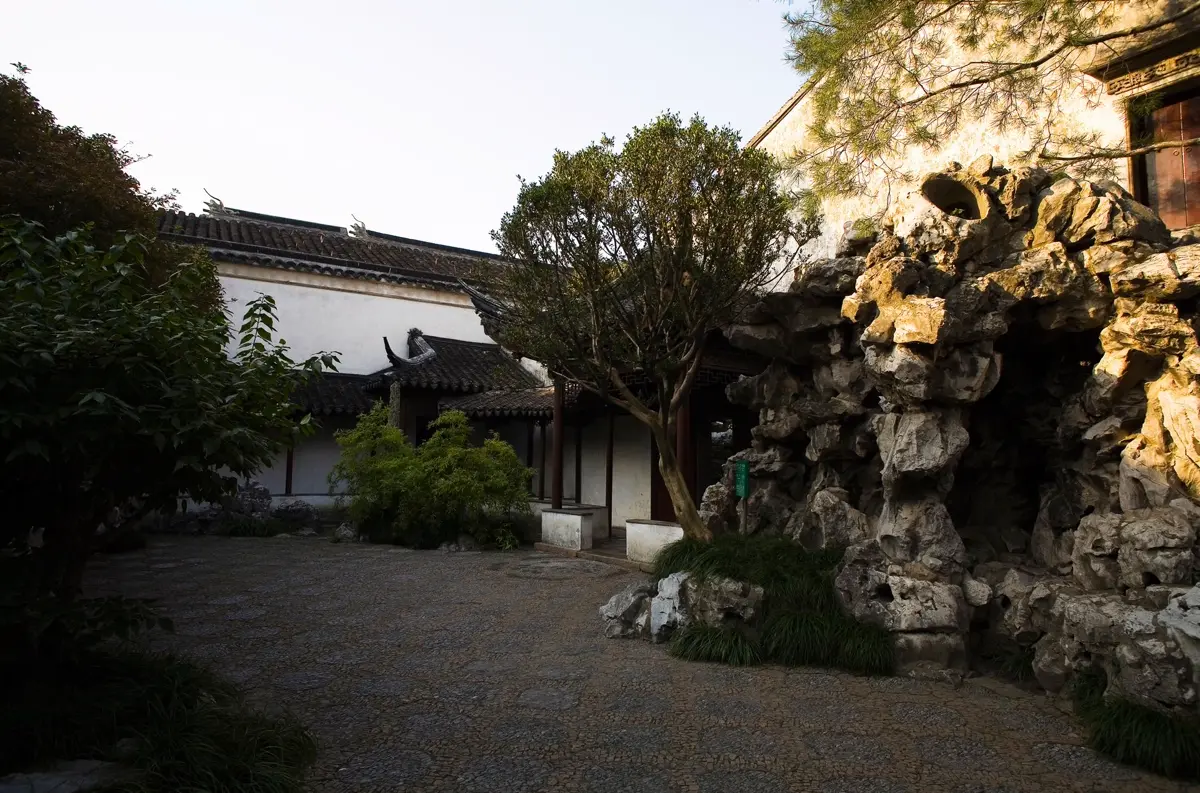
The Taihu limestone rocks used in Suzhou gardens are quarried from the bed of Lake Tai, where centuries of water erosion have carved them into extraordinary shapes. The connoisseur’s criteria are four characters: shòu (瘦, thin/slender), lòu (漏, leaky/porous), tòu (透, perforated/transparent), and zhòu (皱, wrinkled/textured). A rock that embodies all four is considered a scholar’s rock — a piece of the cosmos you can hold in your hands.
3. Architecture (建筑) — Frames Within Frames
Pavilions, corridors, halls, and moon gates serve a dual purpose. They are functional spaces — places to rest, to write poetry, to drink tea. But they are also optical devices. A moon gate doesn’t just provide passage; it frames the view beyond into a perfect circle, turning a garden path into a living painting.
4. Borrowed Scenery (借景) — The Garden Without Walls
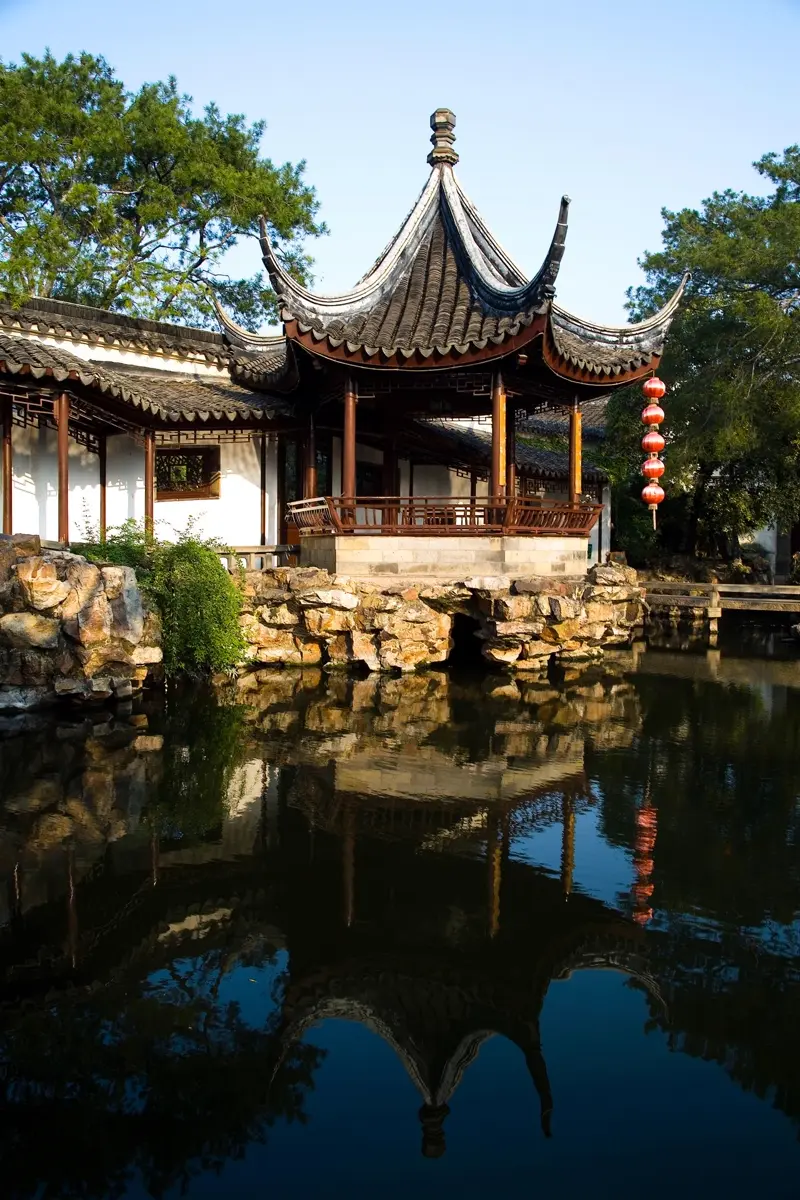
The most sophisticated principle. The best gardens don’t try to contain nature — they extend into it. The Humble Administrator’s Garden borrows the distant North Temple pagoda. The Lingering Garden borrows the Western Hill. The garden wall becomes a picture frame, and the world beyond becomes part of the composition.
◆ When to Visit — A Seasonal Guide
| Season | What to Expect | Best For |
|---|---|---|
| Spring (Mar–May) | Peach and plum blossoms, fresh green foliage, mild temperatures (15–22°C / 59–72°F) | Photography, walking, garden tours |
| Summer (Jun–Aug) | Lotus in full bloom, lush greenery, hot and humid (28–35°C / 82–95°F) | Lotus viewing, night garden tours |
| Autumn (Sep–Nov) | Crimson maples, osmanthus fragrance, clear skies (12–25°C / 54–77°F) | Photography, cultural events |
| Winter (Dec–Feb) | Plum blossoms, snow-dusted rockeries, quiet atmosphere (0–8°C / 32–46°F) | Solitude, contemplative walks |
🌸 Peak recommendation: Late April to mid-May. The gardens are in full bloom, temperatures are comfortable, and the school holiday crowds haven’t yet arrived. September to October offers similar quality with autumn colors.
◆ Getting There
From Shanghai
| Mode | Duration | Cost |
|---|---|---|
| High-speed rail (Shanghai Hongqiao → Suzhou North) | 25–35 minutes | ¥39.5 (~$5.50) |
| Regular train (Shanghai → Suzhou) | 40–60 minutes | ¥26.5 (~$3.70) |
| Bus (Shanghai Long-distance Bus Station) | 1.5–2 hours | ¥50–80 (~$7–11) |
Within Suzhou
| Mode | Details |
|---|---|
| Metro | Line 1 (North Temple Station for Humble Administrator’s Garden), Line 4 (Lingering Garden) |
| Taxi | ¥10–30 (~$1.40–4.20) between most gardens |
| Walking | Gardens in the old town are walkable from each other (15–30 minutes) |
| Bus | Extensive network; ¥2 per ride |
◆ Practical Information
Tickets & Combo Deals
| Garden | Ticket | Combo Options |
|---|---|---|
| Humble Administrator’s Garden | ¥80 (~$11) | Combined ticket with Lion Grove: ¥120 (~$17) |
| Lingering Garden | ¥55 (~$8) | — |
| Master of the Nets | ¥40 (~$6) | Night tour: ¥100 (~$14) |
| Lion Grove | ¥40 (~$6) | — |
| Canglang Pavilion | ¥20 (~$2.80) | — |
💡 The Suzhou Garden Pass (苏州园林卡) at ¥198 (~$28) covers all major gardens for one year — worth it if you plan to visit 3+ gardens.
Budget Estimate — Per Person, Per Day
| Category | Budget | Mid-Range | Comfort |
|---|---|---|---|
| Garden tickets (2 gardens) | ¥120 (~$17) | ¥175 (~$25) | ¥220 (~$31) |
| Lunch | ¥40 (~$5.50) | ¥80 (~$11) | ¥150 (~$21) |
| Transportation | ¥20 (~$2.80) | ¥40 (~$5.50) | ¥80 (~$11) |
| Tea/snacks | ¥20 (~$2.80) | ¥50 (~$7) | ¥100 (~$14) |
| Total | ¥200 (~$28) | ¥345 (~$49) | ¥550 (~$77) |
Visitor Tips
- Arrive early. The gardens open at 7:30 AM. By 10:00 AM, Humble Administrator’s Garden is packed with tour groups. The first 90 minutes are golden.
- Weekdays over weekends. Thursday and Friday mornings are the quietest.
- Wear comfortable shoes. The stone paths are uneven, and you’ll be walking on limestone and flagstone for hours.
- Carry water. Suzhou’s summer humidity is intense. The gardens have limited shaded areas.
- Download Alipay or WeChat Pay. Many smaller vendors don’t accept cash.
- Hire a guide (optional but recommended). A knowledgeable guide reveals the stories behind each pavilion, rock, and planting — the difference between seeing a pretty garden and understanding a masterpiece. Licensed guides at the entrance charge ¥100–200 (~$14–28).
◆ FAQ
Q: How many days do I need for Suzhou’s gardens? A: One full day covers the “big three” (Humble Administrator’s, Lingering, Master of the Nets). Two days lets you add Lion Grove, Canglang Pavilion, and the old town canals. Three days allows for day trips to nearby water towns like Tongli or Zhouzhuang.
Q: Are the gardens accessible for wheelchair users? A: Partially. The main paths are paved, but many areas have stone steps, narrow corridors, and uneven surfaces. Humble Administrator’s Garden has the most accessible routes. Contact the garden in advance for specific accessibility information.
Q: Can I take photos? A: Yes, photography is encouraged. Tripods and professional equipment may require permission. Drone use is strictly prohibited within the garden walls.
Q: Is there English signage? A: Major gardens have English labels and some English audio guides (¥20–30 / ~$3–4 rental). The Humble Administrator’s Garden has the best English-language facilities.
Q: What about nearby food? A: Suzhou cuisine (Sū Bāng Cài) is delicate and sweet. Try squirrel mandarin fish (松鼠桂鱼) — crispy fried fish in a sweet-and-sour glaze — at Song He Lou (松鹤楼), a restaurant operating since 1757. For something simpler, the noodles near Pingjiang Road are excellent: thin, springy noodles in a clear broth with seasonal toppings.
Q: Is it worth visiting in winter? A: Yes — differently worth it. Winter brings solitude, snow-dusted rockeries, and plum blossoms. The gardens feel more contemplative, more aligned with their original purpose as retreats. Just dress warmly; the stone corridors amplify the cold.
◆ Suggested Itinerary — One Perfect Day
| Time | Activity |
|---|---|
| 7:30 AM | Arrive at Humble Administrator’s Garden at opening. Walk the eastern and central gardens in peace. |
| 10:00 AM | Cross to Lion Grove Garden (5-minute walk) — famous for its labyrinthine rockeries. |
| 11:30 AM | Walk to Pingjiang Road for lunch. Try Song He Lou or a canal-side noodle shop. |
| 1:00 PM | Stroll Pingjiang Road — the best-preserved ancient street in Suzhou. |
| 2:30 PM | Visit Master of the Nets Garden. Experience the yǐ xiǎo jiàn dà philosophy. |
| 4:00 PM | Walk to the Lingering Garden (15 minutes). Focus on the corridors and the Western Hill view. |
| 5:30 PM | Dinner at a local Suzhou restaurant. Order squirrel mandarin fish and seasonal vegetables. |
| 7:30 PM | Return to Master of the Nets for the night garden tour (seasonal). |
🌿 Suzhou’s gardens are not destinations — they are instructions. They teach you how to look, how to slow down, how to find the infinite in the small. Come with patience. Leave with perspective.