Nanjing: Walking Through the Shadow of Six Dynasties
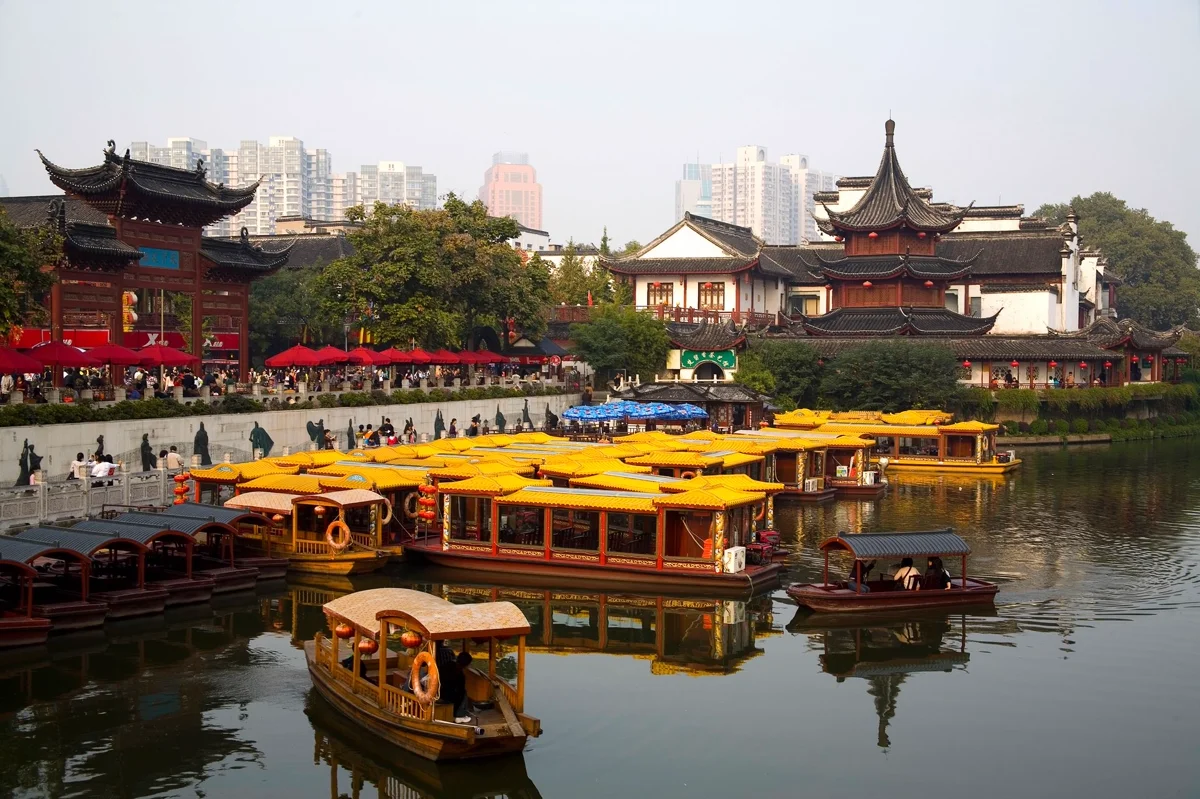
“The ancient capital has seen its share of glory and ruin. To walk through Nanjing is to walk through the lives of kings, poets, and revolutionaries — sometimes in the same afternoon.”
I arrived in Nanjing on a grey October morning, the kind where the sky can’t decide between drizzle and mist. The high-speed rail from Shanghai had taken just over an hour, and I stepped out of Nanjing South Station into a city that felt simultaneously ancient and aggressively modern — glass towers rising behind Ming-era city walls, electric scooters weaving past Confucian academies. It was disorienting in the best possible way. I didn’t know it yet, but this would become one of the most emotionally layered cities I’ve ever visited.
Nanjing — literally “Southern Capital” — has served as China’s seat of power more times than almost any other city. It was the capital of the Eastern Wu, the Eastern Jin, the Song, the Qi, the Liang, and the Chen — the Six Dynasties that defined an era of artistic brilliance and political chaos from the 3rd to 6th centuries. Then came the Ming dynasty, the Republic of China, and the unspeakable horrors of 1937. Every layer of history is still visible, still echoing. You don’t just sightsee in Nanjing. You feel it.
◆ The Historical Weight of Six Dynasties
The thing about Nanjing that caught me off guard is how present the past feels. In Beijing, history is monumental — the Forbidden City, the Great Wall — things that dwarf you into reverence. In Nanjing, history is intimate. It seeps through cracked alleyway walls. It drifts across Xuanwu Lake on autumn mornings. It sits beside you in a teahouse where scholars once debated poetry.
The Six Dynasties period (222–589 AD) was a time of extraordinary cultural production amid constant warfare. The Jiankang, as Nanjing was then known, became a haven for scholars fleeing the war-torn north. They brought with them calligraphy, painting, philosophy, and a melancholic awareness of impermanence that still defines the city’s mood. When you walk along the ancient city wall near Zhonghua Gate — the largest surviving city wall in the world — you’re walking along stones laid by workers in the 14th century, on foundations that trace back to the 6th. The layers are literal.
◆ Editor’s Note: Nanjing’s city wall stretches 35.3 kilometers and was built between 1368 and 1386 under the Hongwu Emperor, founder of the Ming dynasty. Over 200 million bricks were used, many stamped with the names of the workers who made them — an early form of quality control that would make modern building inspectors proud.
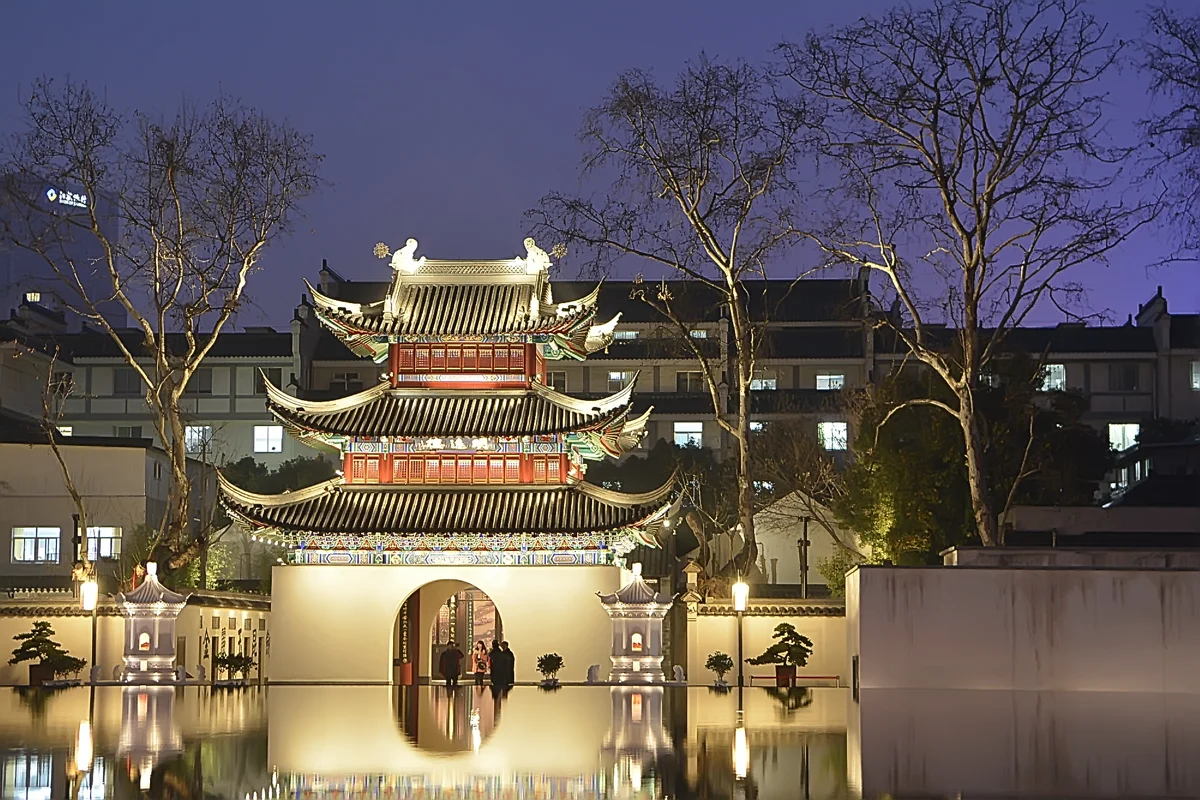
I spent my first afternoon at the Chaotian Palace, a site most tourists skip, and I can’t recommend it enough. It’s the largest surviving palace complex from the Ming dynasty in the Jiangnan region, and when I visited, I practically had the place to myself. Courtyard after courtyard of red-lacquered halls, stone carvings worn smooth by centuries of hands. A group of elderly men practiced tai chi in one corner while a young couple took engagement photos in another. The past and present coexisting without friction.
Chaotian Palace (朝天宫) 📍 No. 1 Guanchaoqian Street, Jianye District 🚇 Metro Line 2, Moqiao Road Station, 10-minute walk ⏰ 9:00 AM – 5:000 PM (closed Mondays) 💰 ¥25 (~$3.50) | Free on weekends
◆ Ming Dynasty Legacies: The Ming Xiaoling Mausoleum
No trip to Nanjing is complete without the Ming Xiaoling Mausoleum — the tomb of the Hongwu Emperor, Zhu Yuanzhang, who founded the Ming dynasty and made Nanjing his capital. The approach alone is worth the trip: the Sacred Way, a 600-meter avenue flanked by stone animals carved in the 14th century, winds through a forest that turns impossibly beautiful in autumn.
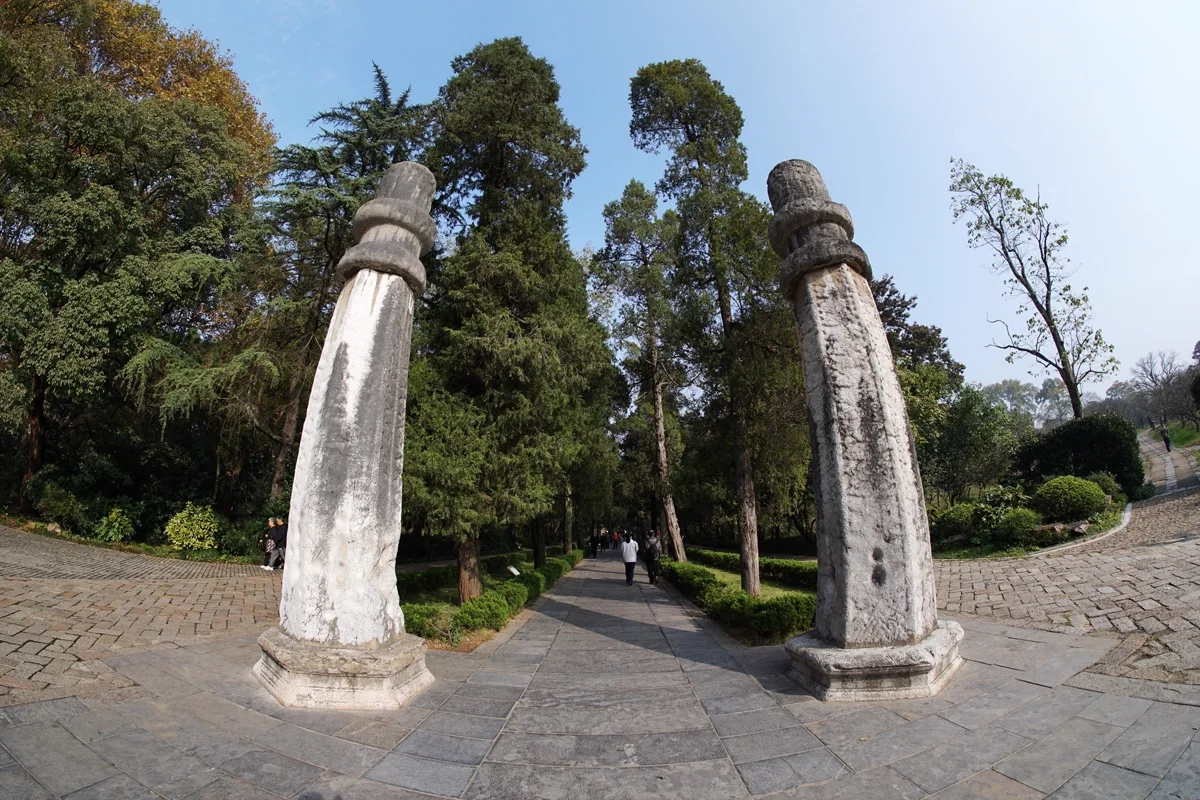
I visited on a weekday in late October, and the red and gold leaves were at their peak. The stone camels and elephants lining the Sacred Way looked almost alive in the dappled light — moss creeping along their flanks, fallen leaves caught in the crevices of their carved saddles. I stood there for twenty minutes, just watching the light change. It’s one of those rare tourist sites where silence feels appropriate, even necessary.
The tomb itself sits at the base of Purple Mountain (Zijin Shan), and the climb up is modest but rewarding. What struck me most wasn’t the grandeur — it’s actually relatively restrained for an emperor’s tomb — but the way nature has reclaimed the site. Trees grow through broken walls. Ferns carpet the stone platforms. It’s a meditation on impermanence, which feels entirely appropriate for a place built to house the dead.
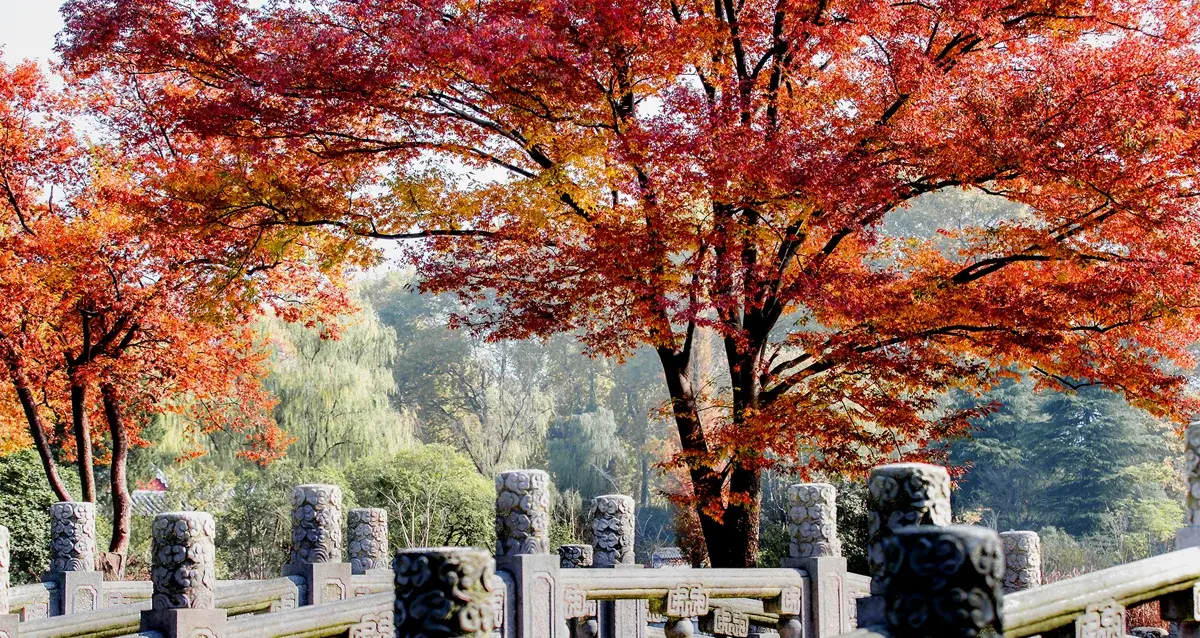
Ming Xiaoling Mausoleum (明孝陵) 📍 South Slope of Purple Mountain, Xuanwu District 🚇 Metro Line 2, Minggong Station; then walk 15 minutes or take shuttle bus ⏰ 6:30 AM – 6:30 PM (peak season) / 6:30 AM – 5:30 PM (off-season) 💰 ¥70 (
$10) | Combined ticket with Purple Mountain area ¥100 ($14)◆ Pro Tip: Come at opening time on a weekday. By 10 AM, tour buses arrive and the Sacred Way transforms from a contemplative walkway into a selfie-stick obstacle course. I made the mistake of arriving at 11 on my first visit and vowed to always come early after that.
● Republican Era Echoes: Sun Yat-sen Mausoleum
Riding the shuttle bus uphill from the Ming Xiaoling, you arrive at one of modern China’s most symbolically charged sites: the Sun Yat-sen Mausoleum (Zhongshan Ling). Dr. Sun Yat-sen, the “Father of the Nation,” chose this spot on Purple Mountain for his tomb, and the architecture reflects his vision of a modern China — blending traditional Chinese elements with Western neoclassical design.
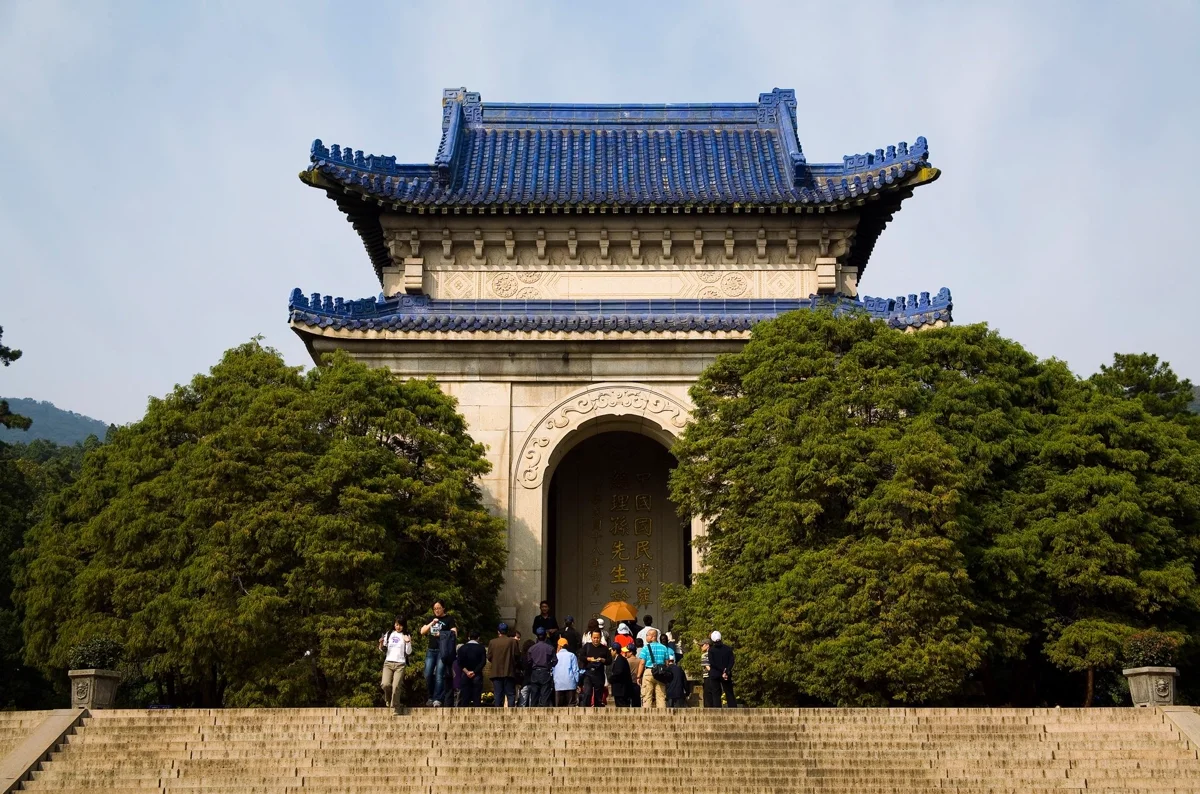
The climb is the experience. 392 steps lead up to the main hall, and yes, your legs will feel it. But there’s a deliberate design logic: the steps narrow as you ascend, making the hall appear closer than it is — a metaphor for the difficulty of revolutionary progress that gets easier as you near the goal. Standing at the top, looking back down through the blue-tiled roofline toward the city below, I understood why Sun chose this place. It commands the landscape without dominating it.
Inside the main hall, a white marble statue of Sun Yat-sen sits in quiet dignity. The space is cool and hushed, and even the most camera-happy visitors tend to lower their voices. Outside, the surrounding parkland is perfect for lingering — tall camphor trees, well-maintained gardens, and the kind of orderly calm that makes you forget you’re in a city of nine million.
Sun Yat-sen Mausoleum (中山陵) 📍 East of Purple Mountain, Xuanwu District 🚇 Metro Line 2, Xiamafang Station; then walk 15 minutes uphill ⏰ 8:30 AM – 5:00 PM (closed Mondays) 💰 Free admission (reservation required — book via WeChat mini-program “钟山风景区”)
● Personal Note: The reservation system is strict. I saw several visitors turned away at the gate because they hadn’t booked. Do this at least one day in advance on WeChat. If you don’t have WeChat, ask your hotel to help you reserve — most front desk staff are used to this.
◆ Along the Qinhuai River: Fuzimiao and Night Scenes
If the mountains hold Nanjing’s solemn history, the Qinhuai River holds its romantic soul. This winding waterway has been the city’s cultural artery for over two thousand years, and the area around the Confucius Temple (Fuzimiao) remains its beating heart.
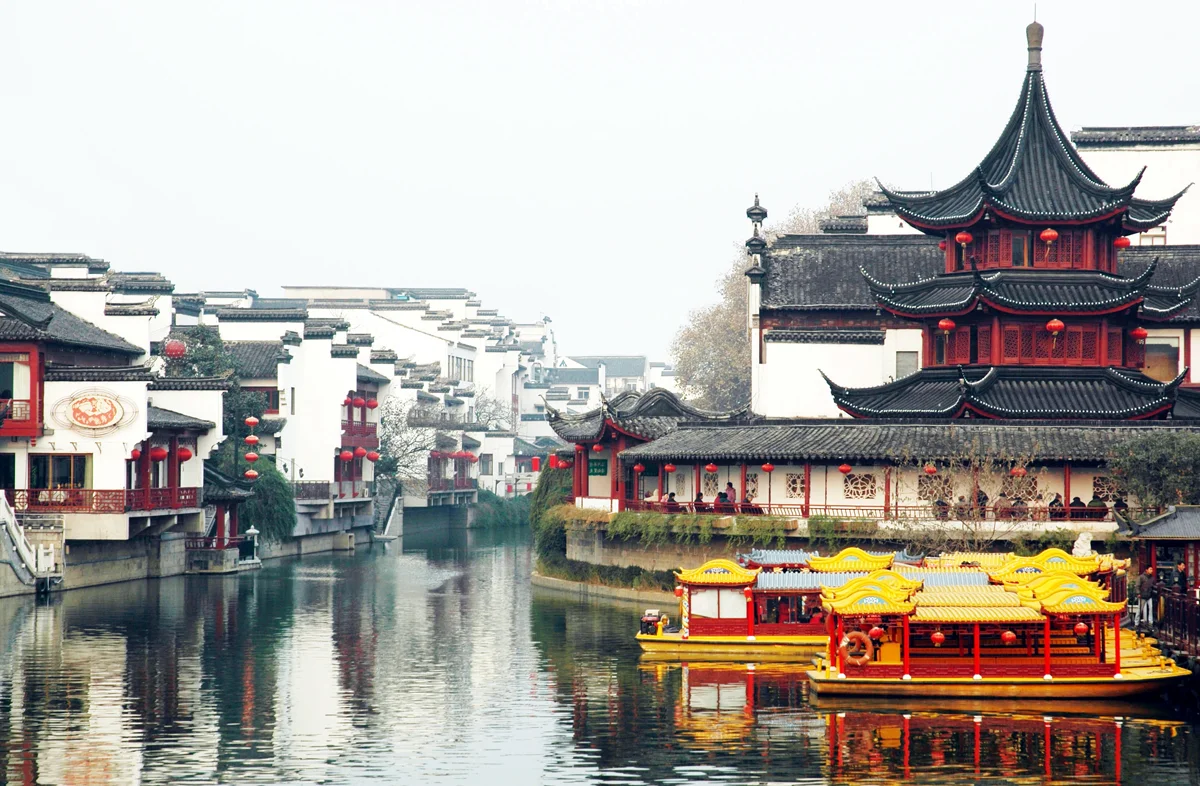
I arrived at Fuzimiao just after sunset, and the transformation was staggering. By day, it’s a somewhat hectic commercial street — souvenir shops, chain restaurants, the usual tourist-industrial complex. But when the lanterns switch on, something shifts. The traditional buildings along the riverbank glow amber and crimson. Their reflections ripple across the dark water. The crowds thin into couples and families strolling along the promenade, and the whole scene takes on the quality of a painting you’ve seen a hundred times but never quite believed was real.
I took a river boat — ¥80 (~$11) for a 50-minute circuit — and it was worth every yuan. Gliding under the arched stone bridges, past illuminated pavilions, with traditional music piped in through hidden speakers, I had one of those moments where travel feels genuinely transcendent. The guide narrated the history of each bridge and building in Mandarin, and even without understanding every word, the cadence of the stories felt right.
Fuzimiao / Confucius Temple (夫子庙) 📍 No. 258 Qinhuai Road, Qinhuai District 🚇 Metro Line 1, Sanshan Street Station, 5-minute walk ⏰ Open area, free access; individual temples ¥30 (~$4) each 🌙 Best visited after dark, 6:00 PM – 10:00 PM
◆ Dining Note: The restaurants directly along the main Fuzimiao strip are tourist traps — overpriced and mediocre. Walk two blocks south into the side alleys and you’ll find the real thing. I had the best tangbao (soup dumplings) of my trip at a tiny shop with a hand-written menu and no English signage. Sometimes the best meals require a little bravery.
The Confucius Temple itself is worth a quick visit, especially if you’re interested in the imperial examination system — the temple complex includes a museum dedicated to the civil service exams that shaped Chinese bureaucracy for over a millennium. The scale of the stone examination cells (each barely large enough for a person to sit cross-legged) gives you a visceral sense of the ordeal candidates endured.
● Nature in the City: Xuanwu Lake
Every great Chinese city has its green lung, and in Nanjing it’s Xuanwu Lake — a vast body of water right in the city center, surrounded by parks, walking paths, and the ancient city wall. It’s free, it’s open from early morning to late evening, and it’s the kind of place that makes you reconsider whether you actually need to leave the city to find peace.
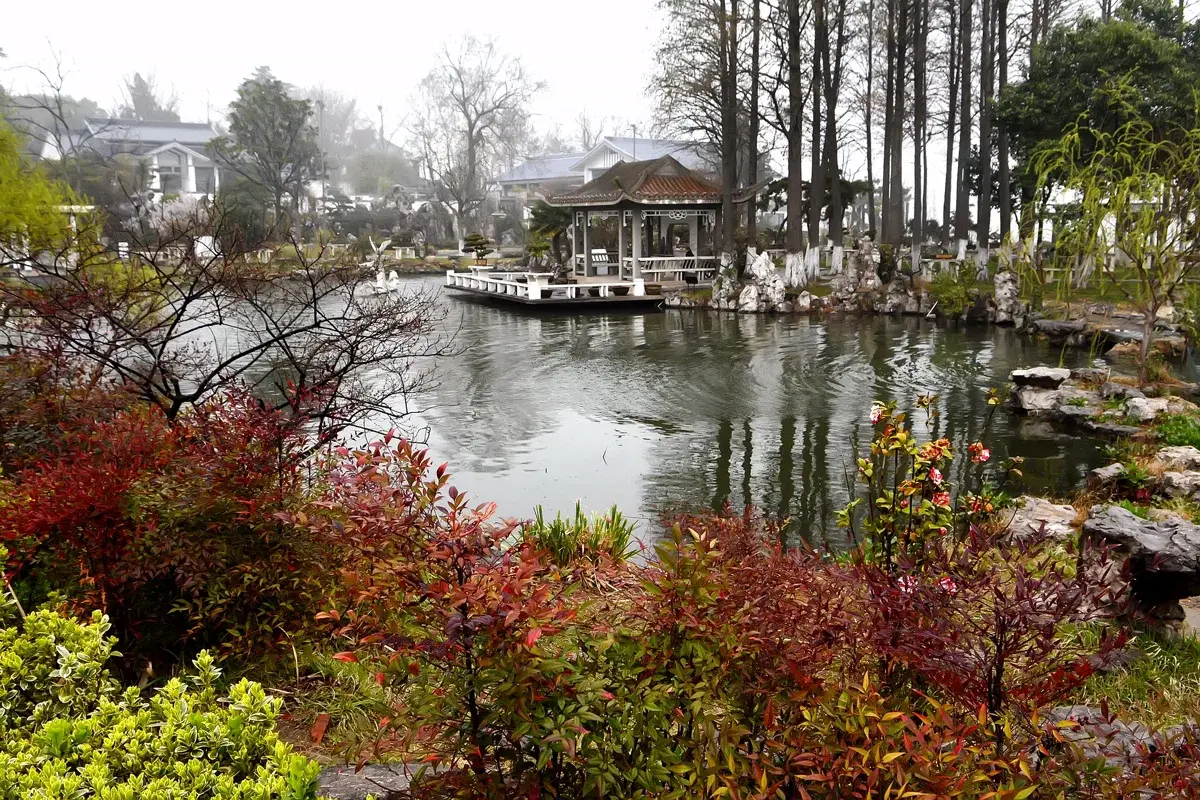
I visited on a Sunday morning and found the lake alive with local life — elderly couples practicing erhu on the shore, joggers circling the perimeter, children flying kites on the lawns. The park is divided into several islands connected by bridges, and I spent a lazy two hours just wandering from one to the next. The lotus flowers were mostly spent by October, but the autumn foliage around the lake was spectacular — ginkgo trees dropping golden leaves onto the water like nature’s own confetti.
What I loved most was the view of the city wall from across the lake — those 600-year-old stones framed by modern Nanjing’s skyline. It’s a reminder that this city has always known how to hold contradictions.
Xuanwu Lake Park (玄武湖公园) 📍 Xuanwu District, adjacent to Nanjing Railway Station 🚇 Metro Line 1, Xuanwu Lake Station ⏰ 6:00 AM – 10:00 PM 💰 Free admission
● Tip: The south gate near Jiming Temple is the most scenic entry point. You can climb Jiming Temple first (¥10 / ~$1.50), get a panoramic view of the lake, then descend into the park. It’s the kind of route that makes you feel like you’ve earned your leisure.
◆ Food: Salted Duck, Soup Dumplings, and Duck Blood Soup
Let me be honest: I didn’t come to Nanjing for the food. I came for the history, the architecture, the autumn leaves. But Nanjing’s culinary scene ambushed me with its quiet excellence. This is not a city that shouts about its food the way Chengdu or Guangzhou does. It doesn’t need to. The flavors speak softly and clearly.
The undisputed king is Nanjing salted duck (南京盐水鸭) — a dish that dates back over a thousand years. Unlike the roasted ducks of Beijing or the smoked ducks of Sichuan, salted duck is poached in brine, resulting in pale, silky meat with a clean, subtly savory flavor. I ate it at least four times during my five-day stay, at places ranging from a ¥15 ($2) street stall to a ¥120 ($17) restaurant platter. The difference was negligible. This is democratic food — done well everywhere.
◆ Duck Breakdown:
- Salted Duck (盐水鸭) — The classic. Silky, mild, served cold. Ask for “jiayi ban” (加一半) to get a half portion.
- Duck Blood Soup (鸭血粉丝汤) — A breakfast staple. Silky tofu-like duck blood, glass noodles, duck organs in a clear broth. Sounds intense, tastes comforting. ¥12–18 (~$2–3).
- Duck Oil Shao Bing (鸭油烧饼) — Flaky, layered flatbread brushed with rendered duck fat. The ultimate carb companion. ¥3–5 (~$0.50–1).
The soup dumplings (汤包) deserve special mention. Nanjing’s version is slightly different from Shanghai’s — the skin is thinner, the broth more delicate, and they’re served in bamboo steamers that arrive at your table still hissing. My favorite spot was a local chain called Yulin Tangbao (鸡鸣汤包), where a basket of eight cost ¥22 (~$3) and each one was a tiny explosion of pork broth.
For the adventurous, duck blood and vermicelli soup (鸭血粉丝汤) is the breakfast of champions. I know — “duck blood” sounds alarming. But the texture is silky-soft, almost like tofu, and in a hot broth with glass noodles, cilantro, and chili oil, it’s the kind of dish that converts skeptics. I had my first bowl at a tiny stall near Fuzimiao, where the cook ladled it out with the practiced indifference of someone who’s made ten thousand bowls. It cost ¥15 (~$2) and I went back the next day for seconds.
● Where to Eat — A Curated List
Spot What to Order Price Range Why Hanfeng Garden (韩复兴) Salted duck, duck neck ¥30–80 (~$4–11) Established 1866. The OG. Multiple locations. Yulin Tangbao (鸡鸣汤包) Soup dumplings, wontons ¥15–30 (~$2–4) Chain restaurant, consistent quality. Nanjing Impressions (南京大牌档) Full Nanjing menu ¥80–150 (~$11–21) Beautiful period-style decor, good for first-timers. Fuzimiao side alleys Duck blood soup, stinky tofu ¥10–25 (~$1.50–3.50) Street food heaven. Point and order. Wutai Mountain Restaurant (吴台山) Home-style Nanjing dishes ¥40–80 (~$5–11) Where locals go when relatives visit.
● Practical Information
◆ Getting There
Nanjing is extremely well-connected by China’s high-speed rail network. From Shanghai, it’s about 1–1.5 hours; from Beijing, 3.5–4 hours; from Hangzhou, about 1.5 hours. Nanjing Lukou International Airport (NKG) handles domestic and some international flights.
Metro: Nanjing’s metro system is modern, clean, and covers all major tourist areas. A single ride costs ¥2–7 (~$0.30–1). Get a transportation card (T-Union card) at any metro station for convenience, or use Alipay/WeChat Pay tap-to-ride.
Taxis & Rideshare: Didi (China’s Uber) works perfectly here. Most rides within the city center cost ¥15–30 (~$2–4).
◆ Where to Stay
For first-time visitors, I recommend staying near Xinjiekou (新街口) — the city’s commercial center. It’s centrally located, well-connected by metro, and walking distance to many attractions. Budget options start around ¥200 (
$28) per night; mid-range hotels run ¥400–600 ($55–83); and luxury options like the Jinling Hotel or the new Andaz Nanjing go for ¥1,000+ (~$140+).If you prefer atmosphere over convenience, the Fuzimiao area has boutique hotels overlooking the Qinhuai River. Falling asleep to the sound of water and distant music is worth the slightly higher price.
◆ Budget Estimate (Per Day)
Category Budget Mid-Range Comfort Accommodation ¥150–250 (~$21–35) ¥400–600 (~$55–83) ¥800–1,200 (~$111–167) Food ¥50–100 (~$7–14) ¥150–250 (~$21–35) ¥300–500 (~$42–69) Transport ¥20–40 (~$3–6) ¥30–60 (~$4–8) ¥50–100 (~$7–14) Attractions ¥50–100 (~$7–14) ¥50–100 (~$7–14) ¥50–100 (~$7–14) Daily Total ¥270–490 (~$38–68) ¥630–1,010 (~$88–141) ¥1,200–1,900 (~$167–264)
◆ Best Time to Visit
October and November are Nanjing’s golden months — literally. The autumn foliage at Ming Xiaoling and Xuanwu Lake is world-class, temperatures hover around 12–22°C (54–72°F), and the humidity that makes summer oppressive has vanished. Spring (March–April) is also lovely, especially during cherry blossom season along Jiming Temple’s moat.
Avoid: July and August, when temperatures regularly hit 38°C (100°F) with brutal humidity. Nanjing is one of China’s “Three Furnaces” alongside Chongqing and Wuhan, and summer is not kind to tourists.
I left Nanjing on a Tuesday afternoon, the same grey sky that had greeted me now clearing into sharp blue. On the train back to Shanghai, I flipped through my photos and realized something: I’d come expecting to learn about history, and instead I’d found a city that was deeply, quietly alive. The Six Dynasties are gone. The Ming dynasty is gone. The Republic is gone. But the salted duck tastes the same. The Qinhuai still reflects the lanterns. The ginkgo trees still drop their golden leaves into Xuanwu Lake every autumn, as if remembering something the rest of us have forgotten.
Nanjing doesn’t perform its history for you. It simply lets you walk through it, one stone, one bowl of soup, one quiet morning at a time. And that, I think, is why it stays with you.
◆ Rating Card
Category Score Notes Historical Depth ★★★★★ Unmatched among Jiangnan cities Food Quality ★★★★☆ Refined but not flashy — you have to seek it out Accessibility ★★★★★ Metro, taxis, high-speed rail — seamless Tourist Infrastructure ★★★★☆ Well-organized, occasional over-commercialization at Fuzimiao Natural Beauty ★★★★☆ Purple Mountain and Xuanwu Lake are exceptional Value for Money ★★★★★ Extremely affordable for a city of this caliber Overall ★★★★½ A must-visit for anyone who loves China’s layered past