The Mogao Caves: A Thousand Years of Buddhist Art on the Silk Road
📅 Last updated July 2026 · 📍 Dunhuang, Gansu, China · 🕐 Allow a full day
Where the Desert Meets the Divine
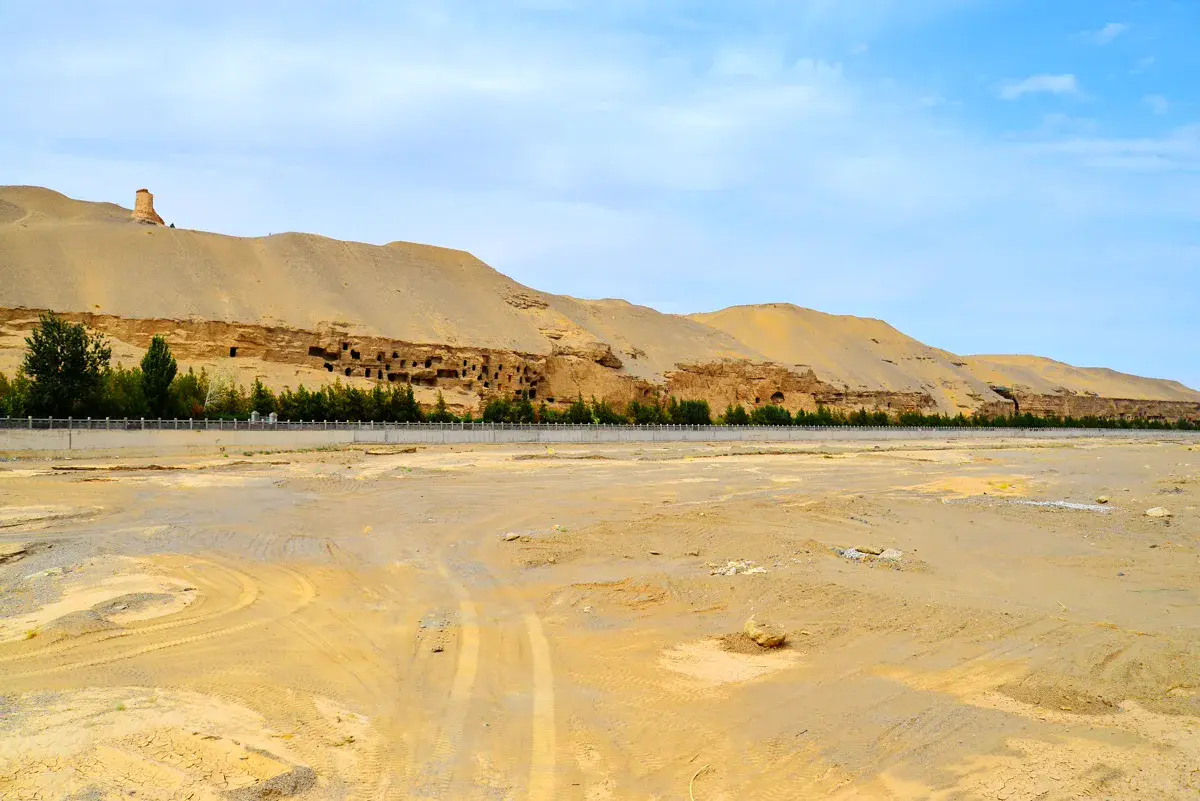
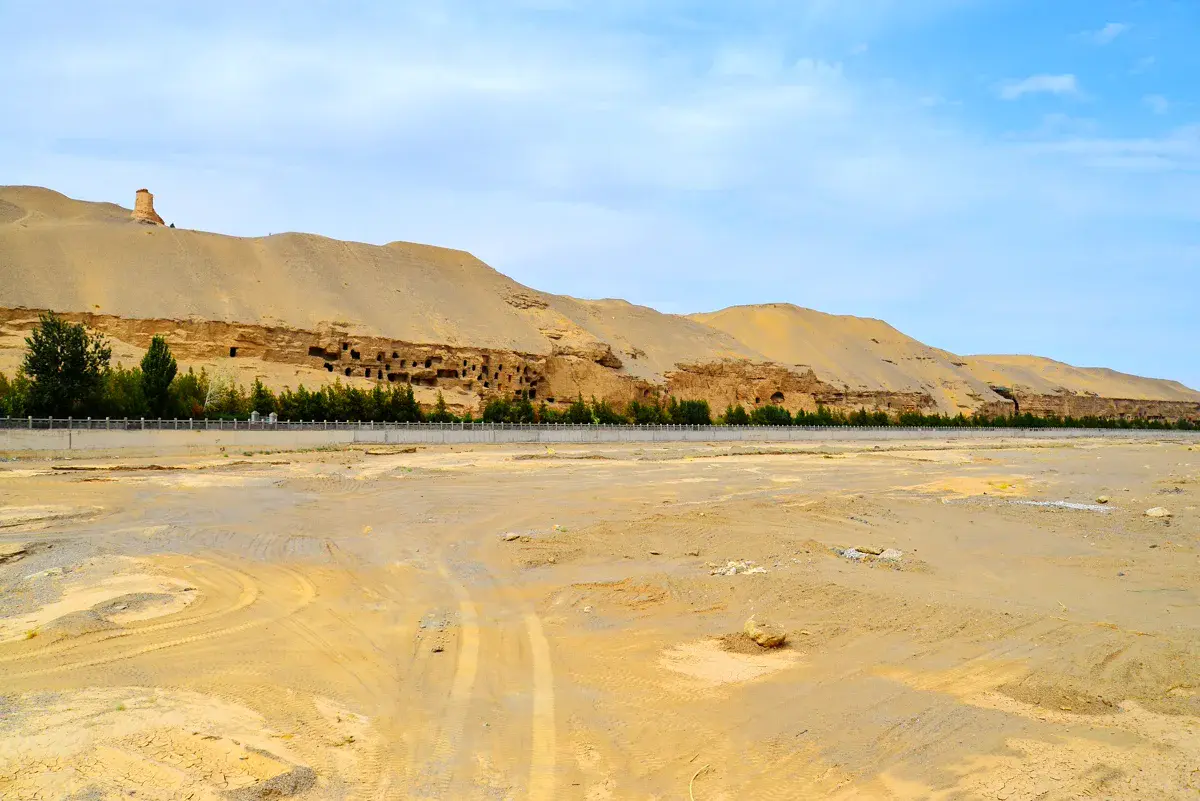
There is a cliff face in the Gobi Desert that should not exist. Rising from the gravel flats of the Daquan River valley, 25 kilometers southeast of Dunhuang, the Mingsha Mountain sandstone escarpment holds 492 cave temples carved into its honeycombed surface over the course of a thousand years — from 366 AD to the 14th century. Inside these caves lie 45,000 square meters of murals, 2,415 painted clay sculptures, and one of the most extraordinary archives of medieval manuscripts ever discovered.
The Mogao Caves (莫高窟), also known as the Caves of the Thousand Buddhas, were designated a UNESCO World Heritage Site in 1987. They are not merely a tourist attraction; they are a living record of how Buddhism traveled from India through Central Asia into the heart of China, absorbing and transforming every culture it touched along the way.
I first visited Mogao on a wind-blown October morning, when the sand was scudding across the visitors’ center parking lot and the air smelled of dust and distant rain. By the time I left, six hours later, I had walked through a millennium of human devotion and artistry. This guide is what I wish I had known before I went.
A Brief History of the Mogao Caves
“In the first year of the Jianhe era [366 CE], the monk Le Zun was traveling eastward. At the foot of Mount Mingsha, he saw golden light appearing like ten thousand Buddhas, and was moved to carve the first cave.” — Tang Dynasty stele inscription, Cave 332
That first cave, carved by the itinerant monk Le Zun in 366 AD, was modest. But Dunhuang sat at the precise intersection of the Northern and Southern Silk Roads — the last oasis before the vast Taklamakan Desert, and the first stop after crossing it from the west. Merchants, monks, diplomats, and soldiers passed through constantly, and many commissioned caves as acts of merit. Over the next thousand years, successive dynasties — Northern Wei, Sui, Tang, Five Dynasties, Song, Western Xia, and Yuan — each left their mark.
The Tang Dynasty (618–907 AD) was the golden age. Dunhuang flourished as a cosmopolitan trading hub, and the caves from this period are the most artistically accomplished. The Five Dynasties and Song periods saw continued patronage, though on a smaller scale. By the time the Yuan Dynasty fell in 1368, the Silk Road had shifted southward, Dunhuang declined, and the caves were gradually forgotten — buried under sand, their entrances sealed by the desert wind.
They remained hidden for nearly five centuries.
Cave Architecture: Types and Construction
The 492 caves at Mogao are not all the same. Archaeologists classify them into several distinct architectural types, each serving a different ritual purpose.
Central Pillar Caves (中心柱窟)
The earliest cave type, modeled on Indian viharas. A square pillar rises from the floor to the ceiling at the center of the cave, and worshippers would circumambulate it clockwise, touching the carved reliefs on each face. The pillar represents the stupa — the reliquary mound that was the original Buddhist sacred object. Examples include Caves 254 and 248, both from the Northern Wei period (5th–6th century).
Vaulted Caves (覆斗顶窟)
The most common type, especially from the Sui and Tang dynasties. A flat floor, four walls, and a truncated pyramid ceiling (a “inverted bucket” shape, or 覆斗顶) create a rectangular chamber. The ceiling often features a central lotus medallion surrounded by celestial beings. Cave 320, a Tang masterpiece, is a perfect example.
Hall Caves (大像窟)
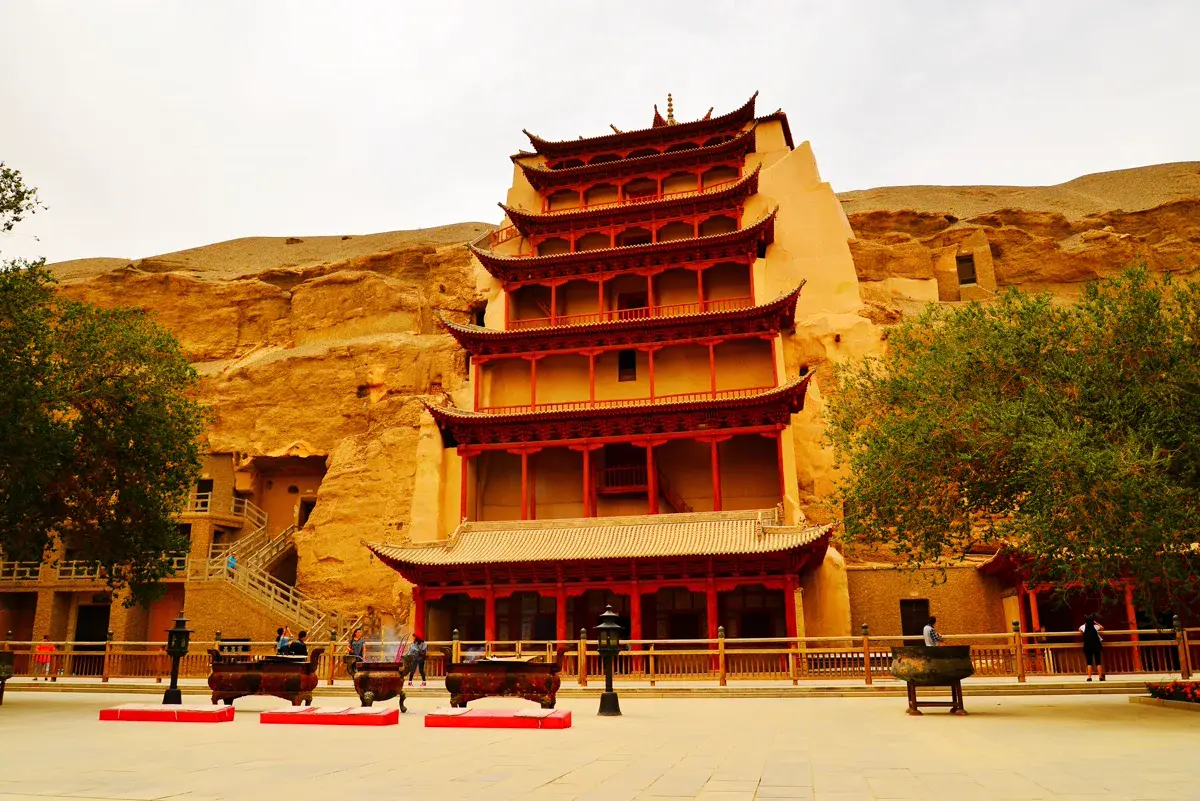
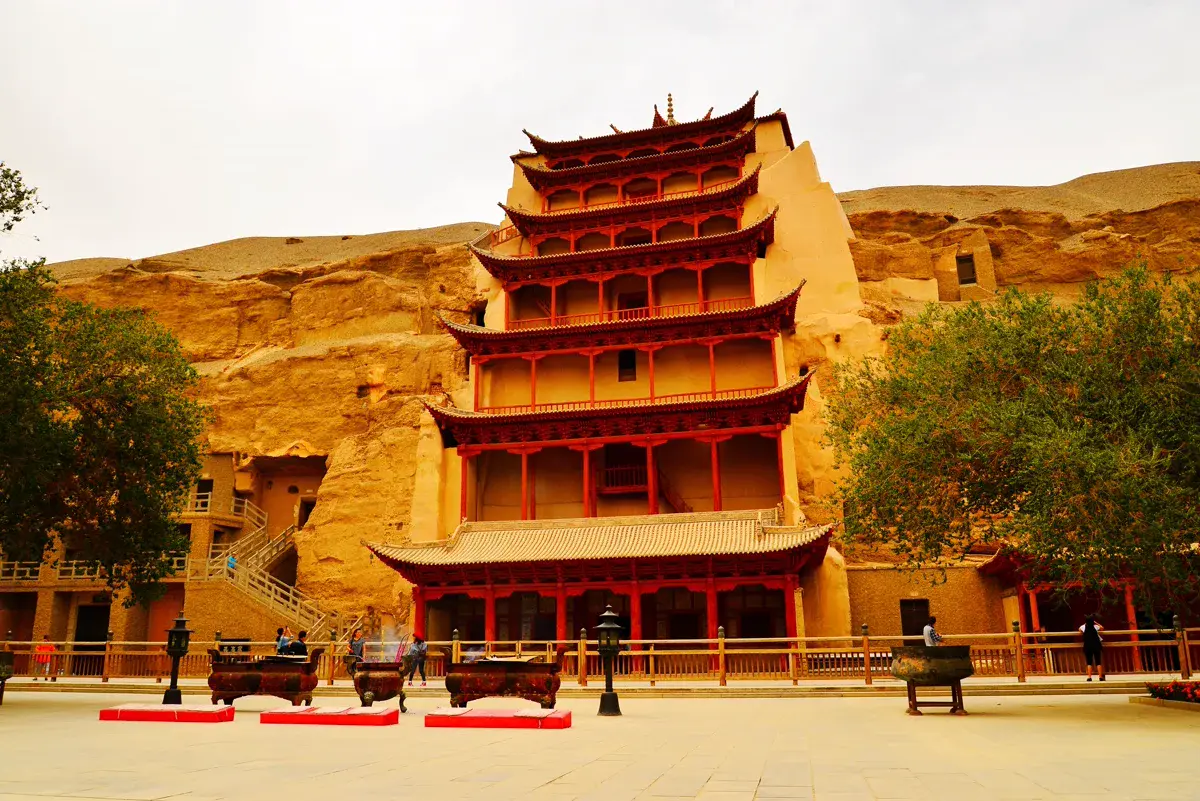
These are the monumental caves built to house colossal sculptures. Cave 96, home to the 35.5-meter Great Buddha, and Cave 130, with its 26-meter Maitreya Buddha, are the most famous. The caves were carved deep into the cliff, and the nine-story wooden pavilion (九层楼) was built over Cave 96 during the late Qing Dynasty to protect the giant Buddha from the elements.
Niche Caves (佛龛窟)
Smaller caves with a single Buddha figure set into a niche in the back wall. These were often commissioned by individual donors as private devotional spaces. They range from the simple to the elaborately decorated.
Construction Techniques
The cliffs at Mogao are composed of conglomerate sandstone — soft enough to carve with basic tools but strong enough to support the weight of the mountain above. Workers would first rough-cut the cave from the cliff face, then apply a layer of mud-and-straw plaster to the walls and ceiling. Over this base coat, a finer layer of lime plaster was applied, providing the smooth surface for painting. The sculptures were built around wooden armatures, layered with clay mixed with straw and animal hair, then painted in vivid colors.
The Murals: 45,000 Square Meters of Painted Devotion
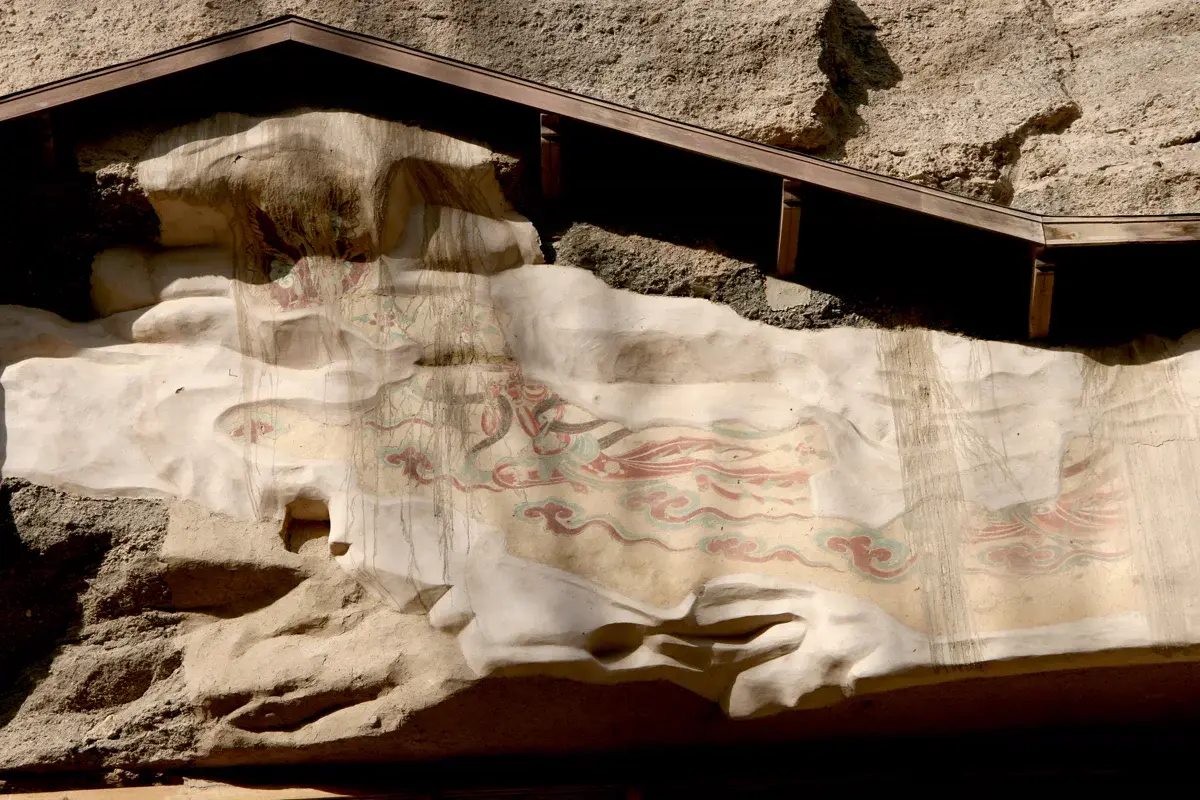
If the sculptures are the bones of Mogao, the murals are its soul. The caves contain 45,000 square meters of painted surface — the largest single body of Buddhist art in the world. The paintings cover every inch of wall and ceiling space, depicting sutras, paradise scenes, jataka tales (stories of the Buddha’s past lives), donor portraits, and decorative patterns.
The Flying Apsaras (飞天)
The most iconic images from Mogao are the Flying Apsaras — celestial beings who soar through the air trailing scarves and scattering flowers. Unlike their heavier, more muscular Indian counterparts, the Dunhuang apsaras are ethereally graceful, their bodies weightless, their ribbons spiraling in impossible curves. They appear in virtually every cave, and their evolving style is one of the most useful tools for dating the murals.
The Northern Wei apsaras are angular and energetic, their bodies taut with movement. By the Tang Dynasty, they have become voluptuous and serene, floating effortlessly through clouds of color. The contrast tells you everything about how Chinese artists transformed a foreign motif into something entirely their own.
Jataka Tales and Buddhist Paradises
The jataka tales are narratives from the Buddha’s previous lives, and they appear throughout the caves as visual stories. In Cave 257 (Northern Wei), the famous “Nine-Colored Deer” jataka unfolds in a continuous horizontal band, like a comic strip painted 1,500 years ago. In Cave 220 (early Tang), the Western Pure Land paradise is rendered in breathtaking detail — a celestial garden with jeweled trees, lotus ponds, and tiny figures dancing in concert halls.
The Painting Styles Across Dynasties
One of the great pleasures of visiting multiple caves is watching the painting style evolve. The early caves (5th–6th century) show strong Central Asian and Indian influences — bold outlines, deep reds and blues, muscular figures. By the Tang Dynasty, the style has become unmistakably Chinese — softer brushwork, naturalistic proportions, a palette rich in greens and golds. The Song and Western Xia caves introduce new elements, including Tibetan Buddhist iconography and Tibetan-style mandalas.
The Sculptures: 2,415 Painted Clay Figures
The painted clay sculptures at Mogao number 2,415 across all caves. They range from tiny seated Buddhas barely a hand’s width to the colossal 35.5-meter Great Buddha of Cave 96.
The Great Buddha of Cave 96
The nine-story pavilion (九层楼) that dominates the Mogao skyline houses a seated Maitreya Buddha measuring 35.5 meters from base to crown — the third-largest Buddha in China after the Leshan Giant Buddha and the Spring Temple Buddha. Carved during the Tang Dynasty (beginning 695 AD), it was the work of a monk named Lingyin, who reportedly began the project by himself and spent decades on it.
Standing at its base and craning your neck upward, the scale is disorienting. The Buddha’s face is serene, almost indifferent, its eyes half-closed in meditation. The wooden pavilion around it has been rebuilt multiple times — the current nine-story structure dates to 1935.
Cave 158: The Reclining Buddha
Cave 158 contains a 15.8-meter reclining Buddha depicting the moment of the Buddha’s parinirvana (final passing). The figure lies on its right side, eyes half-open, with a smile that seems to hover between life and death. Surrounding the Buddha are mourning figures — disciples, bodhisattvas, and celestial beings — each expressing grief in a different way. Some weep openly; others stare with hollow eyes; a few maintain perfect composure. The emotional range is extraordinary.
The Library Cave (Cave 17): The Discovery That Shook the World
On June 22, 1900, a Taoist monk named Wang Yuanlu (王圆箓) — the self-appointed caretaker of the Mogao Caves — was clearing sand from the entrance of a small side cave when a narrow passage opened behind a wall. Inside was a tiny chamber, roughly 3 meters square, packed floor to ceiling with sealed bundles: scrolls, manuscripts, printed books, and paintings on silk and paper.
Wang had discovered the equivalent of a medieval library. The cave contained an estimated 50,000 manuscripts, dating from the 4th to the 11th century, written in Chinese, Tibetan, Sanskrit, Khotanese, Sogdian, Tangut, and other languages. They included Buddhist sutras, Daoist texts, Confucian classics, legal documents, contracts, letters, medical treatises, musical scores, and the earliest known printed book in the world — the Diamond Sutra, dated 868 AD.
The manuscripts had been sealed in the cave around 1002 AD, likely to protect them from the advancing armies of the Western Xia dynasty. They remained hidden for 900 years.
Lost Treasures: The Great dispersal
Wang Yuanlu, well-intentioned but naive, began offering scrolls to local officials in exchange for funding to restore the caves. When this failed to produce significant results, he fell prey to a series of foreign explorers who recognized the manuscripts’ true value.
Aurel Stein (1907)
The Hungarian-British archaeologist Sir Aurel Stein arrived at Mogao in 1907 and, through a combination of flattery, deception, and a payment of 300 silver taels (roughly £130), persuaded Wang to let him fill four camels with manuscripts and silk paintings. Among his haul was the Diamond Sutra — now in the British Library — and the oldest known Chinese painted silk banner.
Paul Pelliot (1908)
The French sinologist Paul Pelliot arrived shortly after and, fluent in Chinese, was able to identify the most valuable scrolls by reading their colophons. In a single week, he selected approximately 10,000 manuscripts and took them to Paris, where they are now held at the Bibliothèque nationale de France.
Other Collections
Japanese, Russian, and American expeditions followed. By the time the Chinese government finally moved to protect the remaining manuscripts in 1910, the most valuable materials had been dispersed across institutions in London, Paris, St. Petersburg, Tokyo, and Beijing. The Library Cave is one of the great archaeological tragedies of the modern era — and one of the most important primary source collections for medieval Central Asian history.
Conservation and the Digital Dunhuang Project
Today, the Mogao Caves face a tension familiar to every heritage site: how to allow public access while preserving fragile art that cannot be restored.
The Dunhuang Research Academy, which manages the caves, has implemented strict visitor limits. Only a fraction of the 492 caves are open to tourists at any given time, and each visit is limited to a guided tour of approximately 8 caves. Photography is prohibited inside the caves — flash, even ambient light, degrades the pigments over time.
The Digital Dunhuang Project (数字敦煌) is a groundbreaking initiative to create high-resolution digital records of every mural and sculpture in the caves. Using specialized cameras and 3D scanning, the project has documented over 200 caves to date, producing images at resolutions far beyond what the human eye can see in person. Selected digital replicas are available online at e-dunhuang.com, allowing virtual access to caves that may never be opened to the public again.
The physical conservation work is equally important. A new visitors’ center, opened in 2014, relocated all commercial activity away from the cliff face. Climate-controlled systems monitor temperature and humidity inside the caves. Sandstorms — a constant threat in the Gobi — are countered with vegetation barriers and mechanical sand-fixation systems.
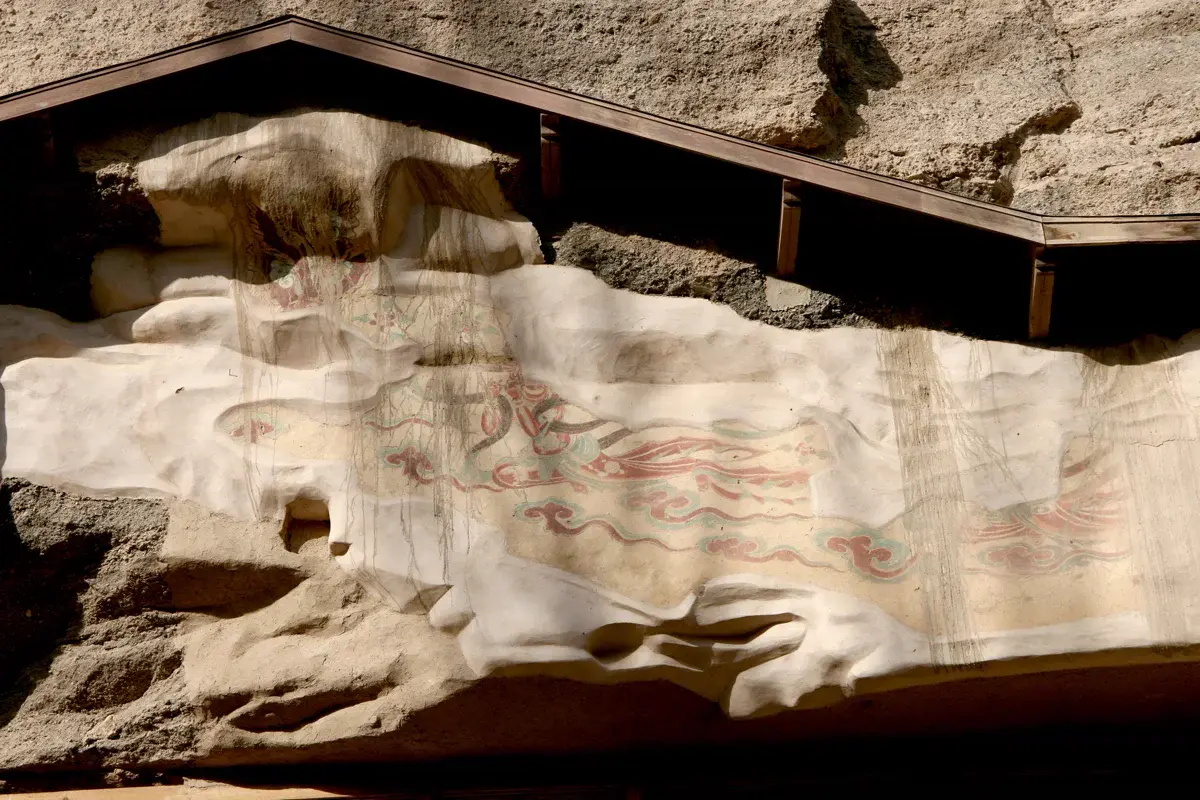
Inside the Caves: What You Will See
Your visit will include a guided tour of approximately 8 caves, selected by the Dunhuang Research Academy based on current preservation conditions. The specific caves change seasonally — the Academy rotates access to prevent any single cave from suffering too much exposure.
The standard tour typically includes:
- One or two Tang Dynasty caves with the finest murals — often Cave 320 or Cave 220
- The Library Cave (Cave 17) — you will see the small side chamber, now empty, where the manuscripts were stored
- A cave with large-scale sculptures — possibly Cave 96 (Great Buddha) or Cave 130
- A Western Xia or Song Dynasty cave — showing later artistic influences
- Cave 158 (Reclining Buddha), when available
The caves are dim inside — the Academy uses minimal artificial lighting to protect the pigments. You will be given a small flashlight. In the half-light, the colors glow: the deep malachite greens, the cinnabar reds, the gold leaf that catches the beam like trapped sunlight.
A separate “movie experience” at the visitors’ center includes an IMAX film and a球幕 (dome-screen) film about the caves’ history, providing context before you enter the actual sites. This is included in the ticket price and is worth arriving early for.
Practical Information
Location and Getting There
The Mogao Caves are located 25 kilometers southeast of Dunhuang city center, at the foot of Mingsha Mountain along the Daquan River valley.
By air: Dunhuang Airport (DNH) has direct flights from Beijing, Shanghai, Xi’an, Lanzhou, and Urumqi. Flight time from Xi’an is approximately 2.5 hours.
From Dunhuang airport or city center:
- Taxi: Approximately ¥50–70 (~$7–10) one way, 25–30 minutes
- Bus: Bus No. 8 from Dunhuang city center runs to the Mogao Visitors’ Center. Departs every 30 minutes, fare approximately ¥5 (~$0.70)
- Organized tours: Many hotels and travel agencies offer day trips
Opening Hours
| Season | Dates | Hours |
|---|---|---|
| Peak season | May 1 – October 31 | 8:00 – 18:00 |
| Off-peak season | November 1 – April 30 | 9:00 – 17:30 |
The site is closed on certain Chinese public holidays (check before visiting). Last entry is typically 1 hour before closing.
Tickets
| Type | Peak Season (May–Oct) | Off-Peak (Nov–Apr) |
|---|---|---|
| Standard (A-type) | ¥238 (~$33) | ¥140 (~$19) |
| Student / Senior | ¥168 (~$23) | ¥95 (~$13) |
What’s included:
- Access to the Digital Exhibition Center (two films: IMAX + dome screen)
- Guided tour of approximately 8 caves
- Shuttle bus between visitors’ center and cliff site
Important: Tickets must be booked in advance — often 1–3 days ahead during peak season. Walk-in tickets are extremely limited. Book through the official Mogao Caves website or the WeChat mini-program “莫高窟参观预约网.”
Best Time to Visit
May through October offers the best weather, with warm days and cool evenings. July and August are the hottest (temperatures can exceed 35°C / 95°F) and the most crowded, especially during the Chinese National Day holiday (October 1–7) and summer vacation (July–August).
The sweet spot is mid-May to mid-June or September to early October — warm, dry, fewer crowds, and the desert light is extraordinary.
Avoid: Chinese New Year (January/February, site may be closed), National Day Golden Week (October 1–7, massive crowds), and weekends throughout peak season.
Tips from Experience
- Book early. This cannot be overstated. During peak season, tickets sell out days in advance. The official booking system opens 7 days ahead.
- Arrive at the visitors’ center at least 30 minutes before your timed entry. You need time to watch the two films, take the shuttle bus, and join your tour group.
- No photography inside the caves. Not even with your phone. Not even without flash. The guards are strict, and for good reason.
- Wear layers. The caves are cool inside (even in summer), and the desert temperature drops quickly in the evening.
- Bring water. The Gobi is relentlessly dry. The visitors’ center has a café, but options at the cliff site are limited.
- Consider hiring a specialty guide. The standard tour is good, but a knowledgeable private guide can provide far deeper context. Ask your hotel to arrange one in advance.
Budget Breakdown
| Expense | Cost (CNY) | Cost (USD) |
|---|---|---|
| Mogao Caves ticket (A-type, peak) | ¥238 | ~$33 |
| Taxi from Dunhuang city (round trip) | ¥120 | ~$17 |
| Lunch at visitors’ center | ¥60–100 | ~$8–14 |
| Souvenir / postcards | ¥30–50 | ~$4–7 |
| Private guide supplement (optional) | ¥200–400 | ~$28–56 |
| Total (standard visit) | ¥450–610 | ~$62–85 |
| Total with private guide | ¥650–1,010 | ~$90–141 |
Budget estimate for one person. Prices in USD are approximate, based on $1 ≈ ¥7.2.
Frequently Asked Questions
Q: How long does the visit take? A: Plan for a full day — approximately 4 to 6 hours total. The two films at the visitors’ center take about 40 minutes, the shuttle ride is 15 minutes, and the guided cave tour lasts 90 minutes to 2 hours. Many visitors also spend time at the exhibition displays and the surrounding area.
Q: Can I visit more caves than the standard tour? A: Yes, but at additional cost. Special access tours to selected caves (including some that are not on the standard route) can be arranged through the Dunhuang Research Academy. These tours are significantly more expensive — ranging from ¥400 to ¥1,500 per person — and must be booked well in advance.
Q: Is photography really not allowed? A: Correct. Photography of any kind is strictly prohibited inside the caves. This includes smartphones, cameras, and video equipment. Violators may be fined and asked to leave. The restriction exists to protect the fragile pigments, which are degraded by even small amounts of light exposure over time.
Q: Are the caves accessible for people with mobility issues? A: The visitors’ center and digital exhibition are fully accessible. The cliff site involves walking on gravel paths and climbing stairs to reach some caves. Wheelchair access is limited. Contact the ticket office in advance to discuss specific needs.
Q: Is there a recommended reading or film before visiting? A: The documentary “Dunhuang” (敦煌) by CCTV provides excellent historical context. For books, “The Caves of the Thousand Buddhas” by Roderick Whitfield offers a detailed visual survey. The official Mogao website (e-dunhuang.com) has a virtual tour feature that is an excellent preview.
Q: What else is there to do in Dunhuang? A: Dunhuang is a small city with several other notable attractions: the Mingsha Mountain and Crescent Moon Spring (鸣沙山月牙泉), the Yumen Pass (玉门关) and Yang Pass (阳关) — frontier fortresses from the Han Dynasty — and the Yadan National Geological Park (雅丹国家地质公园), famous for its wind-eroded “ghost city” landscape. Most visitors combine Mogao with at least two days of exploring the surrounding desert and historical sites.
The Mogao Caves are not a place you visit quickly. They demand patience — the patience to book tickets weeks in advance, to wait in line for the shuttle, to stand in a dark cave straining to see painted figures that are 1,400 years old. In return, they offer something rare: a direct encounter with the creative ambitions of a thousand years of human civilization, preserved by accident in the driest desert on earth.