Longmen Grottoes: 1,400 Years of Carved Devotion on the Yi River 🪨🪷
📅 Version 1.0 · 📍 Cultural Heritage Enthusiasts · ⏱️ Half-Day to Full Day
◆ A Living Testament in Stone
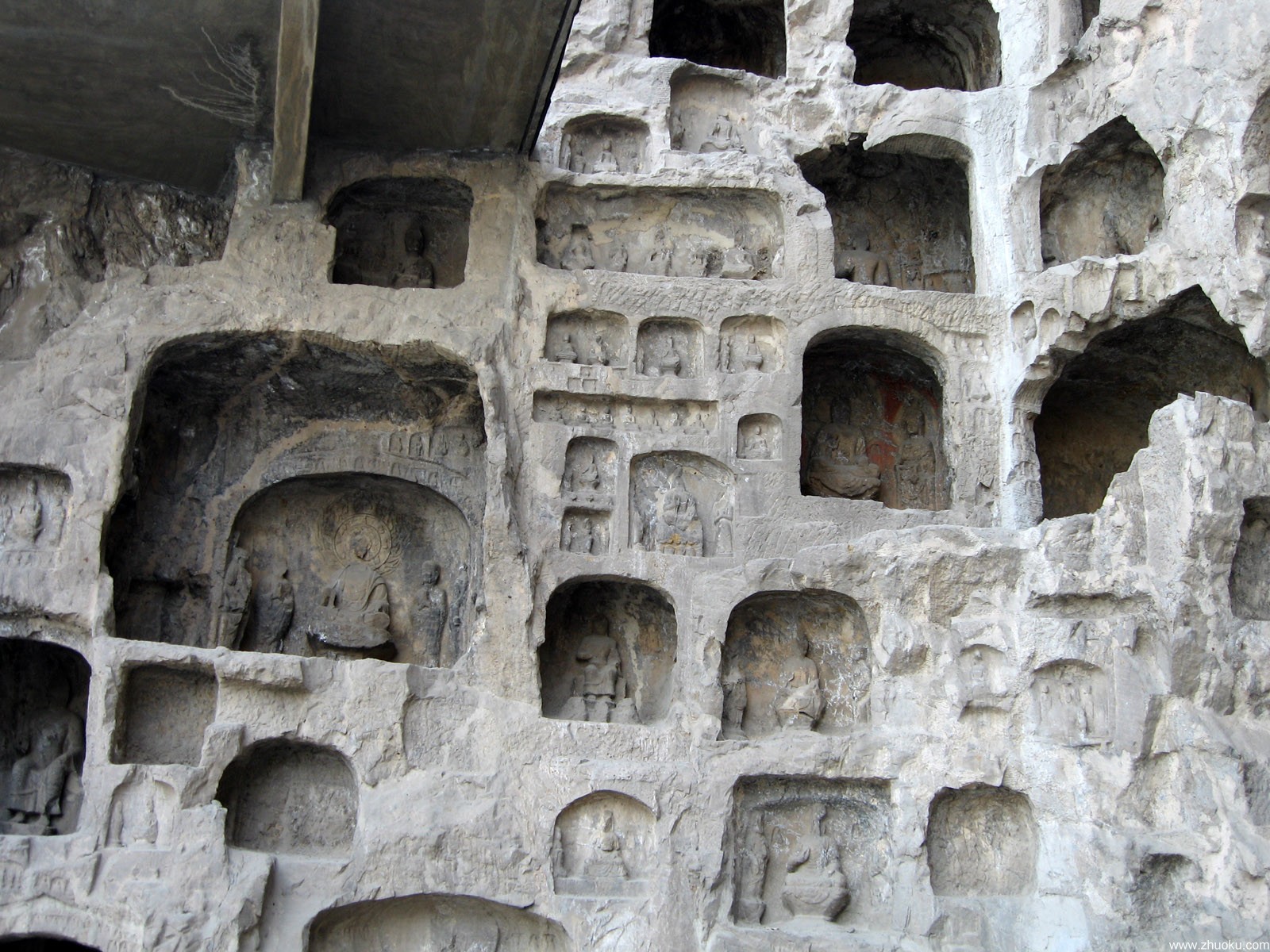
Along the limestone cliffs flanking the Yi River, just south of Luoyang in China’s Henan Province, over 2,300 cave temples and 100,000 Buddhist statues emerge from the rock face like a congregation frozen in devotion. This is the Longmen Grottoes — a UNESCO World Heritage Site since 2000 — and one of the three greatest treasure houses of Buddhist art in China.
The grottoes stretch across nearly one kilometer of cliff on both banks of the Yi River, with the east bank (Longmen Hill) containing the majority of caves and the west bank (Dongshan Hill) holding important later-period works. Walking through them, you are not merely sightseeing. You are traversing a carved record of Chinese civilization spanning more than four centuries — from the Northern Wei dynasty’s arrival in Luoyang in 493 AD to the twilight of the Tang dynasty in 907 AD.
◆ History: From Imperial Decree to Sacred Landscape
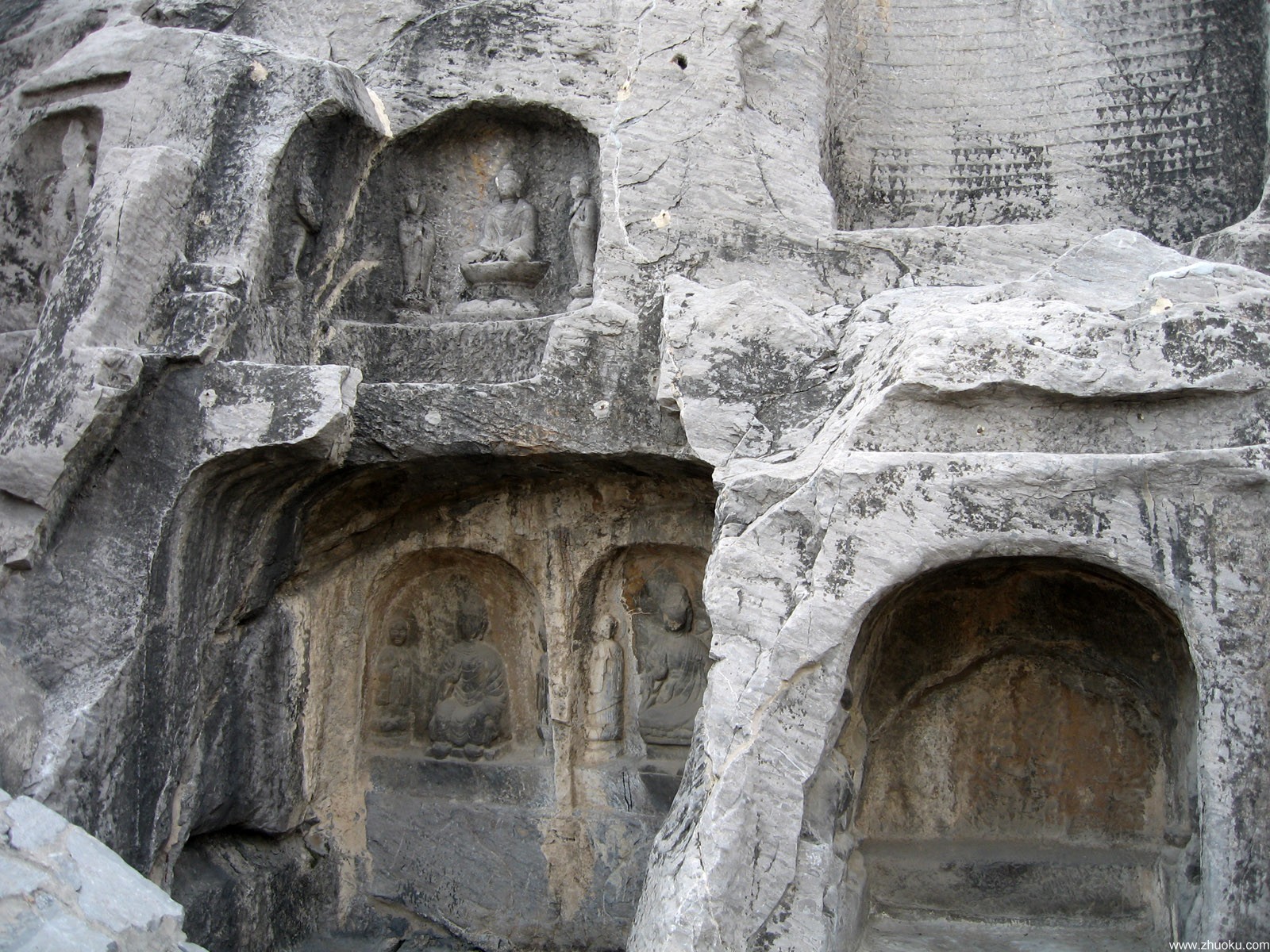
The story of Longmen begins with a political decision that became a spiritual one. In 493, Emperor Xiaowen of the Northern Wei moved his capital south from Pingcheng (modern Datong) to Luoyang. Accompanying this relocation was an explosion of Buddhist cave construction — first at Yungang near the old capital, now at Longmen near the new one. The shift was not merely geographic; it reflected a deliberate Sinicization of the ruling Xianbei elite, who adopted Han Chinese customs, language, and artistic sensibilities.
The earliest caves at Longmen, carved during the Northern Wei period (493–534 AD), tend to be elongated and narrow, with slender, attenuated Buddha figures that carry the ethereal elegance characteristic of early Chinese Buddhist sculpture. The Binyang Caves, commissioned by Emperor Xiaowen himself, represent the pinnacle of this period.
When the Tang dynasty rose to power in 618 AD, Longmen entered its golden age. Emperor Taizong, Emperor Gaozong, and most famously Empress Wu Zetian all lavished patronage on the grottoes. Under Wu Zetian’s reign (690–705 AD), construction reached its zenith. The empress, who declared herself “Holy and Divine” and founded the short-lived Zhou dynasty, used Buddhist art as political legitimation. The colossal Vairocana Buddha at Fengxian Temple — with its serene, androgynous face said to be modeled on the empress herself — is the most dramatic surviving example of this fusion between imperial power and religious devotion.
By the late Tang, political instability and the suppression of Buddhism in 845 AD brought construction to a halt. But the grottoes endured — weathered, vandalized, looted, yet still magnificent.
◆ Fengxian Temple: The Masterpiece of Longmen
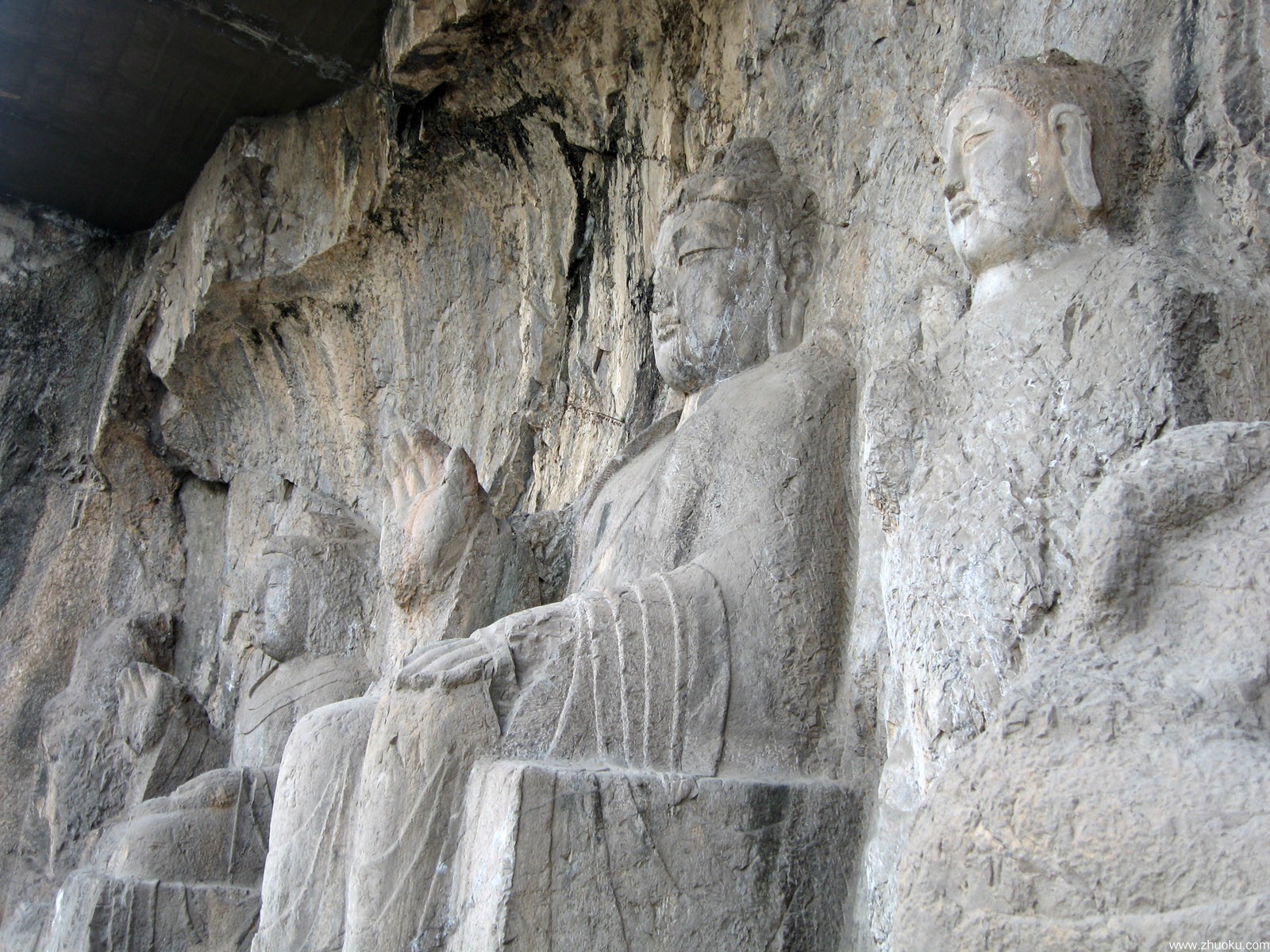
Fengxian Temple (奉先寺) is the crown jewel of the Longmen Grottoes and the single image most associated with Luoyang. Carved into the east bank during the Tang dynasty under the supervision of Empress Wu Zetian, this open-air cave temple houses nine monumental figures arranged in a semicircular composition against the cliff face.
At the center sits the Vairocana Buddha, the “Cosmic Buddha” or “Buddha of the Sustaining Heaven,” measuring 17.14 meters from base to crown. The figure’s face is broad and calm, with a faint smile that has earned comparisons to the Mona Lisa. Art historians have long debated whether the face was modeled on Wu Zetian herself — the roundness of the cheeks, the subtle upturn of the lips, and the regal composure all suggest a deliberate likeness. Regardless of its origin, the face projects an almost unsettling serenity.
Flanking the Vairocana are two disciple figures (Ananda and Kasyapa), two bodhisattvas, two heavenly kings, and two thunderbolt-bearing vajrapani warriors. The composition is asymmetric in a way that feels organic rather than rigid — each figure occupies its own psychological space while contributing to the overall sense of cosmic order.
What makes Fengxian Temple remarkable is not just its scale but its expressiveness. The guardian figures, with their bulging muscles and fierce expressions, contrast dramatically with the serene central Buddha. This range of emotional register — from wrathful protection to compassionate stillness — represents the highest achievement of Tang dynasty stone carving.
Visitor Note: Fengxian Temple is located on the east bank, about 20 minutes’ walk from the main entrance. The best viewing angle is from the plaza directly in front of the cave, but climbing the stairs to the upper walkway offers a different perspective — you can look down at the arrangement of figures and appreciate the spatial choreography.
◆ Binyang Caves: Where Royal Patronage Meets Artistic Mastery
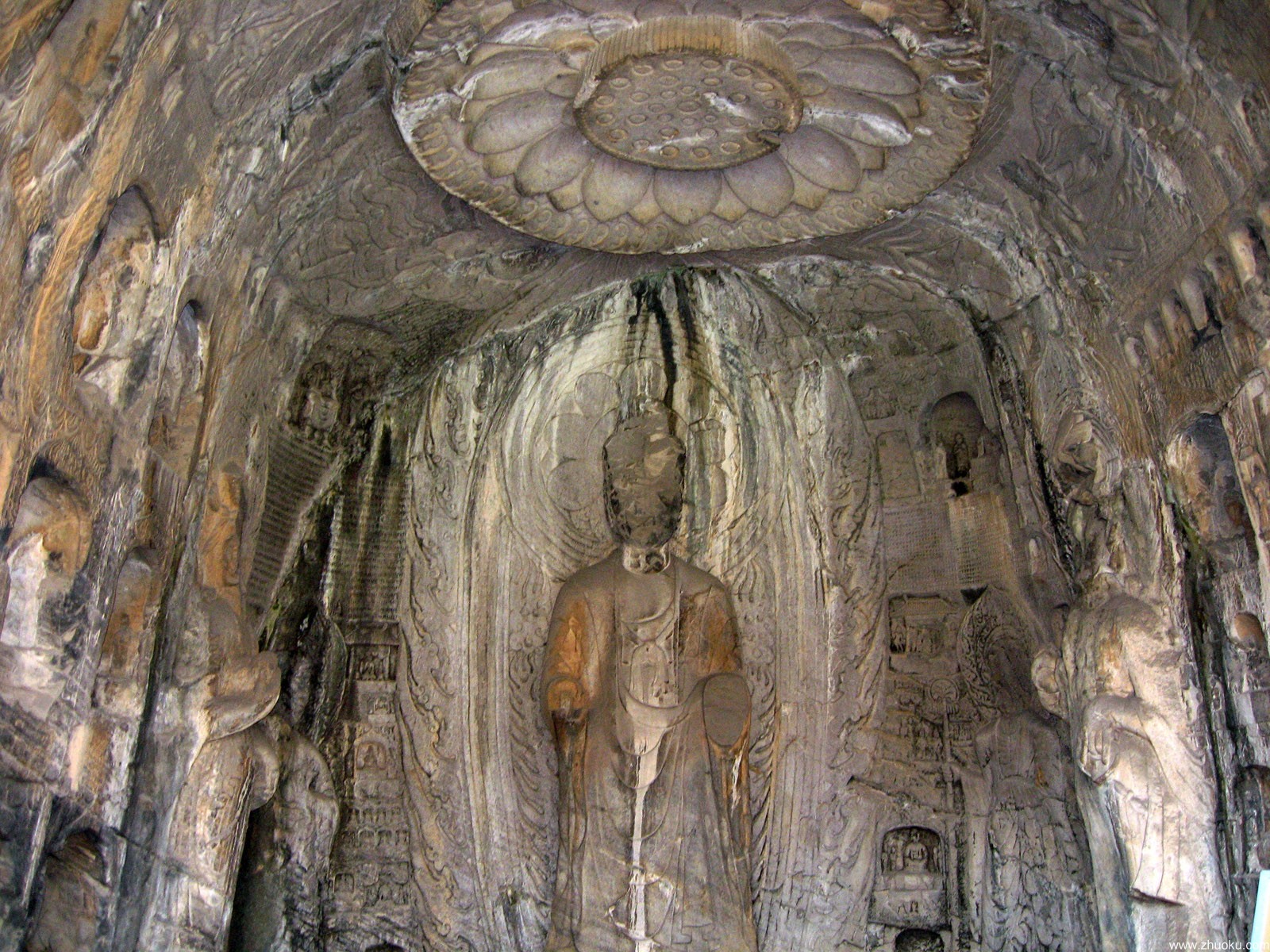
The Binyang Caves (宾阳三洞) are a trio of adjacent caves on the east bank that represent the Northern Wei period at its finest. Commissioned by Emperor Xiaowen for his deceased father, Emperor Wen, these caves took 800,000 laborers and 24 years to complete (500–523 AD) — a staggering investment that reflects the Northern Wei court’s commitment to Buddhist art.
The South Binyang Cave houses a seated Shakyamuni Buddha flanked by bodhisattvas, with walls carved in relief showing scenes from the Buddha’s life. The carving style is distinctive: figures are elongated and slender, with flowing robes that seem to ripple in an invisible wind. This “thin and elegant” aesthetic is characteristic of Northern Wei Buddhist art and contrasts markedly with the fuller, more robust figures of the later Tang period.
The Central Binyang Cave contains a magnificent relief panel known as the “Imperial Procession” — a carved depiction of Emperor Xiaowen’s procession to worship at Longmen. This panel is one of the most important historical documents in Chinese art, offering a rare glimpse into Northern Wei court dress, horse equipment, and ceremonial protocol.
The North Binyang Cave was left largely unfinished, providing an accidental but invaluable lesson in ancient carving technique: you can see the preliminary chisel marks, the rough-hewn forms awaiting detail, and the staging process that preceded the polished final product.
◆ Ten Thousand Buddhas Cave: Devotion in Miniature
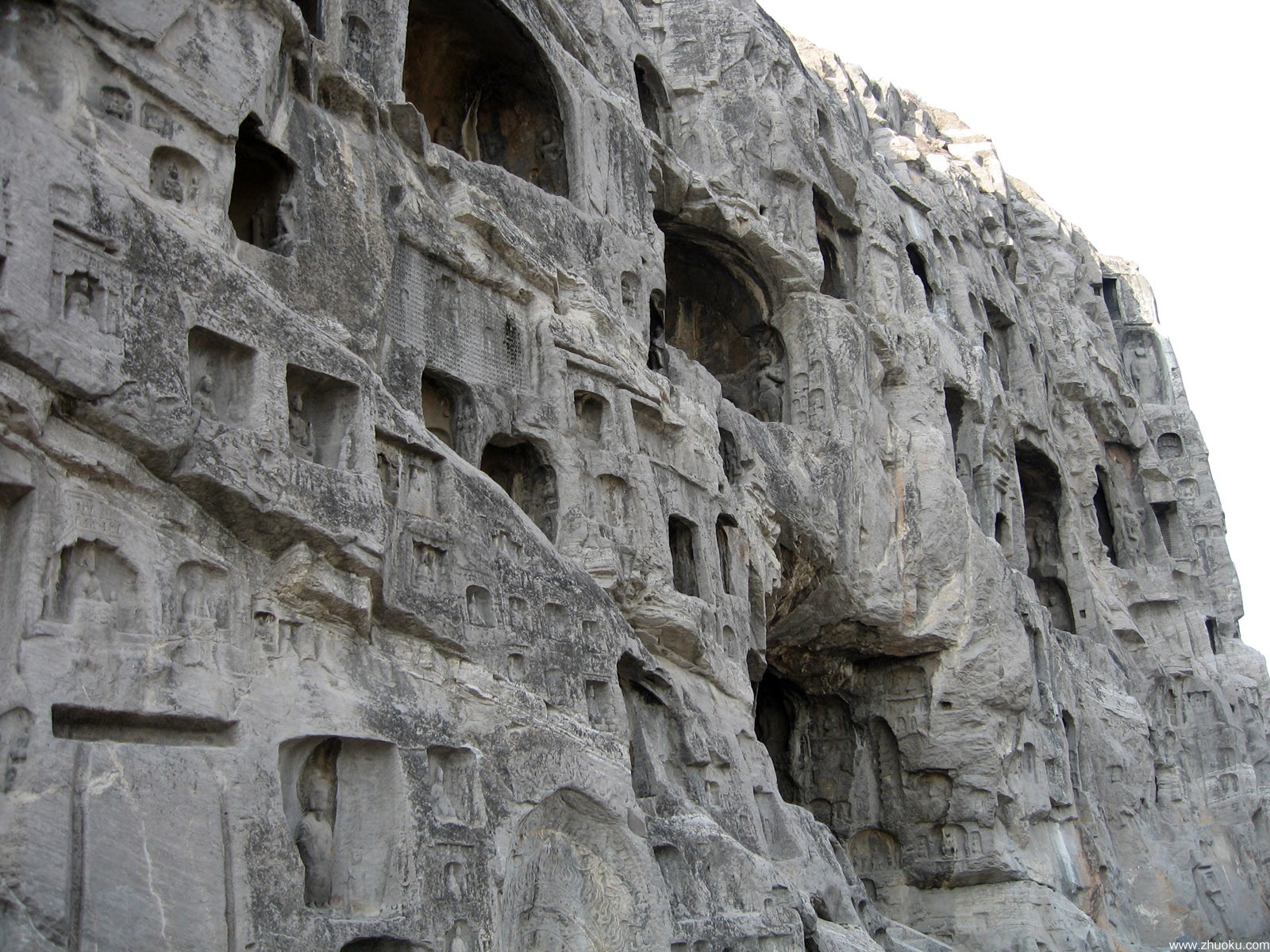
The Ten Thousand Buddhas Cave (万佛洞) on the east bank is exactly what its name promises — a cave whose walls are densely packed with approximately 15,000 tiny Buddha figures, each no more than a few centimeters tall, arranged in neat rows across every available surface. Carved during the Tang dynasty (completed in 680 AD), the cave was commissioned by two palace ladies, Yi Lancui and Fan Yuqi, who hoped to accumulate spiritual merit through this act of devotion.
The effect of standing inside is disorienting in the most wonderful way. Your eyes struggle to find a resting point among the thousands of miniature Buddhas, each one individually carved despite their uniformity. The ceiling features a lotus flower design in relief, and the south wall bears a stele inscription recording the cave’s construction — one of the most complete such records at Longmen.
Above the entrance, 54 tiny lotus flowers are carved into the rock, each supporting a miniature seated Buddha. The attention to detail in a cave so densely populated with figures is remarkable, and the overall effect conveys the Buddhist concept of infinite Buddhas pervading all space — a cosmic truth rendered in stone.
◆ Guyang Cave: The Calligrapher’s Treasury
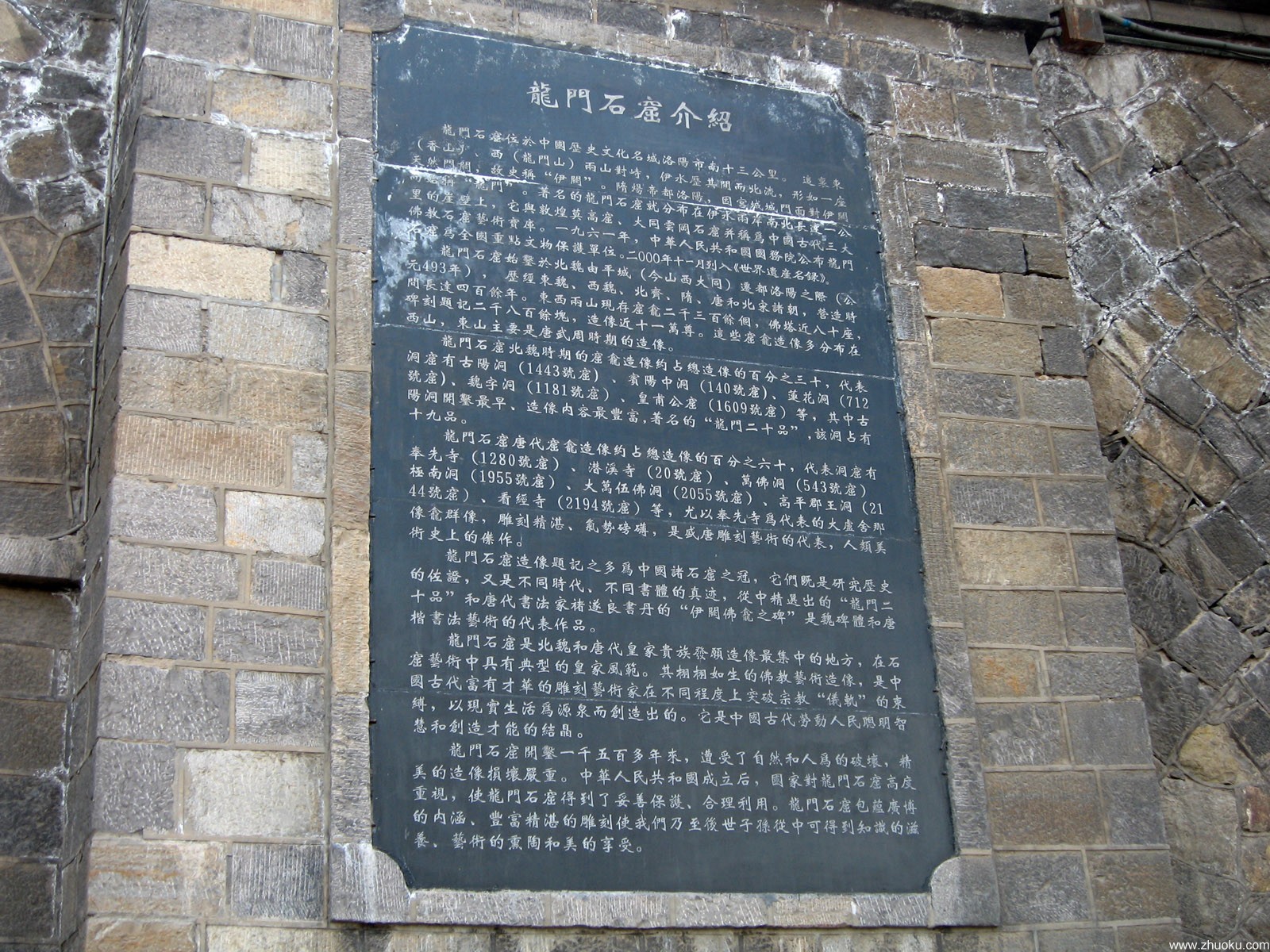
The Guyang Cave (古阳洞) is the oldest cave at Longmen, begun shortly after the Northern Wei capital was established in Luoyang. It is also the largest cave on the east bank, carved into a natural limestone cavern that was enlarged and decorated over several decades.
What makes Guyang Cave singular among the grottoes is its extraordinary collection of calligraphic inscriptions. Over 20 steles bearing inscriptions in the “Wei stele” style — a transitional script between the archaic clerical script and the mature regular script — are carved into the cave’s walls and pillars. These inscriptions, dating from the early 6th century, are among the most celebrated examples of Chinese calligraphy and have been studied, copied, and revered by calligraphers for over a millennium.
The “Longmen Ershi Pin” — a selection of 20 of the finest inscriptions — has been published in numerous rubbing collections and remains a foundational text for students of Chinese calligraphy. Walking through Guyang Cave, you are not only viewing Buddhist art but also standing inside one of the most important repositories of Chinese writing in existence.
◆ The Medical Prescription Cave: Ancient Wisdom in Stone
One of Longmen’s most unexpected treasures is the Medical Prescription Cave (药方洞), located on the east bank near the Binyang Caves. Its walls bear over 140 medical prescriptions carved in stone — prescriptions for ailments ranging from digestive disorders to eye diseases, from urinary problems to skin conditions.
Dating primarily to the Northern Qi dynasty (550–577 AD) and the Tang dynasty, these inscriptions represent one of the oldest surviving collections of medical knowledge in China. Some prescriptions are remarkably specific; others reveal the influence of Buddhist medicine alongside traditional Chinese herbal pharmacology. The cave also contains a seated Buddha figure and attendant bodhisattvas, but it is the medical texts that draw scholars and physicians from around the world.
The prescriptions are carved in a clear, legible script — an indication that they were intended to be read and consulted, not merely decorative. In an era before printed medical texts were widely available, the Longmen Prescription Cave served as a kind of public health resource, freely accessible to anyone who could read.
◆ Architecture & Engineering: How They Carved a Mountain
The Longmen Grottoes were carved into Yilong Mountain, a limestone formation on the east bank of the Yi River, with additional caves on the opposite Dongshan Hill. The limestone here is relatively soft when first exposed but hardens over time — a quality that made it ideal for detailed carving but presented unique engineering challenges.
Ancient craftsmen worked from the top down, carving temporary scaffolding platforms into the rock face itself. They would bore holes into the cliff, insert wooden beams, lay planks, and work their way downward as sections were completed. The drainage systems they designed — channels carved along cave ceilings and along the exterior cliff face — protected the carvings from water damage with a sophistication that still functions today.
The Yi River itself played an essential role. Water-level fluctuations over the centuries have damaged lower-lying caves, and modern conservation efforts include sophisticated monitoring of water levels, humidity, and temperature within the caves. The natural limestone porosity of the cliff means that moisture migration is an ongoing concern, requiring constant attention from conservators.
◆ Lost and Damaged: The Scars of History
Any honest account of Longmen must reckon with its losses. During the late Qing dynasty and the early Republic of China period, a combination of neglect, poverty, and foreign antiquarian demand led to widespread looting. Many of the finest Buddha heads were chiseled off and sold to collectors and museums abroad.
The Vairocana Buddha at Fengxian Temple lost its head to looters in the 1930s — a replica was later fashioned and reattached, but the original has never been recovered. Numerous bodhisattva heads, small figurines, and relief panels were removed and are now scattered across museums in the United States, Europe, and Japan. The Nelson-Atkins Museum in Kansas City, the Metropolitan Museum of Art in New York, and several European institutions hold pieces that unmistakably originated at Longmen.
In recent decades, China has pursued aggressive repatriation efforts, and some pieces have been returned. But the full reconstitution of Longmen’s scattered treasures remains an ongoing project — a reminder that cultural heritage, once fragmented, is extraordinarily difficult to repair.
◆ Night Illumination: Longmen After Dark
During peak season (typically April through October), the Longmen Grottoes offer special night tours in which the entire cliff face is illuminated with carefully designed lighting. The effect is transformative: the grottoes, normally seen in the flat light of daytime, take on a dramatic, almost otherworldly quality when bathed in warm golden light against the darkening sky.
The reflections in the Yi River double the spectacle, creating a shimmering mirror image that has become one of Luoyang’s most iconic photographic subjects. The night tours typically include a walking path along both banks, allowing visitors to experience the grottoes in a profoundly different atmosphere — quieter, more contemplative, and arguably more moving than a daytime visit.
◆ Practical Information
Getting There
Location: Longmen Town, Luolong District, Luoyang, Henan Province — approximately 13 kilometers south of Luoyang city center.
By Bus: Take Bus 53, 60, or 81 from Luoyang’s main bus terminal. The ride takes approximately 40–50 minutes and costs ¥1–2 (~$0.15–$0.30).
By Taxi: A taxi from central Luoyang to Longmen takes about 30 minutes and costs ¥40–60 (~$5.50–$8.50) one way. Negotiate the fare before departing.
By High-Speed Rail: Luoyang Longmen Station is a major stop on the Zhengzhou–Xi’an high-speed line. From the station, a taxi to the grottoes takes about 10 minutes (¥15–20 / ~$2–3).
Opening Hours
| Season | Hours |
|---|---|
| March – October | 8:00 AM – 6:30 PM |
| November – February | 8:00 AM – 5:30 PM |
| Night tours | Typically 6:00 PM – 10:00 PM (peak season only) |
Admission
| Period | Price |
|---|---|
| Peak season (Mar–Oct) | ¥90 (~$12.50) |
| Off-peak season (Nov–Feb) | ¥45 (~$6.25) |
| Night tour (if available) | ¥80–120 (~$11–17) |
Students, seniors (60+), and children under 1.4 meters receive discounted or free entry. Bring valid ID.
Best Time to Visit
April–May and September–October offer the most comfortable weather — mild temperatures, low humidity, and manageable crowds. Summer (June–August) brings extreme heat (often above 35°C / 95°F) and large tour groups. Winter is cold but atmospheric, with far fewer visitors.
How Much Time to Allow
Plan for 3–4 hours for a thorough visit. The grottoes stretch along both banks of the Yi River, and the walking distances between major caves are significant. If you want to linger at each cave, read the informational plaques, and take photographs, budget the full four hours.
Tips for First-Time Visitors
- Start on the west bank. The west bank (Dongshan Hill) is less crowded in the morning and offers the iconic panoramic view of the east bank cliffs. Cross the bridge to the east bank for the close-up encounters with Fengxian Temple and the major caves.
- Rent the audio guide. Available at the entrance for ¥20–40 (~$3–6). The historical context transforms what might otherwise be “old statues on a cliff” into a deeply layered experience.
- Bring water and sunscreen. The cliffs face south and provide minimal shade. Even in shoulder season, sun protection is essential.
- Wear comfortable shoes. The terrain is uneven, with many stairs and steep paths. Flip-flops are a mistake.
- Visit on a weekday. Weekends and Chinese national holidays bring enormous crowds. If your schedule allows, a Tuesday or Wednesday visit will be far more pleasant.
◆ Budget Breakdown: Per Person, Per Day
| Item | Cost (CNY) | Cost (USD) |
|---|---|---|
| Admission | ¥90 | ~$12.50 |
| Audio guide | ¥30 | ~$4.15 |
| Bus (round trip) | ¥4 | ~$0.55 |
| Lunch (simple) | ¥40–60 | ~$5.50–$8.25 |
| Water / snacks | ¥15 | ~$2.00 |
| Taxi (optional, one way) | ¥50 | ~$6.90 |
| Total | ¥229–294 | ~$31–40 |
Exchange rate used: 1 USD ≈ 7.25 CNY (approximate, July 2026). Prices may vary seasonally.
◆ FAQ
Q: Is Longmen Grottoes suitable for children? A: Yes, though young children may tire of the walking. The site involves significant uphill and downhill paths, and the total walking distance is roughly 3–4 kilometers. Children over 8 will likely manage well and find the giant Buddha figures genuinely impressive.
Q: Can I take photographs inside the caves? A: Photography is permitted in the open-air areas and most exterior sites. Flash photography is strictly prohibited inside the caves, and some smaller caves restrict photography entirely to protect the carvings. Follow posted signage.
Q: Is there a combined ticket with other Luoyang attractions? A: Yes. A combined ticket covering Longmen Grottoes, the White Horse Temple (白马寺), and the Luoyang Museum is sometimes available at a discount. Check at the ticket office or through the official Luoyang tourism app.
Q: Are there restaurants near the grottoes? A: A small commercial area near the main entrance has several restaurants and snack shops, though prices are inflated. For better value, bring snacks from Luoyang or eat at the restaurants in the Longmen Town area after your visit.
Q: How does Longmen compare to Yungang Grottoes? A: Both are UNESCO World Heritage Sites and among China’s greatest Buddhist cave complexes. Yungang (near Datong, Shanxi) features earlier, more Indian-influenced carving styles and larger monolithic figures. Longmen has more caves, finer detail, and stronger Tang dynasty influence. Art historians consider them complementary — visiting both gives a fuller picture of Chinese Buddhist art evolution.
Q: Is the night tour worth it? A: Absolutely — if you can time your visit to coincide with it. The illuminated grottoes reflected in the Yi River are one of the most memorable sights in all of Chinese travel. The night tour offers a completely different emotional register from the daytime visit: contemplative, atmospheric, and deeply photogenic.
Longmen is not a place you rush through. It is a place you walk slowly, letting your eyes adjust to the shadows inside each cave, letting your hands trace the outlines of figures carved by craftsmen who lived more than a millennium ago. The grottoes reward patience and curiosity — and they reward the visitor who understands that what you are looking at is not just art, but time itself, carved into stone and left for you to find.