Lijiang: Where Ancient Towns Meet Snow Mountains
Version: July 2026 · Target: Cultural Explorers & Nature Lovers · Suggested Duration: 4–5 days
I arrived in Lijiang on a late afternoon in October, stepping out of the bus station into air so thin and clean it tasted like cold water. The sky was the kind of blue that makes you forget every other shade you’ve ever called blue. Behind the low-slung rooftops of the old town, Jade Dragon Snow Mountain rose like a wall of white, its five peaks catching the last of the daylight. I remember thinking: this place doesn’t feel real. It felt like walking into a painting that someone had started and never quite finished — because the edges were too beautiful to close off.
The Naxi people, whose ancestors migrated south from the Tibetan Plateau over a thousand years ago, built this town in the Lijiang Basin around the 13th century. What they left behind is one of the most intact examples of a medieval Chinese trading town still inhabited today — a living UNESCO World Heritage Site, not a museum. The cobblestone streets are worn smooth by centuries of mule caravans. The canals carry snowmelt from the mountain through every neighborhood. And the Dongba script — the only living pictographic writing system on Earth — is still painted on wooden signs above tea houses and noodle shops.
This is not a guide to tick off attractions. This is an invitation to slow down, to listen to the sound of water over stone, and to understand why the Naxi say they are “children of the mountain.”
◆ The Old Town of Lijiang (丽江古城)
UNESCO World Heritage since 1997 · Elevation: 2,400m · Best explored on foot
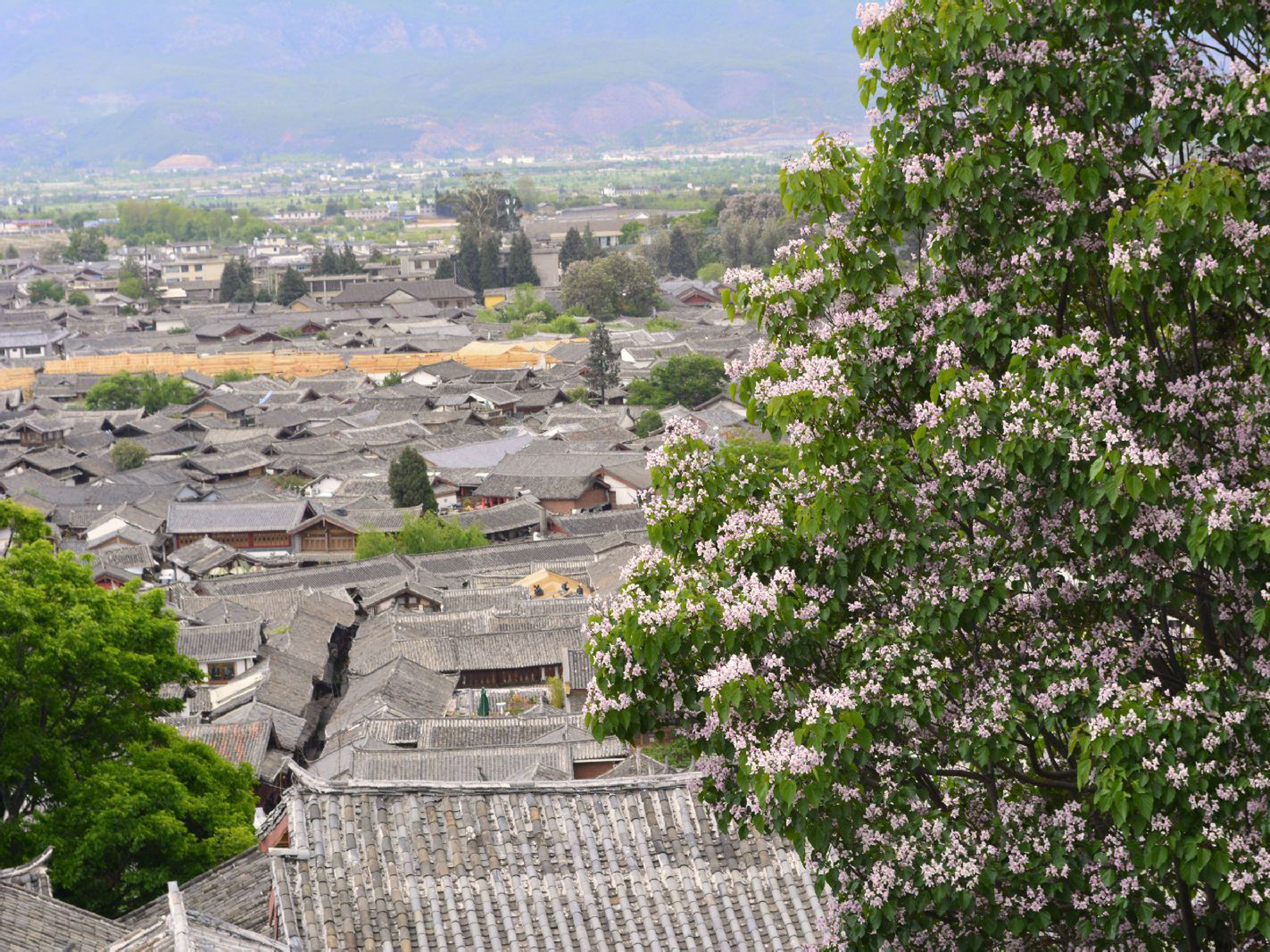
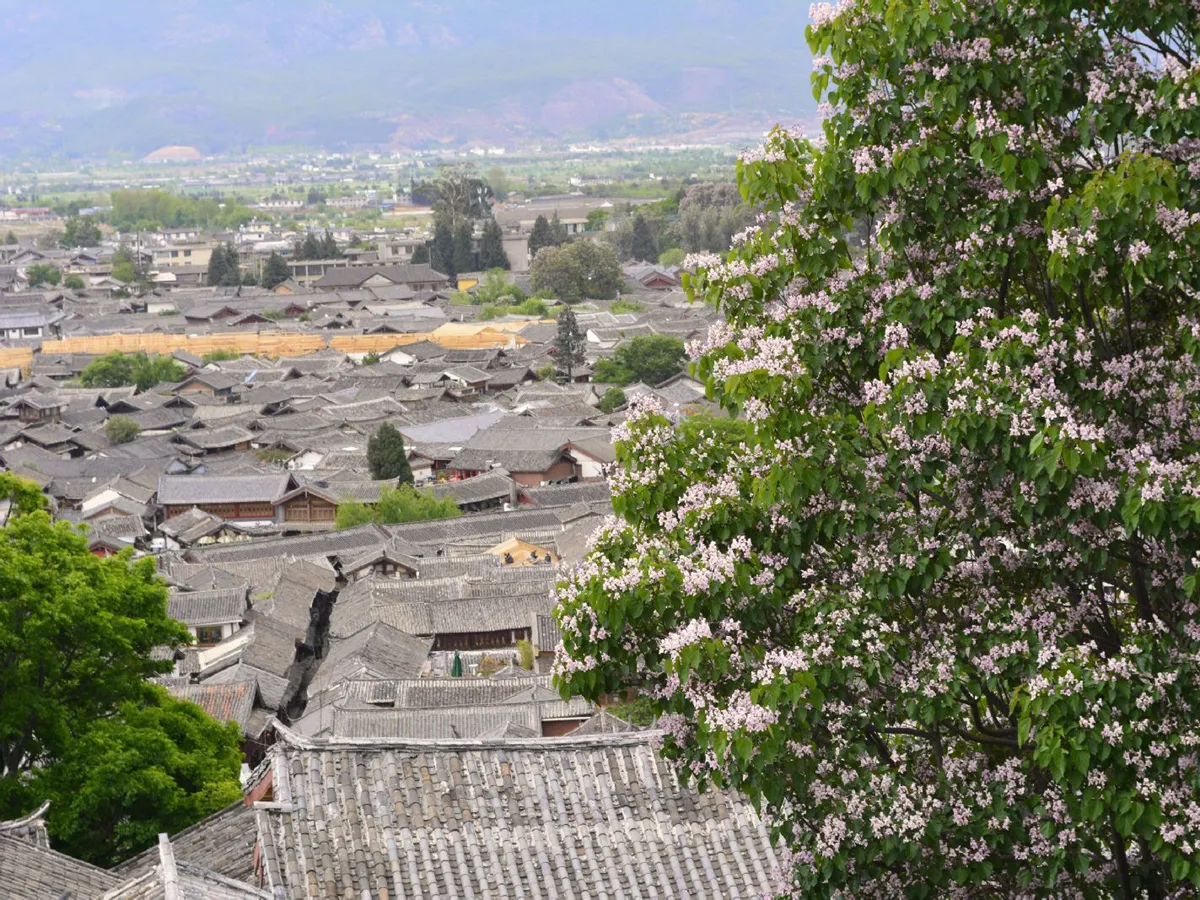
The Old Town — known locally as Dayan (大研) — sprawls across a valley at the foot of Jade Dragon Snow Mountain. Unlike most ancient Chinese cities, Dayan has no walls. The Naxi chose to be open, trusting the mountains and rivers as their natural defenses. This was a trading town, not a fortress, and its lack of walls speaks to a culture that valued exchange over isolation.
The town’s water system is an engineering marvel. Beginning in the 13th century, Naxi engineers diverted three branches of the Black Dragon River (黑龙河) into the town, creating a network of canals that flows in three directions — earning Lijiang its nickname: “the town of three rivers and one city.” Every household has access to running water. By the 1980s, this system still supplied the daily water needs of over 30,000 residents without pumps or modern infrastructure.
Sifang Street (四方街), the central square, has been the commercial heart of Lijiang for over 700 years. Merchants from Yunnan, Sichuan, Tibet, and even Burma once converged here, trading tea, salt, horse tack, and textiles. Today, the square is paved with blue stone — reportedly designed so that when the canals are diverted to flood it, the water washes the street clean. Standing there at dusk, watching Naxi women in traditional pleated skirts sweep the stones, I felt the weight of those seven centuries settle over me like a quiet hand on the shoulder.
The old town’s architecture follows the Naxi tradition: timber-framed houses with tiled roofs, courtyard layouts, and carved wooden window screens. Many homes display Dongba painted scrolls on their facades — not for tourists, but as genuine markers of family identity and spiritual protection. Wander deep into the western lanes, past the souvenir shops, and you’ll find grandfathers playing chess, cats sleeping on warm stone walls, and the unmistakable scent of yak butter tea.
Editor’s Pick: Visit Sifang Street before 8 AM or after 9 PM. During midday, the crowds thin the magic considerably. Early morning is when you’ll hear the water loudest and see the mountain clearest.
Rating: 9/10 — An essential experience, though you’ll need to wander off the main squares to find its soul.
● Mu Palace — The Naxi Royal Court (木府)
Entrance: ¥40 / ~$6 · Hours: 8:00–18:00 · Allow 1.5–2 hours
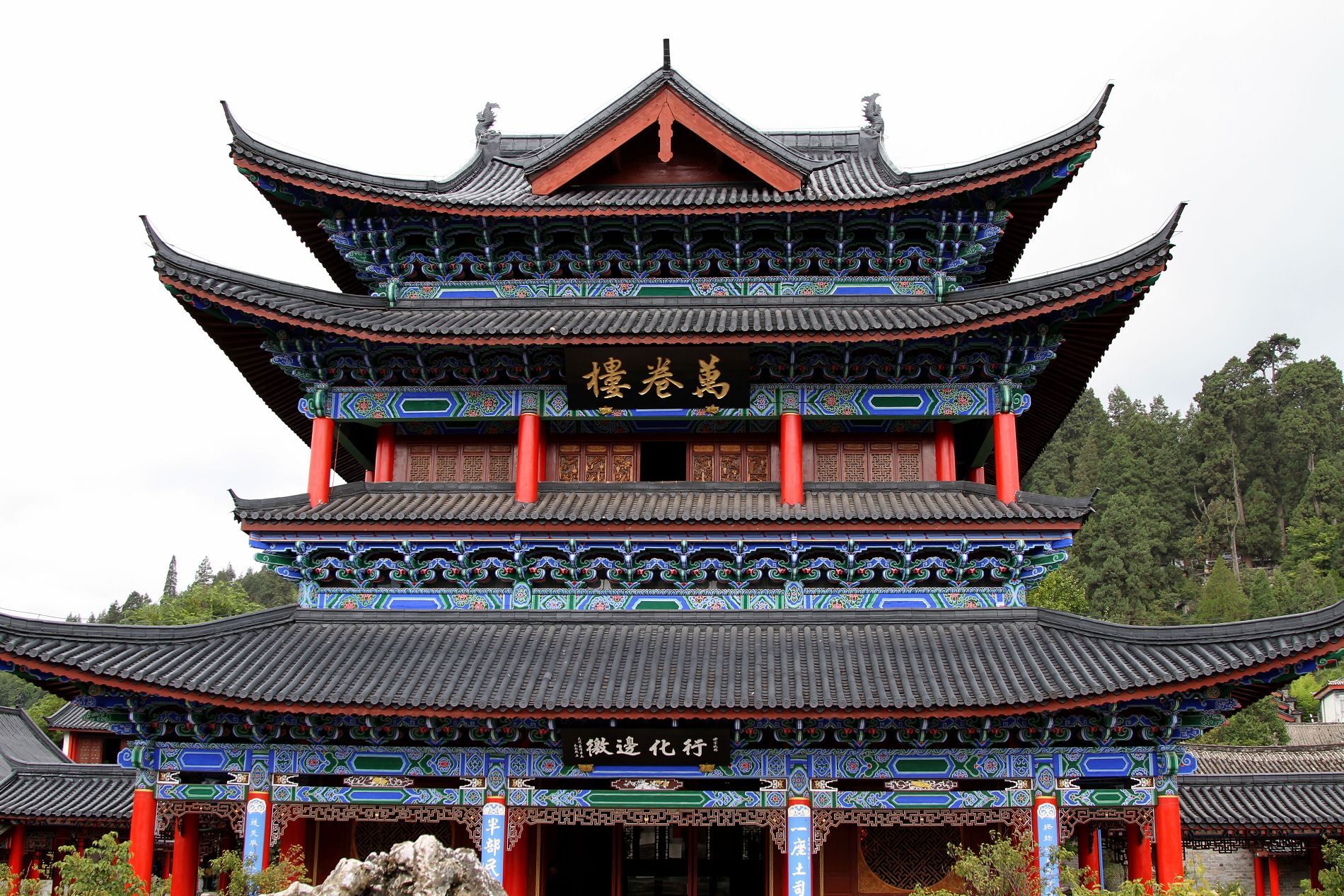
In the heart of the Old Town, set against the green hillside of Lion Hill, stands the Mu Palace — or Mufu (木府), meaning “the residence of the Mu clan.” For over 400 years, the Mu family ruled Lijiang as a succession of tribal chieftains recognized by the Chinese imperial court. Their influence stretched across northwestern Yunnan, and their palace reflected it.
The original Mu Palace was vast — covering an area rivaling the Forbidden City in Beijing, though scaled to Naxi proportions. A Ming Dynasty official who visited in the 15th century wrote that it was “a city within a city, with gates that opened to the sound of drums.” Tragically, the palace was largely destroyed in a devastating fire during the Cultural Revolution in 1968. What stands today is a meticulous reconstruction completed in 1999, based on historical records, old photographs, and surviving architectural fragments.
Walking through the main gate, you pass under a wooden arch inscribed with the phrase “天雨流芳” (Tiānyǔ Liúfāng) — which in the Naxi Dongba language means “listen to the words of the king.” This bilingual pun captures something essential about the Mu clan: they were masters of cultural translation, navigating between Han Chinese imperial power, Tibetan Buddhist traditions, and their own Naxi heritage.
The Throne Hall (议事厅) dominates the inner courtyard. It was here that the Mu chieftains received imperial envoys, adjudicated disputes, and managed the horse trade that made Lijiang wealthy. The ceiling is painted in deep reds and golds, and the carved wooden screens depict scenes from Naxi mythology — the creation story, the migration from the Tibetan Plateau, the founding of the town.
Historical Note: The last Mu chieftain, Mu Zeng, surrendered peacefully to the Qing Dynasty in 1723, ending over 500 years of Mu family rule. He chose negotiation over war, preserving his people’s lives at the cost of political power. Many Naxi still regard him with a mixture of respect and sorrow.
Rating: 8.5/10 — The reconstruction is impressive, and the historical context is rich. For Naxi history, this is non-negotiable.
◆ Jade Dragon Snow Mountain (玉龙雪山)
Elevation: 5,596m (highest peak) · Cable car to 4,506m · Allow full day · Entrance: ¥100 + cable car ¥120 round trip

The mountain that defines Lijiang. Jade Dragon Snow Mountain — Yulong Xueshan (玉龙雪山) — is visible from almost everywhere in the city, its thirteen peaks stretching 35 kilometers across the northern horizon. The highest point, Shanzidou (扇子陡), has never been successfully climbed. The Naxi consider it sacred: the mountain god, Sanduo (三多), is the protector of the Naxi people, and the mountain is the final resting place of Naxi heroes and lovers.
The cable car ride to the glacier park is, frankly, one of the most breathtaking experiences in all of China. Within minutes, you ascend from the green valley floor through cloud layers to a stark white plateau at 4,506 meters. The air thins rapidly — I felt lightheaded within the first five minutes, and the climb up the wooden boardwalk to the highest viewing point (4,680m) left me gasping. Bring water. Move slowly. And don’t be embarrassed if you need to turn back.
What makes the glacier park extraordinary is the scale. You’re standing on ancient ice, watching glacial meltwater cascade down sheer rock faces into the valley below. The snow underfoot crunches with a sound like glass breaking. In the distance, the lower peaks are draped in cloud, appearing and disappearing like shy giants.
Altitude Advisory: The cable car station is at 4,506m. Most healthy adults will feel mild altitude effects (headache, breathlessness). Those with heart or respiratory conditions should consult a doctor before ascending. Altitude sickness pills (acetazolamide) are available at pharmacies in Lijiang — start taking them the night before.
Blue Moon Valley (蓝月谷)
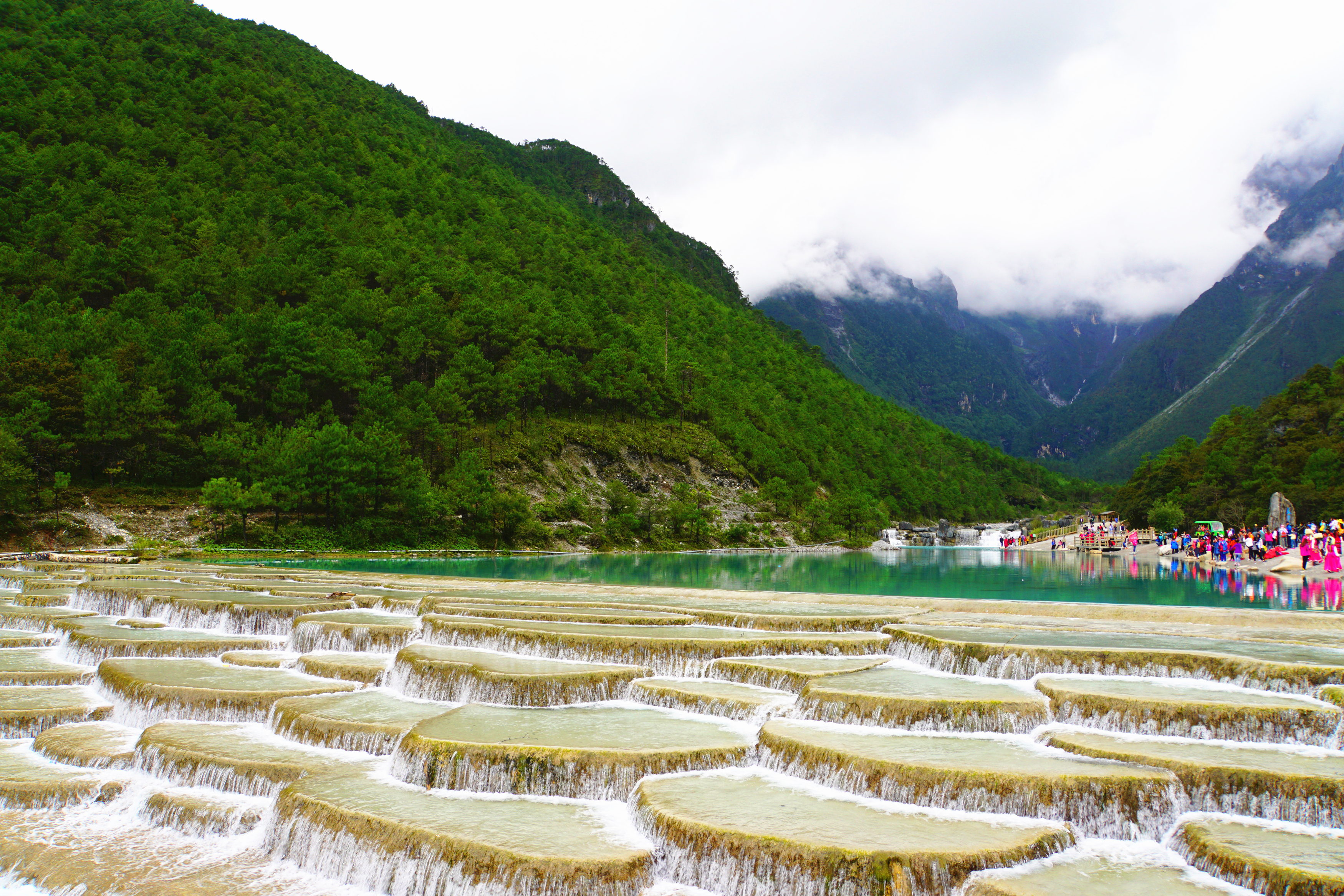
At the foot of the mountain, the glacial meltwater collects into a series of four interconnected lakes collectively known as Blue Moon Valley (蓝月谷). The water here is an almost supernatural shade of turquoise — so vivid it looks digitally enhanced, though it’s entirely natural. The color comes from copper and calcium carbonate dissolved in the glacial runoff, combined with the reflective properties of the white limestone lakebed.
The valley is an easy walk from the cable car base station, following a well-maintained boardwalk through willow groves and past cascading waterfalls. The contrast between the stark, frozen heights of the glacier park and the gentle, flowing beauty of the valley is striking. One feels like a cathedral of ice; the other, a garden of water.
I sat on a rock near the Second Lake for nearly an hour, watching the light shift across the mountain face. The clouds moved fast, and for brief, perfect moments, the entire snow-capped range was visible, reflected perfectly in the still turquoise water. Those moments felt like gifts.
Rating: 9.5/10 — Jade Dragon Snow Mountain is one of the most spectacular natural sites in Yunnan. The combination of glacier, snow peaks, and Blue Moon Valley is genuinely world-class.
● Shuhe Old Town (束河古镇)
Free admission (small historical preservation fee may apply) · 4km northwest of Dayan · Taxi: ¥15–20
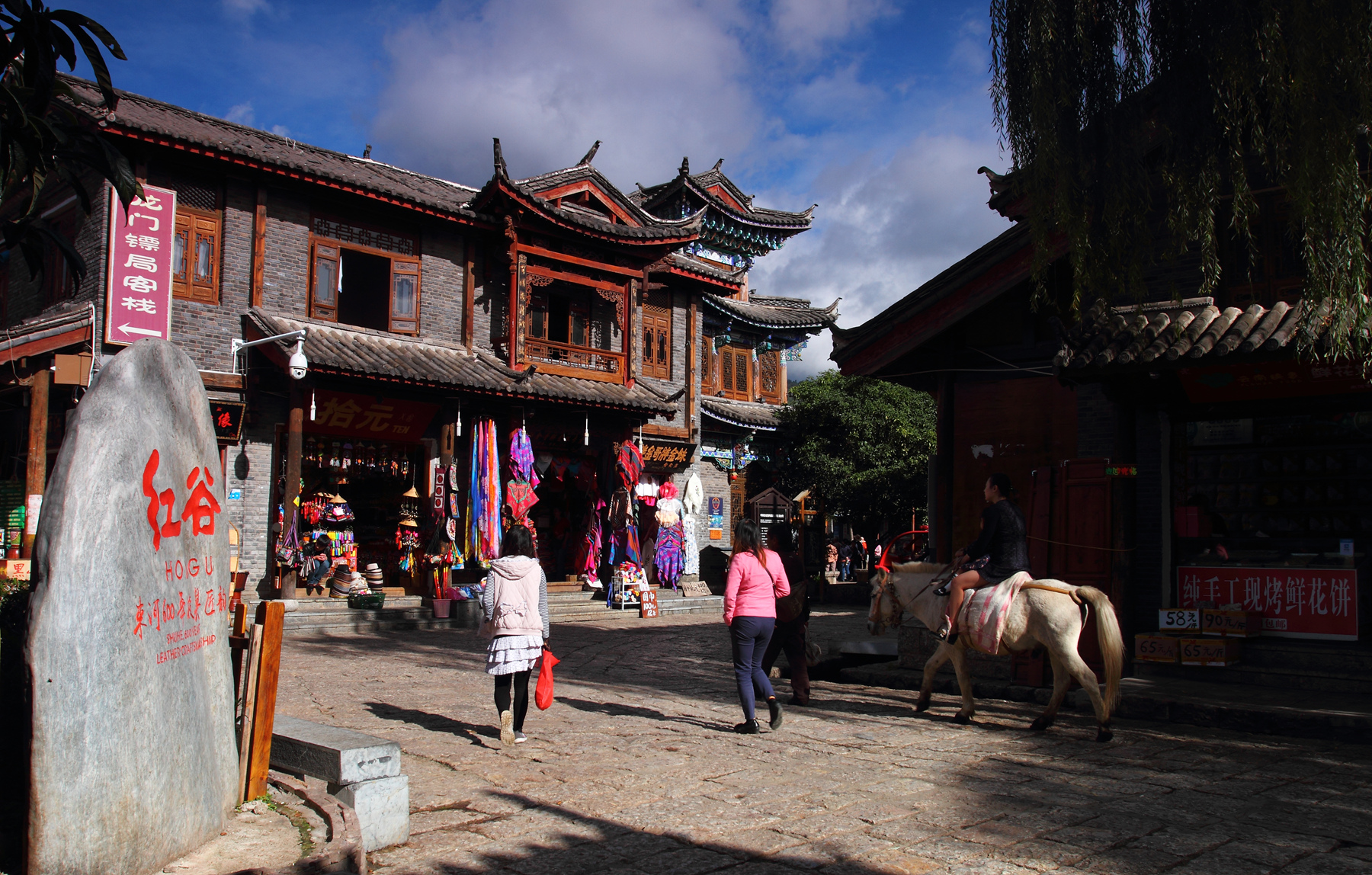
If Dayan is Lijiang’s grand central station, Shuhe is its quieter village cousin — a place where the canals still carry the sound of water more loudly than the sound of tourists. Established during the Tang Dynasty as a horse trading post on the Ancient Tea Horse Road (茶马古道), Shuhe was actually older and more important than Dayan until the Mu clan shifted the political center south in the 13th century.
The town sits along the Heqing Road, one of the ancient caravan routes connecting Yunnan to Tibet and beyond. Horse caravans carrying compressed tea bricks northward and returning with Tibetan wool, salt, and medicinal herbs passed through Shuhe’s streets for over a thousand years. The name “Shuhe” (束河) means “bound river,” referring to the way the channels are channeled and controlled — a subtle reminder of Naxi hydraulic engineering.
Today, Shuhe retains a village atmosphere that Dayan lost decades ago. The main street is lined with traditional Naxi homes converted to cafés, bookshops, and small galleries. But walk five minutes in any direction and you’re in quiet residential lanes where locals hang laundry and elderly women sort peppers on sun-warmed doorsteps. The town square — small and unpretentious — has a handful of tea houses where you can sit with a pot of pu’er tea and watch the afternoon drift by.
Comparison: Many travelers who visit both towns prefer Shuhe for its authenticity and Dayan for its energy. If you only have time for one, Shuhe offers the more contemplative experience. If you have two days, visit Dayan first for the spectacle, then Shuhe for the respite.
The Nine Dragons Screen (九鼎龙潭), at the northern end of the town, is worth the walk. A spring-fed pool, impossibly clear, reflects the surrounding willows and the distant mountain. Locals come here to wash vegetables and fill water containers — a practice that has continued unchanged for centuries.
Rating: 8/10 — A gentler alternative to Dayan that rewards unhurried exploration.
◆ Black Dragon Pool Park (黑龙潭公园)
Free admission · Open 7:30–21:00 · 1km north of Old Town · Best at sunrise
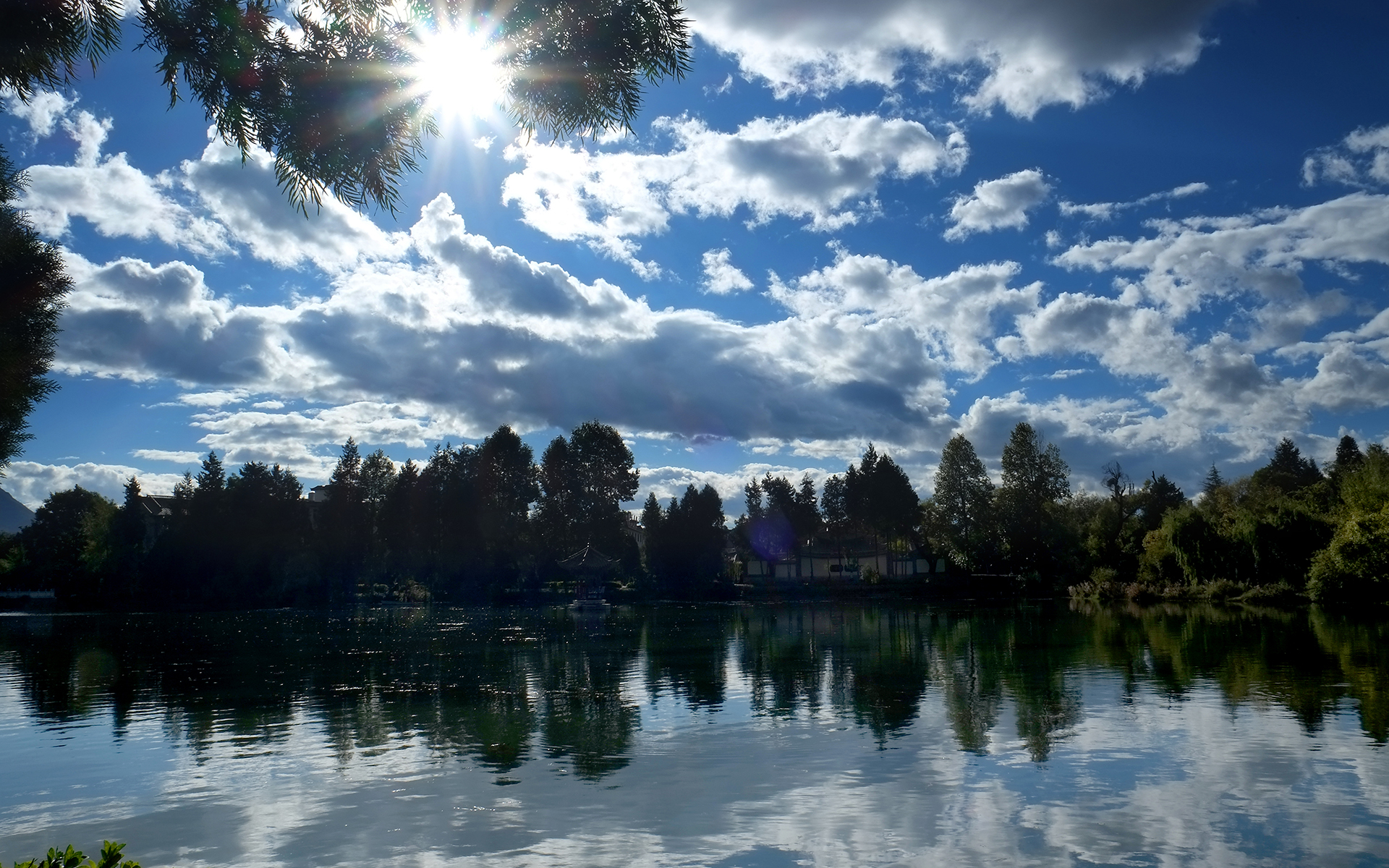
Every iconic photograph of Lijiang — the one on postcards, travel magazines, and a thousand Instagram feeds — was taken here. Black Dragon Pool (黑龙潭, also called Yuquan Park) is a public park at the northern edge of the city, centered on a spring-fed pool whose still waters create a perfect mirror reflection of Jade Dragon Snow Mountain’s main peaks.
The park is home to the Deyue Pavilion (得月楼), a three-story wooden pavilion built during the Qing Dynasty, and the Dongba Culture Museum, which houses the world’s largest collection of Dongba manuscripts and ritual objects. The pool itself is fed by underground springs that emerge from the base of the mountain — the water is cold, clear, and slightly mineral in taste.
I arrived at the park at 6:30 AM, while the air was still heavy with mist and the mountain was hidden. I waited. At 7:15, the wind shifted, the mist parted like a curtain, and the entire snow range appeared in the pool’s reflection with a clarity that made my breath catch. No filter, no editing — just nature performing one of its quiet miracles. The moment lasted perhaps ten minutes before clouds rolled back in.
Timing Tip: The reflection is best in early morning (before 8 AM) when the water is still and the air is clear. By mid-morning, thermal currents create wind that ripples the surface. Late afternoon can also work on still days, but morning is more reliable.
Rating: 8.5/10 — The park itself is pleasant but not extraordinary; it’s the reflection view that makes this unmissable.
● Naxi Culture: The Living Heritage
Dongba Script (东巴文)
The Naxi Dongba script is the world’s last surviving functioning pictographic writing system. Developed over 1,000 years ago by Dongba priests, it comprises approximately 1,400 characters — each one a tiny drawing that represents a concept, action, or object. A picture of a mountain means “mountain.” A picture of a person kneeling before a mountain means “worship.” A picture of a person running from a mountain means “fear.”
Unlike Chinese characters, which evolved from pictographs to abstract forms, Dongba script never made that leap. Each character retains its original visual connection to the thing it represents. Scholars consider it a “living fossil” of human writing — a window into the developmental stage that preceded all modern writing systems.
In practice, Dongba script was used primarily for religious texts — creation myths, prayer books, ritual instructions, and astronomical records. Dongba priests (also called Dongba) were the literate class of Naxi society: part priest, part historian, part doctor. They performed ceremonies for everything from childbirth to death, from planting to harvest, reading aloud from hand-painted manuscripts that combined text with elaborate illustrations.
Today, roughly 60,000 Dongba manuscripts survive, most housed in the Dongba Culture Museum and the Yunnan Provincial Library. The script is being taught in schools across Naxi regions, and a small but growing number of young Naxi are learning to read and write it. It remains a symbol of Naxi identity — proof that their culture endured when so many others did not.
Naxi Ancient Music (纳西古乐)
The Naxi ancient music tradition is one of the oldest surviving forms of Chinese classical music. Performed by aging musicians who learned from their fathers and grandfathers, the repertoire includes pieces dating back to the Tang and Song dynasties — music that was lost in central China but preserved in the remote mountains of Yunnan.
Performances are held nightly at several venues in the Old Town. The most traditional is the Naxi Ancient Music Concert at the Xuanke Hall, where musicians in traditional dress play instruments including the bawu (a free-reed pipe), the pipa (a four-stringed lute), and various drums and bells. The music is haunting — slow, meditative, and deeply melancholic. I attended a performance where the oldest musician, a man in his late 80s, played a solo that reduced half the audience to tears without anyone quite understanding why.
Local Customs
The Naxi practice a syncretic blend of Dongba religion, Tibetan Buddhism, and Taoism. Wedding ceremonies remain elaborate affairs involving horse processions, ritual chanting by Dongba priests, and communal feasting that can last three days. The “Walking Marriage” (走婚) tradition — where couples live separately and visit each other at night — is sometimes attributed to the Naxi but is actually more closely associated with the Mosuo people of nearby Lugu Lake.
Rating: 9/10 — Naxi culture is the beating heart of Lijiang. Without understanding it, the town is just pretty buildings. With it, everything comes alive.
◆ Practical Information
Getting There
By Air: Lijiang Sanyi Airport (LJG) receives domestic flights from Kunming (1 hour), Chengdu (2 hours), Beijing, Shanghai, and Guangzhou. International connections are limited.
By Train: The Kunming–Lijiang railway (7 hours) offers scenic views through the Yunnan–Guizhou Plateau. The high-speed rail option (3 hours) opened in 2023.
From the Airport: Taxi to Old Town takes 25 minutes and costs approximately ¥80. The airport shuttle bus (¥20) drops you near the Old Town entrance.
Best Time to Visit
| Season | Months | Conditions |
|---|---|---|
| Spring | Mar–May | Warm, wildflowers, moderate crowds |
| Summer | Jun–Aug | Rainy season, lush greenery, thunderstorms |
| Autumn | Sep–Nov | Best weather, clear skies, peak crowds |
| Winter | Dec–Feb | Cold, dry, snow on peaks, few tourists |
Sweet Spot: Late September through October offers the best combination of clear mountain views, comfortable temperatures (15–22°C), and manageable tourist numbers.
Altitude & Health
Lijiang sits at 2,400 meters. Most visitors experience no significant altitude effects. The cable car to Jade Dragon Snow Mountain reaches 4,506 meters — this is where altitude becomes relevant. Key advice:
- Spend at least one full day in Lijiang before ascending the mountain
- Stay hydrated (drink 3–4 liters of water on mountain day)
- Carry glucose tablets or energy bars
- Descend immediately if you feel severe headache, nausea, or dizziness
- Altitude sickness pills (acetazolamide/Diamox) can be taken preventatively — start 24 hours before ascent
Budget Estimates
| Category | Daily Cost (Budget) | Daily Cost (Mid-Range) |
|---|---|---|
| Accommodation | ¥100–200 (~$14–28) | ¥300–600 (~$42–83) |
| Meals | ¥80–120 (~$11–17) | ¥150–250 (~$21–35) |
| Transport | ¥30–50 (~$4–7) | ¥80–150 (~$11–21) |
| Attractions | ¥100–200 (~$14–28) | ¥200–300 (~$28–42) |
| Total | ¥310–570 (~$43–79) | ¥730–1,300 (~$101–181) |
Food Worth Seeking
- Naxi Baba (纳西粑粑) — Flatbread baked on a hot stone, stuffed with either savory (ham, scallion) or sweet (rose sugar) filling. Best from street vendors near Sifang Street.
- Crossing Bridge Rice Noodles (过桥米线) — Yunnan’s signature dish: a bowl of boiling broth served with raw ingredients that you cook by dipping. The “bridge” refers to the story of a wife who carried soup across a bridge to her studying husband.
- Yak Butter Tea (酥油茶) — A Tibetan-Naxi staple: strong tea churned with yak butter and salt. Acquired taste, but warming and energizing at altitude.
- Lijiang Grilled Fish (丽江烤鱼) — Freshwater fish from Lijiang Lake, grilled over charcoal with local herbs and chili. Best at evening stalls near the Old Town’s western gate.
- Wild Mushroom Hot Pot (菌子火锅) — Yunnan is China’s mushroom capital. From June to October, wild matsutake, porcini, and chanterelles appear on menus. A hot pot with mixed wild mushrooms is extraordinary.
Dining Tip: Avoid restaurants on the main squares of Dayan (overpriced, mediocre). Walk into the back lanes — particularly along Wuyi Street and the western canal district — for better food at honest prices.
Getting Around
- Old Town: Walking only (vehicles prohibited inside the heritage zone)
- To Shuhe: Taxi or local bus (Bus 11), 15 minutes
- To Jade Dragon Snow Mountain: Tour bus from Old Town (¥20) or organized tour
- To Black Dragon Pool: 15-minute walk north from Old Town entrance
- To Blue Moon Valley: Included with Jade Dragon Snow Mountain ticket
What to Pack
- Layered clothing (temperatures vary dramatically between valley floor and mountain)
- Sunscreen and sunglasses (UV intensity is extreme at 2,400m+)
- Comfortable walking shoes (cobblestones are uneven)
- Reusable water bottle
- Small daypack for mountain day
- Light rain jacket (summer showers are sudden)
Closing Reflection
I left Lijiang on a morning so clear that the mountain seemed close enough to touch. Standing at the bus station, looking back one last time, I thought about the Naxi proverb: “The mountain watches over the town; the town honors the mountain.” It’s a simple idea, but it captures something I’ve rarely felt elsewhere — a sense that a place and its people have been shaped by each other over centuries, not just coexisting but genuinely belonging together.
Lijiang is not perfect. The main squares are crowded. The souvenir shops sell the same trinkets in every alley. And the entrance fees add up faster than you’d expect. But step off the beaten path — walk to the far end of the Old Town where the canal goes quiet, sit by the Nine Dragons Screen in Shuhe while the afternoon light turns golden, stand on the glacier park at 4,680 meters and feel the wind carrying ice crystals past your face — and you’ll find something that no amount of commercialization has managed to diminish.
The mountain still watches. The water still flows. And somewhere in the back lanes, an old man is still painting Dongba characters on a wooden sign that says, simply, “Welcome home.”
Overall Rating: 9/10 — Lijiang rewards patience and curiosity. It is one of the few places in China where ancient culture feels genuinely alive rather than performed. Come for the mountain, stay for the people, and leave carrying something quieter than a photograph.