Lanzhou: Gateway to the Silk Road by the Yellow River
📅 Version 1.0 · 📍 Cultural & Culinary Explorer · ⏱️ 3 Days
The first bowl of Lanzhou beef noodles arrives without ceremony — a ceramic bowl, a tangle of hand-pulled noodles in milky broth, a scattering of cilantro, a slick of chili oil catching the morning light. No menu description prepares you for the texture: springy, slightly alkaline, with a chew that speaks to centuries of refinement. This is Lanzhou’s unofficial welcome letter, and it tastes like nothing else in China.
Lanzhou sits in the crook of the Yellow River, a narrow valley flanked by arid mountains, the kind of geography that compresses everything — the traffic, the culture, the centuries of Silk Road trade that passed through this corridor between east and west. It is not a city that dazzles on first glance. It reveals itself slowly, the way the river reveals its silt: layer by layer, patience required.
Day One: The Yellow River Walk
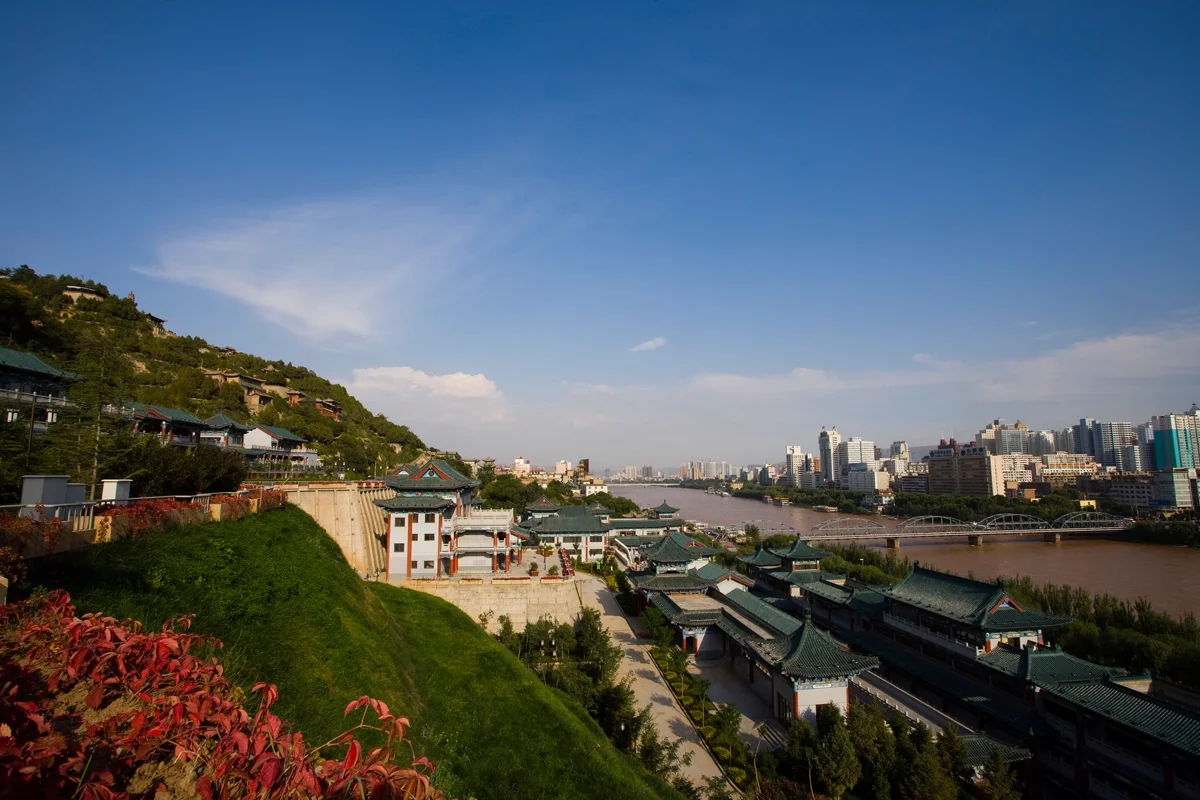
「Zhongshan Bridge — Where Steel Meets Silt」
Zhongshan Bridge, the iron arch bridge completed in 1909, is the logical starting point for any Lanzhou itinerary. Commissioned by Qing Dynasty officials after decades of reliance on a rope ferry — the Jincheng Guan, a precursor that connected the city to the western provinces — this bridge was the first permanent structure to span the Yellow River. Its iron lattice, imported from Germany, still carries traffic today, though the cars have changed considerably.
Walk the length of it at golden hour, when the light turns the river the color of hammered bronze. The bridge is short enough to cross in five minutes, but linger on the western bank: the view back toward downtown, with Zhongshan Bridge in the foreground and Baita Mountain rising behind the old city, is the composition that defines Lanzhou’s skyline.
Editor’s Note: The bridge is free to cross and open at all hours. For the best light, arrive between 5:00 and 6:30 PM in summer. Winter golden hour falls around 4:30 PM.
「Baita Mountain — Steps, Temples, and the Panorama」
From the western end of Zhongshan Bridge, the stone steps leading up Baita Mountain begin immediately. The climb takes roughly thirty minutes at a leisurely pace, passing through layers of Buddhist and Taoist temples, each offering a different angle on the city below. The White Pagoda — the mountain’s namesake — dates to the Yuan Dynasty, rebuilt multiple times, and stands as a quiet sentinel overlooking the river bend.
The summit reveals Lanzhou’s geography in a single glance: the Yellow River threading through the valley floor, the city compressed between mountains, the railway line following the water eastward. On clear days, the Hexi Corridor opens to the northwest, the same route that carried silk, jade, and Buddhism westward from Chang’an.
Practical Information:
- 📍 Baita Mountain Park, Chancheng District
- 🚇 Bus 2, 4, 6, 9, 13, 15, or Metro Line 1 to Baita Mountain station
- ⏰ Open 6:00 AM – 8:00 PM (summer), 7:00 AM – 6:00 PM (winter)
- 💰 Free entry; White Pagoda ¥5 / ~$0.70
「Waterwheel Park — The River’s Memory」
Waterwheel Park (Shui Che Wan) sits along the southern bank of the Yellow River, a green belt of willow trees and flowing water where Lanzhou’s ancient irrigation technology is preserved. The waterwheels — massive wooden wheels that once lifted river water to the terraced farmland above — were the backbone of agriculture in this arid valley for centuries. The park has seven restored waterwheels, the largest standing 16.5 meters tall, their wooden buckets still catching the current.
The park is compact, a thirty-minute stroll at most, but its position along the river makes it an excellent connector between the morning’s Baita Mountain climb and the afternoon’s riverside walk. The willow trees provide shade that the valley’s dry heat makes essential.
「Riverside Walk — The Yellow River Belt」
The Yellow River Belt Park (Huang He Feng Qing Xian) stretches for kilometers along both banks, a linear green corridor that functions as Lanzhou’s living room. The locals gather here in the evenings — couples walking, old men playing cards, children chasing along the waterfront. The belt is wide, lined with sculptures, public art, and the occasional tea pavilion where you can sit with a glass of locally brewed spring water tea and watch the river.
The Yellow River here is not the roaring torrent of the upper gorges. In Lanzhou, it is wide and relatively calm, carrying its characteristic silt load — the same sediment that gives the river its name and its color. Standing on the bank, watching the water move, you understand why this river sustained civilizations for millennia: it is generous, even in its apparent harshness.
Dining Note: End the day at Zhengning Road, Lanzhou’s most famous food street. The evening market comes alive after 6:00 PM with stalls selling malatang (spicy hot pot), lamb skewers, and the ubiquitous beef noodles that anchor the city’s culinary identity.
Day Two: Culture, Springs, and Noodle Mastery
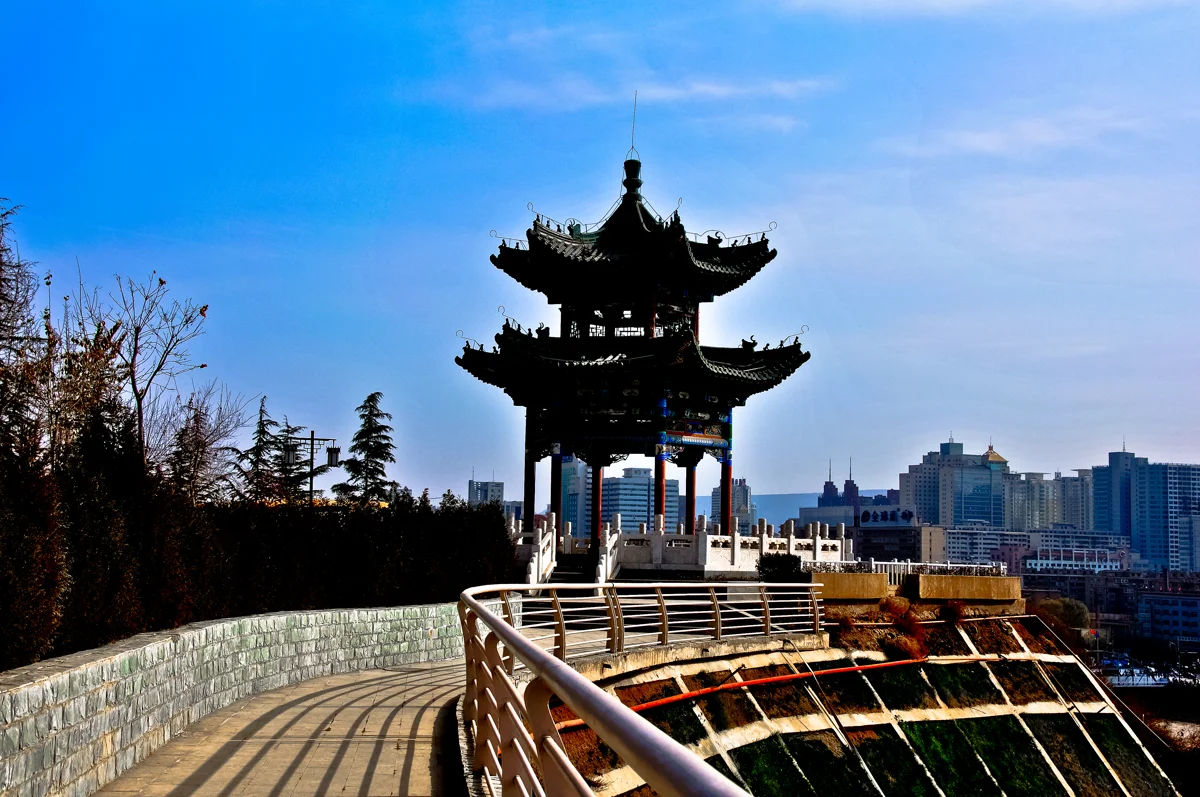
「Gansu Provincial Museum — Two Thousand Years in a Morning」
The Gansu Provincial Museum occupies a modern building on the eastern side of the city, its collection spanning from Neolithic pottery to the Silk Road trade goods that define the province’s historical identity. The museum’s crown jewel is the Galloping Horse Treading on a Flying Swallow — a bronze sculpture from the Eastern Han Dynasty (25–220 CE) so perfectly balanced it appears to defy gravity. This single artifact, discovered in a tomb in Wuwei, became the symbol of Chinese tourism and a masterwork of ancient metallurgy.
Beyond the bronze horse, the museum’s Silk Road gallery houses artifacts from the Mogao Caves, Turfan, and Dunhuang — fragments of Buddhist texts, painted scrolls, and trade goods that tell the story of the corridor’s role as a conduit between civilizations. Allow two to three hours; the museum is well-organized, with bilingual labels in Chinese and English.
Practical Information:
- 📍 3 West Tianshui Road, Chengguan District
- 🚇 Metro Line 1 to Baita Mountain station, then a 10-minute walk north
- ⏰ 9:00 AM – 5:00 PM (closed Mondays)
- 💰 Free (ID required for entry, passport accepted for foreigners)
- ⚠️ Arrive early; the Galloping Horse gallery draws crowds by mid-morning
「Five Springs Park — An Oasis in the Valley」
Five Springs Park (Wu Quan Shan) sits at the southern edge of the city, a green hillside fed by five natural springs that have flowed for over two thousand years. The park is Lanzhou’s oldest public garden, originally established during the Western Han Dynasty, and its terraced landscape — temples, pavilions, pools fed by spring water — offers a counterpoint to the arid mountains visible beyond the park walls.
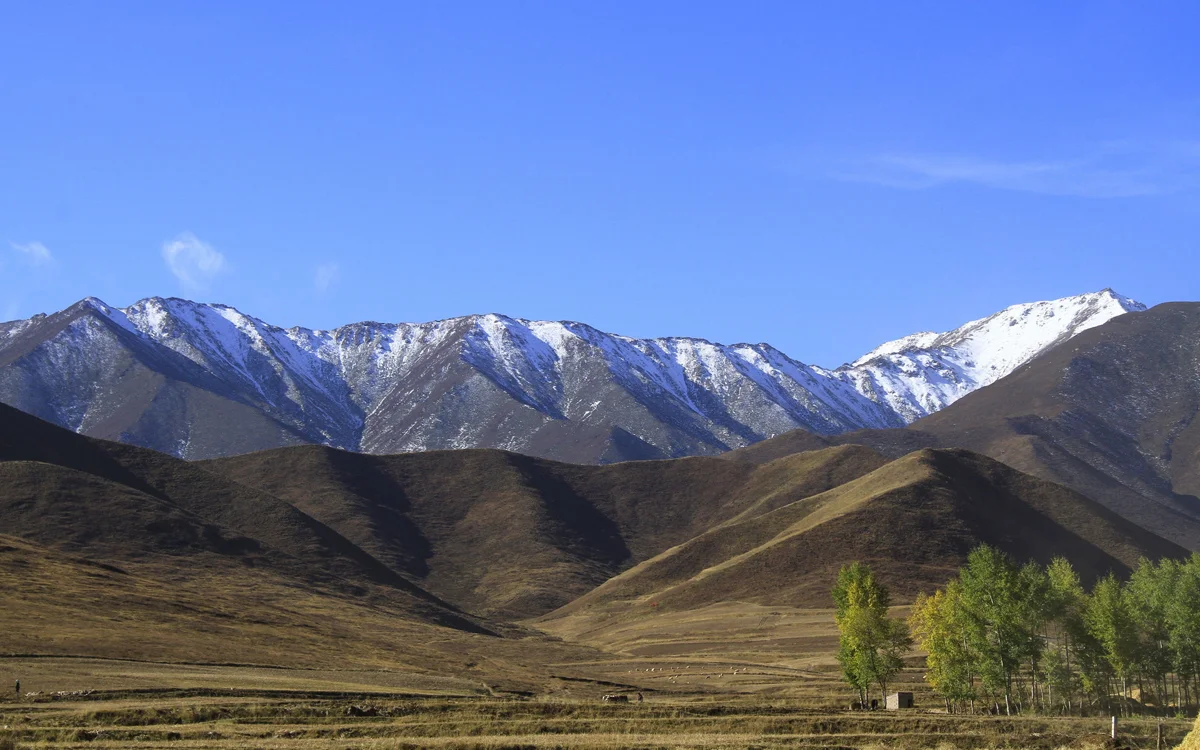
The five springs — Ganlu, Jieyu, Mozi, Mengyue, and Hui — each have their own legend, though the water itself is the attraction: clear, cold, and constant even in the driest summers. The park is a popular weekend destination for Lanzhou families, and on weekdays it maintains a quieter atmosphere, the springs murmuring through stone channels while visitors sit in the shade.
Practical Information:
- 📍 1 South Wuyi Road, Chengguan District
- 🚇 Bus 8, 18, 33, or Metro Line 2 to Wuyishan Park station
- ⏰ Open 6:00 AM – 8:00 PM
- 💰 Free entry
「Zhengning Road Night Market — The City After Dark」
Zhengning Road transforms after sunset. By day, it is a commercial street of modest shops; by night, it becomes Lanzhou’s most concentrated food experience. The stalls line both sides of the street, the smoke from grills mixing with the steam from noodle pots, the sound of woks clanging against iron burners creating a rhythm that drives the evening forward.
The specialties here are specific to Lanzhou and difficult to find elsewhere: guan zhuan (tube-shaped fermented mung bean noodles served in a spicy broth), sweet fermented rice porridge, and grilled lamb kidneys — a local delicacy that rewards the adventurous. The beef noodles, of course, are everywhere, each stall claiming a slightly different recipe for the broth.
Dining Recommendation: Zhengning Road is most vibrant between 7:00 and 10:00 PM. Arrive hungry, bring cash (many stalls still prefer it), and eat slowly — the variety demands patience.
「Beef Noodle Masterclass — The Art of Hand-Pulled」
Lanzhou’s beef noodles are not simply a dish; they are a craft. The technique of pulling dough into individual strands — each strand uniform in thickness, each strand absorbing the alkaline broth differently — requires years of practice. The noodle masters who work the dough in the early morning hours, stretching and folding with a rhythm that appears effortless, are performing a kind of performance art.
Several restaurants offer noodle-making demonstrations, though the best way to understand the process is simply to watch the cooks at any of Lanzhou’s morning noodle shops, where the dough preparation begins before dawn. The noodles are pulled to order, each strand hand-shaped, and the broth — simmered for hours with beef bones, star anise, cardamom, and white pepper — is the element that distinguishes Lanzhou’s version from beef noodles found elsewhere in China.
Noodle Guide:
- Standard ordering: Choose noodle width (from hair-thin to wide flat), specify spice level, request extra beef
- Best time: 6:30 – 9:00 AM for the freshest noodles and thinnest crowds
- Price: ¥12–18 / ~$1.70–2.50 per bowl
- Recommended shops: Ma Junyi Beef Noodles (multiple locations), Zhonghua Beef Noodles on Zhangye Road
Day Three: The Stone Forest and the River’s Source
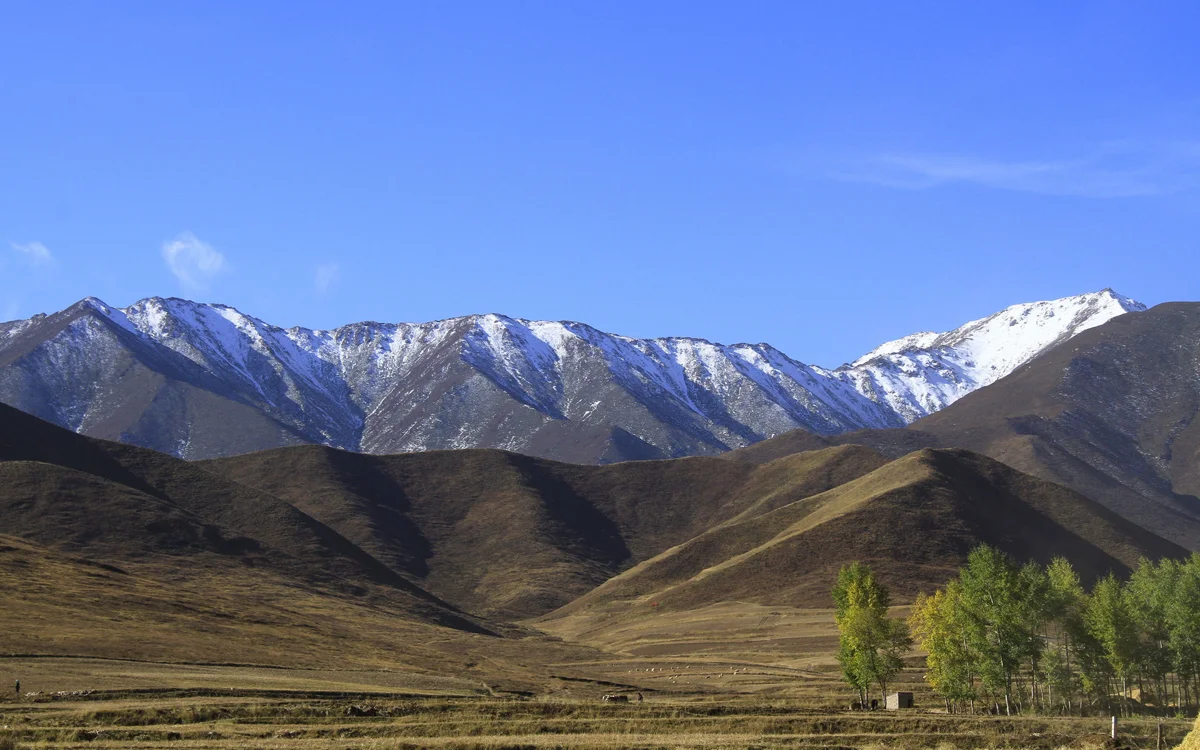
「Liujiaxia Reservoir — Where the River Pauses」
The Liujiaxia Reservoir lies approximately 80 kilometers west of Lanzhou, reachable by bus from Lanzhou West Bus Station in roughly ninety minutes. The reservoir, created by a dam on the Yellow River in the 1960s, flooded a valley that once held villages and farmland, creating a lake of startling blue-green water — a color that contrasts sharply with the silt-brown Yellow River downstream.
The reservoir is the staging point for a boat trip to Bingling Temple, one of China’s most important Buddhist grotto complexes. The boat ride takes approximately two hours, skirting the reservoir’s western shore through narrow gorges where the water turns from blue to emerald. The landscape is stark: bare rock, sparse vegetation, the kind of arid beauty that makes the engineering achievement of the dam and the devotional achievement of the cave temples equally impressive.
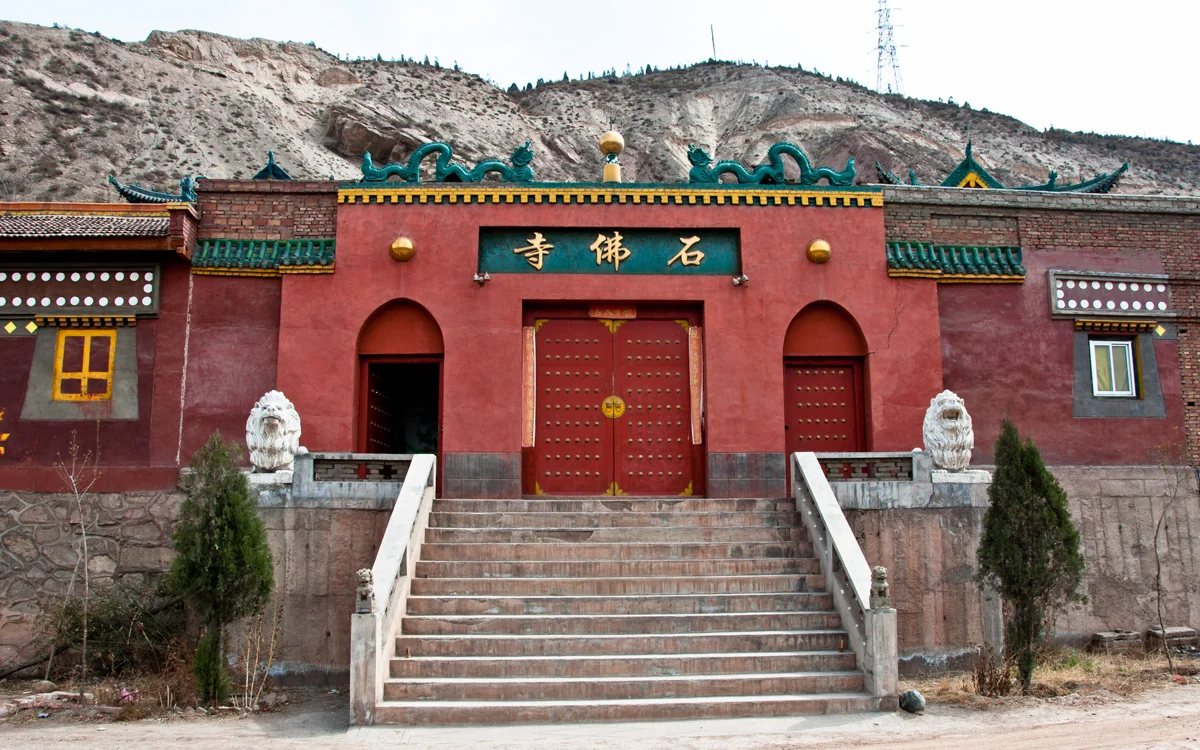
「Bingling Temple Grottoes — Buddhism in Stone」
Bingling Temple’s 183 cave niches contain sculptures and murals dating from the Western Qin Dynasty (385–431 CE) through the Ming Dynasty, a span of over a thousand years of continuous religious art carved into the limestone cliffs above the reservoir. The grottoes are smaller than those at Dunhuang’s Mogao Caves, but the intimacy is the advantage — the sculptures feel immediate, their expressions preserved in stone with a precision that larger complexes sometimes lose.
The most remarkable niche is the “One Thousand Buddha Cave,” its walls entirely covered with small Buddhist figures, each individually carved, each slightly different. The effect is cumulative: standing in the small cave, surrounded on all sides by centuries of devotion, the noise of the modern world drops away entirely.
Practical Information:
- 📍 Bingling Temple, Yongjing County (boat access from Liujiaxia Reservoir)
- 🚐 Bus from Lanzhou West Bus Station to Liujiaxia (¥15 / ~$2, one way, 90 minutes)
- ⛴️ Boat from reservoir pier to Bingling Temple (¥120 / ~$17 round trip)
- ⏰ Boats depart 8:00 – 10:00 AM; return by 4:00 PM
- 💰 Temple entrance ¥50 / ~$7
- ⚠️ Total round trip from Lanzhou: approximately 6–7 hours including travel
「Alternative: The Stone Forest」
For those preferring to stay closer to the city, the Yellow River Stone Forest (Huang He Shi Lin) lies about 170 kilometers east of Lanzhou, near Jingtai County. 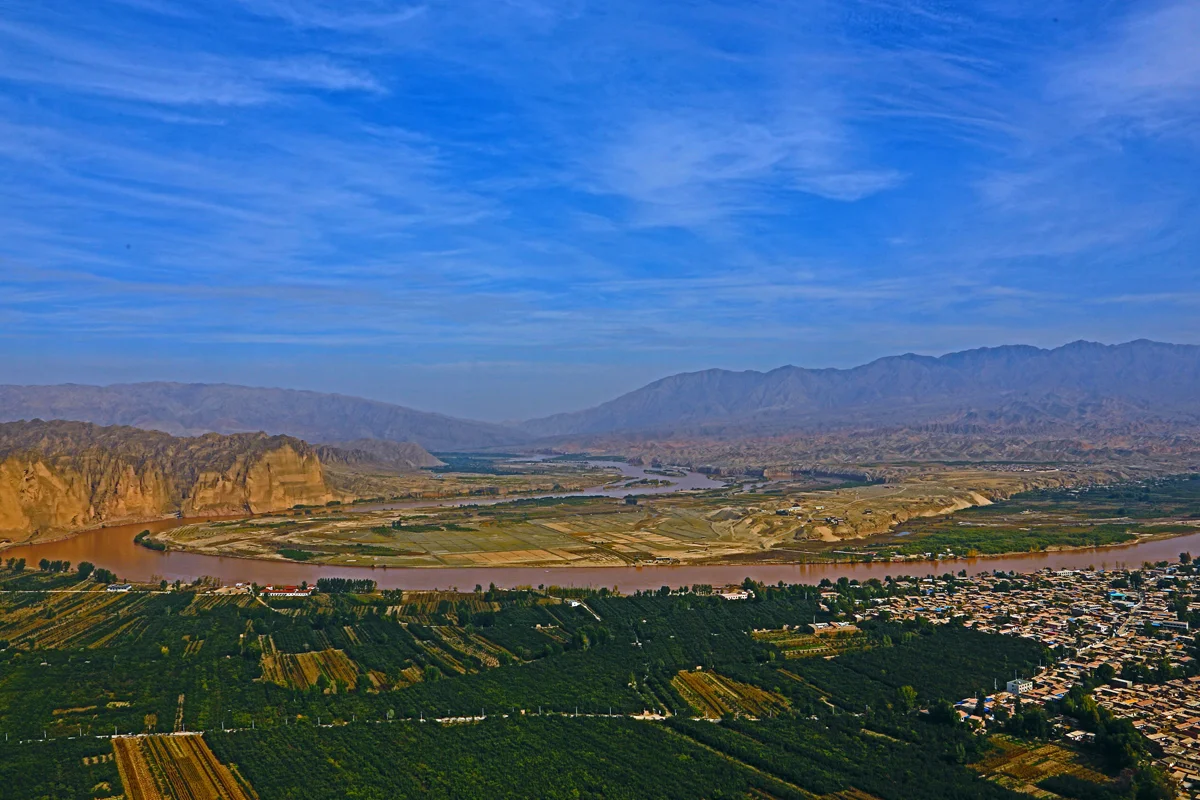
The geological park features towering sandstone pillars — some exceeding 200 meters — eroded by wind and water into formations that resemble a forest of stone. The landscape is prehistoric in feel, the kind of terrain that makes the geology of the Loess Plateau tangible and immediate.
The stone forest is best visited in the morning, when the low-angle light accentuates the texture of the rock. A cable car provides panoramic views; on the valley floor, the old village of Longwan has been partially restored as a heritage site, its adobe houses and narrow lanes preserved against the dramatic backdrop.
Practical Information:
- 📍 Yellow River Stone Forest Geopark, Jingtai County
- 🚐 Charter bus or self-drive (approximately 2.5 hours)
- 💰 Entrance ¥80 / ~$11, cable car ¥80 / ~$11 additional
- ⏰ Open 8:00 AM – 6:00 PM (summer)
- ⚠️ Full-day trip; leave early to maximize time at the park
Practical Information
| Category | Details |
|---|---|
| When to Visit | May–October (dry season, warm days). Winters are cold and dusty; summers are hot but dry. |
| Getting There | Lanzhou Zhongchuan International Airport (LHW), 75 km from city center. High-speed rail connects to Xi’an (3 hours), Chengdu (6 hours), Urumqi (11 hours). |
| Getting Around | Metro Lines 1 and 2 cover major areas. Buses are comprehensive and cost ¥1. Taxis are affordable (base fare ¥7). Ride-hailing apps (DiDi) work well. |
| Accommodation | Budget hostels: ¥60–100/night ( |
| Budget | ¥200–350/day (~$28–50) for meals, transport, and attractions. Lanzhou is significantly cheaper than coastal cities. |
| Language | Mandarin is standard. English is limited outside international hotels. Download a translation app and learn: “牛肉面” (niú ròu miàn) — beef noodles. |
| Safety | Lanzhou is safe for travelers. The city is accustomed to Silk Road tourists and domestic visitors. Standard precautions apply. |
Why Lanzhou Stays With You
Lanzhou does not compete with Xi’an’s terracotta warriors, or Chengdu’s pandas, or the dramatic gorges of Zhangjiajie. It is a quieter city, one that rewards attention rather than demanding it. The Yellow River, patient and silted, carries the same water that once bore Buddhist monks and Silk Road merchants through this valley. The mountains, bare and ancient, frame the city in stone.
What stays with you, months later, is the texture of the place: the sound of the noodle master’s dough hitting the counter at dawn, the way the light turns the river to bronze at sunset, the silence inside the Bingling Temple grottoes where a thousand years of devotion are carved into limestone. Lanzhou is not a city of spectacle. It is a city of substance, and the distinction matters.
Final Note: Lanzhou is a city best experienced on foot and by bowl — walking the riverfront, climbing the mountain, pulling noodles from broth. The Silk Road may have moved on, but its flavors, its faith, and its sense of place remain, waiting in the valley where the Yellow River bends.