Huangshan: Walking Through a Traditional Chinese Painting
L6 小红书种草风 · P1 马蜂窝式 · S1 旅行攻略型
Okay, I need you to stop scrolling and read this. Because what I’m about to tell you might be the most important travel decision you make this year.
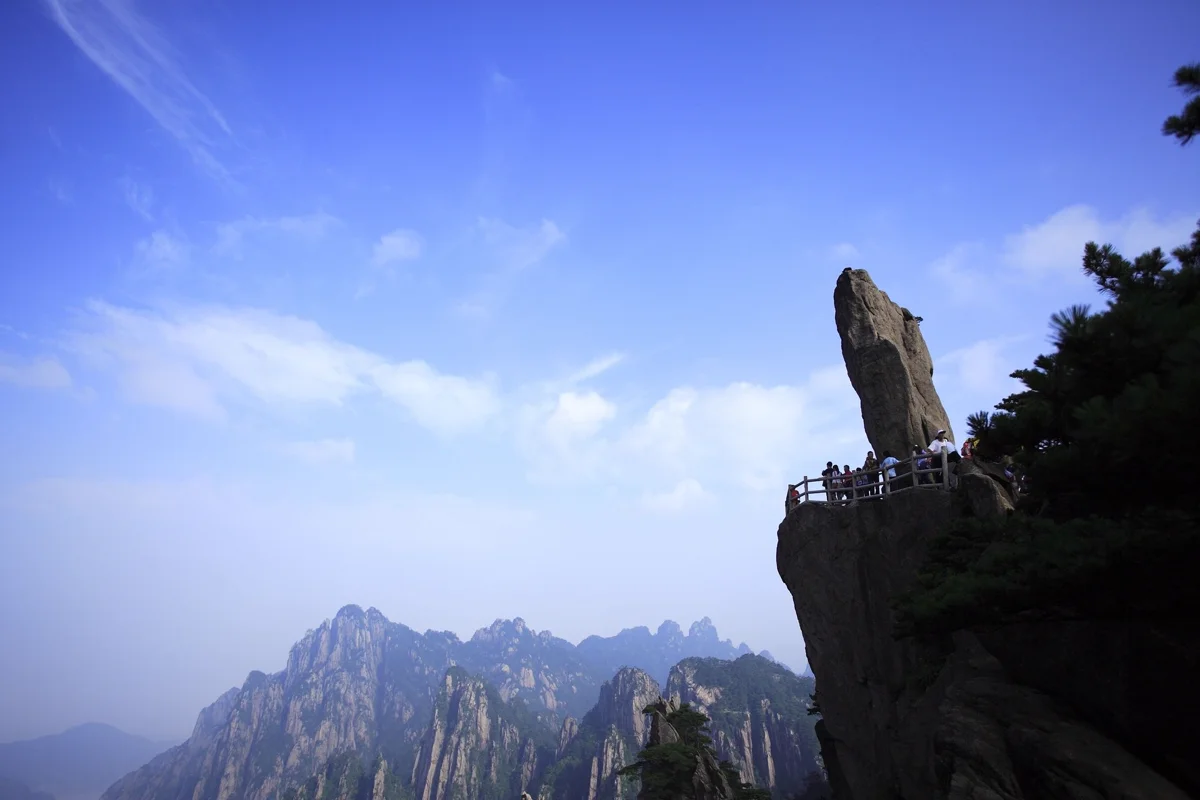
Huangshan — Yellow Mountain — in Anhui Province, China. UNESCO World Heritage Site since 1990. Called “the loveliest mountain of China” by no less than Xia Ke, a Tang dynasty travel writer who basically invented the concept of the travel influencer 1,200 years ago. And honestly? He undersold it.
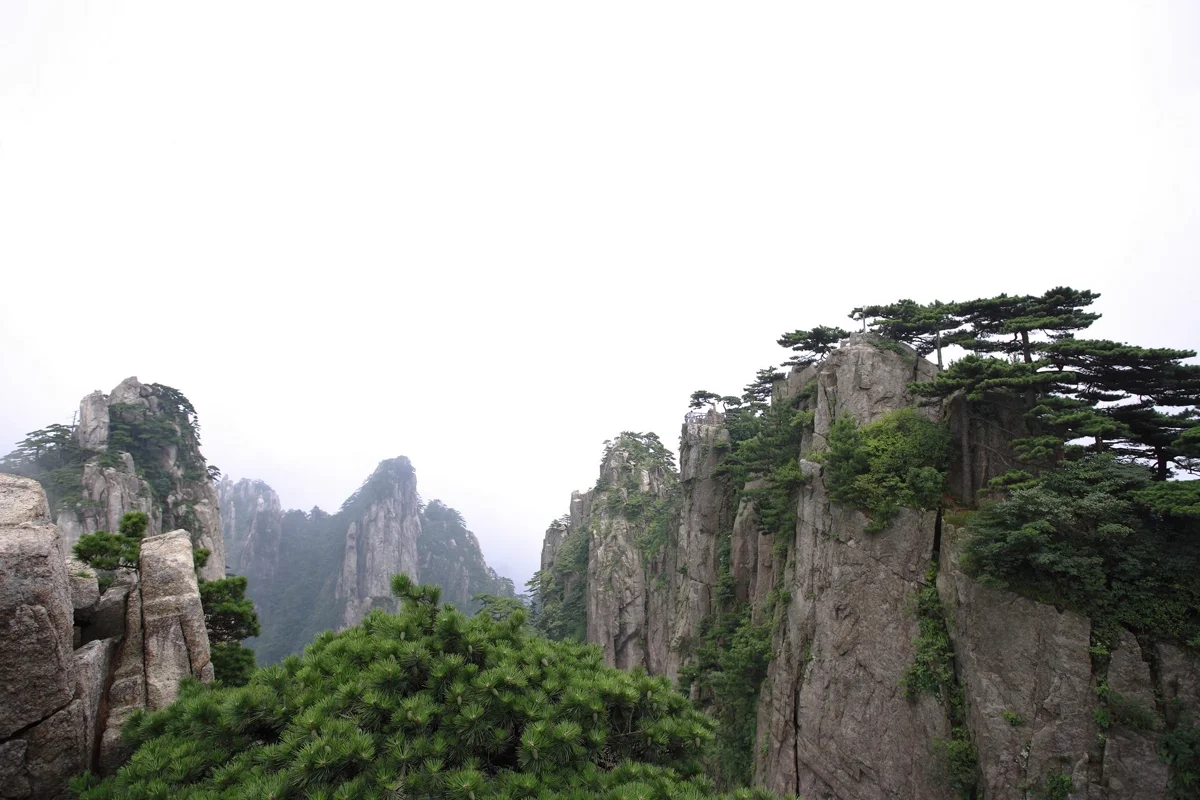
This mountain is where literally every traditional Chinese ink-wash painting comes from. Those misty peaks, those twisted pines growing out of impossible granite cracks, those oceans of cloud swirling below your feet like you’re standing on the floor of heaven — that’s Huangshan. And I’m going to tell you exactly how to see it, feel it, and survive it.
Because here’s the thing nobody tells you before you go: Huangshan will wreck you. The stairs are relentless. The crowds at sunrise are real. The food on the mountain tastes like sadness and costs like fine dining. But then you turn a corner and see a pine tree that’s been clinging to a rock for 1,000 years, and the clouds part, and suddenly none of that matters. You get it. You really get it.
The Four Wonders: Why This Mountain Is Famous
Huangshan is famous for four things, and they call them the “Four Wonders.” Let me break them down for you.
Strange Pines (奇松)
These pines don’t grow like normal trees. They grow out of granite. Out of literal rock. Their roots crack through stone, wrap around boulders, and somehow — somehow — produce these gnarled, wind-sculpted canopies that look like they belong in a museum. The most famous is the Welcoming Guest Pine (迎客松), which has been alive for over 1,000 years on the cliff of Yuping Peak. It’s the official symbol of Anhui Province. It’s on postcards, stamps, and basically every photo anyone has ever taken of Huangshan. The tree leans outward over the cliff like it’s reaching out to shake your hand. Standing next to it, you feel very small and very temporary.
Grotesque Rocks (怪石)
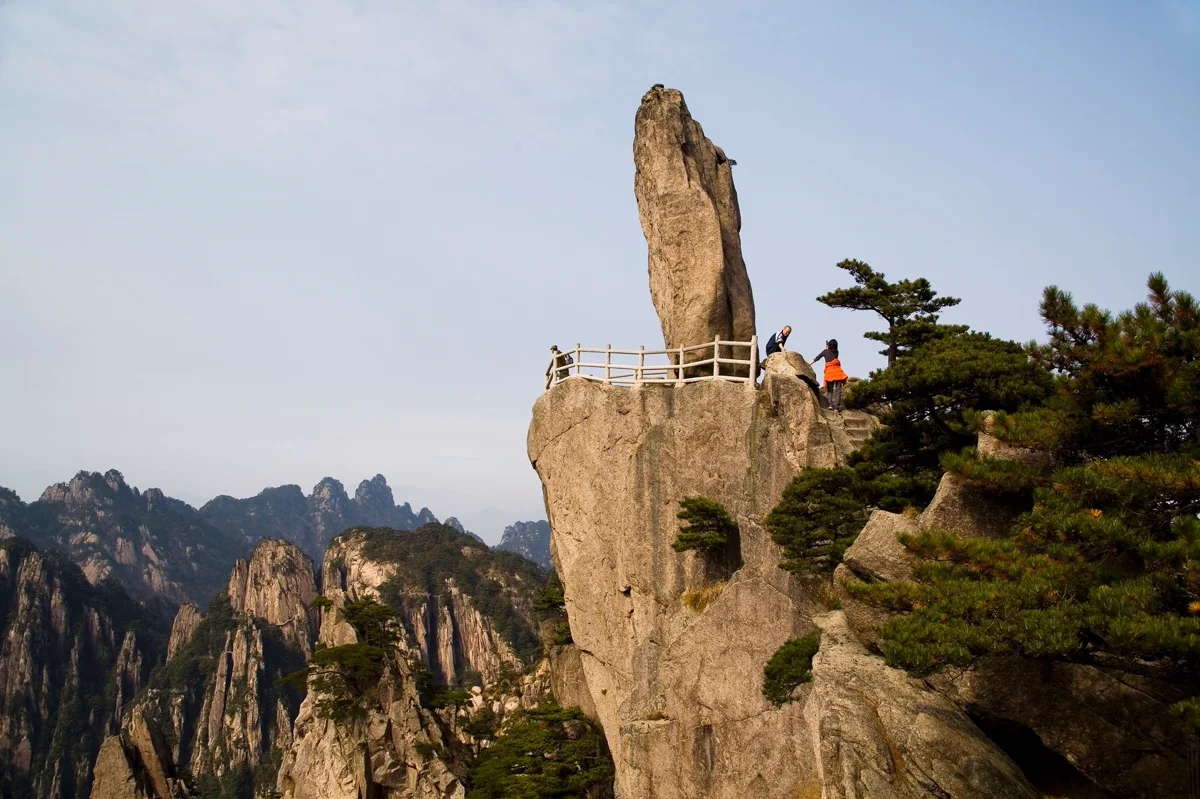
Huangshan has over 120 named rock formations, and every single one of them looks like something. There’s the Monkey Watching the Sea — a boulder perched on a peak that genuinely looks like a crouching monkey gazing at the cloud ocean below. There’s Flying-over Rock (飞来石), a massive slab balanced on a tiny base as if someone dropped it from the sky. There’s Dream-Writing Brush Peak, a pointed spire that supposedly inspired poets. Honestly, some of these require a generous squint, but the good ones? The good ones are genuinely surreal.
Sea of Clouds (云海)
This is the one that gets you. The sea of clouds — where the valleys fill with thick, white cloud cover and only the peaks poke through like islands in an ocean. It happens about 200 days a year, mostly in the cooler months. When it’s there, it’s the most extraordinary thing you’ve ever seen. The clouds move. They swirl. They pour over ridges like waterfalls made of light. At sunrise, the whole ocean turns gold and pink and the peaks become silhouettes. I’ve stood on Bright Summit Peak at dawn watching this happen and I’m not going to lie to you — I cried a little.
Hot Springs (温泉)
At the base of the mountain, the Huangshan Hot Springs (黄山温泉) have been soothing tired hikers for centuries. The water comes from deep underground at about 42°C (108°F) and is naturally mineral-rich. After a full day of climbing thousands of stone steps, soaking in these pools while looking up at the granite peaks above is basically the closest thing to heaven you’ll find on earth.
Sunrise and Sunset: The Two Non-Negotiable Moments
Sunrise at Bright Summit Peak (光明顶)
This is the most popular sunrise spot and for good reason — it’s the second-highest peak on the mountain at 1,860 meters, with a 360-degree panorama. You’ll need to wake up absurdly early. Like, 4:00 AM early. Hike up in the dark with your headlamp and a hundred other people doing the same thing. Find a spot. Wait.
Then the horizon turns orange, then pink, then the sun breaks free and the whole sea of clouds below catches fire. Every peak becomes a black silhouette against a sky that looks like it’s been painted by someone who doesn’t know when to stop adding color.
Pro tip: Arrive at least 45 minutes before sunrise to get a decent spot. Bring a warm layer — it’s freezing up there at dawn, even in summer.
Sunset at Flying-over Rock or Cloud-Dispelling Pavilion
If sunrise is about drama, sunset is about peace. Flying-over Rock (飞来石) gives you a wide-angle view of the western peaks catching the last light. Cloud-Dispelling Pavilion (排云亭) faces the West Sea and is slightly less crowded. Either way, the golden hour light turns the granite pink and the pines into dark calligraphy strokes against the sky.
I prefer sunset, actually. There’s less pressure. No crowds jostling for position. Just you and the mountain and the light doing its slow fade.
West Ocean Grand Canyon: The Most Spectacular Hike
If you only do one thing on Huangshan, do this. The West Sea Grand Canyon (西海大峡谷) is a massive canyon carved into the mountain’s western face, and the hiking trail that loops through it is, without exaggeration, one of the most spectacular walks I’ve ever done.
The loop takes about 2.5 to 3 hours and descends deep into the canyon before climbing back out. The trail clings to cliff faces, passes over glass-bottomed bridges suspended above voids that go straight down, and winds through passages where the granite walls tower on both sides and you can’t see the sky.
The route:
- Start at the West Sea Grand Canyon entrance near Paiyun Pavilion
- Descend through Step 1 (the upper canyon, with the best views)
- Continue through Step 2 (narrower, more intimate, the glass bridge is here)
- Take the sightseeing train (a funicular railway) back up from the canyon floor — this saves your knees and costs about ¥100 (~$14)
The glass bridge is both the highlight and the moment your legs stop working. You’re standing on transparent floor over a 1,000-meter drop. Your brain knows you’re safe. Your knees don’t care.
Warning: This hike is not for the faint of heart. There are thousands of steps. Bring water, snacks, and an attitude that says “I chose this.”
Seasons: When to Go
Spring (March–May) 🌸
Flowers bloom everywhere — azaleas, magnolias, wild orchids. The mountain is green and fresh. Mornings are foggy, which means the sea of clouds is more likely. This is one of the two best seasons. The temperature is pleasant, though rain is common.
Summer (June–August) 🌿
Lush and green, but hot and humid at lower elevations. The summit stays cooler (around 20°C/68°F). Thunderstorms are frequent — the mountain gets dramatically shrouded in clouds, which can be magical or frustrating depending on whether you can see anything. Summer also brings the biggest crowds.
Autumn (September–November) 🍁
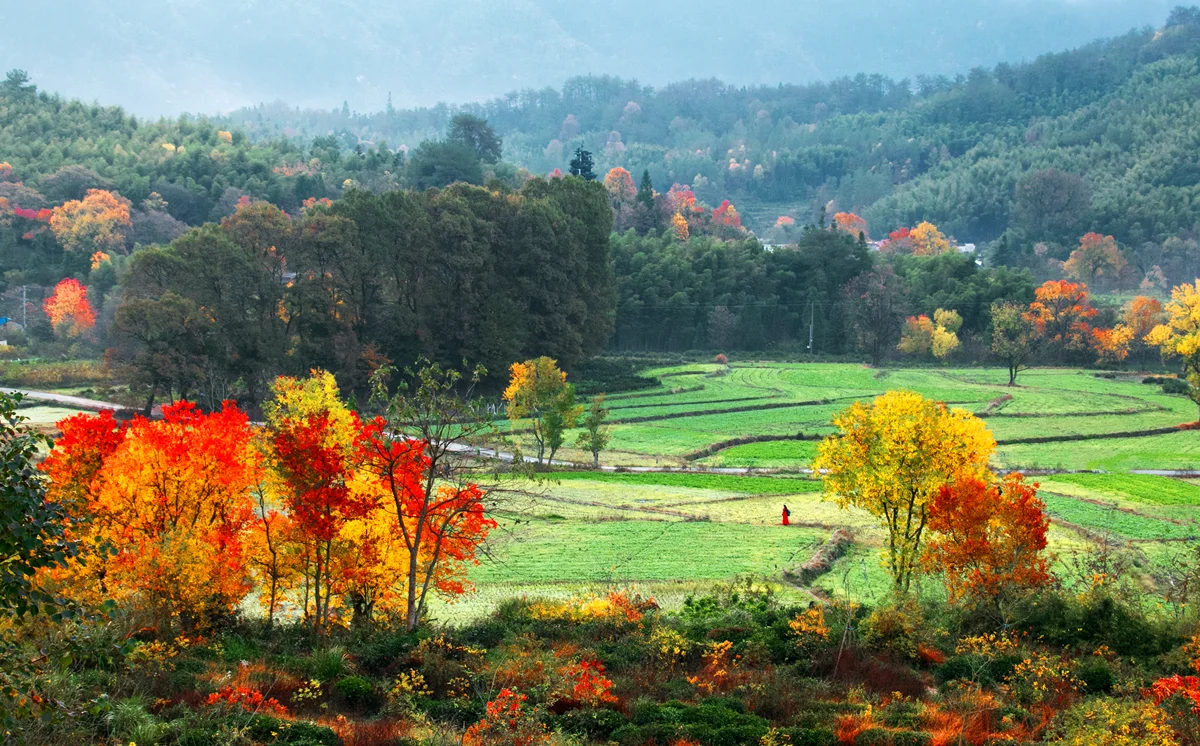
The other peak season, and arguably the best. Clear skies, comfortable temperatures, and the famous autumn foliage — red and gold leaves against gray granite peaks. The light in autumn is extraordinary for photography. September and October have the highest chance of seeing the sea of clouds.
Winter (December–February) ❄️
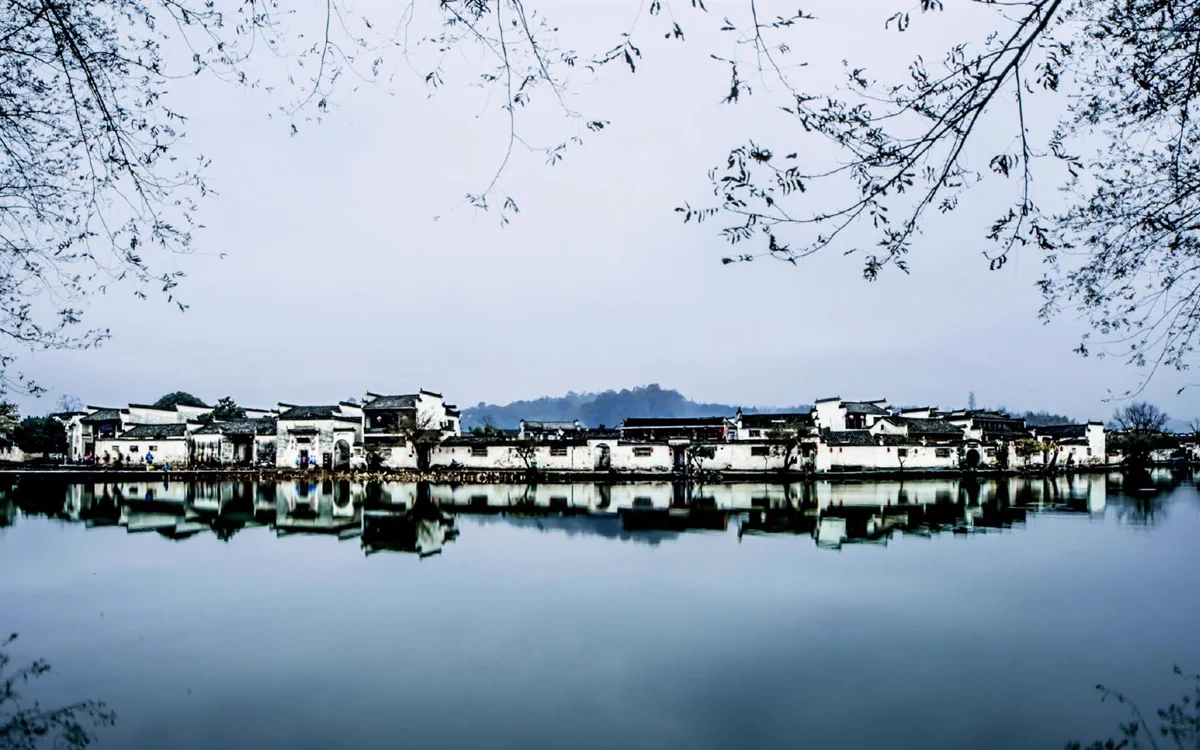
The most underrated season. Snow-covered pines and granite peaks are genuinely magical — like stepping into a Song dynasty painting. Fewer crowds, cheaper accommodation, and if you’re lucky, the combination of snow and sea of clouds is the most dramatic sight Huangshan produces. The catch: it’s cold (down to -10°C/14°F), some trails may close, and you need proper winter gear.
Cable Cars vs. Hiking: Choose Your Adventure
Huangshan has three cable car routes, and choosing between them (or not choosing) is one of the first decisions you’ll make.
| Cable Car | Route | Price (one way) | Best For |
|---|---|---|---|
| Yungu (云谷) | North side → Summit area | ¥80 (~$11) | First-time visitors, West Sea Grand Canyon access |
| Yuping (玉屏) | South side → Welcoming Guest Pine area | ¥90 (~$13) | Seeing the famous pine, east side |
| Taiping (太平) | East side → Foxes’ Spring area | ¥80 (~$11) | Quieter route, less crowded |
Taking the Cable Car (Recommended for Most People)
Here’s my honest take: take the cable car up. The hike up is 3–4 hours of stone steps through forest with limited views. It’s exercise, not experience. Save your energy for the top, where the actual magic happens. Take the Yungu cable car up in the morning, and either Yungu or Yuping down depending on your route.
Hiking Up (For the Brave/Stubborn)
If you insist on earning it, the classic hiking route starts from Cloud Valley Temple (慈光阁) and takes about 3–4 hours to reach the summit. The trail is well-maintained with stone steps, but it’s relentless — the elevation gain is over 1,000 meters. You’ll pass through forest, alongside streams, and occasionally catch glimpses of the peaks above. It’s a workout. There’s no shame in the cable car.
Photography Tips: Capture the Magic
The best light on Huangshan happens at two moments: sunrise (5:30–6:30 AM in summer, 6:30–7:30 AM in winter) and sunset (5:30–6:30 PM in summer, 4:30–5:30 PM in winter). Midday light is harsh and flat — the mountain looks like a postcard instead of a painting.
Best spots for photography:
- Bright Summit Peak — sunrise panorama, wide-angle heaven
- Welcoming Guest Pine area (Yuping scenic area) — the iconic shot, arrive early
- West Sea Grand Canyon — dramatic cliff faces, glass bridge, vertical compositions
- Cloud-Dispelling Pavilion — sunset over the western peaks
- Beginning to Believe Peak (始信峰) — the most photogenic granite formations
Gear tips:
- Wide-angle lens is essential (16–35mm)
- Bring a tripod for sunrise/sunset (the light changes fast)
- A polarizing filter helps cut through cloud haze
- Extra batteries — cold weather drains them fast
- A rain cover for your camera — weather changes in minutes
The real secret: The best Huangshan photos aren’t of the peaks. They’re of the pines. Find a single pine tree silhouetted against the cloud sea and you’ve got something that belongs in a museum.
Practical Information
Location
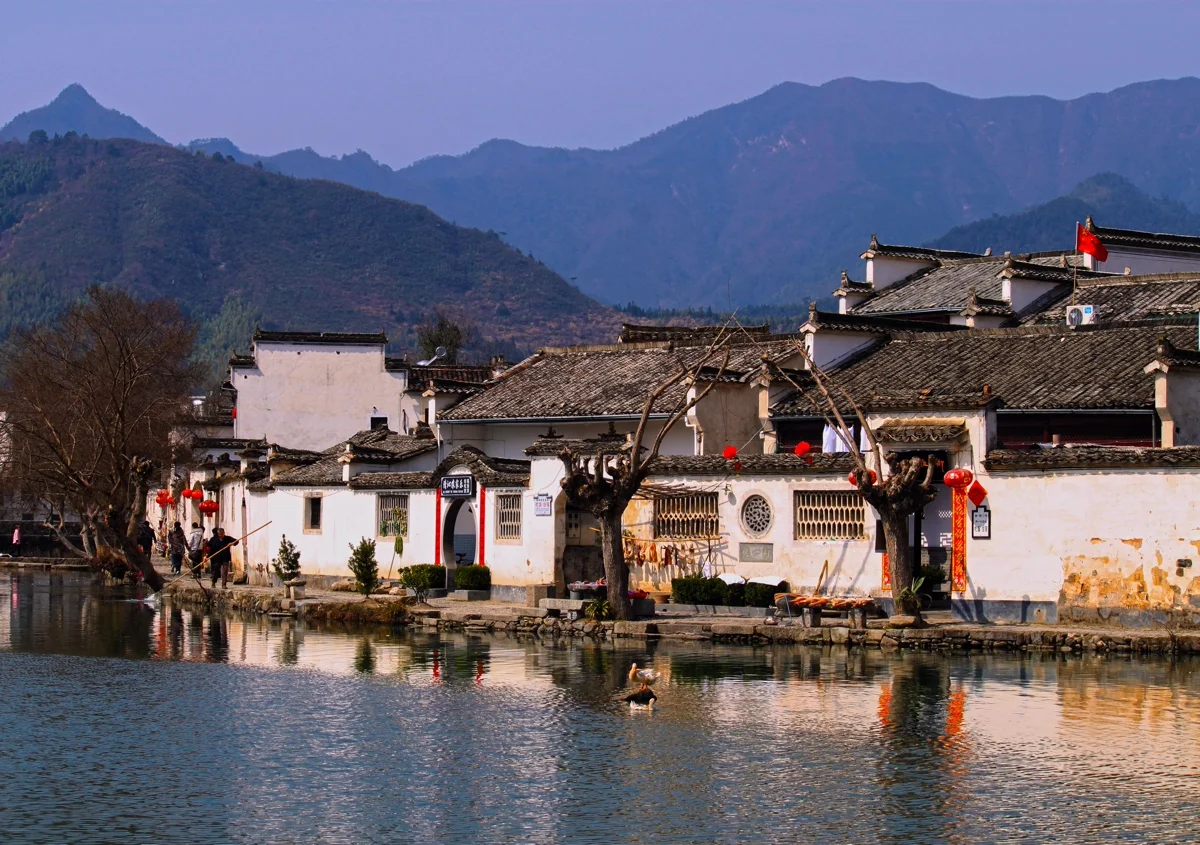
Huangshan City (黄山市), Anhui Province, China. The mountain itself is about 60 km from the city center.
How to Get There
From Shanghai: High-speed train to Huangshan North Station (黄山北站), about 2.5 hours, 180 RMB ($25). From the station, take the airport shuttle bus or tourist bus to the mountain base (~30 RMB / ~$4, 50 minutes).
From Hangzhou: High-speed train, about 1.5 hours, 120 RMB ($17). Same shuttle connection.
From Beijing: High-speed train, about 4.5 hours, 400 RMB ($55). Fly to Huangshan Tunxi International Airport (TXN) instead — 2 hours, cheaper if booked early.
Opening Hours
| Season | Hours |
|---|---|
| Summer (Apr–Oct) | 6:00 AM – 5:00 PM |
| Winter (Nov–Mar) | 7:00 AM – 4:00 PM |
Ticket Prices
| Item | Price |
|---|---|
| Mountain entrance | ¥190 (~$26) |
| Yungu Cable Car | ¥80 (~$11) one way |
| Yuping Cable Car | ¥90 (~$13) one way |
| Taiping Cable Car | ¥80 (~$11) one way |
| West Sea sightseeing train | ¥100 (~$14) |
| Hot Springs | ¥198 (~$27) |
Total for a typical visit: ¥290–370 (~$40–50) per person (entrance + one cable car each way)
Best Time to Visit
March–May (spring) and September–November (autumn). Avoid the Chinese national holidays — Golden Week (October 1–7) and Spring Festival — unless you enjoy being one of 50,000 people on a mountain.
Tips
- Stay on the mountain overnight — this is non-negotiable if you want sunrise. Hotels on the summit range from ¥400–1,500/night (~$55–200). Book at least 2 weeks in advance in peak season.
- Bring warm clothes even in summer — the summit is 1,800+ meters and temperatures can drop 10–15°C from the base.
- Pack food — restaurant meals on the mountain cost ¥50–80 (~$7–11) for basic noodles. Bring instant noodles and snacks. Free hot water stations are everywhere.
- Start early — the first cable car is usually 6:00–7:00 AM. By 9:00 AM, the crowds arrive.
- Check weather — no point climbing if the mountain is completely fogged out. The scenic area hotline (0559-5580325) can tell you current conditions.
- Wear proper shoes — stone steps are slippery when wet. Trail runners or hiking boots, not sandals.
Budget: What It Costs Per Person Per Day
| Expense | Budget | Mid-Range | Comfort |
|---|---|---|---|
| Entrance ticket | ¥190 (~$26) | ¥190 (~$26) | ¥190 (~$26) |
| Cable car (round trip) | ¥160 (~$22) | ¥170 (~$23) | ¥180 (~$25) |
| Summit hotel (per night) | ¥400 (~$55) | ¥800 (~$110) | ¥1,500 (~$205) |
| Food & drinks | ¥80 (~$11) | ¥150 (~$21) | ¥250 (~$34) |
| Hot springs | — | ¥198 (~$27) | ¥198 (~$27) |
| Total (1 day + 1 night) | ¥830 (~$114) | ¥1,508 (~$207) | ¥2,318 (~$317) |
Budget tips:
- Pack your own food from the base town — saves ¥100+ easily
- Sleep in a dorm bed at summit hotels (¥150–200 / ~$21–28) instead of a private room
- Skip the hot springs if budget is tight — the mountain itself is the experience
- Buy the combined ticket (entrance + cable car) online for a small discount
FAQ
How many days do I need?
Minimum 1 full day, ideally 1.5–2 days. One day lets you see the highlights but you’ll rush. Two days means you can catch both sunrise and sunset, explore the West Sea Grand Canyon without hurrying, and actually enjoy the mountain instead of sprinting past it.
Is Huangshan suitable for children?
Yes, with caveats. Kids over 8 can handle the cable car routes and the easier walks. The West Sea Grand Canyon is strenuous — the descent involves thousands of steep steps that are tough on little legs. Bring a carrier for younger children. The cable car makes most of the mountain accessible.
Can I do Huangshan as a day trip from Shanghai?
Technically yes, practically no. The train is 2.5 hours each way, plus 50 minutes shuttle each way. That’s 6 hours of transit. Add the mountain time and you’re looking at a 16-hour day with no sunrise. Stay overnight on the mountain at least once.
What if it rains?
Rain is common and doesn’t close the mountain. The cable car operates in light rain (it may close in heavy storms). Wet stone steps are genuinely dangerous — go slow, use the metal handrails, and consider buying shoe grips at the base (¥15–20 / ~$2–3). Rain actually makes the mountain more atmospheric — mist swirling through the pines is peak Huangshan.
Is there WiFi on the mountain?
Spotty. Summit hotels have WiFi, but don’t expect reliable signal on the trails. Download offline maps before you go. The scenic area has basic cell coverage.
Do I need a guide?
No. The trails are well-marked with signs in both Chinese and English. Maps are available at the entrance. A guide adds ¥300–500 (~$41–68) to your cost and is unnecessary unless you want historical context or are visiting in winter when some trails may be unclear.
Huangshan is not a mountain you visit. It’s a mountain you experience. You climb until your legs burn, you wake before dawn to watch the world catch fire, you stand on a glass bridge over a void and feel your stomach drop, and you see a pine tree that was old when Columbus was born. Then you go home and realize you can’t stop thinking about it. That’s Huangshan. Go.