The Forbidden City: 600 Years of Imperial Majesty 🏯👑
Version: July 2026 | Target: Cultural travelers, history enthusiasts | Duration: 3–5 hours
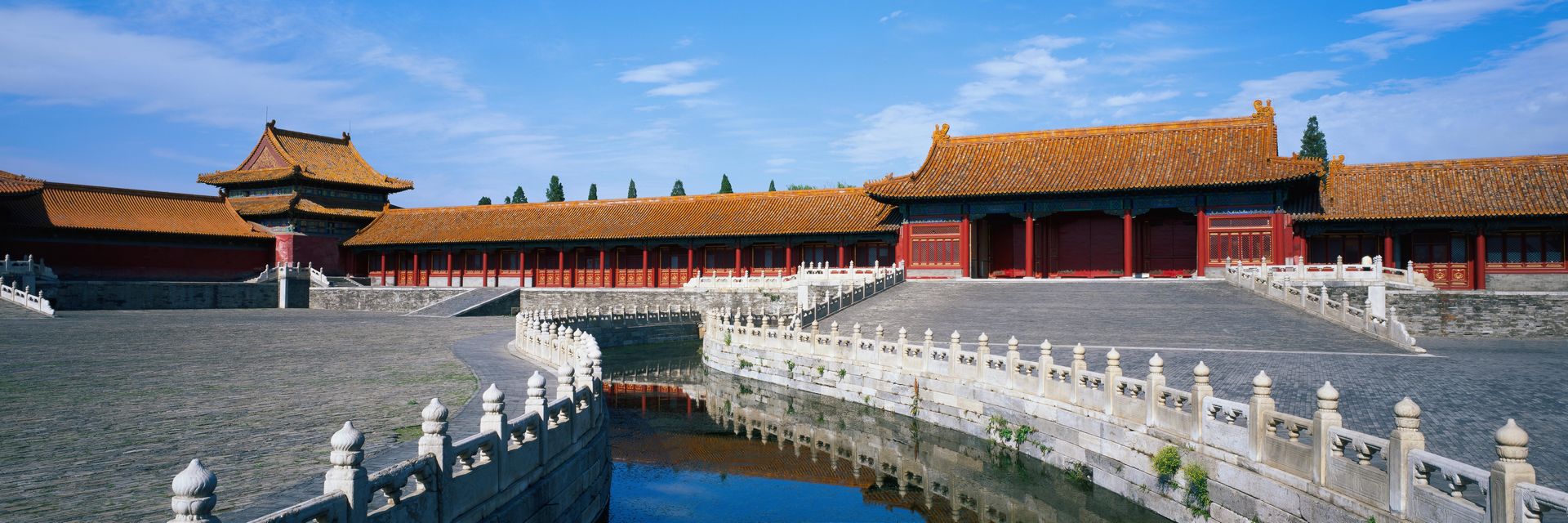
Nothing prepares you for the first glimpse. From the top of Coal Hill in Jingshan Park, you see it all — a sea of golden rooftops cascading southward like a frozen wave, 980 buildings locked behind a moat of still water. The Forbidden City is not a palace. It is a world unto itself, the largest surviving palace complex on Earth, and for nearly five centuries, the gravitational center of an empire that encompassed one-fifth of humanity.
◆ The Weight of History
The numbers alone stagger: 720,000 square meters of floor space. 8,700 rooms (the popular myth of 9,999.5 is charming but unverifiable). A wall 52 meters wide at the base, stretching 3,400 meters around the perimeter. A moat 52 meters wide, holding 1.5 million cubic meters of water. But the Forbidden City’s true magnitude lies not in its dimensions — it is measured in time.
Between 1420 and 1912, twenty-four emperors governed from within these walls. The Ming Dynasty built it; the Qing Dynasty perfected it; the Republic dismantled its political function. In 1925, it became the Palace Museum, and in 1987, a UNESCO World Heritage Site. Today, it receives over 19 million visitors annually — more than any museum in the world — and still, it whispers.
◆ Editor’s Note Standing in the Outer Court on a quiet weekday morning, the silence between the Hall of Supreme Harmony and the Hall of Central Harmony is almost physical. The courtyard — large enough to hold 100,000 people — absorbs every sound. You hear only your own footsteps and the wind moving through centuries-old cypress trees.
◆ The Outer Court: Where Power Was Performed
You enter through the Meridian Gate (Wǔ Mén), the most imposing of the palace’s four gates. Its U-shaped plan wraps around a forecourt like two enormous arms, and its central tower rises 38 meters — a threshold designed to humble every visitor before they even set foot inside. In the Ming and Qing dynasties, only the emperor could pass through the central archway. Officials entered from the side gates, and commoners never entered at all.
Beyond the gate, the Outer Court unfolds in a sequence of three great halls, each raised on a triple-tiered marble terrace carved with dragons and clouds.
◆ Hall of Supreme Harmony (Tàihé Diàn)
This is the throne room of the world’s largest wooden structure — 64 meters wide, 37 meters deep, 35 meters tall. The Hall of Supreme Harmony was the ceremonial heart of imperial China: coronations, the Lunar New Year audience, imperial birthdays, and the dispatching of military campaigns all took place here. The Dragon Throne sits at the center, flanked by six golden columns coiled with carved dragons.
The engineering is extraordinary. The hall uses a bracket system (dǒugǒng) with no nails — interlocking wooden supports that distribute the weight of the massive hip-and-gable roof. During heavy rain, water cascades from the mouths of 1,142 carved dragon heads along the eaves, creating a spectacle the ancient court called “a thousand dragons spitting water.”
◆ Did You Know? The number nine appears throughout the Forbidden City — in the nine-by-nine grid of door studs, the nine dragon screens, the 9,999-room legend. In Chinese numerology, nine is the highest single digit, associated with the emperor and eternity. The palace’s 9,999 rooms are said to fall just short of the mythical 10,000 rooms of the Jade Emperor’s heavenly palace.
◆ Hall of Central Harmony (Zhōnghé Diàn)
The smallest and most intimate of the three great halls, the Hall of Central Harmony was where the emperor rested and prepared before ceremonies. Here, he would review speeches, inspect grain samples from the provinces, and receive officials. The hall’s octagonal throne sits beneath a coffered ceiling with a dragon-and-phoenix motif, and the space is proportioned to create a sense of focused calm — a deliberate contrast to the overwhelming scale of the Hall of Supreme Harmony.
◆ Hall of Preserving Harmony (Bǎohé Diàn)
Used for the final imperial examinations — the highest civil service tests in the empire — this hall was where the emperor personally questioned the top candidates. A massive marble ramp carved with dragons and clouds leads to its entrance, a single stone slab weighing over 200 tons, quarried from the hills southwest of Beijing and dragged to the site on ice paths lubricated with water.
◆ The Inner Court: Private Worlds
Cross the Gate of Heavenly Purity, and the palace changes character. The grand ceremonial scale gives way to smaller, more domestic spaces — though “domestic” here still means gilded halls and courtyards designed to house hundreds of concubines, eunuchs, and attendants.
◆ Palace of Heavenly Purity (Qiánqīng Gōng)
The emperor’s primary residence during the Ming dynasty and the venue for routine governance during the Qing. The plaque reading “Zhèng Dà Guāng Míng” (Open and Aboveboard) hung above the throne, behind which the name of the chosen successor was secretly stored in a sealed box — a system designed to prevent the succession crises that plagued earlier dynasties.
◆ Hall of Union (Jiāotài Diàn)
Sitting between the emperor’s and empress’s palaces, the Hall of Union symbolized the harmony between heaven and earth. It housed the twenty-five imperial seals and served as the venue for the empress’s birthday celebrations. The hall’s name reflects a Confucian ideal: that cosmic balance requires the cooperation of complementary forces.
◆ Palace of Earthly Tranquility (Kūnníng Gōng)
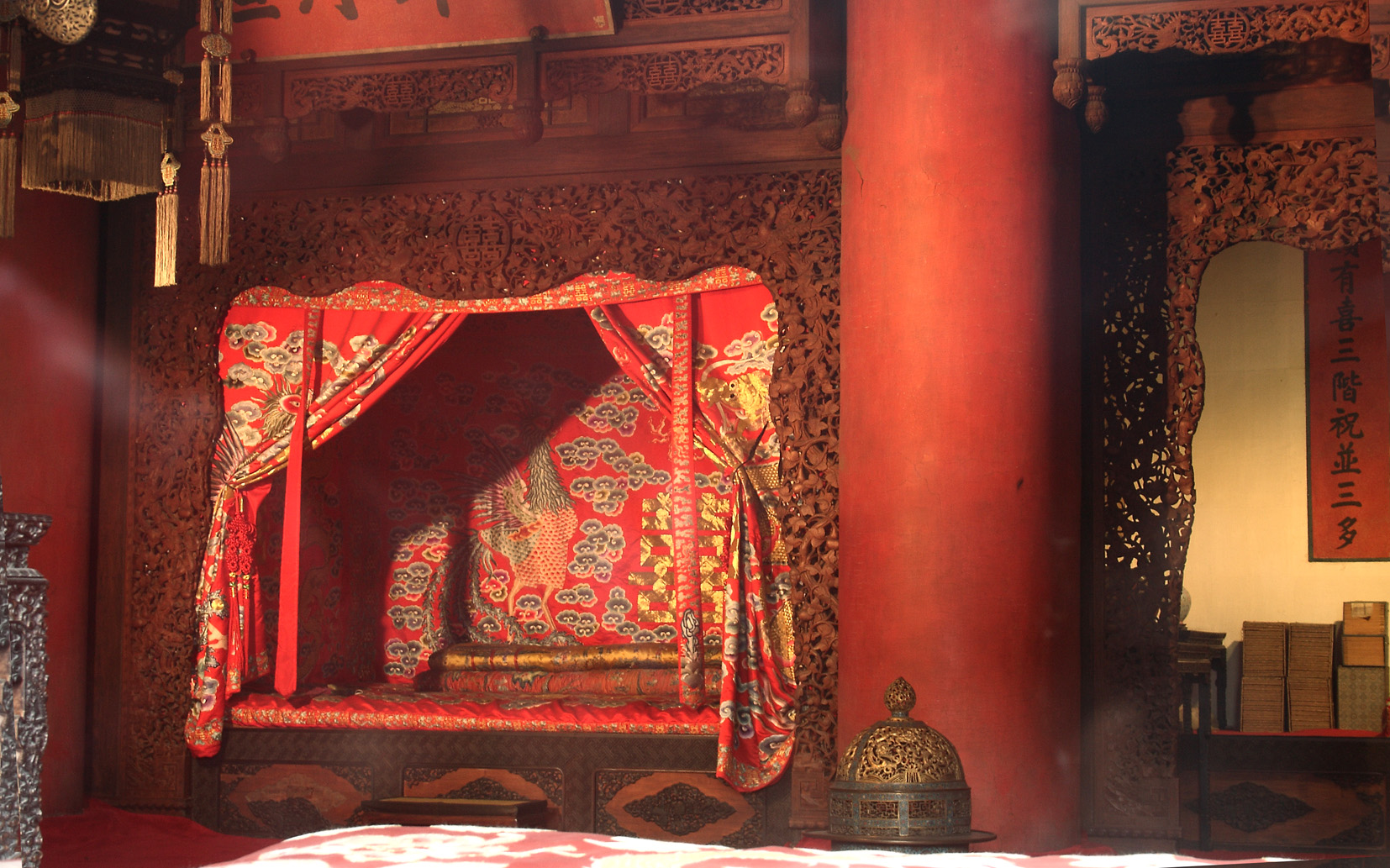
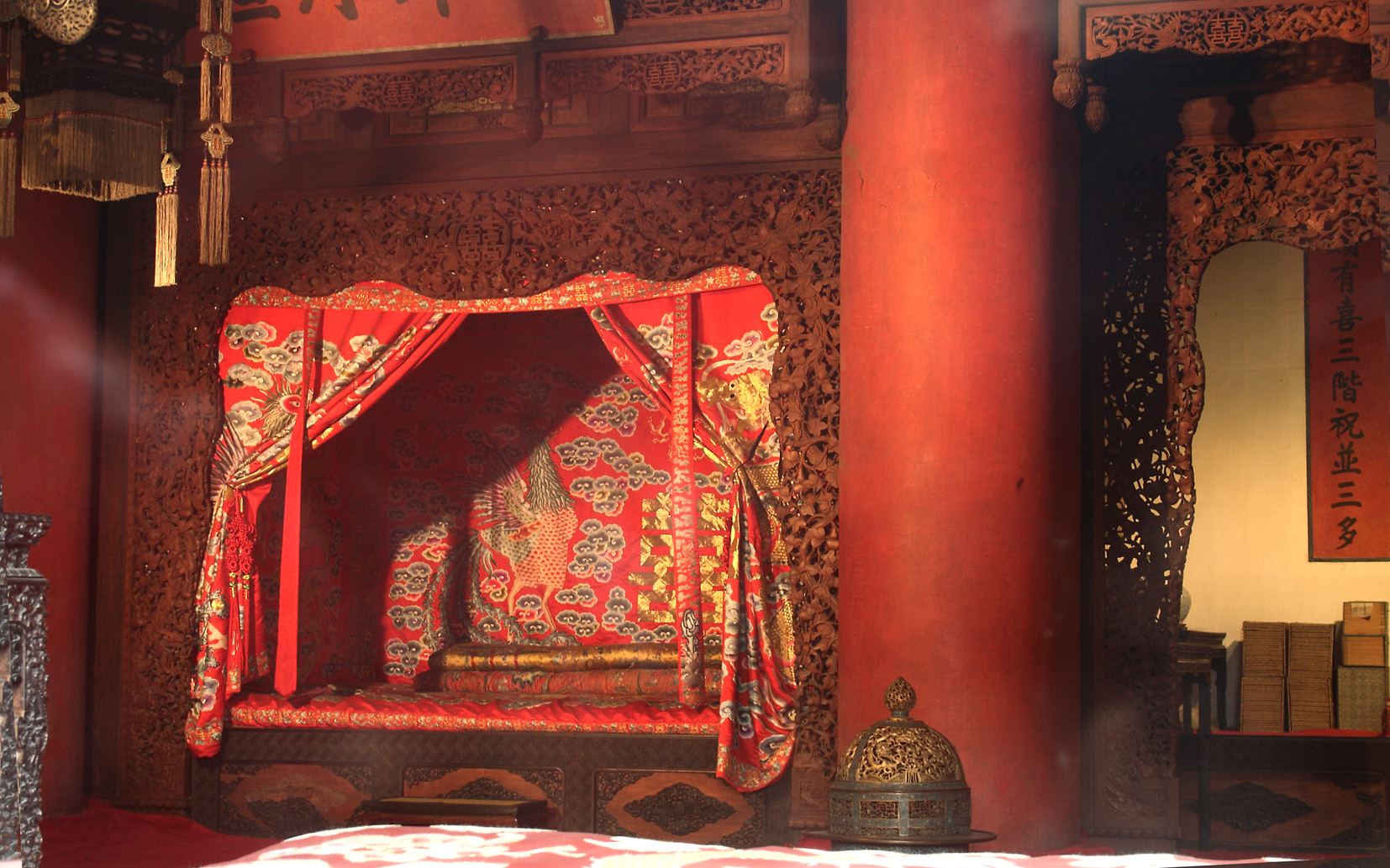
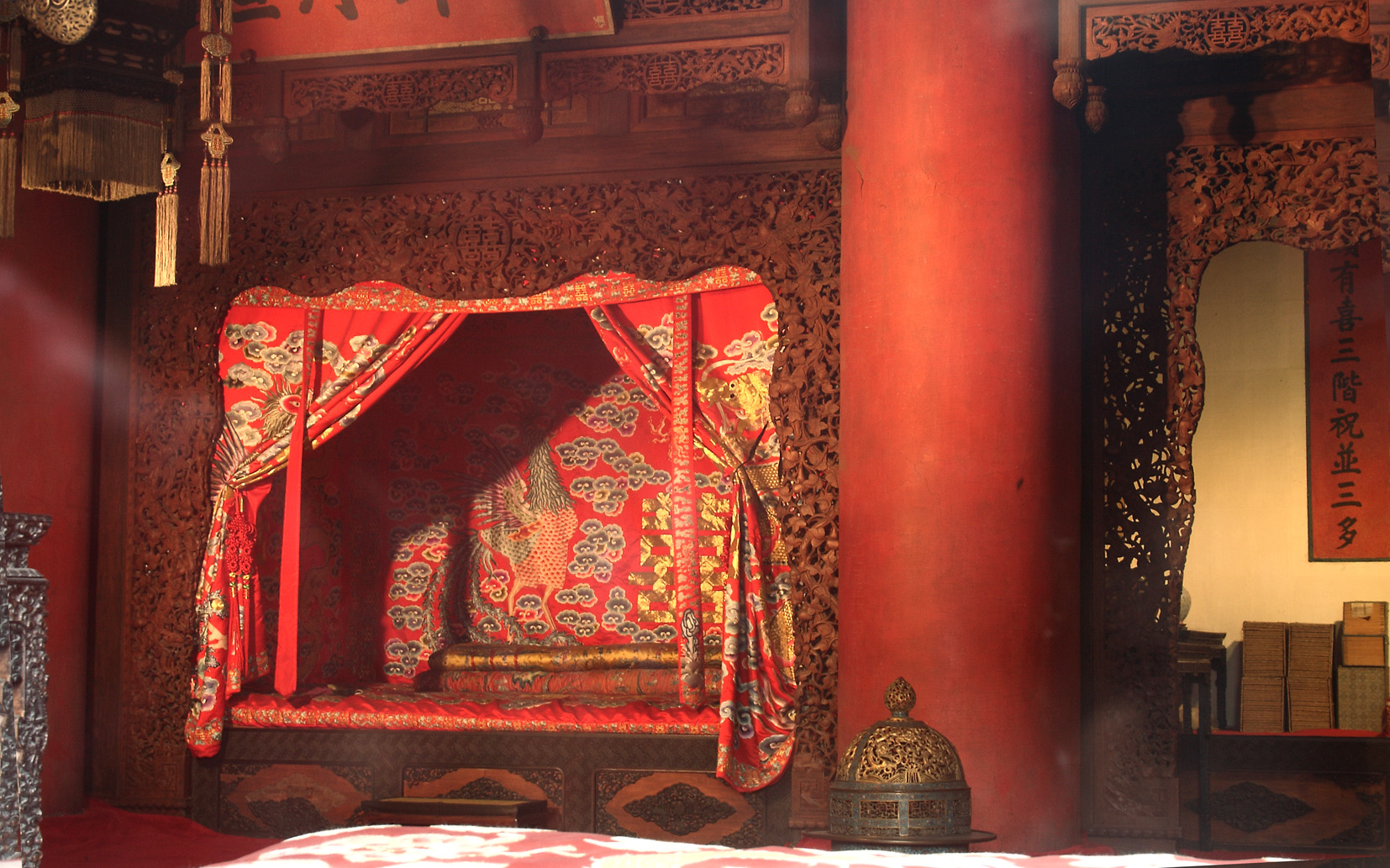
Originally the empress’s residence, this palace was later converted into the site of the imperial wedding night and shamanistic rituals. One chamber still contains the bed where emperors spent their wedding night — a canopied structure decorated with dragons and phoenixes, surrounded by symbolic objects meant to ensure fertility and good fortune.
◆ The Imperial Garden
At the northern end of the palace, the Imperial Garden covers 12,000 square meters — small by palace standards, but exquisite. pathways of colored pebbles wind through rockeries shaped to resemble mountains, past ancient cypress and pine trees (some over 400 years old), and under pavilions with names that evoke the idealized landscapes of Chinese poetry: the Pavilion of Imperial Prospect, the Pavilion of Ten Thousand Spring Sunsets.
The garden was not merely decorative. It was a private retreat where emperors could escape the rigid protocols of court life, compose poetry, practice calligraphy, or simply sit among rocks that had been selected to embody the aesthetic principles of shānshuǐ — mountain and water — the Chinese philosophical concept of natural harmony.
◆ Treasure Gallery & Clock Hall
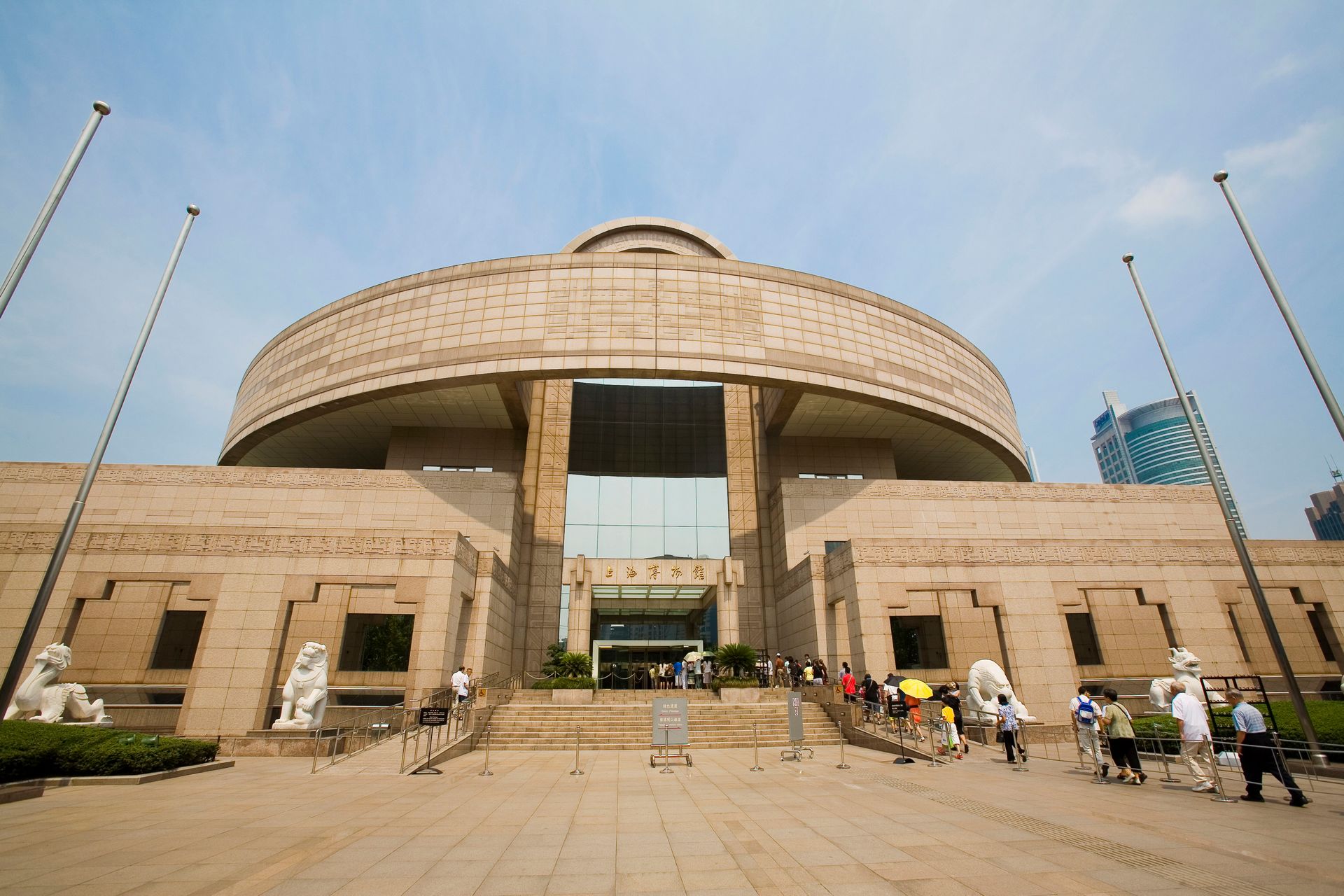
The Palace Museum houses over 1.86 million artifacts — the largest collection of imperial treasures in the world. Two of the most rewarding exhibition spaces are the Treasure Gallery (Zhēnguǎn) in the northeastern corner and the Clock Hall (Zhōngbiǎoguǎn) in the southern part of the Inner Court.
The Treasure Gallery displays jade carvings, gold vessels, enamelware, and ceremonial objects that took master craftsmen years to complete. The Clock Hall features European mechanical clocks acquired through trade and diplomacy — elaborate pieces with moving figures, flowing water, and musical mechanisms that still function after centuries.
◆ Practical Tip The Treasure Gallery requires a separate ¥10 (~$1.40) ticket on top of the general admission. It is worth every fen — the craftsmanship is staggering, and the galleries are far less crowded than the main halls.
◆ The Moat and Walls
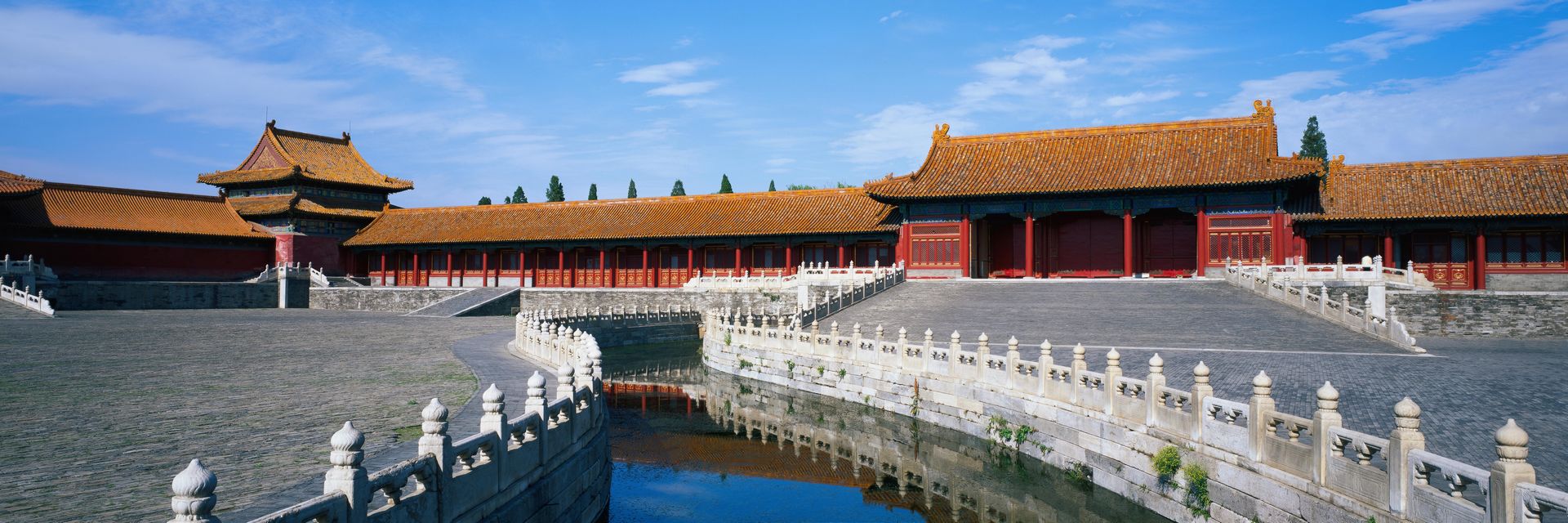
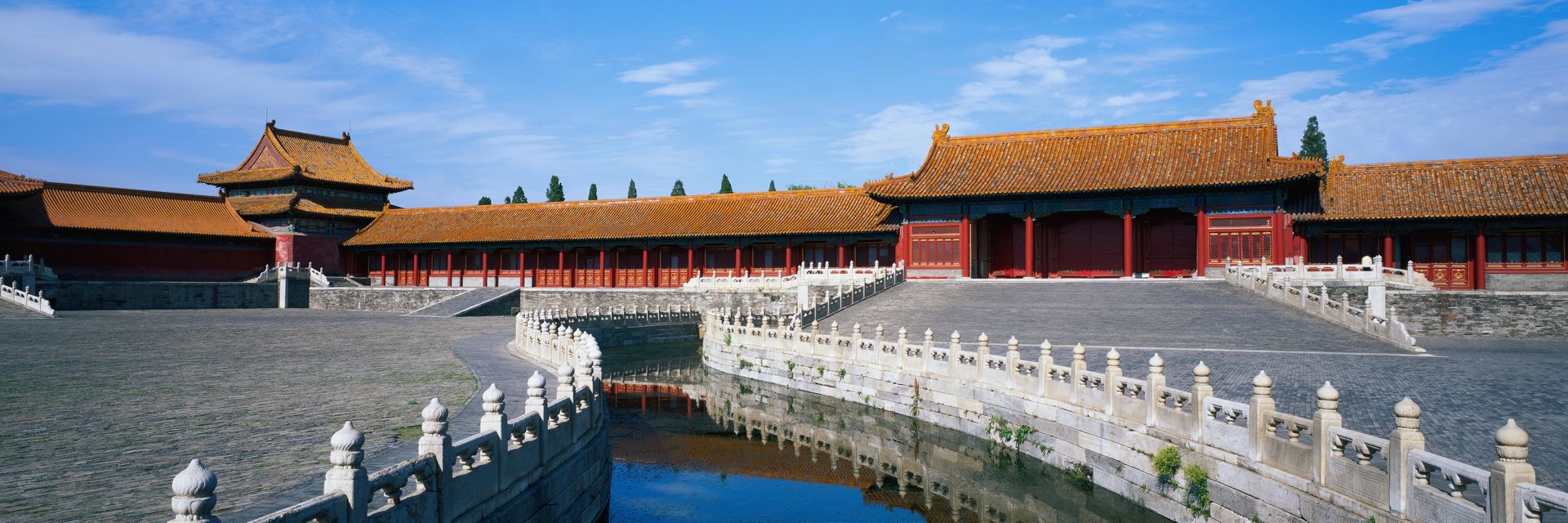
The palace moat — the Tong Zi He — encircles the entire complex at a width of 52 meters. Its still waters create mirror images of the red walls and golden roofs that have become the most iconic photographs of Beijing. The best time to see the reflection is early morning, when the air is calm and the light turns the walls to deep vermillion.
The walls themselves stand 10 meters high, punctuated by corner towers (jiǎo lóu) of extraordinary architectural complexity — each one featuring 72 ridges and 28 upturned eaves, built without a single nail. The legend says they were designed by a master carpenter who dreamed the solution after struggling for days.
◆ Coal Hill Panorama
The best view of the Forbidden City is from Jingshan Park (Jǐngshān Gōngyuán), directly across the street from the north gate (Shénwǔ Mén). A ten-minute climb to the Wanchun Pavilion at the summit reveals the full scope of the palace — a golden grid stretching south toward Tiananmen Square, with the modern skyline of Beijing rising behind it.
◆ Timing Advice Arrive at Jingshan Park at opening time (6:30 AM in summer, 6:30 AM in winter) for unobstructed views and soft morning light. Midday crowds make it difficult to find a clear vantage point.
◆ Architecture: Reading the Grammar of Power
The Forbidden City is organized along a strict north-south central axis — a line of symmetry that extends beyond the palace to encompass Tiananmen, the Temple of Heaven, and the Bell and Drum Towers. This axis was more than architectural; it was cosmological. In Chinese imperial ideology, the emperor sat at the center of the world, and the axis was the thread connecting heaven to earth.
Every detail communicates hierarchy:
| Element | Significance |
|---|---|
| Golden-yellow roof tiles | Reserved exclusively for the emperor; no other building in China could use them |
| Dragon motifs (lóng) | Symbol of imperial power; five-clawed dragons for the emperor, four-clawed for princes |
| Nine rows of nine studs | The number 9 = supreme; found on the main gates |
| Marble terraces | Three tiers = heaven, earth, man; the emperor bridged all three |
| Red walls | Symbol of happiness and power; the color also repels evil spirits in Chinese belief |
| White marble balustrades | Frame every terrace and bridge; 1,142 carved dragon-head water spouts |
The layout follows fēngshuǐ principles: water (the moat) on the south and east, mountain (Coal Hill) on the north, protecting the palace from malevolent northern winds and spirits.
◆ Practical Information
📍 Location & Access
- Address: 4 Jingshan Qianjie, Dongcheng District, Beijing (北京市东城区景山前街4号)
- Metro: Tiananmen East (天安门东) or Tiananmen West (天安门西) — Metro Line 1, then 10-minute walk
- Bus: Routes 1, 52, 82, 120 to Tiananmen Dong or Tiananmen Xi stops
- Entrances: South Gate (Meridian Gate — main entrance), North Gate (Shenwu Gate), East Gate, West Gate
- Exit: Only the North Gate and East Gate are typically open for exit
⏰ Opening Hours
| Season | Hours | Last Entry |
|---|---|---|
| Apr 1 – Oct 31 | 8:30 AM – 5:00 PM | 4:10 PM |
| Nov 1 – Mar 31 | 8:30 AM – 4:30 PM | 3:40 PM |
Closed on Mondays (except national holidays).
💰 Admission
| Ticket | Price (CNY) | Price (USD) |
|---|---|---|
| Peak season (Apr–Oct) | ¥60 | ~$8.50 |
| Off-peak (Nov–Mar) | ¥40 | ~$5.50 |
| Treasure Gallery add-on | ¥10 | ~$1.40 |
| Clock Hall add-on | ¥10 | ~$1.40 |
◆ Booking Note Tickets must be purchased online in advance through the Palace Museum official website or WeChat mini-program. Walk-in tickets are not available. Book at least one day ahead during peak season; during Golden Week (Oct 1–7) and Chinese New Year, tickets sell out within hours of release.
🕐 How Long to Spend
| Pace | Duration | What You’ll See |
|---|---|---|
| Quick visit | 2–3 hours | Main axis halls + Imperial Garden |
| Standard | 3–4 hours | Above + side palaces + Treasure Gallery |
| Deep dive | 5–6 hours | Everything above + Clock Hall + detailed exhibits |
◆ Budget Estimate
| Category | Cost (CNY) | Cost (USD) |
|---|---|---|
| Admission (peak) | ¥60 | ~$8.50 |
| Treasure Gallery | ¥10 | ~$1.40 |
| Audio guide (optional) | ¥40 | ~$5.50 |
| Lunch nearby (average) | ¥50–100 | ~$7–14 |
| Metro (round trip) | ¥8–12 | ~$1–2 |
| Jingshan Park (optional) | ¥2 | ~$0.30 |
| Total estimate | ¥170–224 | ~$24–32 |
◆ Best Time to Visit
Weekdays in October–November or March–April offer the ideal combination of pleasant weather, manageable crowds, and beautiful light. Autumn brings golden tones to the palace walls; spring softens the marble terraces with cherry blossoms along the moat.
Avoid:
- Golden Week (October 1–7) — millions of visitors, impossible crowds
- Chinese New Year — limited hours, extreme congestion
- Weekends throughout the year — significantly more crowded
- July–August — Beijing’s peak summer heat (35°C+) with high humidity
◆ Pro Tip Enter at 8:30 AM sharp. The first hour is the quietest — tour groups typically arrive after 9:30 AM. By 10:00 AM, the main axis is packed. Arriving early transforms the experience from a crowded tourist attraction into something approaching the solitude the emperors once knew.
◆ FAQ
Q: Is the Forbidden City worth visiting if I only have one day in Beijing? Absolutely — it is the single most important historical site in China’s capital. Even a two-hour walk along the central axis gives you a sense of the scale and ambition of imperial Chinese architecture. If you have only one day, make this your priority.
Q: Can I hire a guide? Yes. English-speaking guides are available at the South Gate entrance (typically ¥300–500 / ~$42–70 for a 2–3 hour tour). Alternatively, the official Palace Museum audio guide (¥40 / ~$5.50) is excellent and available in multiple languages. For deeper context, a licensed guide is recommended — the stories behind the buildings are as compelling as the buildings themselves.
Q: Is there a dress code? No formal dress code, but wear comfortable walking shoes. The palace complex covers 72 hectares, and you will walk several kilometers on uneven stone surfaces. Sunscreen and a hat are essential in summer; layers are wise in winter.
Q: Are there toilets and food inside? Yes — there are restrooms throughout the complex and a small café near the Imperial Garden. However, food options are limited and overpriced. Eating before entry or saving your appetite for the restaurants in the surrounding hutong neighborhoods is advisable.
Q: What about photography? Photography is allowed throughout the outdoor areas and most halls (no flash). Tripods and selfie sticks are prohibited. The best photo opportunities are the golden-hour light on the Meridian Gate (morning) and the moat reflections at the north gate (late afternoon).
Q: Should I visit the north gate or south gate? Enter through the South Gate (Meridian Gate) — it is the grandest entrance and puts you on the correct south-to-north axis. Exit through the North Gate (Shenwu Gate) and climb Jingshan Park for the panoramic view. This is the classic route and the most logical way to experience the palace.
◆ Beyond the Walls
After the Forbidden City, take ten minutes to explore the surrounding neighborhoods. Jingshan Park directly north offers the best panoramic view. To the east, the Wangfujing shopping district provides modern contrast. To the west, the hutongs around Zhongguancun and Nanluoguxiang offer traditional alleyways, teahouses, and local snacks. And to the south, Tiananmen Square and the National Museum of China complete the historical circuit.
The Forbidden City is not a place you visit once. It is a place you carry with you — the weight of those golden roofs, the silence of those enormous courtyards, the quiet certainty that you are standing where history turned.
📍 Address: 4 Jingshan Qianjie, Dongcheng, Beijing · 🚇 Metro Line 1, Tiananmen East/West · ⏰ 8:30 AM–5:00 PM (Apr–Oct) · 💰 ¥60 / ~$8.50