Datong: Buddhist Art & Ancient Capital | Northern China’s Hidden Jewel
📅 3-Day Itinerary | 📍 Northern Shanxi | ⏱️ September 2025
If you’ve never heard of Datong, you’re not alone. Most travelers flock to Beijing, Xi’an, or Shanghai, completely ignoring this gritty, fascinating city in northern Shanxi. But here’s the thing — Datong sits at the crossroads of Chinese, Mongolian, and nomadic cultures, and it’s home to some of the most jaw-dropping Buddhist art on the planet. I spent three days here with a local friend who grew up in the old city, and she completely rewired my understanding of what northern China can be.
The Yungang Grottoes alone are worth the trip — 252 caves carved into sandstone cliffs, filled with over 51,000 Buddha statues dating back 1,500 years. But Datong isn’t just about ancient religious art. There’s a medieval city wall you can walk, temples that have survived dynasties, and a hanging temple literally clinging to a cliff face like something out of a fantasy novel. My friend told me the secret: locals treat this as a three-day loop — city center on day one, Yungang Grottoes on day two, and the Hengshan mountains on day three. That’s exactly what we did, and it works perfectly.
🏛️ City Center Area — Day 1: Walking the Ancient Walls
游玩攻略
Datong’s old city is one of the best-preserved medieval urban cores in northern China, and honestly, it surprised me. The city wall here was rebuilt during the Ming Dynasty in 1372, stretching nearly four kilometers around the old town. What I love about it is that unlike the tourist-packed walls in Xi’an, you can actually walk up here in relative peace. My friend and I started at the south gate around nine in the morning, climbed the ramparts, and had the entire western stretch almost to ourselves. The views over the gray-tiled rooftops with the pagodas poking up in the distance — that’s the Datong I’ll remember.
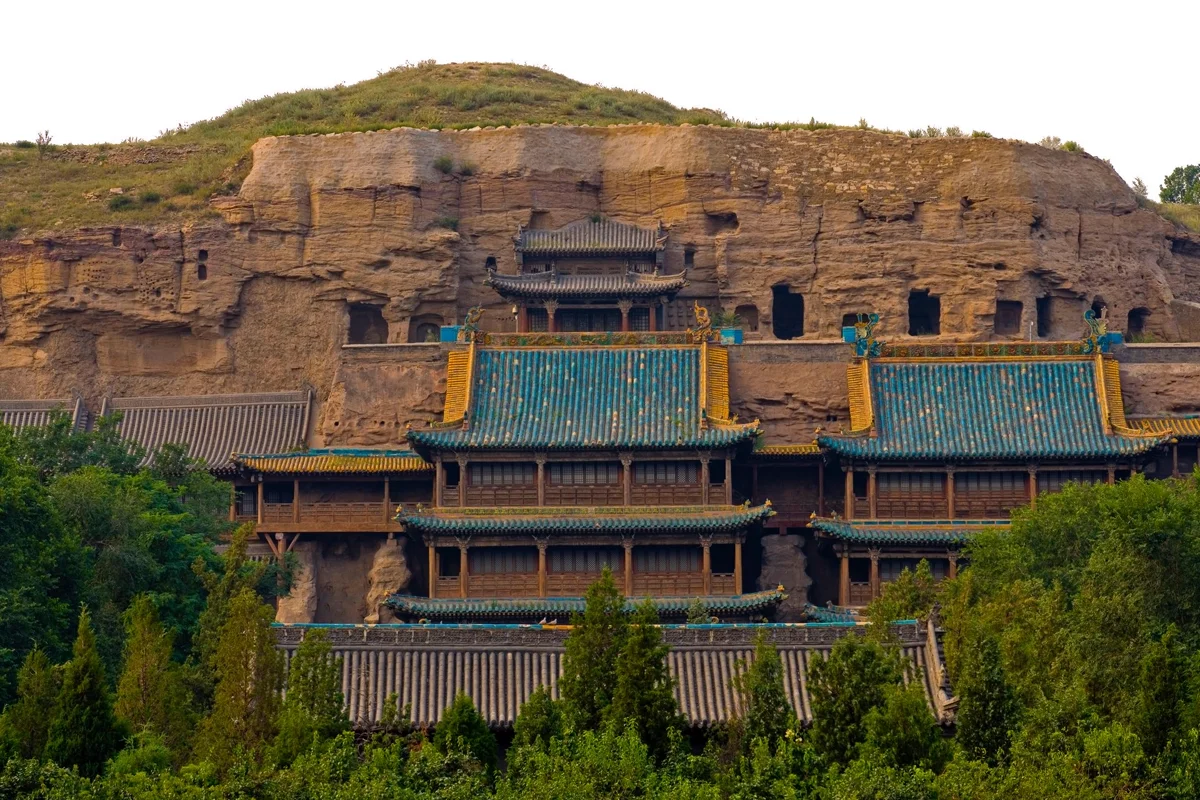
After the wall, we headed straight to Huayan Temple, which is the real showstopper in the city center. This is a Liao Dynasty Buddhist temple from 1038, and the main hall — the Daxiong Baodian — is the largest wooden hall surviving from that era. When you step inside, the ceiling is covered in intricate wood carvings that look like they were made yesterday. My friend pointed out how the Liao Dynasty artisans used interlocking wooden brackets without a single nail, and honestly, standing under that ceiling looking up, I felt genuinely small. The Upper and Lower Huayan Temples are both worth visiting, but the Upper Temple has that massive hall that steals the show.
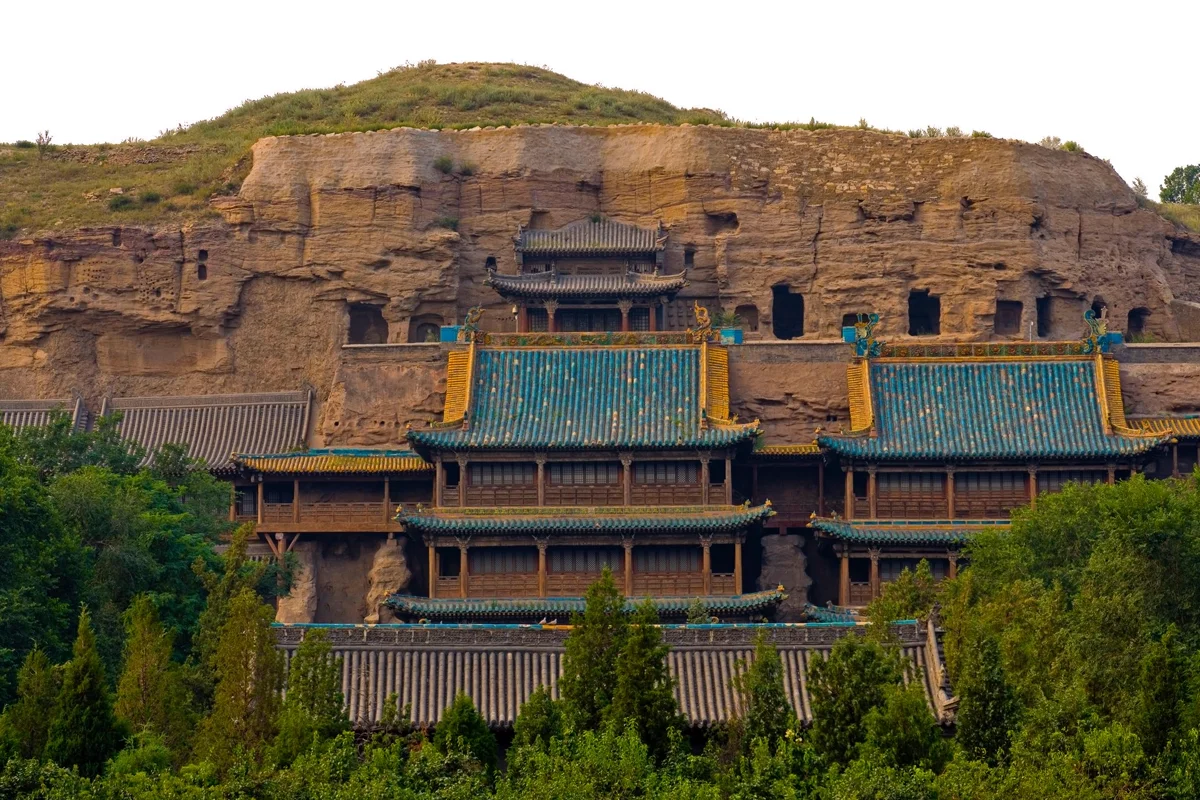
From there, we walked to Shanhua Temple, which is a quieter, more intimate complex. It dates to the Tang Dynasty but was rebuilt in the Liao period, and the narrow, high-walled courtyard has a completely different vibe from Huayan. The Three Saints Hall here has some of the finest Liao-era wooden architecture you’ll find anywhere. Most tourists skip this one because it’s smaller, but my friend insists it’s the best-preserved example of Liao Buddhist architecture in existence. I believe her.
Before dinner, we detoured to the Nine-Dragon Wall, one of only three surviving dragon walls in China — the other two are in Beijing and Datong. It’s a glazed tile wall from the Ming Dynasty, about 45 meters long, with nine writhing dragons in relief. It’s impressive, but I’ll be honest — it’s a fifteen-minute stop, not a major attraction. The real magic of day one is the walking. Datong’s old city has this unpolished, lived-in quality that most Chinese tourist cities have lost. There are no luxury brand stores or flashy LED signs. Just locals sitting outside their doors, kids on bicycles, and the smell of hand-pulled noodles wafting from side streets.
交通攻略
Getting to Datong is easier than you’d think for a city this far north. Datong Yungang Airport has flights from Beijing (about one hour), Shanghai, and several other cities, though connections can be spotty. The more reliable option is the high-speed train from Beijing North Station — it takes about two hours on the Datong-Qinhuangdao line, and tickets run around ¥100 to ¥150 depending on the class. From Taiyuan, it’s about two and a half hours by high-speed rail.
Once you’re in the city, the old town is compact enough to walk everywhere on day one. The city wall has multiple entry points, and you can rent a bike at the south gate to ride along the top. For getting to and from the hotel, Datong has a decent bus network, but honestly, taxis are cheap enough that you’ll probably just use those. A ride across the old city rarely costs more than ¥10. My friend warned me to avoid the unlicensed cabs that hang around the train station — stick to the ones with meters or use a ride-hailing app.
餐饮攻略
Datong’s food scene is built around wheat, not rice — this is northern China at its most authentic. For lunch on day one, my friend took me to a tiny hand-pulled noodle shop near the south gate that doesn’t even have an English menu. She ordered for us: a bowl of Dao Xiao Mian, which is knife-shaved noodles, the signature dish of Shanxi. The noodles come in irregular, thick slices with a chewy texture that’s completely different from the uniform strands you get elsewhere. The broth was rich with beef and star anise, topped with scallions and a handful of pickled vegetables. It cost about ¥15 per bowl, and it was one of the best meals I had on the entire trip.
For dinner, we wandered into a restaurant near the Huayan Temple area serving Datong-specific dishes. My friend insisted we try Youmian — oat flour pasta that’s steamed in small rolls and served with a dipping sauce. It sounds plain, but the texture is incredibly satisfying, almost like eating tiny sponges that soak up the garlic-vinegar sauce. She also ordered a plate of stuffed lamb kidneys, which is a local delicacy I was initially skeptical about but turned out to be delicious — crispy on the outside, tender inside, with a subtle gamey flavor. A full dinner for two with drinks came to about ¥120.
The locals have a saying: “Datong’s best food is in the alleys you don’t know about.” My friend proved this by taking me to a hole-in-the-wall near the drum tower for late-night grilled lamb skewers. The place had no sign, just a grill on the sidewalk and a queue of locals. The lamb was seasoned with cumin and chili flakes, grilled over charcoal until the edges were crispy. Three skewers and a bottle of local beer cost about ¥30. That’s the kind of meal you remember.
🪨 Yungang Area — Day 2: The Main Event
游玩攻略
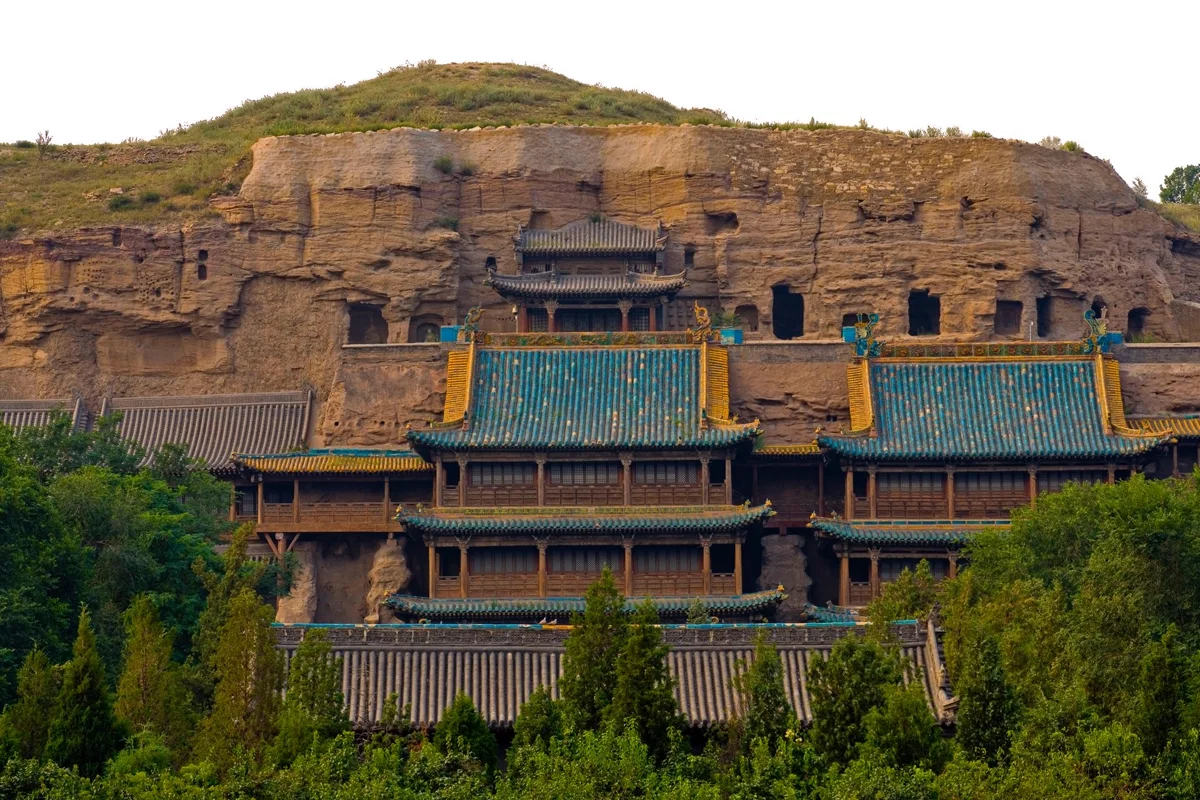
Today is the reason you came to Datong. The Yungang Grottoes are a UNESCO World Heritage Site, and they are absolutely breathtaking. The complex stretches along a kilometer-long cliff face west of the city, containing 45 major caves and over 51,000 Buddha statues carved between 460 and 525 AD during the Northern Wei Dynasty. This was the imperial project of Emperor Wencheng, who wanted to demonstrate the divine authority of Buddhism and the Wei Dynasty through sheer artistic ambition.
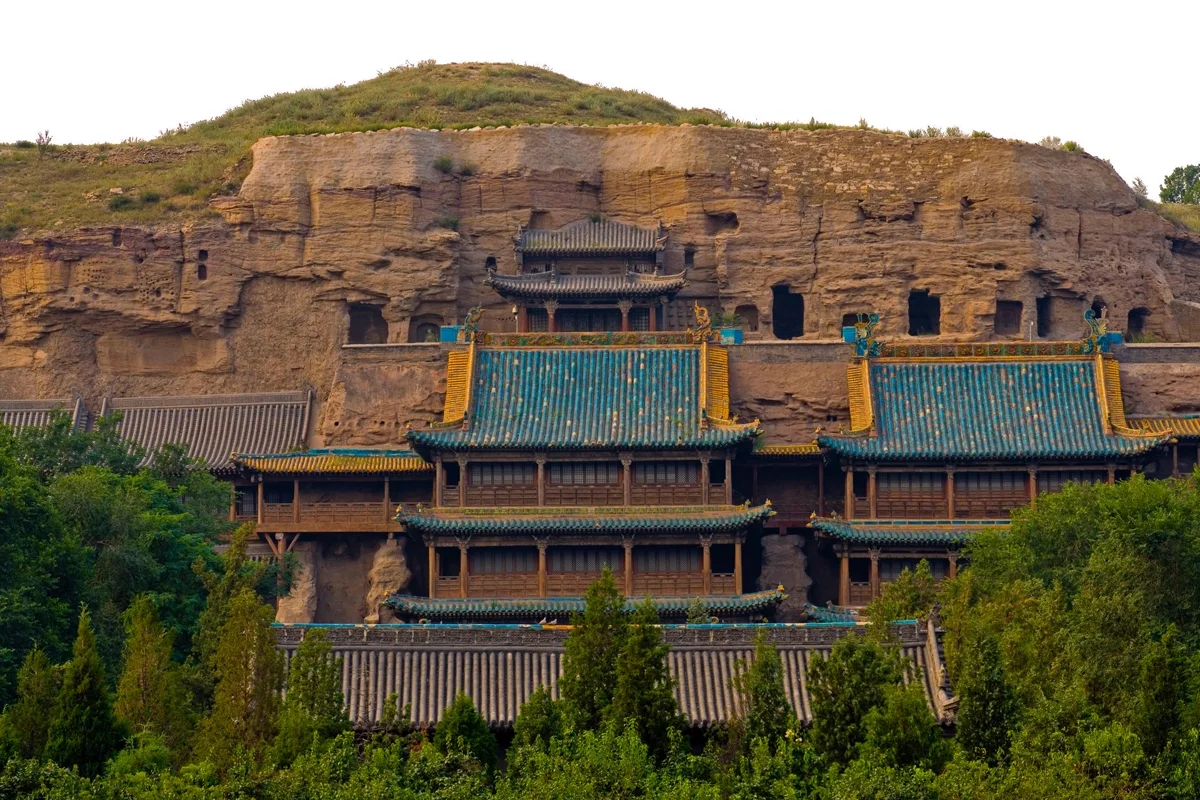
The must-see caves are 5, 6, 16, and 20. Cave 20 is the iconic one — a colossal seated Buddha, about 14 meters tall, with a serene expression that somehow manages to be both awe-inspiring and comforting. Cave 5 and 6 are the most ornate, with multi-story interior carvings that cover every inch of wall and ceiling. Cave 16 through 20 are known as the “Tan Yao Five Caves,” and they represent the pinnacle of early Yungang art. My friend, who has visited at least a dozen times, told me to spend extra time in Cave 6 — the interior is a complete Buddhist cosmos carved in stone, with a central pillar surrounded by thousands of tiny figures. I could have stood in there for an hour.
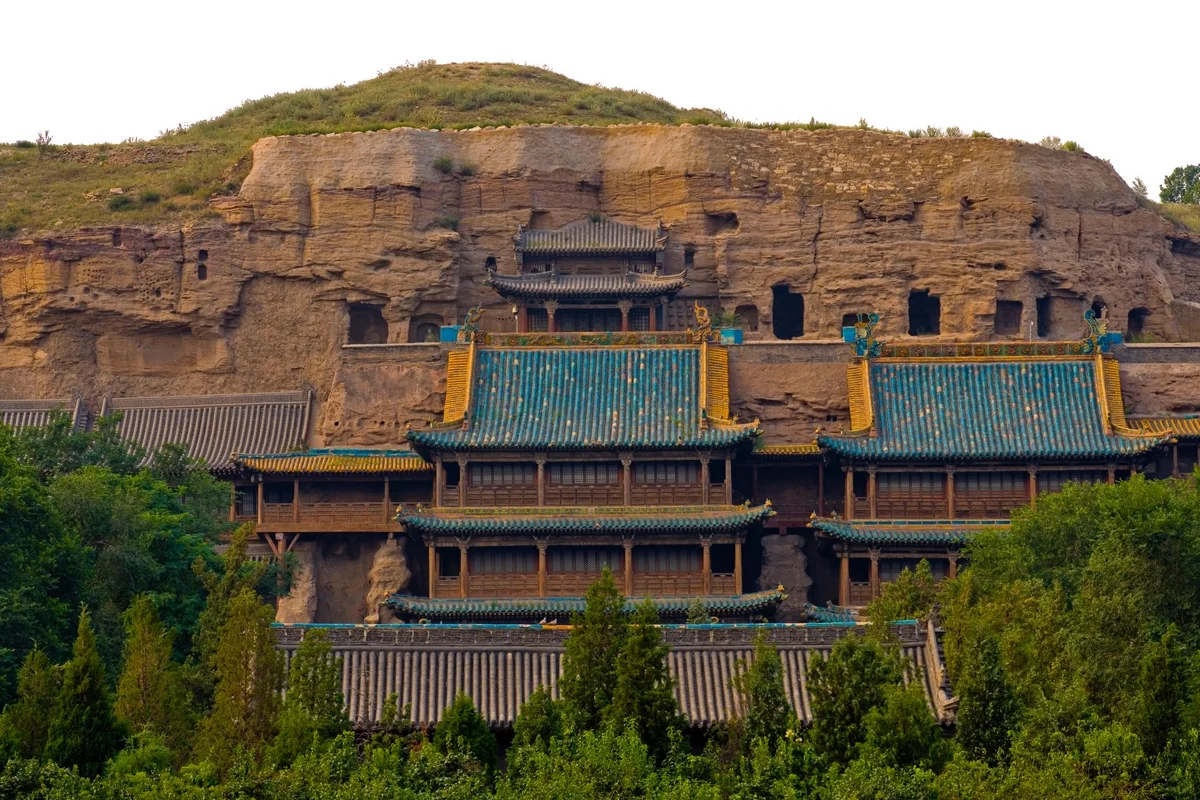
The trick with Yungang is timing. My friend said to arrive right when the gates open at eight-thirty in the morning. By ten, the tour buses from Datong and even from Beijing start rolling in, and the main caves get crowded. We had the first two hours almost to ourselves, which made the experience completely different from what the afternoon visitors get. The light in the morning is also better for photography — the sun hits the cliff face at an angle that makes the carvings pop.
Budget a full morning for the grottoes. The site is bigger than it looks, and rushing through it would be a crime. After we finished the main caves, we took the shuttle bus to the back of the site where there are less-visited caves with fewer crowds. These aren’t as spectacular as the main ones, but they have a rawer, more archaeological feel that I actually preferred.
交通攻略
Yungang Grottoes are about 16 kilometers west of Datong’s old city. The easiest way to get there is by bus — the number 603 bus departs from the Datong train station area and takes about 40 minutes, costing around ¥3. There’s also a tourist专线 (tourist专线 bus) that runs from the city center directly to the grottoes. My friend drove us, which took about 25 minutes, but taxis are also an option — expect to pay around ¥40 to ¥50 one way. Some drivers will offer a round-trip deal for ¥80 to ¥100, which is worth it if you don’t want to hassle with finding a return ride.
The site itself is spread out, but there’s a free shuttle bus that loops through the main areas. You can also walk — the entire cliff face is about a kilometer long, and the walk from one end to the other is pleasant, especially in the morning.
餐饮攻略
For lunch on day two, my friend took me to a place near the Yungang Grottoes entrance that she swears is the best noodle shop in the area. It’s a family-run place with about ten tables, and the specialty is another variation of knife-shaved noodles, this time served with a tomato and egg topping — a classic northern Chinese comfort food combination. The noodles were thick, chewy, and perfectly al dente, and the tomato sauce had a depth of flavor that suggested it had been simmering for hours. A bowl cost ¥12, and my friend also ordered a side of local pickled radish that was crunchy, sour, and addictive.
After we returned to the city in the late afternoon, we wandered through the old city’s evening streets. Datong comes alive at night in a way that surprised me — not with neon and nightclubs, but with food stalls and outdoor barbecue joints setting up along the pedestrian streets near the drum tower. We grabbed grilled corn, lamb skewers, and a plate of cold tofu skin salad from different stalls, eating while walking. The whole evening meal cost about ¥50 for two people. My friend pointed out that this is how locals actually eat — not in sit-down restaurants, but grazing from stall to stall, sampling whatever looks good.
⛰️ Hengshan Area — Day 3: The Hanging Temple & Mountain Heights
游玩攻略
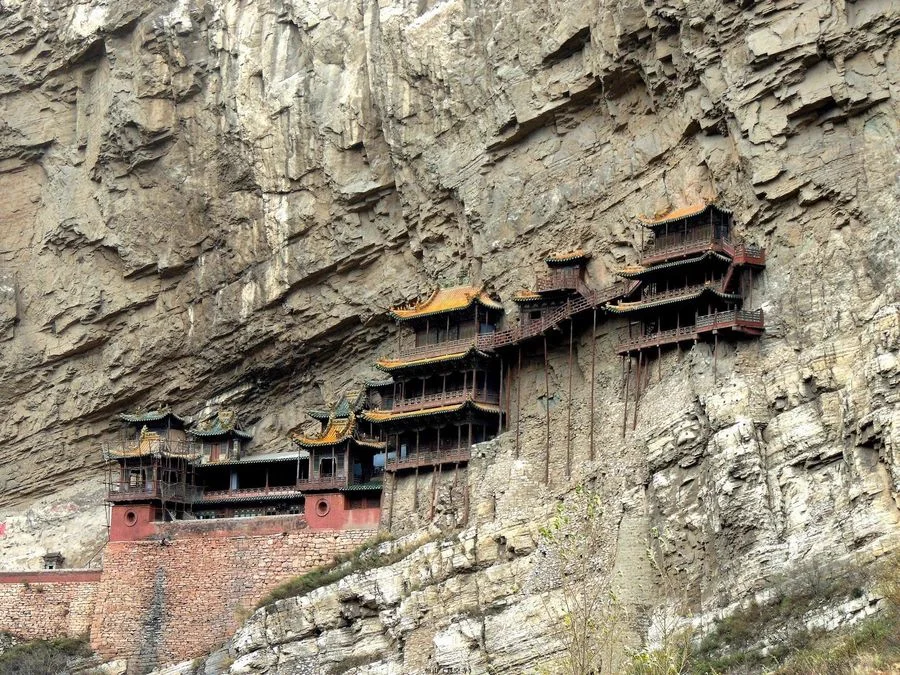
Day three takes you south of Datong to the Hengshan mountain range, one of China’s Five Sacred Mountains. But the real star here isn’t the mountain itself — it’s Xuankong Temple, the Hanging Temple, which clings to a cliff face about 75 meters above the ground. Built during the Northern Wei Dynasty around 491 AD, this temple is an engineering marvel that has survived over 1,500 years of earthquakes, wind, and erosion. The wooden beams are inserted into holes drilled in the cliff, and the structure seems to float against the rock face.
When you first see it from the approach path, your brain almost refuses to process what it’s looking at. A multi-story wooden temple, complete with balconies and tiled roofs, bolted垂直 to a sheer cliff. My friend told me the temple was built here specifically because the cliff overhangs provide shelter from rain and sun, which is why it’s survived so long. Inside, the corridors are narrow and the staircases are steep — if you’re claustrophobic or afraid of heights, this might not be your thing. But for most people, the experience of walking through a temple that feels like it could tip off the cliff at any moment is unforgettable.
After the Hanging Temple, we continued up to the main Hengshan scenic area for hiking. The mountain has several peaks, and the most popular hike takes you to the Tianfeng Peak at about 2,016 meters. The trail is well-maintained but steep in sections — my friend, who hikes here regularly, was barely winded while I was gasping for air. The reward at the top is a panoramic view of the surrounding mountains and the Yanmen Pass in the distance, which was one of the most important military passes in ancient China. We spent about thirty minutes at the summit before heading back down.
交通攻略
The Hengshan area is about 75 kilometers south of Datong, which translates to roughly an hour and a half by car. There’s no direct public bus from Datong to the Hanging Temple, so your best options are hiring a taxi for the day (expect to pay around ¥300 to ¥400 for a round trip with waiting time) or joining a tour group. My friend drove us, and she recommends leaving Datong early — by seven-thirty at the latest — to beat the tour groups that start arriving around ten.
If you’re doing both the Hanging Temple and the main Hengshan hiking area, the Hanging Temple is at the northern foot of the mountain, and the main scenic entrance is further south. It makes sense to visit the temple first, then continue up the mountain. The two sites are about 30 minutes apart by car. Some taxi drivers offer a package deal that covers both, which simplifies logistics.
餐饮攻略
Lunch on day three is the trickiest to plan because you’re in a rural mountain area with limited options. My friend took me to a small farmhouse restaurant near the base of Hengshan that she’s been going to for years. The place has no English signage and no online presence — you find it by knowing someone who knows someone. We ordered Datong-style braised pork with potatoes, a plate of wild mountain vegetables stir-fried with garlic, and more hand-pulled noodles (you will eat a lot of noodles in Datong). The wild vegetables were something I’d never had before — slightly bitter, earthy, and completely fresh, clearly picked that morning from the mountainside. The whole lunch for two cost about ¥80.
On the drive back to Datong, my friend insisted we stop at a roadside shop that sells locally produced vinegar and fermented bean paste. Shanxi is China’s vinegar capital, and the Datong-area varieties have a sharper, more complex flavor than what you find in supermarkets. I bought a bottle of aged vinegar for about ¥30 — it’s become my go-to condiment at home now.
Back in Datong for our final dinner, my friend took me to a restaurant near the train station area that specializes in Datong hot pot. The broth is different from Sichuan hot pot — it’s a clear, mild bone broth with goji berries and jujubes, designed to complement rather than overpower the ingredients. We ordered thinly sliced lamb, hand-made tofu, mushroom varieties I couldn’t identify, and fresh vegetables. The dipping sauce was a simple mix of sesame paste, chili oil, and cilantro. It was the perfect way to end the trip — warming, communal, and deeply satisfying. The bill came to about ¥150 for two, which felt like a steal for such a quality meal.
💡 Practical Tips
Datong sits at about 1,000 meters elevation, which means the air is drier than coastal cities. Bring lip balm and moisturizer, especially in autumn and winter. The temperature swings between day and night can be significant — even in September, mornings were chilly enough for a light jacket.
For the Yungang Grottoes, photography is allowed inside the caves but flash is strictly prohibited. The lighting inside is dim, so bring a camera with good low-light performance if you want decent shots. Phone cameras struggle in there.
The Hanging Temple charges a separate entrance fee of about ¥125, which some visitors feel is steep for a fifteen-minute walk-through. My friend says it’s absolutely worth it — there’s nothing else like it in China. But if you’re on a tight budget, you can view the temple from the免费 observation platform below, which gives you a good look at the exterior without going inside.
Datong is at its best from September to November, when the weather is crisp and the mountain colors start changing. Winter is brutally cold (temperatures can drop to -20°C), but the sites are nearly empty, which has its own appeal. Spring brings dust storms from the north, so avoid April and May if you can.
Three days in Datong gave me a completely different picture of northern China — raw, unpolished, deeply historical, and full of surprises. This isn’t a city that tries to impress you with shiny surfaces. It earns your respect the old-fashioned way: by being genuinely, unapologetically itself.