📌 2026 Edition | 🎯 First-timers / Trap-avoiders | 🎫 3 days Chongqing —the internet hypes this place like crazy. “8D magical city,” “your GPS will go haywire” —I was just as pumped before I came. After visiting, I realized most of the Insta-famous spots are just okay. But the genuinely good stuff? The travel guides barely mention it.
Day 1 Skip the Jiefangbei Crowd —Hit Shibati and the Mountain City Trail
Arrive in Chongqing and drop your luggage at the hotel. I recommend staying near Jiefangbei —good transport connections. But don’t stay right in the center. Too noisy.
After dropping your bags, head to Shibati (Eighteen Steps). A lot of people say it’s “rebuilt” and “fake” —and yeah, it was demolished and rebuilt in 2017.
 Jiefangbei —Chongqing’s busiest intersection, and the starting point of the mountain city’s iconic landmarks
Here’s the thing —after the rebuild it’s actually cleaner, and the view from the top looking down gives you Jiefangbei and the river in one frame. That angle is genuinely beautiful. Best part? Fewer people. Compared to the Jiefangbei crowds, Shibati feels like a different city.
Walk south from Shibati and you’ll reach the Mountain City Trail (Shancheng Budao). THIS is what’s worth walking in Chongqing. It’s a cliffside boardwalk —the Yangtze River on your left, old residential buildings on your right, and the light rail literally passing through a building above your head. You’ll see laundry poles sticking out of windows, aunties playing mahjong downstairs, dogs napping on the street —that’s Chongqing.
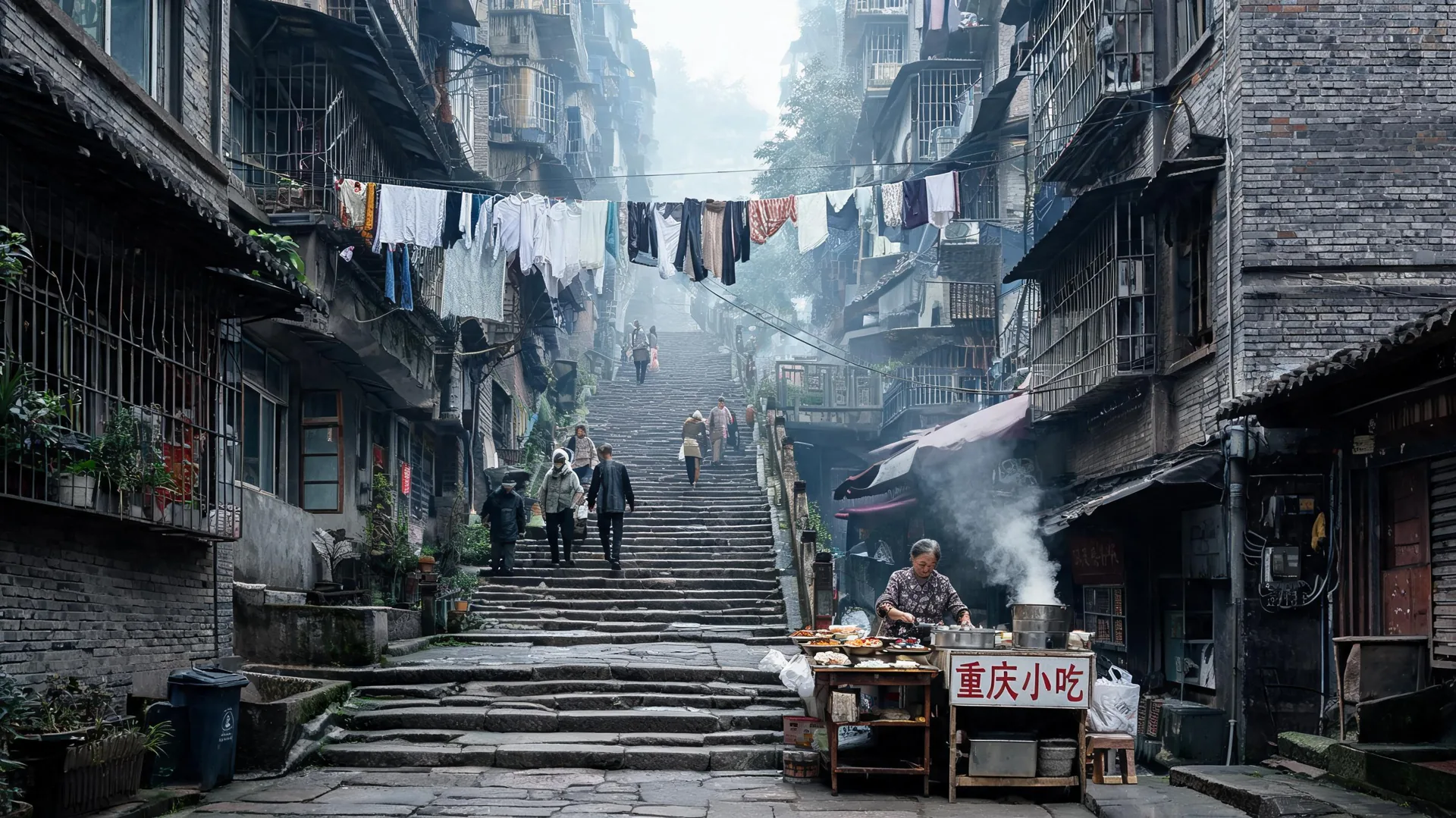
The trail takes about an hour. Once you’re down the hill, check out Baixiangju —that 24-story apartment building with no elevator and three different exits on different floors. It’s not a tourist attraction, just a residential building, but the architecture itself is fascinating. Walk around inside and you’ll understand what “daily life in Chongqing” really means.
Lunch: Have some Chongqing noodles (xiaomian). Don’t queue at the Instagram-famous shops. Find any random alley noodle joint with tiny plastic stools out front —the quality won’t disappoint. Wanza noodles (pea and minced pork) and beef noodles are the two classic options. Take your pick.
Evening: Hongyadong. Yes, locals visit it too —but they only look from the opposite bank. They don’t go inside.
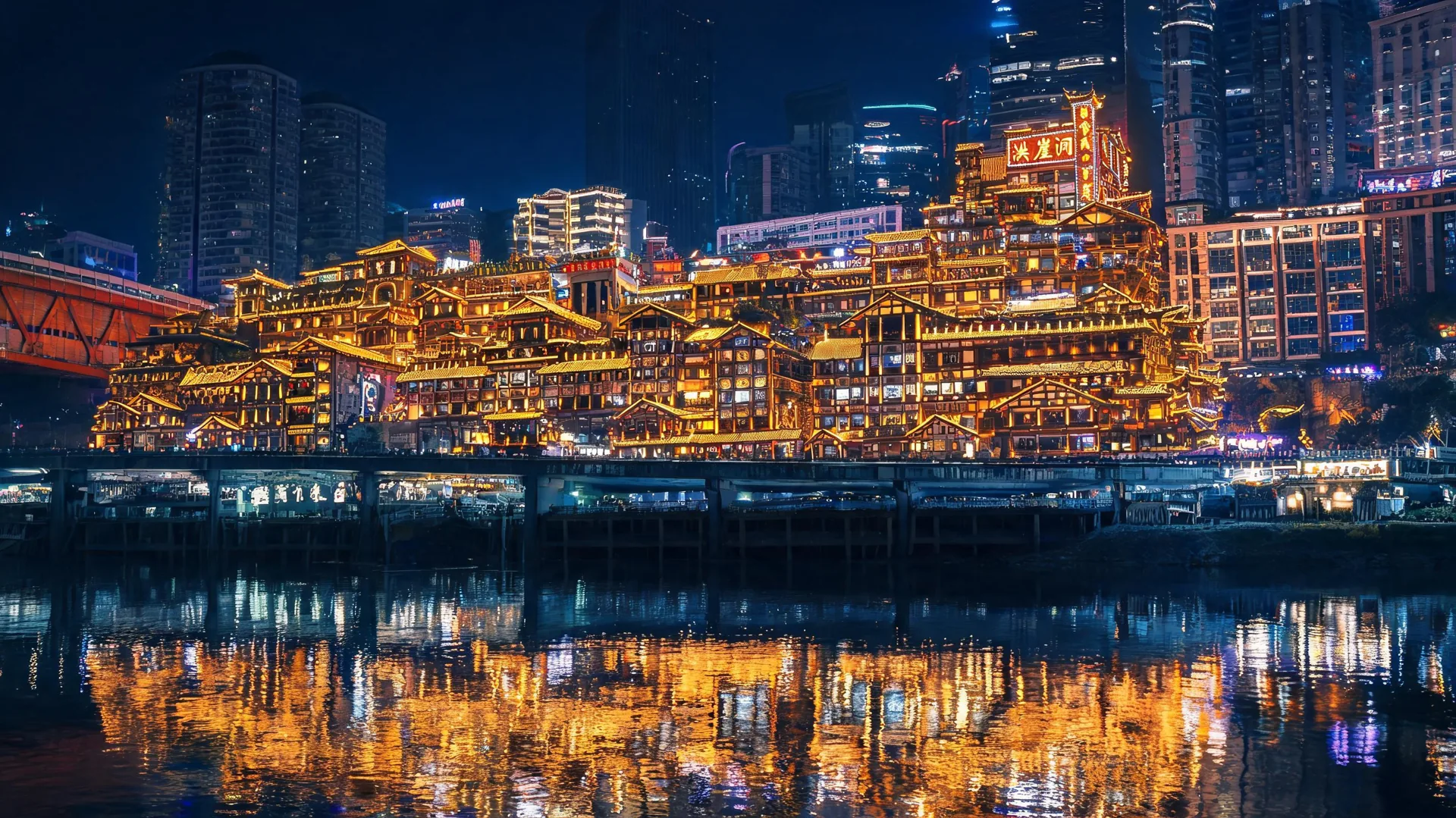
Walk onto the Qiansimen Bridge, or head to the Chongqing Grand Theatre plaza across the river, for the full panoramic view of Hongyadong. When the lights come on at night, it really does look like the bathhouse from Spirited Away —but that picture only works from the outside. Inside? It’s wall-to-wall people.
Day 2 Only Visit the Back Street of Ciqikou, Snap Li Ziba and Leave
Morning: Head to Ciqikou first. But here’s the trick —don’t enter through the main gate. The main gate leads to a commercial street that looks exactly like every other ancient town in China.
 Ciqikou Ancient Town —the backstreet teahouses are way quieter than the main drag, with handicraft workshops and tea rooms tucked away in the alleys
Enter through the back gate. The back street (also called “Back Street”) was developed later, with far fewer tourists. There are handicraft workshops and quiet teahouses. At the very end is Baolun Temple —free, not crowded, but the architecture is solid.
Lunch at Ciqikou. Mao Xue Wang (blood curd in chili oil) is the local specialty here. Pick any restaurant where you see a lot of locals eating.
Afternoon: Head to Li Ziba. That’s the spot where the light rail passes through a residential building. When you get there, you’ll realize —it’s just one metro station where the train goes through a building. The photo op is interesting, but you’ll be done in five minutes.
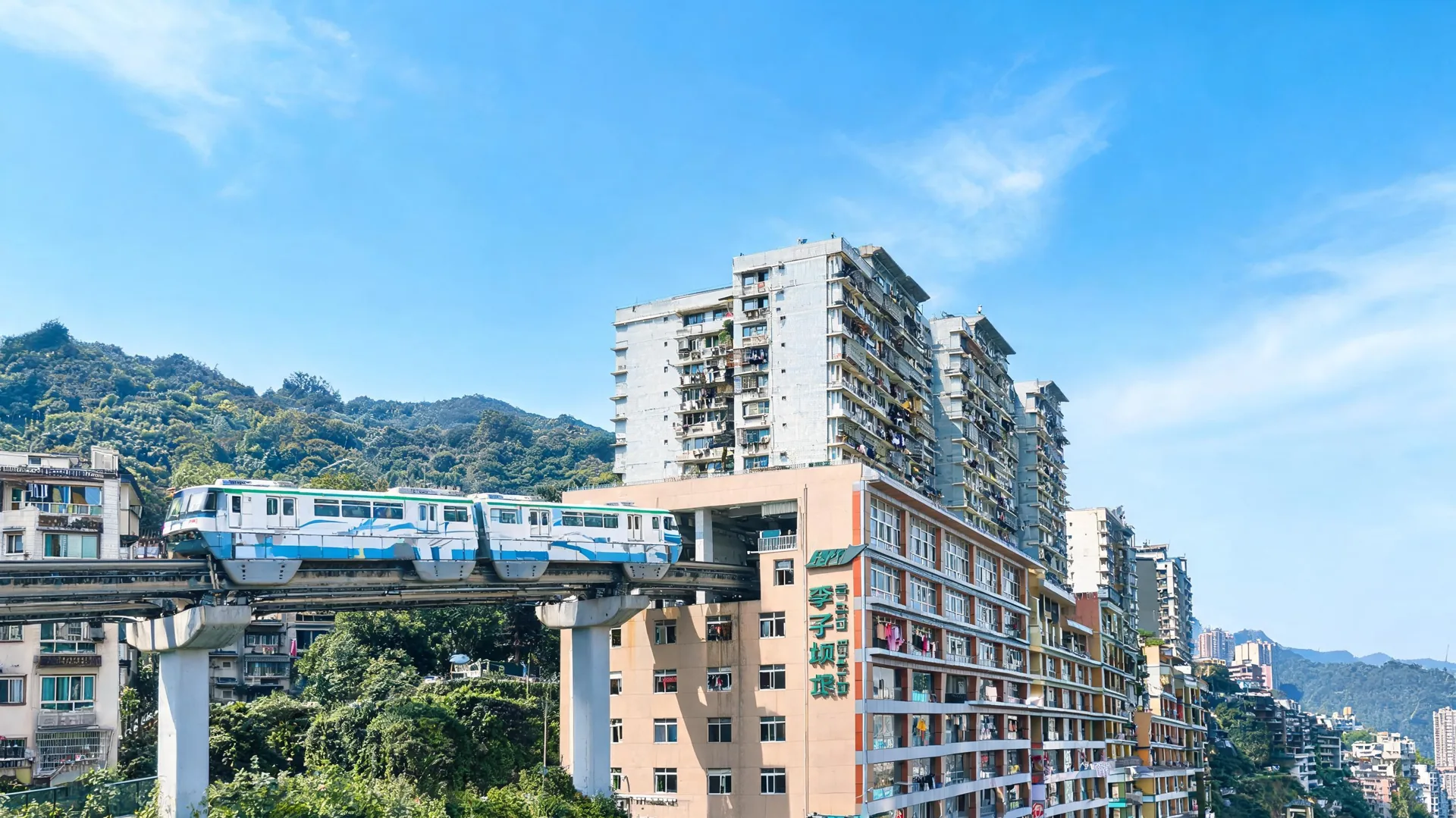
After snapping your photo, check out the Li Ziba Anti-Japanese War Heritage Park next door. Free entry, and not many people know about it.
Then head to Eling No. 2 Factory. This used to be a printing factory, now converted into a creative park. From Your Whole World Passed By (a popular Chinese movie) was filmed here. It’s about a 10-minute taxi ride from Li Ziba. The rooftop at No. 2 Factory offers a view of the two rivers meeting —great panorama. But honestly, it’s gotten pretty commercial. A quick look is enough.
Evening: Hotpot. The soul of Chongqing hotpot isn’t the ingredients —it’s the broth base. Beef tallow broth is the standard. When ordering, tripe, duck intestine, and aorta (huanghou) are the must-order “holy trinity.” For dipping sauce, locals usually just use sesame oil and garlic. None of that elaborate Chengdu-style dipping station.
I recommend Pei Jie Lao Hotpot (鐝鑰佺伀閿? or Da Long Hotpot (澶ч緳鐏攨), but both have long queues. If you don’t want to wait, find a hole-in-the-wall hotpot place with a rating above 4.5 and an average spend of 楼60-80 per person. Those are often more authentic.
Day 3 Ride the Yangtze River Cable Car Once, Watch Sunset at Nanshan
Morning: The Yangtze River Cable Car. This used to be a commuter transport for locals; now it’s a tourist attraction. 楼20 one way, 楼30 round trip. I recommend buying a one-way ticket —ride from the south bank to the north bank, you’ll exit near Jiefangbei, and you can wander from there.
The queue can be 30+ minutes, especially on holidays. If you don’t want to wait, take Metro Line 6 to Grand Theatre Station and walk across the Qiansimen Bridge. You’ll see where the Jialing and Yangtze rivers meet —the angle is pretty similar to what you’d see from the cable car.
Lunch near Jiefangbei. The suan la fen (hot and sour noodles) at Bayi Good Food Street are worth a try, but don’t eat too much. Save room for dinner.
Afternoon: Head up Nanshan (South Mountain). The Nanshan Yikeshu (One Tree) Observation Deck is the best spot for Chongqing’s night view, but here’s what most people don’t know —there are several free viewing spots halfway up the mountain with just as good a view as Yikeshu. As you drive up Nanshan, watch for roadside viewing platforms. Pick a spot and wait for sunset.
Yikeshu admission is 楼30. If you want to photograph the night scene, arrive before 5 PM, claim a good spot, and wait for dark. Chongqing’s nightscape comes in layers —first the sunset glow on the horizon, then the city lights flickering on one by one, and finally the reflections on the river. The whole process takes about an hour and a half.
Head back down after dark. If you still have energy, check out Jiujie (Nine Street) —Chongqing’s nightlife hub with bars, BBQ, and street food. But if you don’t drink, it’s not worth the trip.
A Few Things Only Locals Know
The light rail is more useful than the subway. Chongqing is a mountain city —where the subway can’t reach, the light rail can. Lines 2 and 3 cover most attractions in the main urban area.
GPS really doesn’t work well here. It’ll tell you you’re right next to your destination, but you might be three stories above or below it. If you’re lost, ask a local. Chongqing people are friendly; anyone you stop will point you in the right direction.
Chongqing summers are brutally hot. 40掳C is normal, and it’s humid. Five minutes outside and you’re drenched in sweat. If you visit in summer, don’t go out in the afternoon —nap at your hotel or hang out in a shopping mall.
About the spice —if you can’t handle your chili well, tell the restaurant “wei la” (milder) or “wei wei la” (very mild). Chongqing’s “wei la” is about as spicy as “medium spicy” in other cities. Don’t be a hero.
Wear flat shoes. Chongqing is nothing but slopes and stairs. Heels are self-torture.