🎨 Chengdu in 3 Days —AI Visual Story
📅 July 2026 | 🖼All images generated with AI | 📍 Target: Food lovers & panda fans
Day 1: Pandas, History & Hotpot
🐼 Scene 1: Giant Panda Base

I got there at 7:30 AM and the pandas were already having breakfast. There’s something about watching a panda munch bamboo that makes all your problems disappear. One baby panda rolled off a log mid-chew and didn’t even pause —just kept eating. I’ve never related to anything more.
Step 1: Take Metro Line 3 to Panda Avenue Station (PandaчAvenue?. Exit B, then catch the free shuttle bus or walk 10 minutes through a bamboo-lined path that already puts you in the mood.
Step 2: Buy tickets online in advance (55 / ~$8) —they sell out fast on weekends. Arrive before 8:00 AM to beat the crowds. The base opens at 7:30, and the pandas are most active in the cool morning.
Step 3: Head straight to the nursery (/) to see baby pandas. They’re only visible in the morning feeding window. After that, walk the adult panda enclosures —the one near the stream with the climbing structures is the best for photos.
📍 Address: No.1375 Panda Avenue, Chenghua District, Chengdu(No.1375 Panda Avenue, Chenghua District) 🚇 Metro: Line 3 →?Panda Avenue Station (PandaчAvenue?, Exit B 🕐Hours: 7:30 AM —6:00 PM (last entry 5:00 PM) 💰 Price: 55 (~$8) | Free for children under 6
💡 Pro tip: Go on a weekday morning in autumn for the best panda activity. In summer, they’re often hiding from the heat by midday. Bring a light jacket —the forest paths are cooler than you’d expect.
🏛Scene 2: Wuhou Shrine
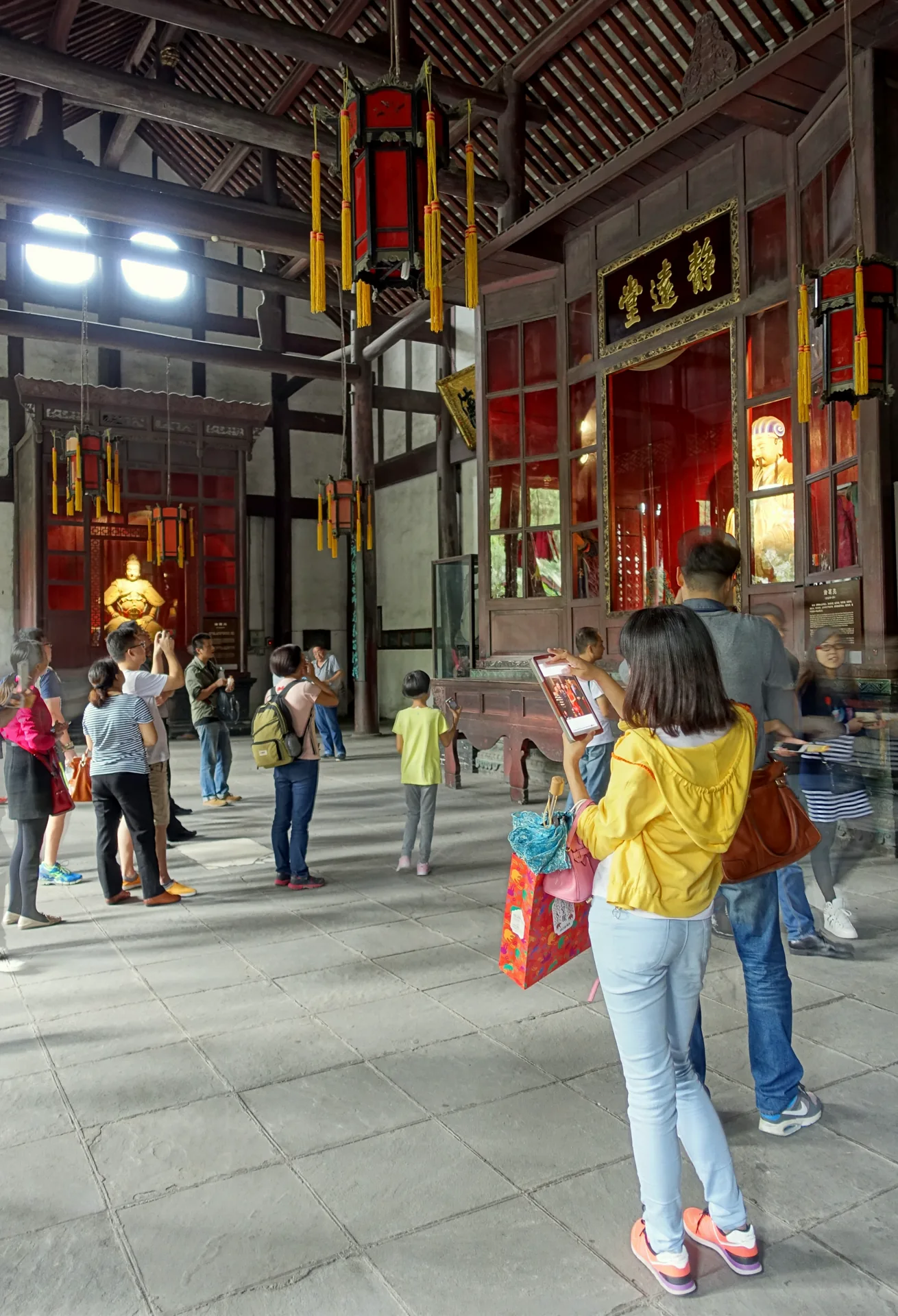
The red walls here are almost impossibly vivid against the green bamboo. I wandered through for over an hour, just soaking in the quiet. There’s a certain gravity to a place that’s been honoring Zhuge Liang for 1,800 years.
Step 1: Enter from the Jinli Street side —it connects directly to the shrine’s west gate, so you can combine both in one visit. The walkway between them is lined with red walls and bamboo that practically begs for a photo.
Step 2: Inside, focus on the Three Kingdoms cultural exhibits. The main hall with the gilt statues of Liu Bei and Zhuge Liang is impressive, but the real beauty is in the garden corridors and the ancient cypress trees.
Step 3: Don’t skip the gallery of poetry and calligraphy —it’s tucked in the back and far less crowded, with stunning hand-painted scenes from the Romance of the Three Kingdoms.
📍 Address: No.231 Wuhouci Street, Wuhou District(No.231 Wuhouci Street, Wuhou District) 🚇 Metro: Line 3 →?Nishimen Station (StreeteStation), Exit C 🕐Hours: 8:00 AM —6:00 PM (Feb—ct) / 8:00 AM —5:30 PM (Nov—an) 💰 Price: 50 (~$7)
💡 Pro tip: Arrive right at opening —the morning light through the bamboo corridor is magical and the crowds haven’t arrived yet. The red walls photograph best in soft, diffused light.
🏮 Scene 3: Jinli Ancient Street
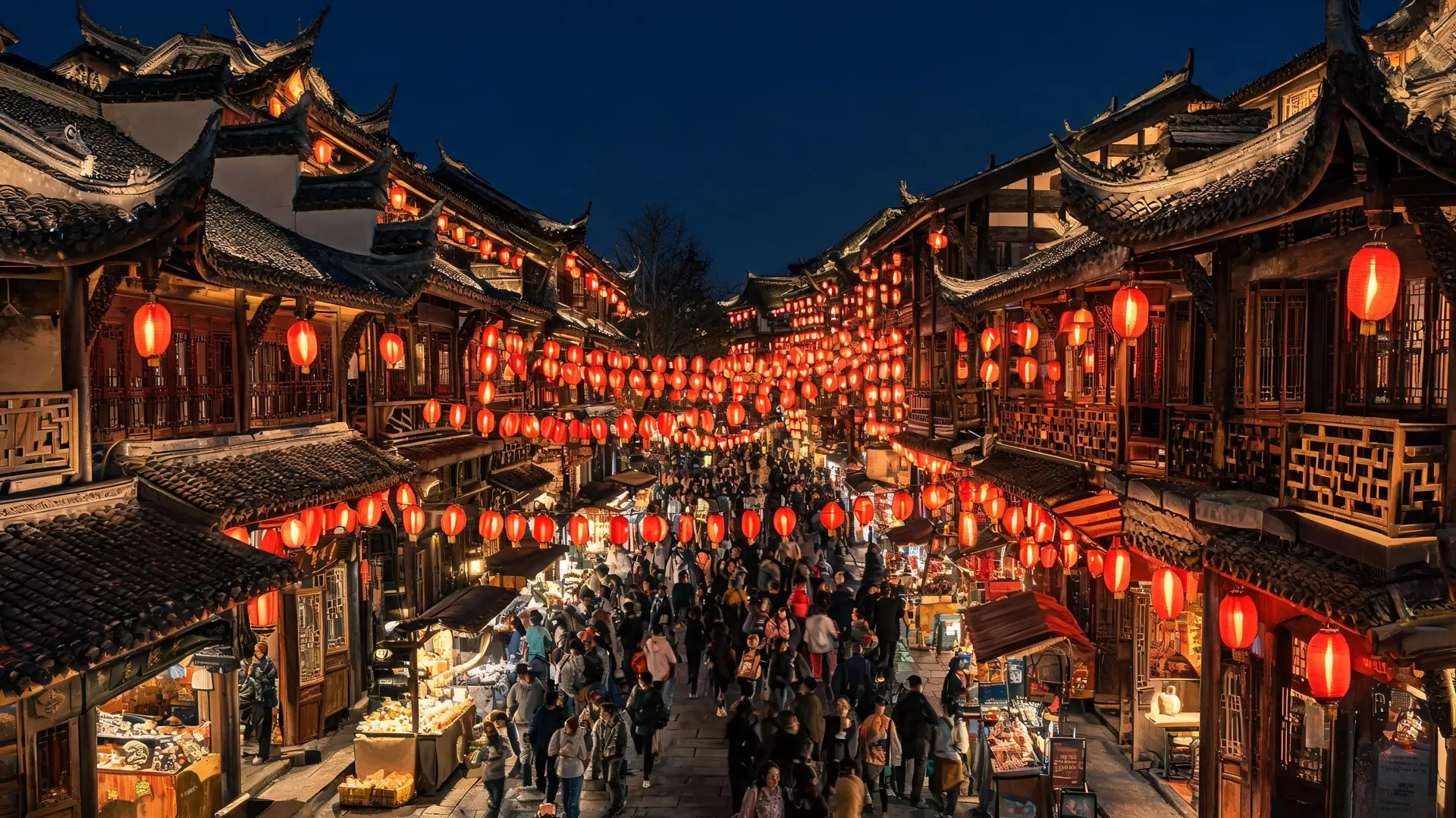
Jinli at night is pure magic. The red lanterns reflecting off the wet cobblestones, the smell of chili oil drifting from every other shop, the sound of erhu playing somewhere in the distance. I came for a quick walk and stayed for three hours.
Step 1: Enter from Wuhou Shrine’s west gate —Jinli connects directly. The street is about 550 meters long, and every step is packed with Sichuan snacks, handicraft shops, and tea houses.
Step 2: Must-try street food: Three Cannon Balls(Three Cannon Balls —sticky rice balls that bounce off a metal plate), (glazed fried dough balls), and Film (husband-and-wife lung slices —don’t let the name scare you, it’s incredibly tasty).
Step 3: For the best photos, walk to the back half of the street where it’s less touristy and the traditional architecture is better preserved. The bridge over the small canal with lanterns reflected in the water is the iconic shot.
📍 Address: ︿ц231?(Adjacent to Wuhou Shrine) 🚇 Metro: Line 3 →?Nishimen Station (StreeteStation), Exit C 🕐Hours: Most shops 10:00 AM —10:00 PM; street is open 24/7 💰 Price: Free entry; snacks 5—0 (~$0.70—4)
💡 Pro tip: Visit twice —once during the day for shopping and snacks, once after dark for the full lantern-lit atmosphere. Weekday evenings are less packed than weekends.
🍲 Scene 4: Sichuan Hotpot Night
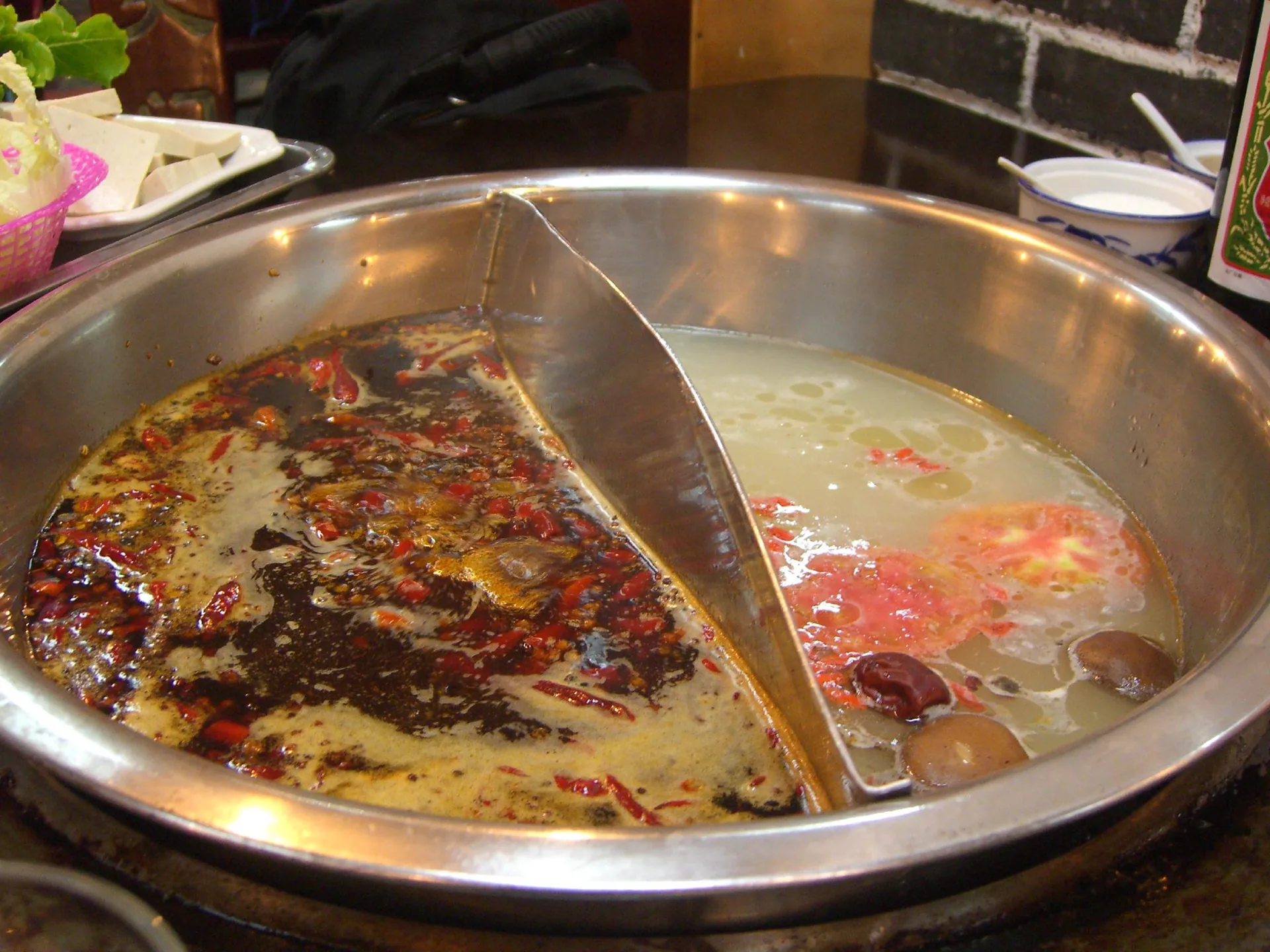
Sichuan hotpot isn’t just food —it’s a ritual. The red oil bubbling, the numbing peppercorns, the steam rising. I went three nights in a row and regret nothing. My lips were numb for hours afterward. Bliss.
Step 1: Pick your restaurant. For first-timers, Da Long Yi(Da Long Yi) or ?(Xiao Long Kan) are solid choices —they have English menus and the spice levels are adjustable. For something more local, try €т (Shu Da Xia) for the theatrical presentation.
Step 2: Order the Butter Hotpot Base (butter and beef tallow base) —it’s the classic Chengdu hotpot broth. Get the (Sichuan peppercorn) side for the authentic numbing sensation. If you can’t handle heat, the Duck Intestine Hotpot?(split pot) gives you a mild side too.
Step 3: The dipping sauce is an art form. Start with sesame oil (Spicy) + garlic + oyster sauce + cilantro. Add a raw egg for extra silkiness. This cools the spice and adds depth. Dunk your Tender Beef?(fresh tripe) for exactly 8 seconds —the locals will judge you if you overcook it.
📍 Address: Multiple locations —Da Long Yi(Da Long Yi) flagship is at No.15 Yulin South Road(No.15 Yulin South Road) 🚇 Metro: Line 3 →?Yulin Road Station (StreeteStation), or Line 5 →?Yulin Station (Yulin Station? 🕐Hours: Usually 11:00 AM —2:00 AM; some until 4:00 AM 💰 Price: 100—00/person (~$14—8)
💡 Pro tip: Order Steamed Buns (brain) and Wafer (kidney slices) if you’re adventurous —they’re hotpot essentials that most tourists skip. Also: wear clothes you don’t mind smelling like hotpot for the rest of the day.
Day 2: Day Trip —Giants of Sichuan
🙏 Scene 5: Leshan Giant Buddha
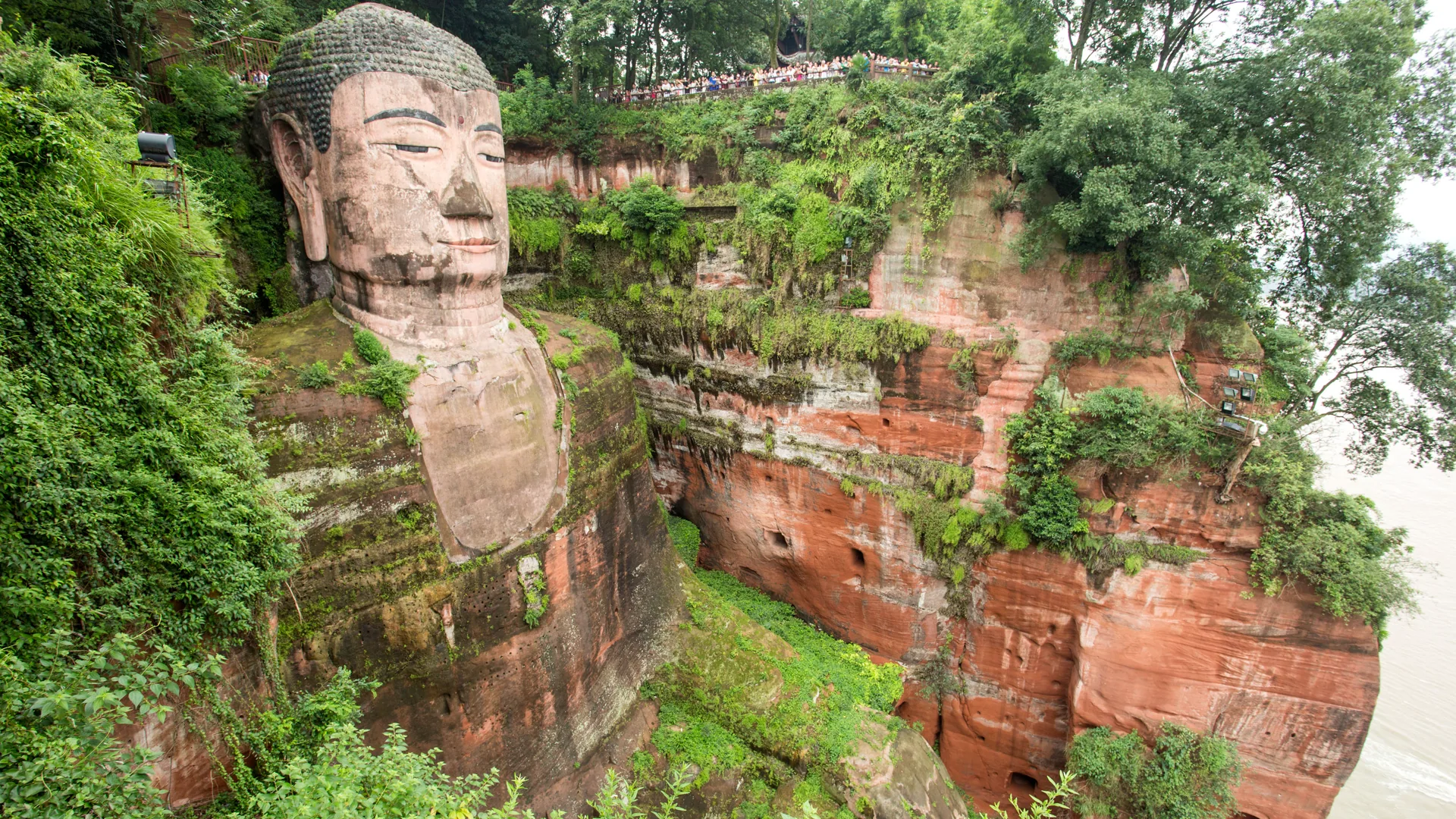
Nothing prepares you for the sheer scale. You see photos, you read the numbers —71 meters tall —but standing at the base of the Buddha’s foot and craning your neck up? That’s when it hits you. This took 90 years to carve, and every inch is deliberate.
Step 1: Take the high-speed train from Chengdu South Station (Chengdu South Station) to Leshan Station (Leshan Station? —about 50 minutes, 54 (~$8). From the station, take Bus 3 or a taxi (about 15) to the scenic area entrance.
Step 2: Enter from the east gate and take the cliff-side walkway down. You’ll pass giant stone guardians and carved reliefs before reaching the top of the Buddha’s head. The descent is steep —hold the railings. The plank walk along the cliff gives you the best angle for photos.
Step 3: After reaching the base, cross to the river viewing platform for the full frontal view. This is the money shot —the entire Buddha framed by the river and mountains. The boat tour (70 / ~$10) gives you an even better perspective from the water.
📍 Address: Leshan CityLingyun Road??(No.9 Lingyun Road, Leshan)
🚄 Transport: High-speed rail Chengdu South →?Leshan (50 min)
🕐Hours: 7:30 AM —6:30 PM (Mar—ct) / 8:00 AM —5:30 PM (Nov—eb)
💰 Price: 80 ($11)
💡 Pro tip: Visit on a weekday and go early —the cliff walkway gets dangerously crowded on weekends. The best light for photos is morning (the Buddha faces east). Combine with the boat ride for the full experience.
🌊 Scene 6: Dujiangyan Irrigation System
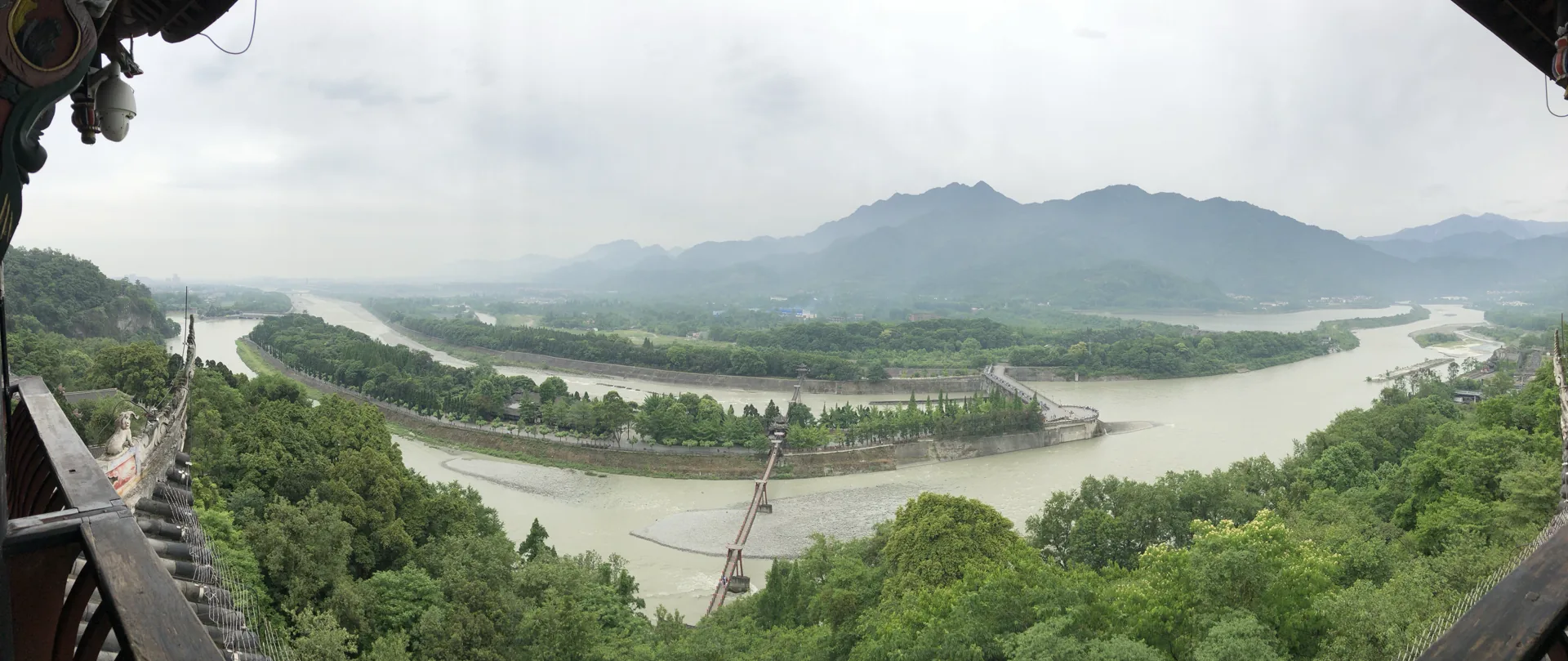
This 2,200-year-old irrigation system is still working —and still irrigating millions of acres of farmland. No dams, no modern engineering, just brilliant ancient Chinese water management. Standing on the bridge watching the river split and flow through the channels, I felt genuinely humbled.
Step 1: Take the Chengdu—ujiangyan intercity train from Xipu Station (€︾) —about 30 minutes, 10 (~$1.50). From the station, it’s a 15-minute walk or short taxi to the main entrance.
Step 2: Start at the Fish Mouth Levee (Fish Mouth) —the clever wedge that splits the Min River into inner and outer channels. Walk across the Anlan Suspension Bridge (Anlan Cable㈡ˉ) for views of the whole system.
Step 3: Follow the path upstream to the Bottle Neck Gorge (Bottle Neck Gorge, where the water accelerates through a narrow channel carved out of the mountain. This is the most dramatic engineering point. The overlook platform above gives a bird’s-eye view.
📍 Address: Dujiangyan Scenic Area?(Dujiangyan Scenic Area)
🚄 Transport: Intercity train Xipu →?Dujiangyan (30 min)
🕐Hours: 8:00 AM —6:00 PM (Feb—ct) / 8:00 AM —5:30 PM (Nov—an)
💰 Price: 80 ($11)
💡 Pro tip: Go after rain when the river is high —the engineering marvel is most impressive with powerful water flow. Pair with Qingcheng Mountain (Mount Qingcheng? if you have time —they’re right next to each other and covered by a combo ticket.
Day 3: Old Alleys, Tea Culture & Modern Chengdu
🫖 Scene 7: Teahouse Culture
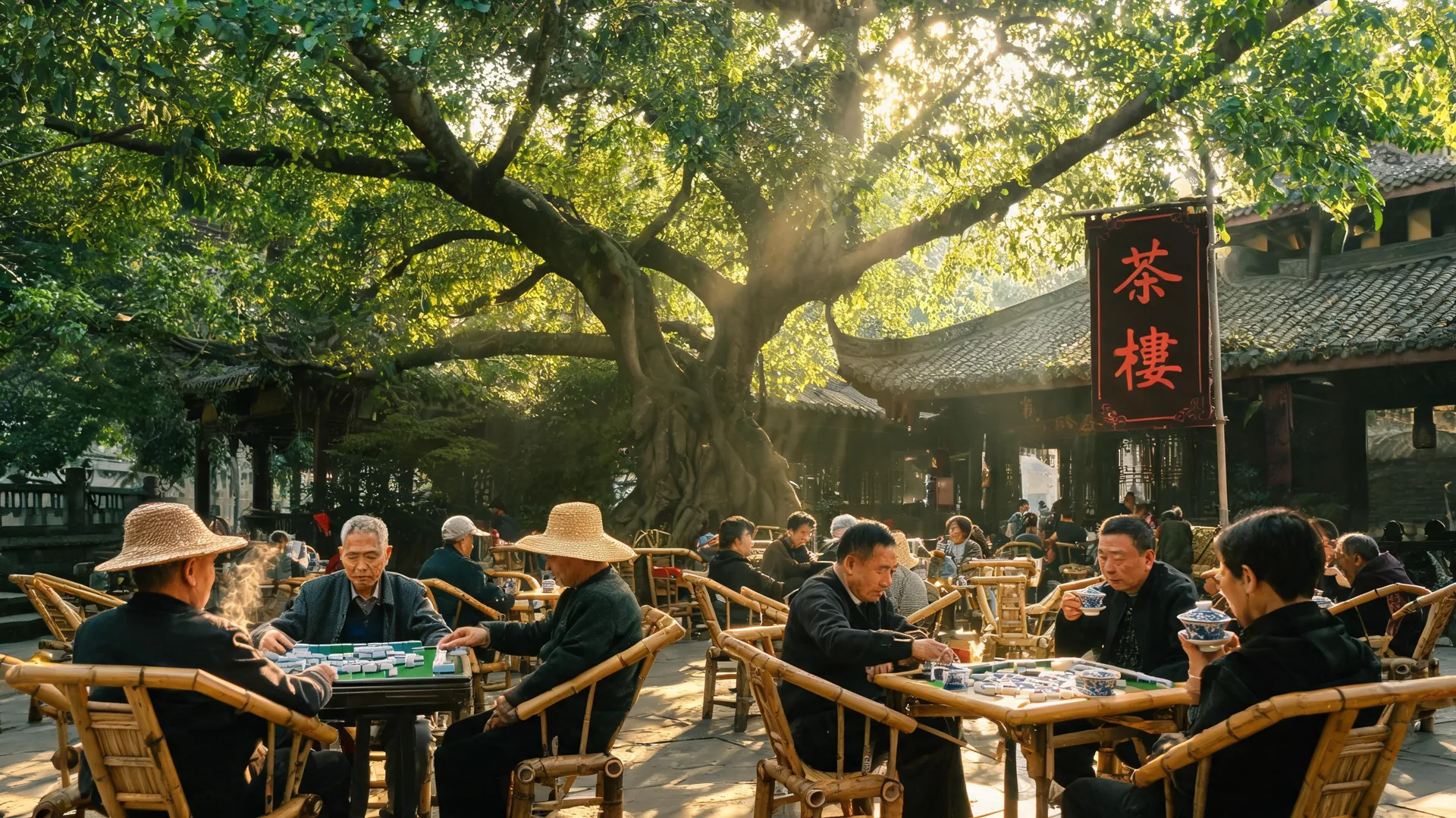
Chengdu is the only city where I saw people sit in bamboo chairs, sipping tea, playing mahjong, and arguing about absolutely nothing for four straight hours. And somehow, it felt like the most productive use of time I’d ever witnessed. I joined them. I stayed for three.
Step 1: Head to People (People’s Park) and find Phoenixらぞ (Heming Teahouse) —it’s been operating since 1923. Follow the sound of clacking mahjong tiles and you’ll find it.
Step 2: Grab a bamboo chair under the trees and order a bowl of Bamboo Leaf Tea (jasmine tea) for 15 (~$2). It comes in a big ceramic bowl with a lid. The ritual of lifting the lid, blowing the leaves, and sipping is half the experience.
Step 3: For the full Chengdu experience, get a Ear Pick (ear cleaning) from one of the street vendors who wander through the teahouse —it’s a traditional service that sounds terrifying but is surprisingly relaxing. 30—0 (~$4—).
📍 Address: Peopleh?(Heming Teahouse, People’s Park)
🚇 Metro: Line 2 →?People’s Park Station (People?, Exit D
🕐Hours: 8:00 AM —6:00 PM
💰 Price: Tea 15 ($2); Ear cleaning 30—0 ($4—)
💡 Pro tip: Go in the late afternoon around 3— PM when the light is golden and the park is at its most atmospheric. Weekends are lively; weekdays are more peaceful. Don’t rush —that’s the whole point.
🐼 Scene 8: Kuanzhai Alley
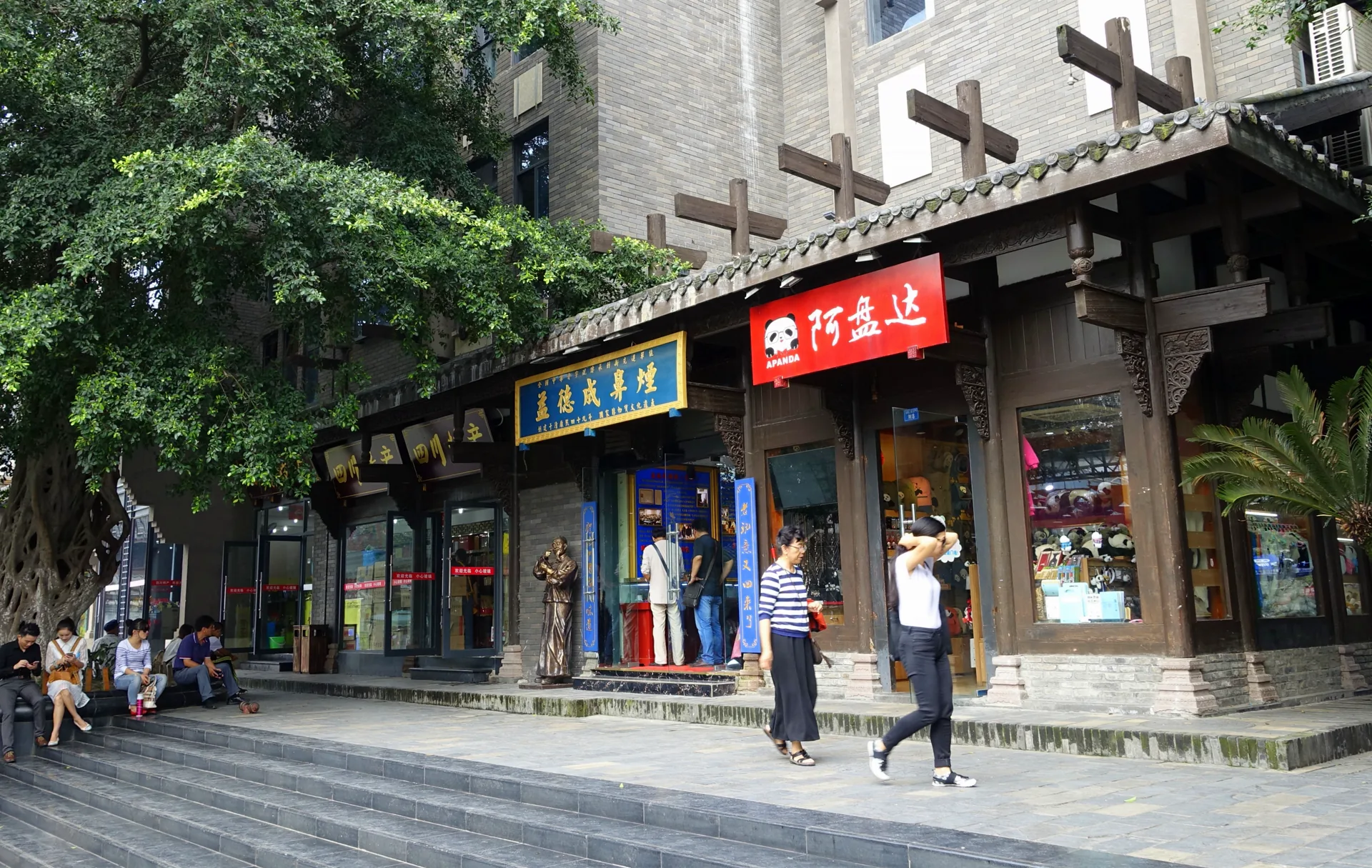
Kuanzhai Alley is three parallel alleys —Wide, Narrow, and Well-named —that somehow capture old Chengdu in a few hundred meters of gray brick and courtyard gates. The snack shops are touristy, but the architecture is real, and the side alleys have hidden gems.
Step 1: Take Metro Line 4 to Kuanzhai Alley Station (Kuanzhai Alley?. The alleys are right at the exit. Enter from the main gate and start with Kuan Alley (Wide Alley? for the best-preserved courtyard houses.
Step 2: Walk through Zhai Alley (Narrow Alley? for the most food variety —try ?(sweet water noodles) and Worried Alley?(dandan noodles) from the small shops. Well Alley (Well Alley? has the best art installations and craft studios.
Step 3: Duck into the side alleys between the main three —that’s where you’ll find quiet courtyard gardens, independent bookshops, and the occasional cat sleeping on a warm windowsill. The contrast between the busy main streets and silent side alleys is the real charm.
📍 Address: Qingyang DistrictNarrow Alley?(Kuanzhai Alley, Qingyang District) 🚇 Metro: Line 4 →?Kuanzhai Alley Station (Kuanzhai Alley? 🕐Hours: Shops 10:00 AM —10:00 PM; alleys open 24/7 💰 Price: Free entry; snacks 5—5 (~$0.70—3.50)
💡 Pro tip: Visit early morning (before 9 AM) when the alleys are nearly empty and the morning light hits the gray brick beautifully. Return at night when the lanterns come on for a completely different atmosphere.
🌆 Scene 9: Chunxi Road
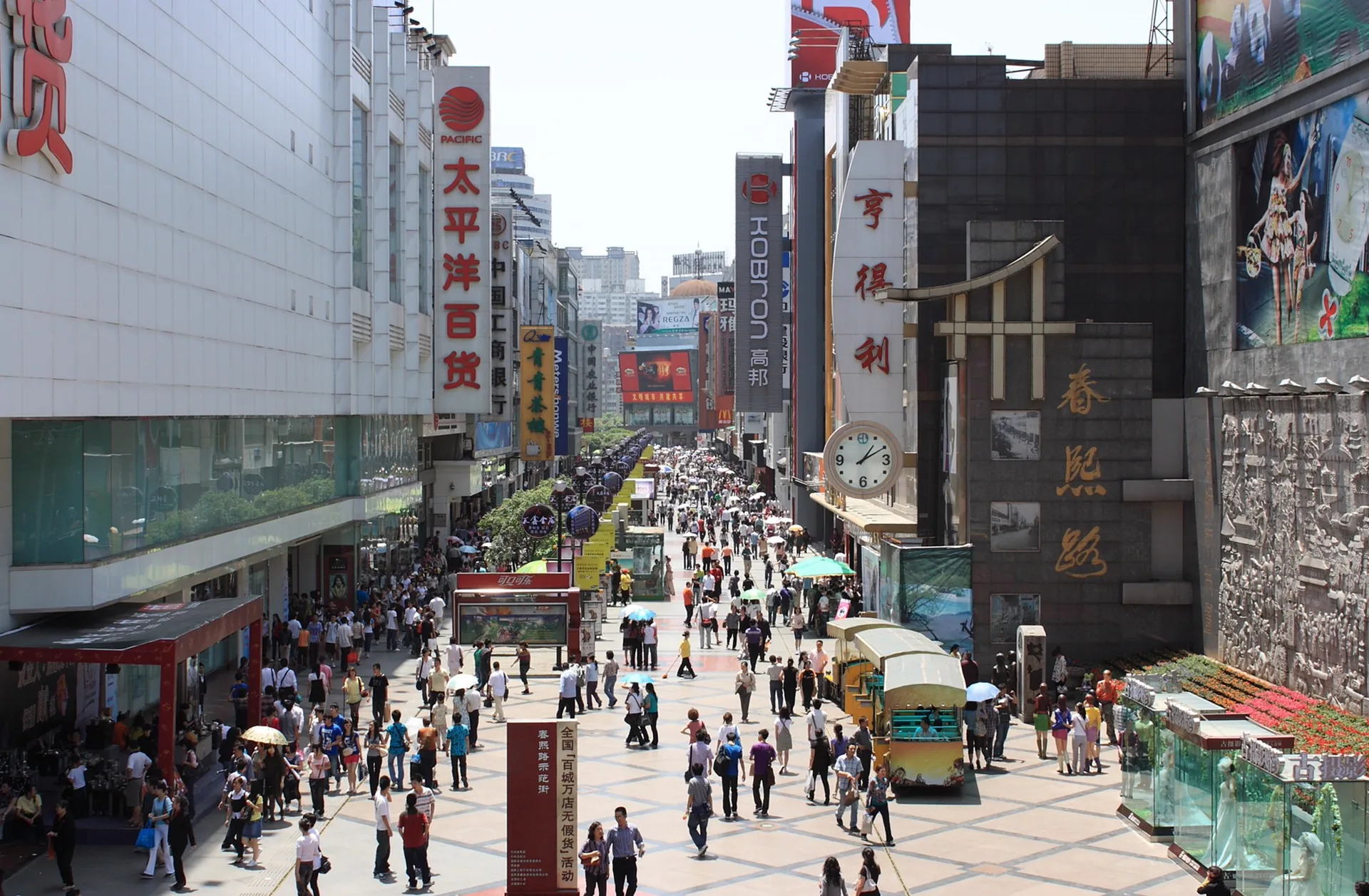
Chunxi Road is where Chengdu shows off its modern side —neon-lit, fashion-forward, buzzing with energy. I came to shop but ended up just people-watching for an hour. The mix of old aunties in floral shirts and Gen-Z in streetwear is peak Chengdu.
Step 1: Take Metro Line 2 to Chunxi Road Station (ョ). The pedestrian street stretches in both directions, but the main action is between the IFS building (with the climbing panda sculpture on top —go to the roof for photos) and Taikoo Li (?.
Step 2: Taikoo Li is an open-air luxury mall built around restored Qing Dynasty buildings. Even if you’re not shopping, the architecture blend is worth seeing. Grab a coffee at one of the courtyard cafs and watch the world go by.
Step 3: For the best view, head to the rooftop of the IFS (IFS) building. There’s a giant panda sculpture climbing the wall —it’s become Chengdu’s most iconic modern landmark. Free to visit, open until 10 PM.
📍 Address: Hotpot︽Spring Hotpot (Chunxi Road, Jinjiang District) 🚇 Metro: Line 2 →?Chunxi Road Station (ョ) 🕐Hours: Most shops 10:00 AM —10:00 PM 💰 Price: Free to walk; shopping varies
💡 Pro tip: The IFS rooftop panda is best photographed at sunset when the building lights up behind it. For local snacks at better prices, duck into the alleys behind Taikoo Li where you’ll find HalfゅFlavor (braised snacks) and Ice Cream (ice jelly) for 5—0.
🍢 Scene 10: Riverside Night Food Market
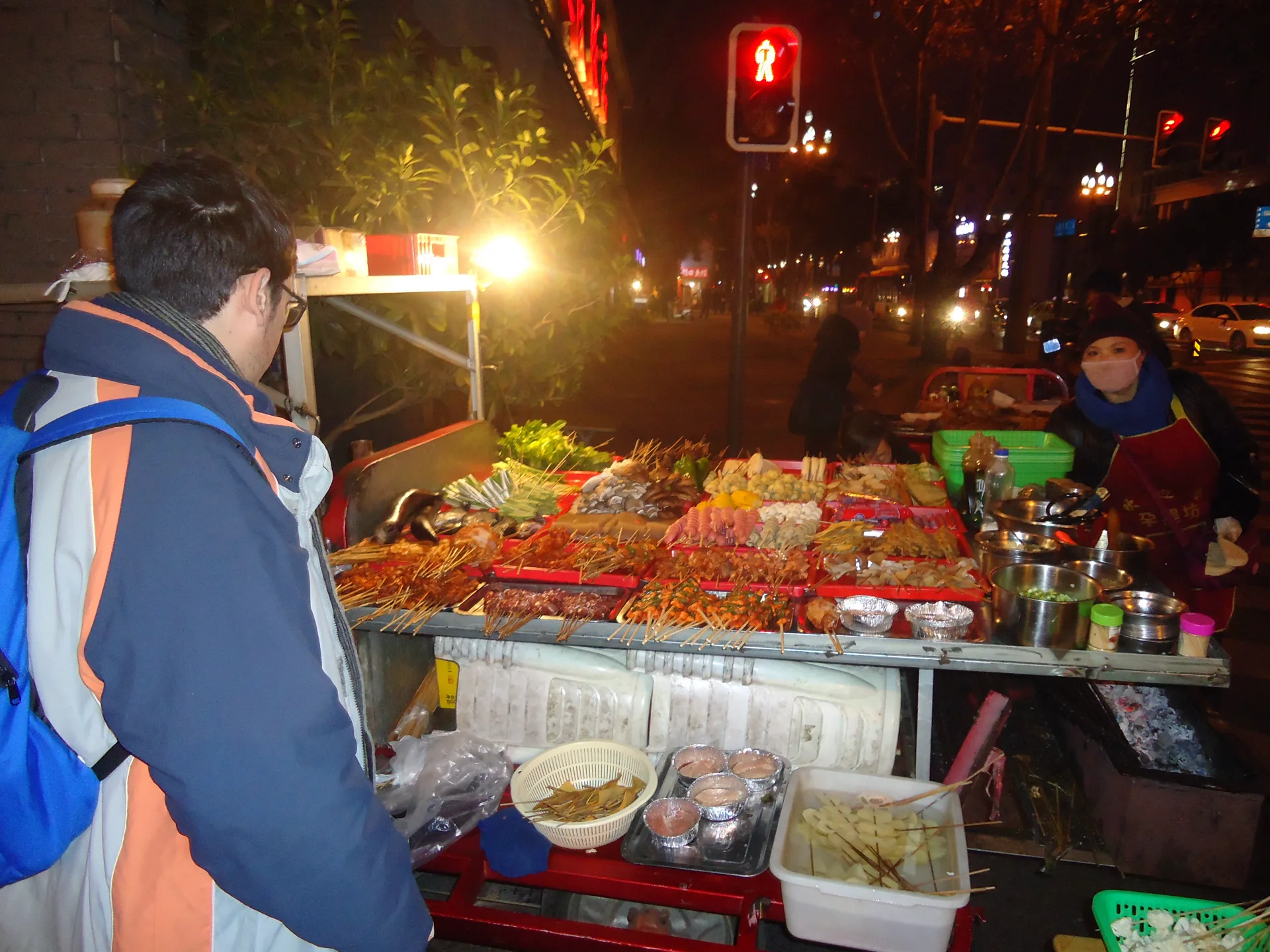
The smoke, the sizzle, the shouting vendors —a Chengdu night market is a full-sensory assault. I grabbed a skewer of х (BBQ) and a cup of Ice Cream (ice jelly) and just walked, eating everything that looked good. My bill came to 60 for five different things. Absolute paradise.
Step 1: Head to Jiuyan Bridge?(Jiuyanqiao) area along the Jin River —it’s Chengdu’s most famous bar and food street. The bridges are lit up, the river reflects everything, and the whole strip comes alive after 8 PM.
Step 2: Start with や (grilled skewers) —lamb, chicken skin, and よ?(grilled sweet potato noodles) are musts. Then try ?(mltng —spicy hot broth with your chosen ingredients) from one of the open-air stalls. Finish with Ice Cream (ice jelly with fruit and sugar) to cool down.
Step 3: Walk along the river after eating —the Nine-Eye Bridge (Jiuyan Bridge? at night is stunning, with traditional-style pavilions lit up in gold. Street performers often set up near the bridge. This is where Chengdu locals come to relax after dinner.
📍 Address: Hotpot︽ˉ (Jiuyanqiao, Jinjiang District) 🚇 Metro: Line 2 →?Niuwangmiao Station (Bull King Temple Station), then 10-minute walk 🕐Hours: Most stalls open 6:00 PM —2:00 AM 💰 Price: 50—00/person (~$7—4) for a full meal of street food
💡 Pro tip: The best stalls are the ones with the longest local queues —follow the crowd. Avoid anything with zero customers. Also: (chuanchuanxiang —skewers you cook yourself in hotpot broth) is the ultimate late-night Chengdu experience if you’re still hungry after the night market.
🗺Practical Info
Getting There
- By air: Chengdu Tianfu International Airport (TFU) —most international flights. Take Metro Line 18 to the city center (~45 min, 10).
- By rail: Chengdu East Station (Chengdu East Station) is the main high-speed rail hub.
Getting Around
- Metro: 13 lines covering the city. Buy a travel card or use Alipay/WeChat pay.
- Didi (Chinese Uber): Ubiquitous and cheap. Trips within the city are usually 10—0.
- Walking: The historic areas (Jinli, Kuanzhai, Wuhou) are all walkable from each other.
Weather in July
- Temperature: 24—2C (75—0F). Hot and humid.
- Rain: Frequent afternoon showers. Carry an umbrella.
- Tip: Early mornings are the best time for outdoor activities. Save indoor/night activities for the afternoon and evening.
Budget Estimate (3 Days)
| Category | Cost | Cost (~$) |
|---|---|---|
| Accommodation (3 nights) | 600—,200 | 85—70 |
| Food (all meals) | 400—00 | 55—5 |
| Transport (metro + taxis) | 150—50 | 20—5 |
| Attractions | 265—45 | 37—9 |
| Total | 1,415—,395 | 200—40 |
Packing Essentials
- 🌂 Umbrella (rain is frequent in July)
- 👟 Comfortable walking shoes
- 🧴 Sunscreen + insect repellent
- 📱 Portable charger (you’ll take 500+ photos)
- 🧻 Tissues/wet wipes (street food situations)
Chengdu isn’t a city you visit —it’s a city you sink into. By Day 3, you’ll be sitting in a teahouse with no agenda, no rush, and absolutely no desire to leave. That’s the Chengdu effect.
🖼**All images in this guide are AI-generated using Seedream 5.0 Lite via LibTV CLI. They capture the spirit and atmosphere of each location.