Chengde: The Summer Resort City That Time Forgot
So here’s the thing about Chengde — most people outside of China have never even heard of it, and honestly, that’s part of the charm. Tucked up in the mountains of Hebei province, about three hours northeast of Beijing, this place was once the Qing dynasty’s summer escape from the brutal heat of the capital. Emperors came here to cool off, hunt deer, and hold elaborate diplomatic meetings with Mongol and Tibetan leaders. Today, it still feels like a city frozen in a gentler era — slower, cooler, and way less crowded than you’d expect for something with UNESCO World Heritage status.
I went to Chengde in early autumn, partly because I’d heard the grasslands at Mulan Paddock turn this ridiculous shade of gold and crimson, and partly because I just wanted to see what an imperial summer retreat actually looks like. Three days turned out to be perfect — one for the Mountain Resort itself, one for the Outer Eight Temples, and one for the day trip out to Mulan Paddock. If you’ve got four days, even better, because there’s no rush here. That’s the whole point of the place.
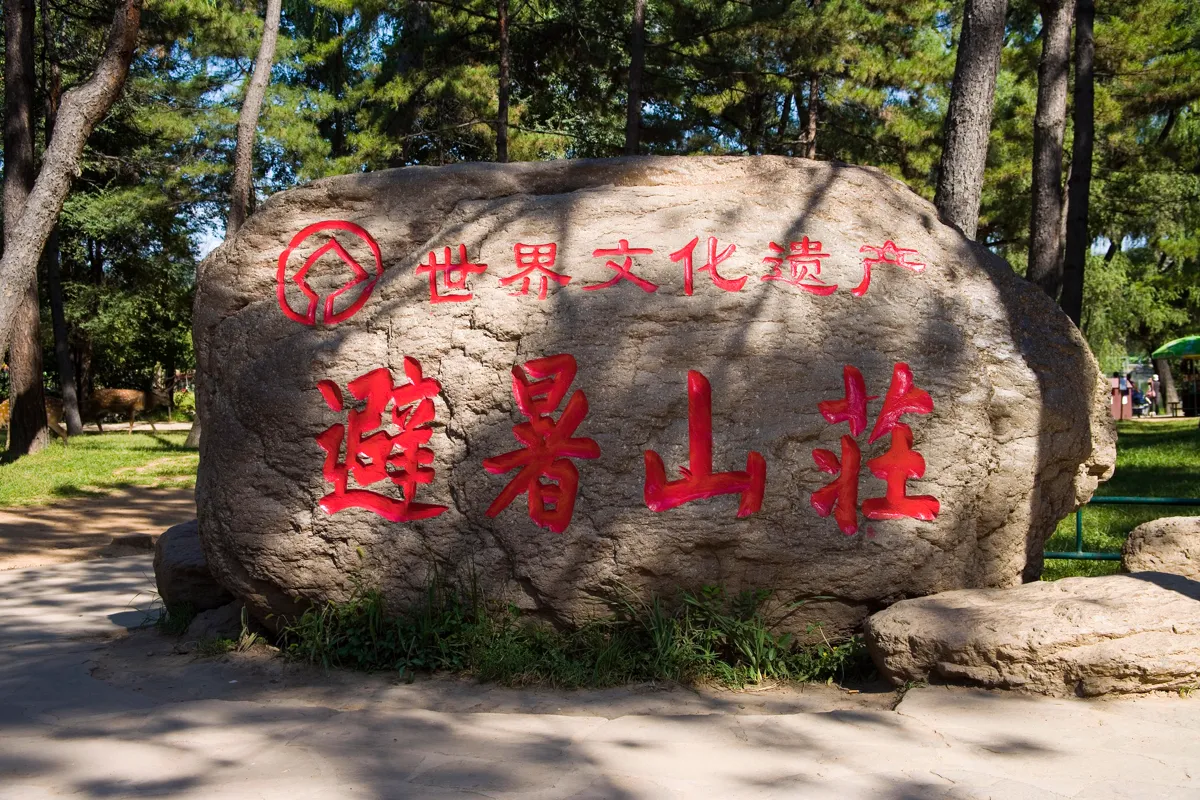 The Mountain Resort sprawls across more than five square kilometers of lakes, forests, and palace grounds — it really is the largest imperial garden in the world
Day 1: The Mountain Resort — Where Emperors Played
游玩攻略
Let me just say this upfront: the Mountain Resort is enormous. We’re talking about the largest imperial garden in the world — 5.6 square kilometers of lakes, forests, palace buildings, and rolling hills, all enclosed within a wall that stretches over ten kilometers. You could genuinely spend an entire day here and still not see everything, and I’d actually recommend doing exactly that.
I started at the main gate on the south side, which dumps you right into the palace area. The palaces themselves are impressive but deliberately understated — the Qing emperors wanted a retreat that felt rustic compared to the Forbidden City, so you get wooden beams, simple courtyards, and a lot more greenery between buildings than you’d find in Beijing. The Kangxi and Qianlong Halls are the highlights here, and honestly, the architecture is beautiful in its restraint. No golden dragons everywhere, no overwhelming grandeur — just elegant simplicity.
But the real magic happens when you walk north into the lake district. This is where the resort earned its Chinese name, 避暑山庄, which literally means “mountain estate for avoiding the summer heat.” There are eight interconnected lakes, each with its own character. The lakes and pavilions are what make this place magical — willow trees reflected in still water, curved bridges connecting tiny islands, that misty atmosphere the emperors came here for.
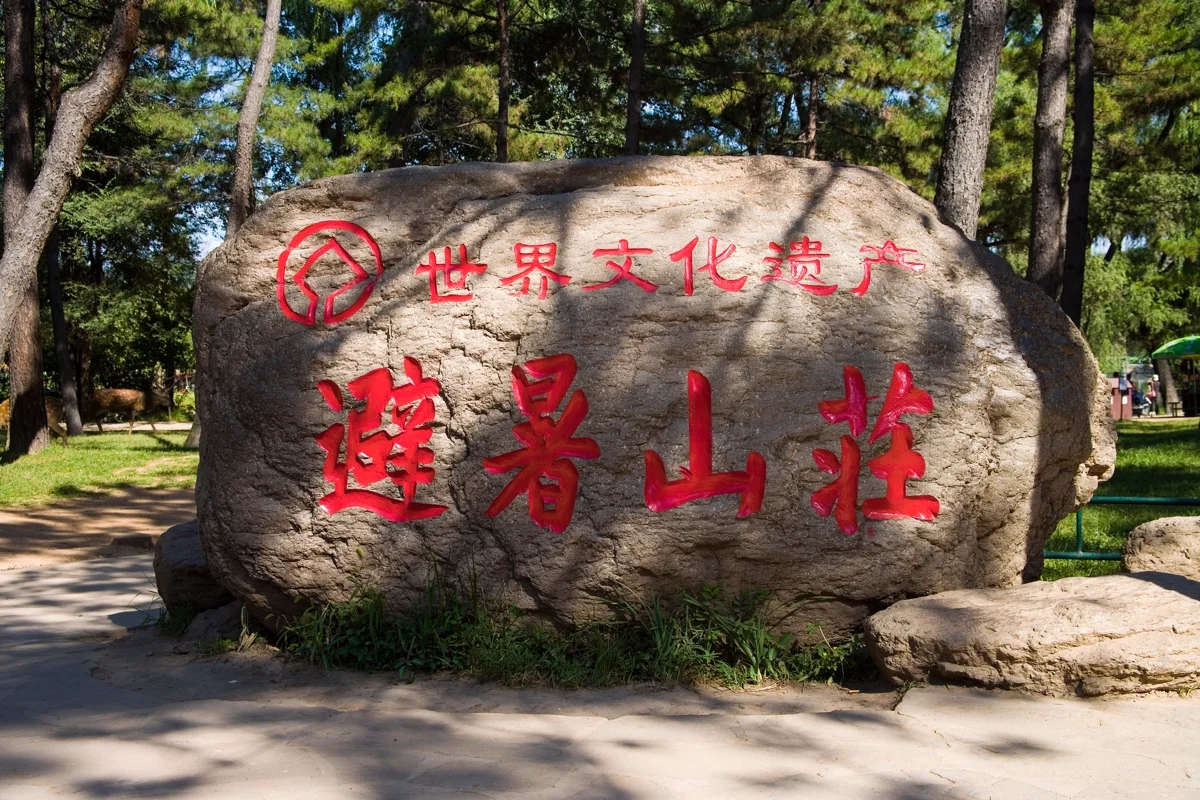 Walking along the causeways between the lakes, watching reflections of willow trees in the water — this is the Chengde the emperors fell in love with
I found myself wandering along the causeways between the lakes, watching the reflections of willow trees in the water, and genuinely forgetting that there was a city outside the walls. The煙雨樓, or Misty Rain Pavilion, sitting on its own island in one of the lakes, is one of those spots that makes you understand why poets have been writing about Chinese gardens for centuries.
Further north, the terrain rises into forested hills where you’ll find the deer park — yes, actual deer roaming around. Sika deer, to be exact, and they’re pretty much used to people by now. I spent a good twenty minutes just sitting on a bench watching a family of them graze in a meadow. There are also some Tibetan-style temples scattered through this area, which felt like a preview of what was coming on Day 2.
One thing I’d flag: the resort has multiple gates, and the internal distances are genuinely long. There’s a shuttle bus service that loops around the main areas, and honestly, after walking about three kilometers in the morning, I was grateful for it. The ticket is ¥130 / ~$18 for the main resort, and ¥80 / ~$11 if you just want the palace area. I’d say the full ticket is worth it — the lake and mountain areas are the whole point.
交通攻略
Getting to the Mountain Resort from central Chengde is easy. It’s literally in the middle of the city, so from most hotels you can either walk or take a short taxi ride. I stayed about two kilometers south of the main gate, and it was a pleasant fifteen-minute walk through residential streets where you’ll see locals playing chess in parks and elderly couples doing morning exercises. If you’re coming from the train station, a taxi should cost around ¥15 / ~$2. The resort’s south gate is the main entrance and the one you want.
If you’re arriving from Beijing, you’ve got a few options. The train is the most comfortable — there are several daily services from Beijing North or Beijing Chaoyang station, taking about two and a half to three hours. Tickets run around ¥70-90 / ~$10-12 for a second-class seat. There are also long-distance buses from Beijing’s Liuliqiao station, which take roughly three hours and cost about ¥80 / ~$11. I took the train and it was perfectly painless — the scenery on the way out is mostly flat farmland, nothing spectacular, but it beats sitting in traffic on the G45 highway.
餐饮攻略
Okay, this is where Chengde surprised me. The food here is distinct from both Beijing and the surrounding Hebei region, partly because of its history as a multiethnic meeting point. The one thing you absolutely have to try is 换换肉, which translates roughly as “swap meat” — it’s lamb cooked in a broth with mountain vegetables, and it’s warming, comforting, and nothing like anything I’ve had elsewhere. I ate it at a small restaurant about a ten-minute walk north of the resort’s east gate, where the sign was entirely in Chinese and the menu had about twelve items on it. No English, no tourist prices, just excellent food.
For lunch inside the resort, there are a few simple canteen-style places that serve noodles and rice dishes. Don’t expect anything fancy — this is cafeteria food, and it’s fine. Better yet, pack some snacks and eat by the lake. There are plenty of benches and shaded spots, and eating a baozi while staring at a misty lake feels very on-brand for this city.
In the evening, head to the restaurant area near Wuliehe Road, which is the main commercial street running south from the resort. The street food scene here is modest but good — try the 碗坨, which is a buckwheat starch jelly served cold with chili oil and vinegar. It sounds weird, tastes amazing. There are also several places serving 烤全羊, whole roasted lamb, if you’re traveling with a group and want to go big. A meal for two with drinks will run you about ¥100-150 / ~$14-21.
Day 2: The Outer Eight Temples — Where Cultures Collide
游玩攻略
This was honestly the day I was most excited about, and it did not disappoint. The Outer Eight Temples — 外八庙 — are a collection of eight imperial temples built outside the Mountain Resort’s walls during the Qing dynasty. They were constructed specifically as diplomatic tools: each one was designed to appeal to a different ethnic or religious group, from Tibetan Buddhists to Mongol princes. The result is one of the most architecturally diverse temple complexes you’ll ever see.
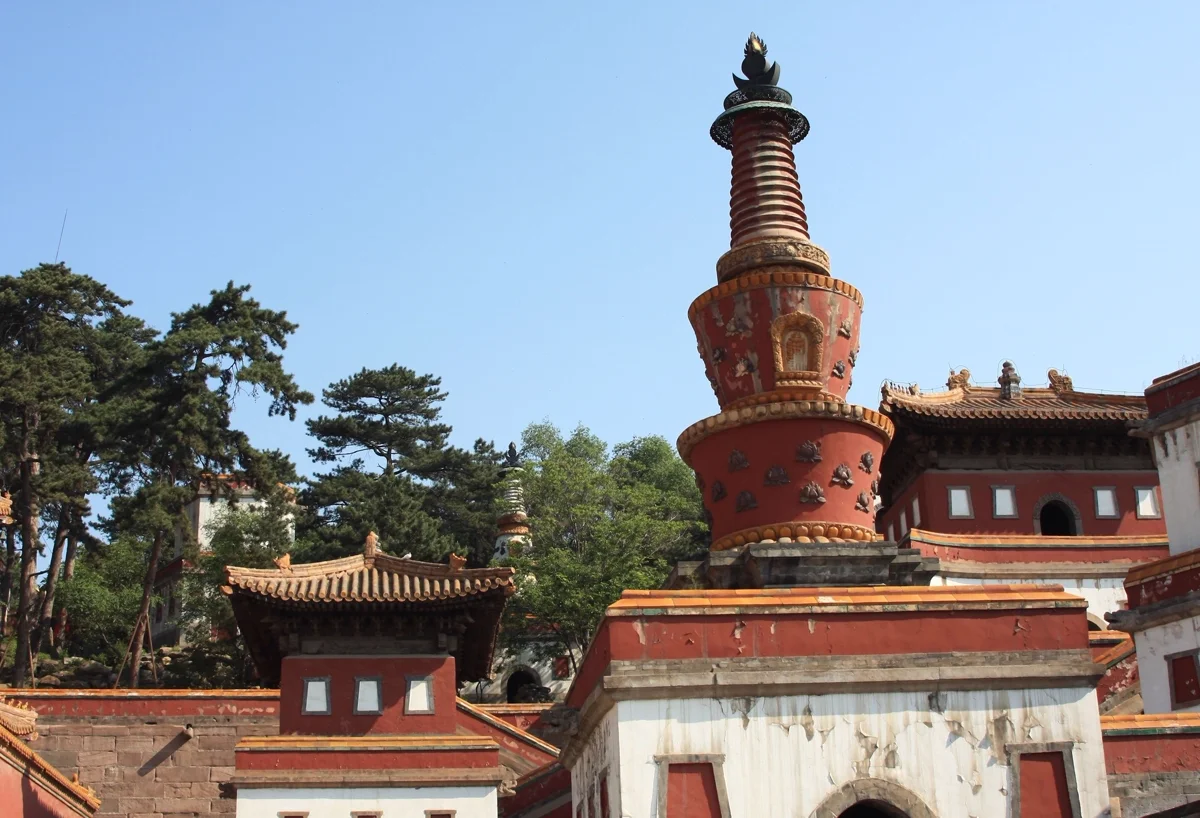
The star of the show is Putuo Zongcheng Temple, also known as the “Little Potala Palace” because it was modeled after the Potala Palace in Lhasa. And honestly, when you see it rising up the hillside with its red and white walls and golden roof ornaments, you get why they call it that.
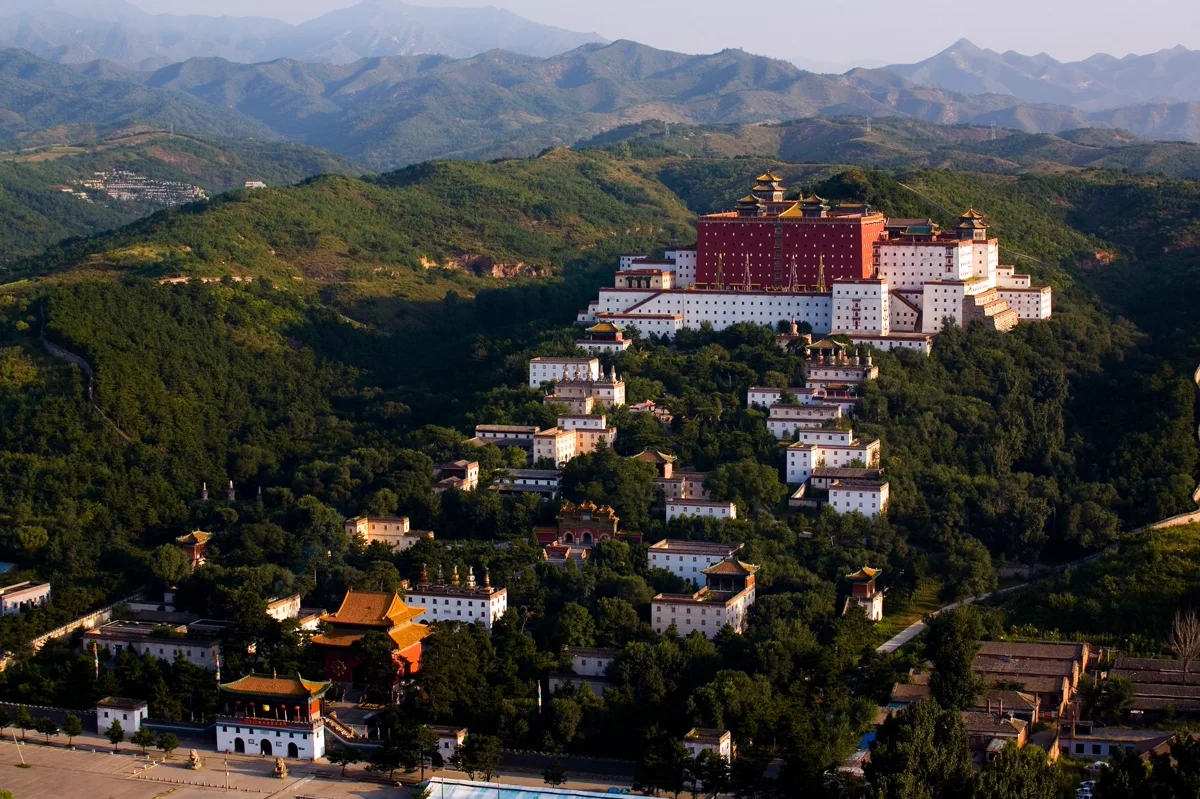 The Tibetan Buddhist architecture of the Outer Eight Temples — each one was built to impress a different ethnic group the Qing emperors needed to keep happy
The scale is genuinely impressive — the main structure climbs the hillside in terraces, and from the top, you get a panoramic view of the entire city and the mountains beyond. The interior is less ornate than you might expect; the Qing builders put most of their energy into the exterior and the overall positioning. The ticket is ¥80 / ~$11, and I’d say allow at least two hours here.
The Tibetan-style architecture here is unlike anything else in northern China — red walls, golden roofs, and that unmistakable Himalayan influence.
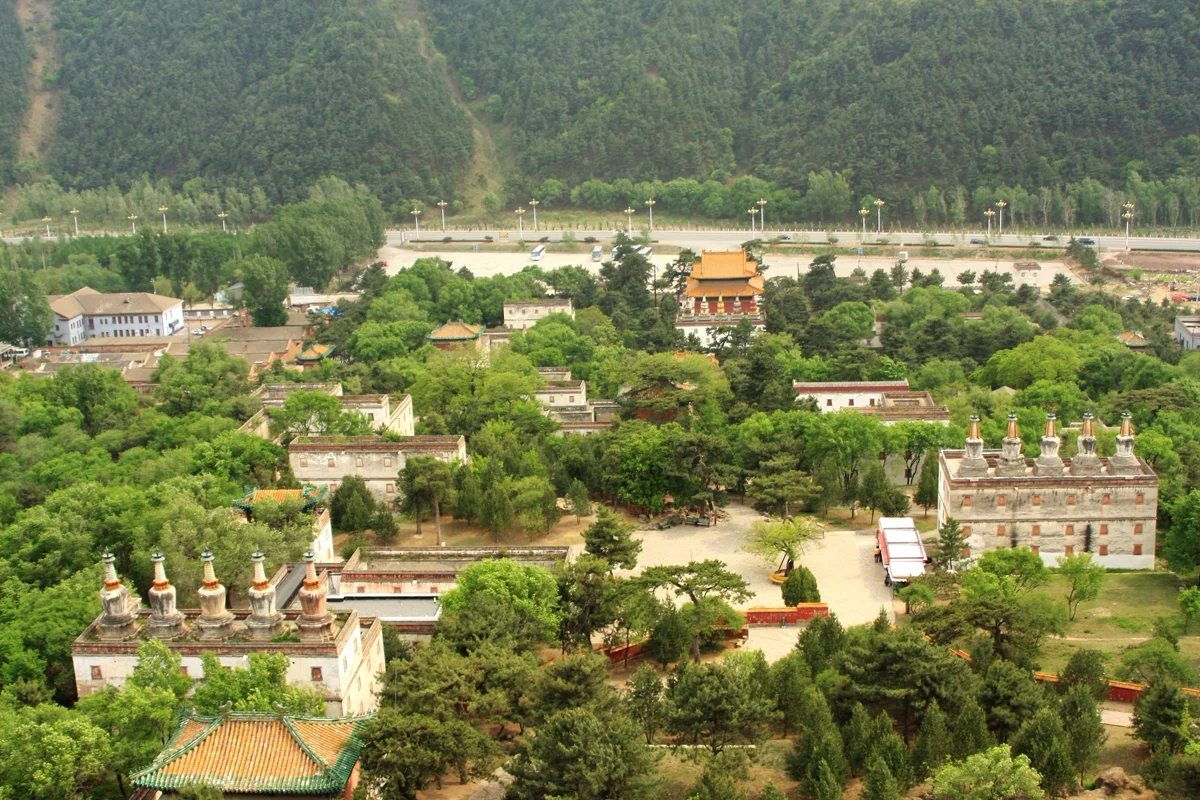 The Tibetan-style buildings of the Outer Eight Temples — the Qing emperors were serious about diplomacy through architecture
Just down the road is Puning Temple, which is home to the world’s tallest wooden Buddha — a twenty-two-meter-tall statue of the Thousand-Armed Guanyin.
 The wooden Buddha at Puning Temple fills an entire multi-story building — seeing it in person is genuinely jaw-dropping
Seeing this thing in person is genuinely jaw-dropping. The statue fills an entire multi-story building, and the detail on all those arms and faces is extraordinary. The temple complex around it is peaceful and well-maintained, with some lovely gardens. Entry is ¥80 / ~$11 and it’s worth every yuan.
The third temple I’d recommend is Pule Temple, which is smaller and less visited but has a beautiful circular main hall with a golden dome. It was designed to represent the Sumeru Mountain in Buddhist cosmology, and the architecture is strikingly different from the other two — more Central Asian than Tibetan. I had the place almost to myself, which was a refreshing change from the tour groups at Putuo Zongcheng.
My practical advice: start early. The tour buses from Beijing hit Putuo Zongcheng around 10 AM, and by mid-morning the place is crawling with selfie sticks. I got there at 8:30 and had the first hour almost completely to myself. The light at that hour is also gorgeous — golden and angled, perfect for photos.
交通攻略
The Outer Eight Temples are scattered along the northern and eastern edges of the Mountain Resort, so you can actually walk between some of them. Putuo Zongcheng is about a thirty-minute walk from the Mountain Resort’s north gate, and Puning Temple is another fifteen minutes beyond that. Pule Temple is a bit further out, so I’d suggest a taxi for that one — it’s about ¥10-15 / ~$1.50-2 from Puning.
If you’re coming from central Chengde, taxis to Putuo Zongcheng cost around ¥20-25 / ~$3-4. Some local buses also run routes past the temples, but the frequency is unpredictable and the signage is entirely in Chinese, so unless you read characters, I’d stick with taxis or walking. The whole temple area is compact enough that you don’t need to stress about logistics — it’s not like the temples are spread across different parts of the city.
One thing worth knowing: there are combination tickets available for ¥160 / ~$22 that cover Putuo Zongcheng and Puning Temple together. If you’re planning to visit both, this saves you ¥16 / ~$2 compared to buying separately. The ticket windows at each temple will sell you the combo.
餐饮攻略
The temple area doesn’t have a ton of dining options, so I’d recommend eating breakfast at your hotel and packing some snacks for the morning. That said, there are a few small restaurants near the entrance to Putuo Zongcheng that serve simple noodle soups and stir-fried dishes. I had a decent bowl of 打卤面, which is noodles with a thick starchy gravy, for about ¥25 / ~$3.50. Nothing fancy, but it hit the spot.
For lunch, I walked back toward the city and ate at a restaurant near the intersection of Wuliehe Road and the road leading to Puning Temple. This area has more options, including several places serving 承德烤肉, Chengde-style barbecue. The meat here is typically lamb or beef, grilled over charcoal with cumin and chili — distinctly northern Chinese in flavor. A generous lunch for two with drinks came to about ¥120 / ~$17.
In the evening, I’d suggest exploring the Wuliehe Road area more thoroughly. It’s the liveliest part of Chengde after dark, with street food vendors, small shops, and a few local bars. I found a tiny place doing 烤冷面, grilled cold noodles, which is a northeastern Chinese specialty that’s become popular all over the north. Watching them make it on the flat grill is half the entertainment — they crack an egg onto the noodle sheet, fold it up, chop it into pieces, and douse it in sauce. It costs about ¥8 / ~$1 and it’s the perfect late-night snack.
Day 3: Mulan Paddock — The Grasslands Beyond the City
游玩攻略
If there is one day trip from Chengde that I’d tell everyone to do, it’s Mulan Paddock. This is where the Qing emperors held their famous autumn hunts, and the landscape is just breathtaking — rolling grasslands, dense forests of birch and larch, and wide-open skies that make you feel very small. In autumn, the whole area turns into a patchwork of gold, orange, and deep red, and I’m not exaggerating when I say it’s some of the most beautiful scenery I’ve seen anywhere in China.
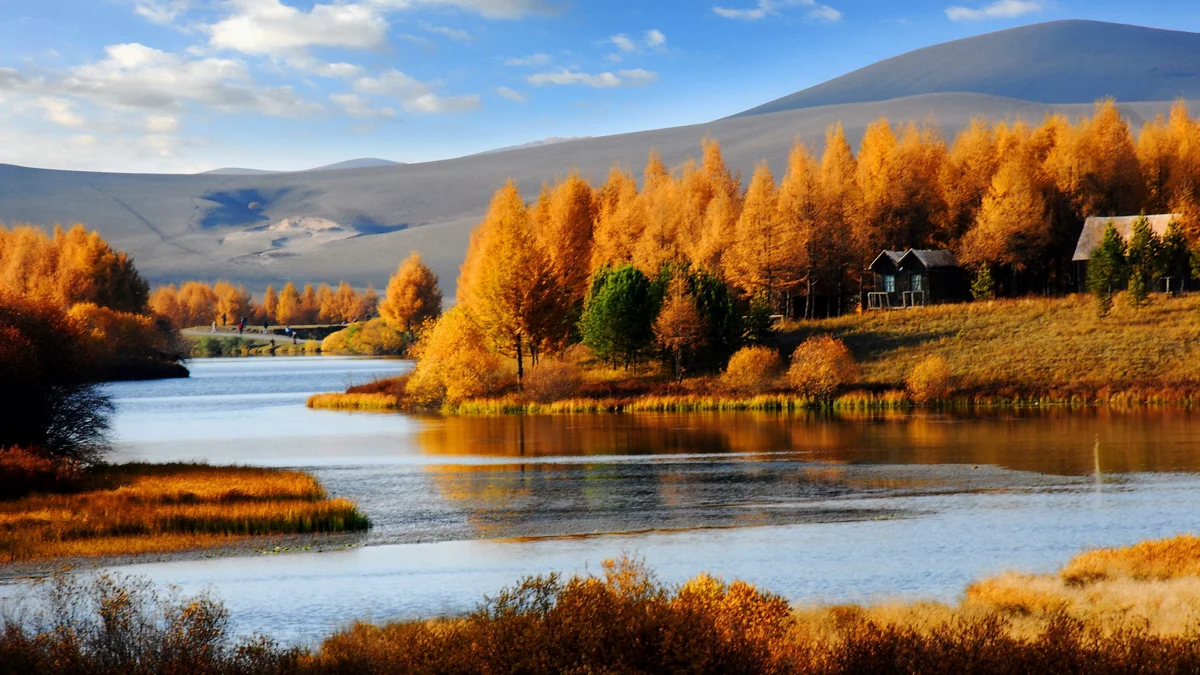 The grasslands at Mulan Paddock in autumn — golden birch forests, rolling meadows, and the kind of wide-open skies that make your phone camera feel inadequate
The paddock is actually enormous — about 2,300 square kilometers — so you need to pick which areas to visit. The two main zones are Saihanba National Forest Park in the north and the Hongshan Grassland area to the south. I went with a day tour that covered both, and it was a long day but absolutely worth it. Saihanba is higher in elevation and has a more alpine feel — think dense coniferous forests, clear streams, and wooden walkways through the trees. The grassland areas are lower and more open, with grazing horses and the kind of wide horizons that make your phone camera feel inadequate.
One thing to know: you really need a vehicle to get around the paddock. The distances between attractions are measured in tens of kilometers, not meters. Most visitors either join a tour group or hire a car with a driver for the day. I went with a small group tour that picked me up from my hotel at 7 AM and got me back by about 6 PM, and the cost was ¥280 / ~$39 including transport, entrance fees, and a simple lunch. The entrance fee to Saihanba alone is ¥130 / ~$18, so the tour is genuinely good value.
The highlight for me was the 百花坡, or Hundred Flower Slope, which in early autumn was covered in late-blooming wildflowers against a backdrop of golden birch trees. Standing on the grasslands watching horses graze against a backdrop of autumn color — this is the real Chengde experience.
Standing on the grasslands watching horses graze against a backdrop of autumn color — this is the real Chengde experience
It’s one of those spots where you just stand there thinking, “I can’t believe this is a real place.” The 红松洼, or Red Pine Depression, was another standout — a valley filled with ancient red pine trees that creates this cathedral-like atmosphere. Absolutely serene.
交通攻略
Mulan Paddock is about 250 kilometers north of Chengde city, which translates to roughly a three-and-a-half to four-hour drive depending on road conditions. This is not a place you can easily reach by public transport — there are no regular buses, and the roads through the paddock aren’t set up for independent travel without a car.
Your best options are: join a day tour from Chengde (most hotels and travel agencies can arrange this), hire a private car (expect to pay around ¥600-800 / ~$83-111 for a round trip with driver), or rent a car yourself if you’re comfortable driving on Chinese roads. I went with the day tour option and it was stress-free — the guide handled all the navigation and timing, and I just got to enjoy the scenery.
If you decide to stay overnight (which I’d actually recommend if you have the time), there are guesthouses and small hotels in the Saihanba area. A basic room runs about ¥200-300 / ~$28-42. Staying overnight means you can catch the sunrise over the grasslands, which is genuinely one of those life-list experiences. I didn’t do it this time, and it’s probably my biggest regret from the trip.
One practical tip: the paddock is at a higher elevation than Chengde, so it’s noticeably cooler up there. Even in early autumn, temperatures dropped to around 5°C at night. Bring layers, and if you’re going in September or October, a proper jacket is non-negotiable.
餐饮攻略
Food options inside Mulan Paddock are limited, and honestly, that’s part of the experience. Your tour will almost certainly include a basic lunch — usually a set meal of stir-fried meat and vegetables, rice, and soup. It’s functional, not gourmet, and that’s fine. I’d rather eat simple food surrounded by grasslands than sit in a nice restaurant looking at a parking lot.
What I’d actually recommend is leaning into the pastoral vibe. Several of the herding families near the grasslands offer homemade meals — think fresh milk, hand-pulled noodles, and meat dumplings. If your tour guide knows the area, ask them to stop at one of these places. I had lunch at a family-run spot near Saihanba where the grandmother made us 饽饽, which are steamed buckwheat cakes, served with butter tea. It was simple, wholesome, and exactly what you want to eat after a morning of walking through forests and grasslands.
For dinner back in Chengde, I treated myself to a proper meal at one of the restaurants on Wuliehe Road. I ordered the 柴鸡炖蘑菇, which is free-range chicken stewed with wild mushrooms — the mushrooms are sourced from the forests around Mulan Paddock, so it felt like a fitting way to end the day. The broth was rich and earthy, the chicken was tender, and the portion was enormous. With a couple of beers, the whole meal cost about ¥130 / ~$18 for two people.
Practical Tips for Chengde
A few things I wish I’d known before going. Chengde is genuinely cooler than Beijing — the city sits at a higher elevation and the surrounding mountains keep temperatures moderate, which is exactly why the emperors chose it. In summer, expect highs around 28°C compared to Beijing’s 35°C+, and in autumn, the mornings can be genuinely cold even when afternoons are pleasant.
The city itself is small and walkable, with a relaxed pace that feels refreshing after Beijing’s intensity. People are friendly but not pushy, and you’ll get curious looks rather than aggressive touts. English is rare outside the major hotels, so having a translation app on your phone is pretty essential.
For accommodation, I’d recommend staying near Wuliehe Road for easy access to restaurants and the resort. There are options ranging from ¥150-500 / ~$21-69 per night. I stayed at a mid-range hotel for about ¥280 / ~$39 per night and was perfectly comfortable.
One last thing: Chengde is the kind of place that grows on you. It doesn’t hit you with spectacle or adrenaline. It’s a city that rewards you for slowing down, for walking without a destination, for sitting by a lake and watching the light change. The Qing emperors understood this, and after three days, I think I did too.