📅 2026 Edition | 📍 First-timers / Culture lovers | ⏱️ 4 days Editor’s note: Beijing is NOT a city for “checklist tourism.” The Forbidden City’s red walls, the hutong’s gray tiles, the CBD’s glass facades —time here is layered, not linear. Over four days, we try to find a breathable route through these layers.
鈼?Overview
| Day | Theme | Pace | Keywords |
|---|---|---|---|
| 1 | The Imperial Axis | Slow | Forbidden City, Jingshan, Central Axis |
| 2 | Hutong Textures | Leisurely | Nanluoguxiang, Wudaoying, Lama Temple |
| 3 | Great Wall Day Trip | Tight | Mutianyu, Ming Wall Ruins |
| 4 | Old Meets New | Casual | 798, Sanlitun, Guomao |
鈼?Day 1 — Time Folds on the Central Axis
Theme: From Yongding Gate to the Bell & Drum Towers, six centuries on one line
The soul of Beijing is a single line. From Yongding Gate in the south to the Bell and Drum Towers in the north, it stretches 7.8 kilometers, running through the city’s heart for six hundred years.
But here’s my advice: don’t try to walk the whole thing in one day. Pick one section. Take your time.
The Forbidden City (鏁呭)
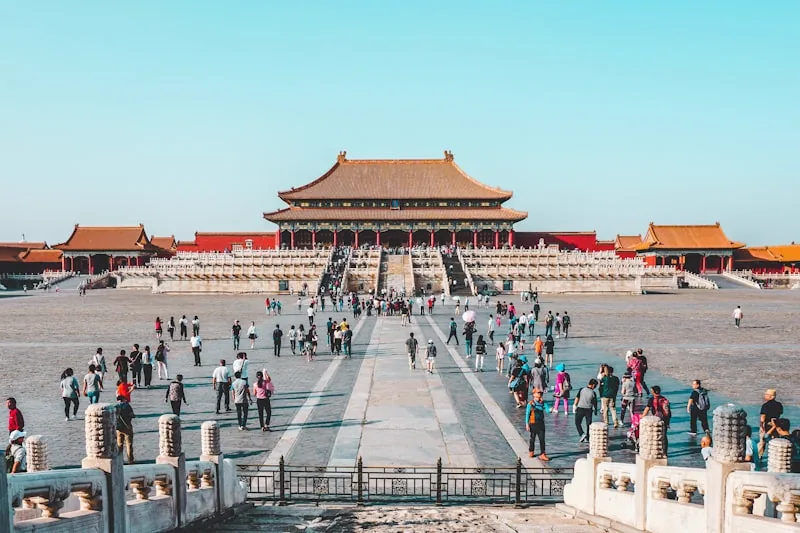 The square in front of the Hall of Supreme Harmony —you can’t feel the weight of “imperial power” until you’re standing there
Enter through the Meridian Gate (Wumen) and exit from the Spirit Gate (Shenwumen), walking straight along the central axis. The Hall of Supreme Harmony, the Hall of Central Harmony, the Hall of Preserving Harmony —these three main halls are so massive, no photo can capture it. You have to stand in that plaza, surrounded by architecture designed to make you feel tiny, to understand what “imperial power” really meant.
Most visitors only walk the central axis, but the east and west wings are where it gets interesting. The Western Six Palaces were the empress’s quarters —smaller, more delicate courtyards with way fewer tourists. On the east side, the Treasure Gallery and the Clock Gallery are worth the extra ticket, especially the clocks. Some of those mechanical timepieces from over 200 years ago still work today. The craftsmanship is mind-blowing.
Audio guides cost 楼20, or you can scan the WeChat mini-program codes. I’d recommend getting one —otherwise you’re just looking at a bunch of old buildings.
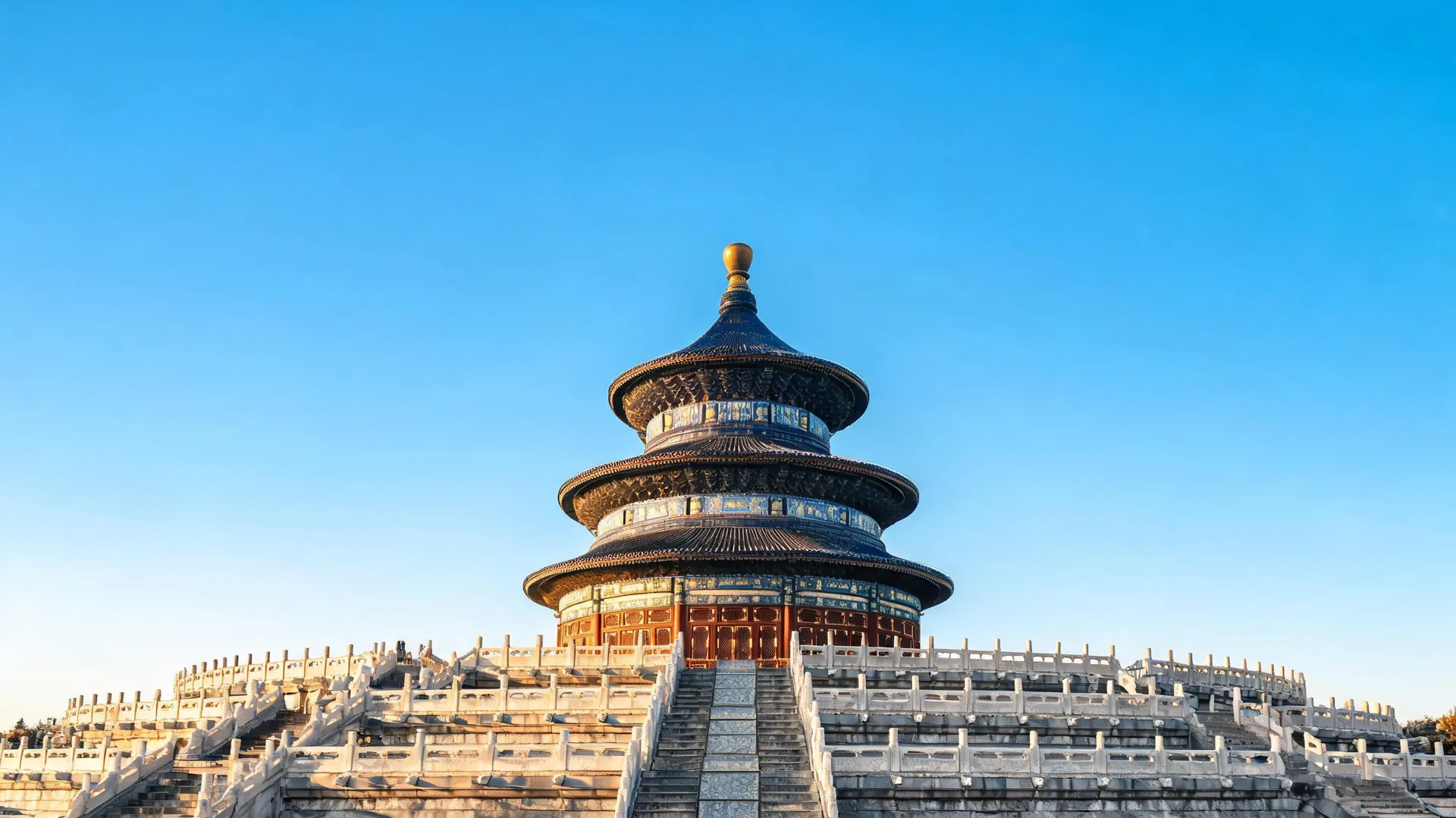
Practical Info
- 📍 4 Jingshan Qianjie, Dongcheng District
- 🚇 Metro Line 1, Tian’anmen East/West stations
- 🕐8:30-17:00 (closed Mondays)
- 💰 楼60 (peak season), advance reservation required
Jingshan Park
Exit the Forbidden City from the Spirit Gate, cross the road, and you’re at Jingshan Park. Admission is 楼2, and it takes about ten minutes to climb to the Wanchun Pavilion at the top.
This is THE spot for a panoramic view of the Forbidden City. Get there around 4 PM—he sunset hits the glazed roof tiles, turning the whole complex golden. This view is one of Beijing’s iconic images. Bring a telephoto lens if you’ve got one.
Dinner Suggestion
Walk north from Jingshan toward Di’anmen, and you’ll find plenty of old Beijing restaurants. You don’t have to go to Quanjude for Peking duck —Sijiminfu (鍥涘姘戠) offers better value. If you want lamb hotpot (shuan yangrou), Nanmen Shuanrou (鍗楅棬娑倝) is the local pick.
鈼?Day 2 — The Beijing of Hutongs
Theme: Hutongs aren’t tourist attractions —they’re a way of life
Morning: Nanluoguxiang →?Wudaoying Hutong
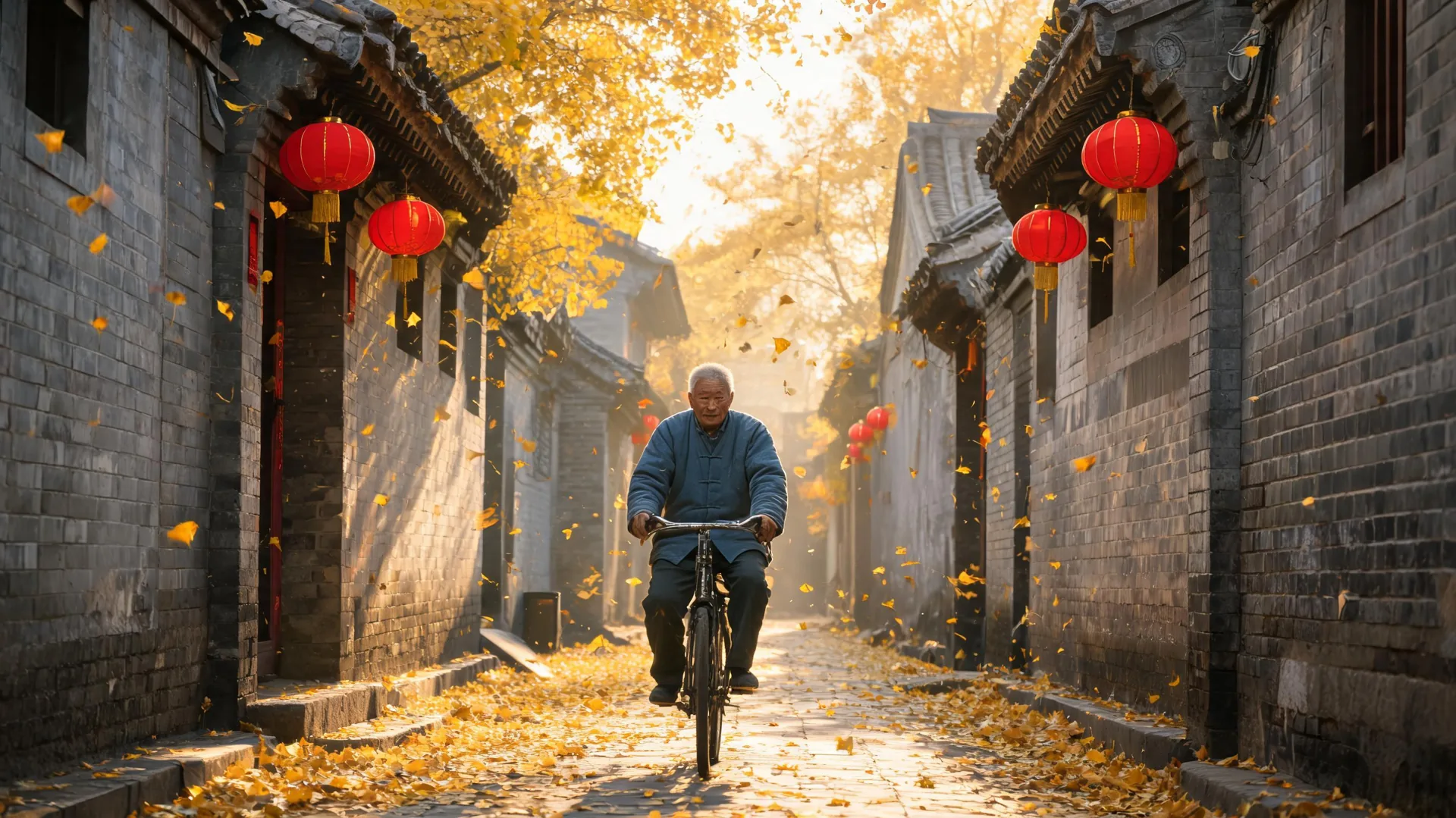
Nanluoguxiang is Beijing’s most famous hutong, and also the most commercialized one. Honestly, if you’re expecting quiet old Beijing alleys, you’ll be disappointed —it’s more like a street of creative souvenir shops.
But here’s the trick: the real value is in the entrances. Turn into ANY of the east-west alleys branching off Nanluoguxiang, and you’ll instantly enter a different world. Mao’er Hutong, Suoyi Hutong, Yu’er Hutong —the names alone carry the scent of old times. You’ll see locals hanging laundry, playing chess, walking their birds. THAT’s the real Beijing.
Wudaoying Hutong is near Andingmen and much quieter than Nanluoguxiang. Lots of coffee shops and indie boutiques, but without that overdeveloped commercial feel. Perfect for a slow afternoon stroll.
Afternoon: Lama Temple (闆嶅拰瀹?
The Lama Temple is Beijing’s largest Tibetan Buddhist monastery. Before it was converted in 1744, this was Prince Yongzheng’s residence —the emperor who lived here before he took the throne.
The building complex is perfectly preserved, and the incense burns strong here. If you’re interested in Tibetan Buddhism, you can buy a bundle of incense and follow the worshippers through the full prayer circuit. If you’re just sightseeing, walk the central axis from south to north, focusing on the Dharma Wheel Hall and the Pavilion of Ten Thousand Happinesses (Wanfuge) —inside is a 26-meter-tall Maitreya Buddha carved from a single sandalwood log. That’s the temple’s crown jewel.
Admission is 楼25, no reservation needed.
Evening
Walk south from the Lama Temple to Guijie (Ghost Street). Guijie is Beijing’s late-night food district, famous for spicy crayfish and grilled fish. I recommend Hu Da Restaurant or Zai Zai BBQ, but be prepared to queue. Or —if you hate waiting —just pick any decently rated place. The quality difference isn’t huge.
鈼?Day 3 — The Great Wall: Choose Mutianyu, Skip Badaling
Theme: The Wall is more than just a wall
Why Mutianyu
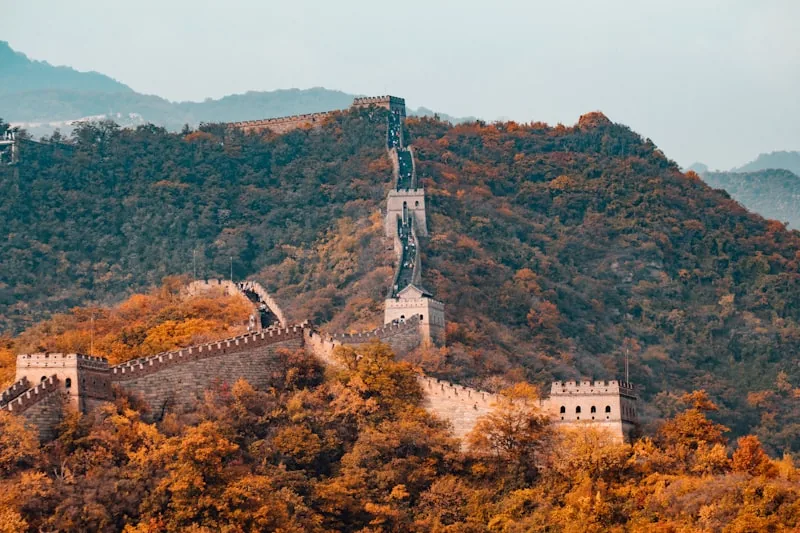 Mutianyu Great Wall in autumn —the wall flanked by red leaves, with two-thirds fewer crowds than Badaling
Badaling has the biggest reputation and the biggest crowds. During peak season, every photo you take will have dozens of other tourists’ heads in it.
Mutianyu is northeast of Beijing, about 1.5 hours by car. It has about a third fewer tourists than Badaling, and better scenery —vegetation coverage is over 90%. Spring brings flowers, autumn brings red leaves. The wall is also better preserved here, with the highest density of watchtowers of any Great Wall section.
How to Get There
The easiest option is a day tour —hotel pickup in the morning, drop-off in the afternoon, including tickets and transport, around 楼200-300. If you go on your own, take bus 916 from Dongzhimen transport hub to Huairou Beidajie, then switch to bus H23 to Mutianyu.
How to Play
There’s a cable car and a toboggan run. The cable car takes you to Watchtower 14, and from there you can walk east or west. Walking east to Watchtower 20 (the highest point) takes moderate effort —young people can make it in about an hour. The west side has fewer people —great if you want quiet.
For the way down, I highly recommend the toboggan —basically a mountain luge. It’s fun. A combo ticket with cable car + toboggan costs about 楼120.
Bring water and snacks —everything on the mountain is overpriced.
Evening
If you still have energy, visit Hongluo Temple near Mutianyu. It’s not a must-see, but if you like ancient temples and bamboo groves, worth a detour. Admission 楼54.
On the way back you’ll pass the Ming Wall Ruins Park (in the Huairou section). There’s a ruined watchtower that makes for great photos —but it’s not an official site, so decide on the spot whether to stop.
鈼?Day 4 — Where Old Beijing Meets New
Theme: When hutongs meet the CBD
Morning: 798 Art District
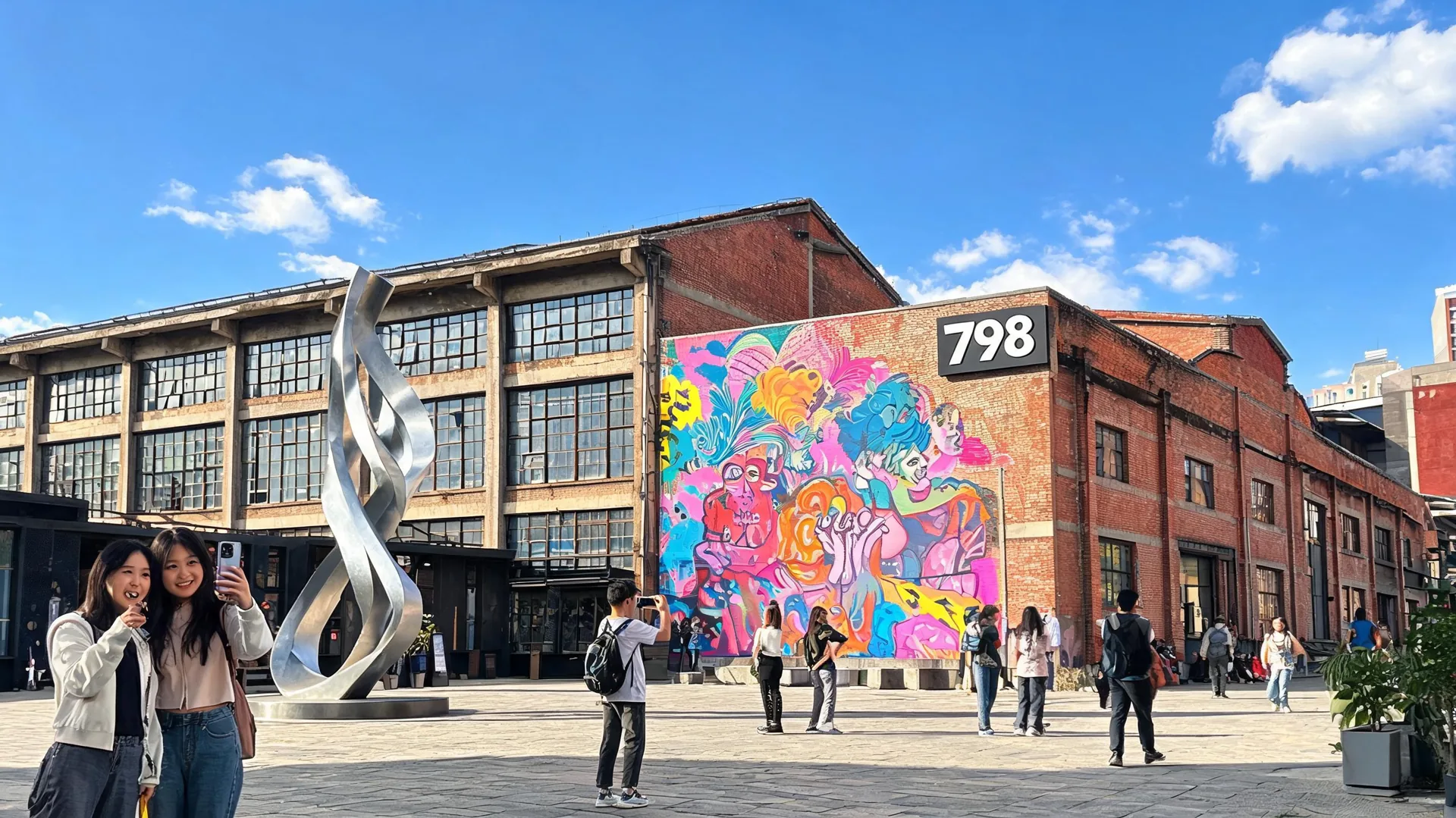
798 used to be a state-owned electronics factory complex in German Bauhaus style. Artists started moving in around 2002, and it gradually became Beijing’s largest art district.
It’s pretty commercialized now, but the core value is still there —those massive industrial pipes, weathered red brick walls, the sawtooth Bauhaus roofs —it’s a living textbook of industrial aesthetics. Art galleries are scattered throughout, most are free to enter, and occasionally you’ll stumble across an installation art exhibition.
I suggest entering from the south gate and walking north along the main road. When you see the Tang Contemporary Art Center and the Ullens Center for Contemporary Art, you’re in the heart of 798. Two to three hours is enough.
Afternoon: Sanlitun →?Guomao (CBD)
Sanlitun is Beijing’s most “international” area. The Taikoo Li complex is worth seeing just for its architecture —the open-plan layout makes for a pleasant walking experience. You don’t have to buy anything; just wander and feel another side of Beijing.
Head east from Sanlitun, past Workers’ Stadium, to Guomao (the CBD). The Guomao skyline is Beijing at its most modern. If you want a high view, the China Zun observation deck on the 80th floor of Guomao Phase III offers over 600 meters of elevation —you can see the entire city, weather permitting.
Dinner
For your last Beijing meal, go for proper Beijing cuisine. I recommend Sijiminfu (鍥涘姘戠, the Forbidden City branch). If you sit by the window, you can see the Forbidden City’s corner tower, and the roast duck is solid. Alternatively, try Da Dong (澶ц懀) —pricier, but the presentation and atmosphere are more refined.
鈼?Editor’s Picks
If you can only do one thing: Go to the Wanchun Pavilion at Jingshan at 4 PM to see the Forbidden City panorama. The light, the angle, the atmosphere —it’s Beijing at its finest.
If you have one day: Jingshan + Forbidden City + Nanluoguxiang + Peking duck for dinner. Classic but not boring.
If you want to avoid crowds: Visit the Forbidden City on weekdays and Mutianyu on weekends. That time gap will double your enjoyment.
鈼?Practical Info
Transport: Beijing’s metro has wide coverage, but there are plenty of interchange stations —pay attention to direction. Download the “Yitongxing” (浜块€氳) app for QR code boarding.
Weather: Spring and autumn are best (April-May, September-October). Summer is hot and rainy; winter is dry and cold but has lots of clear, sunny days.
Accommodation: Stay in Dongcheng or Chaoyang districts near a metro line. Hutongs inside the Second Ring Road offer characterful guesthouses, though soundproofing can be hit or miss.
Ticket Reservations: Popular sites like the Forbidden City and Great Wall require advance booking. Search for the WeChat mini-programs “鏁呭鍗氱墿闄? (Forbidden City) and “鎱曠敯宄暱鍩? (Mutianyu Great Wall).
Budget reference: Economy about 楼500-600/day (hotel, tickets, meals, transport); Comfort about 楼800-1,200/day.